
The ubiquitous symbol $pi$ (pi) is more than just a Greek letter; it’s a fundamental constant in mathematics with profound implications across various technological fields. While its most basic definition relates to circles, its reach extends far beyond geometry, underpinning critical aspects of engineering, computer science, data analysis, and signal processing. Understanding the meaning and applications of $pi$ is crucial for anyone navigating the modern technological landscape.
The Geometric Foundation: Circles and Beyond
At its heart, $pi$ represents the ratio of a circle’s circumference to its diameter. This simple, elegant relationship is the bedrock upon which much of our understanding of circular objects and their properties is built.
Circumference and Area of a Circle
The most direct application of $pi$ is in calculating the circumference ($C$) and area ($A$) of a circle. The formulas, $C = 2pi r$ and $A = pi r^2$ (where $r$ is the radius), are fundamental in numerous engineering and design applications. Whether designing a perfectly round wheel for a vehicle, calculating the surface area of a cylindrical tank, or determining the optimal coverage area of a circular antenna, $pi$ is indispensable. These calculations are not just theoretical; they translate directly into physical designs and manufacturing processes.
Spheres and Cylinders
The influence of $pi$ extends to three-dimensional shapes that incorporate circular elements. The volume of a sphere, for instance, is given by $V = frac{4}{3}pi r^3$, and its surface area by $A = 4pi r^2$. Similarly, the volume of a cylinder is $V = pi r^2 h$ and its lateral surface area is $A = 2pi rh$ (where $h$ is the height). These formulas are vital in fields like mechanical engineering for designing everything from gears and pistons to fluid dynamic systems. Architects also rely on these to calculate material requirements and structural integrity for domed buildings or cylindrical components.
Beyond Basic Geometry: Trigonometry and Periodic Phenomena
While geometric applications are evident, the role of $pi$ becomes even more significant when we consider its connection to trigonometry and periodic functions. Trigonometry, the study of triangles and their relationships, heavily relies on angles measured in radians, where a full circle is $2pi$ radians. This radian measure, intrinsically linked to $pi$, is the standard for many computational and scientific calculations.
Radians and Angular Measurement
The concept of radians is pivotal in advanced mathematics and engineering. Instead of degrees, angles are often expressed as a proportion of the radius. A radian is the angle subtended at the center of a circle by an arc equal in length to the radius. Consequently, $180^circ$ is equivalent to $pi$ radians, and $360^circ$ to $2pi$ radians. This unit system simplifies many calculus operations involving trigonometric functions, making it the preferred choice in physics, engineering, and computer graphics for representing rotations and oscillations.
The Sinusoidal Wave
Trigonometric functions like sine and cosine are inherently periodic, meaning they repeat their values at regular intervals. The fundamental period of both $sin(x)$ and $cos(x)$ is $2pi$. This property makes them ideal for modeling any phenomenon that exhibits cyclical behavior, which is incredibly common in technology. From alternating current (AC) electricity to sound waves, light waves, and even the oscillations of a pendulum, $pi$ defines the characteristic frequencies and patterns of these natural and engineered systems.
$pi$ in the Digital Realm: Algorithms and Computation
The digital age has amplified the importance of $pi$, making its accurate calculation and application a core concern in computer science and numerous related technologies.
Numerical Algorithms and Approximations
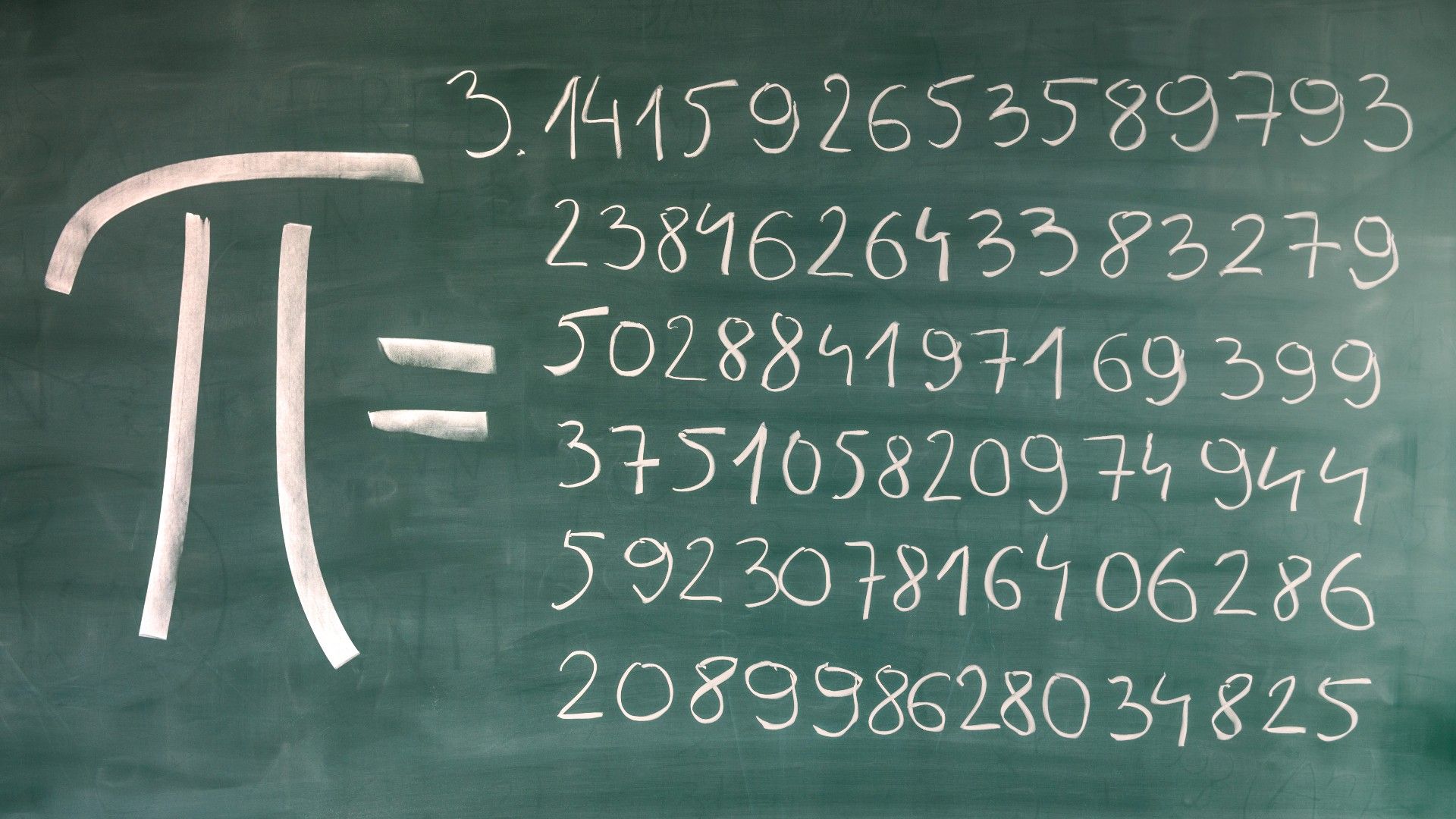
The value of $pi$ is irrational, meaning its decimal representation goes on infinitely without repeating. This poses a computational challenge, as computers must work with approximations. The development of sophisticated numerical algorithms to calculate $pi$ to an ever-increasing number of decimal places has been a hallmark of computational advancement. This pursuit, while seemingly abstract, drives innovation in high-performance computing, parallel processing, and the very architecture of processors. Algorithms like the Chudnovsky algorithm and Machin-like formulas are benchmarks for computational power.
The Need for Precision
The precision required for $pi$ depends heavily on the application. For everyday calculations, a few decimal places suffice. However, in fields like astrophysics, aerospace engineering, or high-precision scientific simulations, millions or even trillions of digits of $pi$ might be necessary. This demand for precision pushes the boundaries of what computers can achieve, influencing the design of hardware and software for handling large numbers and complex calculations.

Data Compression and Signal Processing
$pi$ plays a surprisingly significant role in data compression and signal processing, particularly in applications involving audio and image manipulation. Techniques like the Fast Fourier Transform (FFT), a cornerstone of digital signal processing, heavily rely on trigonometric functions and thus, implicitly, on $pi$.
Fourier Analysis and Waveforms
Fourier analysis allows us to decompose complex signals into a sum of simple sinusoidal waves. This decomposition is essential for understanding, manipulating, and compressing signals. For example, in audio codecs (like MP3), sound waves are analyzed using Fourier transforms to identify dominant frequencies. By representing the signal in terms of these fundamental frequencies, which are defined using trigonometric functions involving $pi$, redundant information can be discarded, leading to smaller file sizes. Similarly, in image processing, transforms related to the Fourier transform are used for compression and noise reduction.
Random Number Generation
The generation of pseudo-random numbers, crucial for simulations, cryptography, and machine learning, also often involves mathematical concepts where $pi$ makes an appearance. While not always direct, the underlying mathematical principles used in some random number generators can trace their roots back to number theory and probability distributions where constants like $pi$ are integral. For instance, the Normal (Gaussian) distribution, a fundamental probability distribution used extensively in statistics and machine learning, has a probability density function that includes $pi$.
$pi$ in Emerging Technologies and Future Frontiers
The ever-evolving landscape of technology continues to find new and innovative applications for $pi$, solidifying its position as a fundamental constant for future advancements.
Artificial Intelligence and Machine Learning
The burgeoning field of Artificial Intelligence (AI) and Machine Learning (ML) relies heavily on statistical models, probability distributions, and complex algorithms, all of which can incorporate $pi$. As mentioned, the Normal distribution is central to many ML models, and its formula includes $pi$. Furthermore, optimization algorithms used to train neural networks, particularly those based on gradient descent, often involve calculus and trigonometric concepts where $pi$ is relevant.
Probabilistic Models and Bayesian Inference
Many advanced AI techniques are probabilistic in nature. Bayesian inference, a powerful framework for updating beliefs based on evidence, frequently utilizes probability distributions like the Dirichlet distribution, which, in turn, depends on the Gamma function, a function that relates to $pi$. Understanding these underlying mathematical structures is key to developing more sophisticated and accurate AI systems.
Neural Network Architectures
While not always explicit in every layer, the underlying mathematics of some neural network architectures can implicitly involve $pi$. For example, in generative models or certain types of recurrent neural networks, periodic functions might be employed to model cyclical data, drawing upon the properties of sine and cosine.
Quantum Computing and Advanced Physics Simulations
The quest for quantum computing and the simulation of complex physical systems at the quantum level demand extraordinary mathematical rigor. $pi$ is a constant that appears in many fundamental equations of quantum mechanics and statistical physics.
Quantum Mechanics and Wavefunctions
The behavior of subatomic particles is described by wavefunctions, which often involve complex exponentials and trigonometric functions. These functions are intrinsically linked to $pi$. Calculating probabilities, energy levels, and other quantum properties of particles requires the precise use of these mathematical tools, making $pi$ a vital component of quantum simulations and theoretical frameworks.
Advanced Simulations and Modeling
From climate modeling to cosmological simulations, scientists and engineers use $pi$ in vast, complex computational models. These simulations require immense processing power and highly accurate mathematical representations of physical phenomena. The presence of $pi$ in the equations governing fluid dynamics, wave propagation, and gravitational interactions means it is woven into the fabric of these simulations.
In conclusion, the symbol $pi$ transcends its simple geometric origin to become a cornerstone of modern technology. Its role in defining circularity, enabling precise angular measurement, modeling periodic phenomena, driving computational algorithms, and underpinning advanced fields like AI and quantum computing, underscores its indispensable nature. As technology continues to advance, our reliance on and fascination with this simple yet profound mathematical constant will only grow.
aViewFromTheCave is a participant in the Amazon Services LLC Associates Program, an affiliate advertising program designed to provide a means for sites to earn advertising fees by advertising and linking to Amazon.com. Amazon, the Amazon logo, AmazonSupply, and the AmazonSupply logo are trademarks of Amazon.com, Inc. or its affiliates. As an Amazon Associate we earn affiliate commissions from qualifying purchases.