
In the intricate tapestry of the United States’ legal and economic framework, certain foundational principles stand out as pillars supporting the entire structure. Among these, the Supremacy Clause, enshrined in Article VI, Clause 2 of the U.S. Constitution, plays an exceptionally critical role, especially when viewed through the lens of finance, business, and investment. It is not merely a legalistic pronouncement but a powerful determinant of regulatory authority that shapes market operations, influences corporate strategy, and provides a stable, albeit complex, environment for economic growth. For individuals managing their personal finances, businesses charting their compliance paths, or investors evaluating regulatory risks, a clear understanding of what the Supremacy Clause states, and more importantly, what it implies for the financial world, is indispensable.

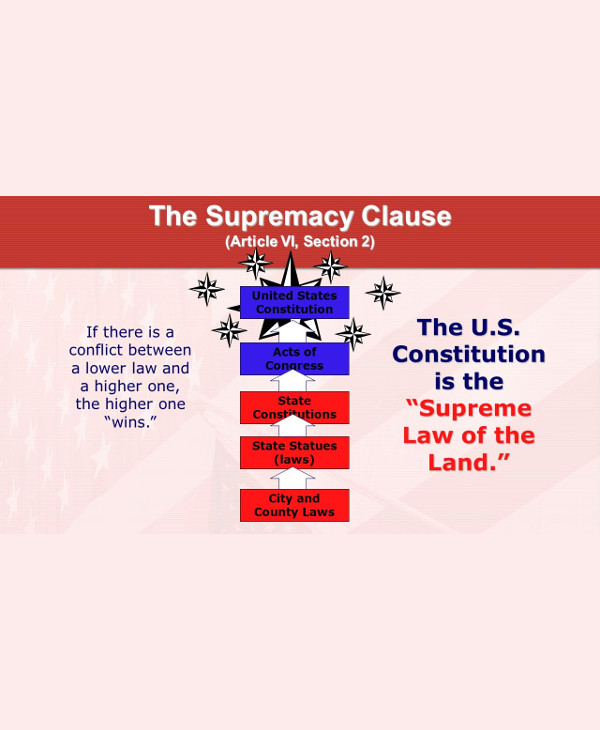
At its core, the Supremacy Clause declares that the Constitution, federal laws made pursuant to it, and treaties made under its authority, constitute the “supreme Law of the Land.” It further mandates that “the Judges in every State shall be bound thereby, any Thing in the Constitution or Laws of any State to the Contrary notwithstanding.” This concise yet potent statement establishes a clear hierarchy: federal law generally prevails over state law when there is a conflict. This principle of federal preemption is not just an abstract legal theory; it is the bedrock upon which much of the American financial system is built, ensuring a degree of uniformity and predictability that is vital for an integrated national economy.
Unpacking the Foundation: The Essence of the Supremacy Clause
To fully grasp its financial implications, we must first dissect the fundamental meaning of the Supremacy Clause. It’s more than just a tie-breaker in legal disputes; it’s a foundational declaration of federal authority that has profoundly shaped the economic landscape of the United States.
Article VI, Clause 2: The Text and Its Core Meaning
The exact wording of Article VI, Clause 2 is precise and unambiguous:
“This Constitution, and the Laws of the United States which shall be made in Pursuance thereof; and all Treaties made, or which shall be made, under the Authority of the United States, shall be the supreme Law of the Land; and the Judges in every State shall be bound thereby, any Thing in the Constitution or Laws of any State to the Contrary notwithstanding.”
This statement does several critical things. Firstly, it elevates the U.S. Constitution itself to the highest legal authority. Secondly, it extends this supremacy to federal laws that are legitimately enacted under the powers granted to the federal government by the Constitution. Thirdly, it includes treaties made by the U.S. government. Crucially, it then explicitly binds state judges, effectively making them enforcers of federal supremacy and ensuring that state laws or even state constitutions cannot contradict legitimate federal authority. The phrase “any Thing… to the Contrary notwithstanding” serves as a powerful declaration of federal dominance in areas where it has constitutional authority.
Establishing Federal Preeminence: Why it Matters for the Economy
The establishment of federal preeminence is profoundly significant for the economy. Without the Supremacy Clause, the United States would essentially function as a confederation of 50 independent economic entities, each with its own potentially conflicting laws and regulations concerning commerce, finance, and property. This would create an insurmountable barrier to interstate trade, investment, and the free flow of capital.
For businesses, a lack of federal supremacy would mean navigating a patchwork of vastly different regulations in each state—a compliance nightmare. For investors, the risk associated with conflicting state laws would deter capital allocation across state lines, fragmenting markets and increasing transaction costs. By establishing federal law as supreme, the Supremacy Clause provides a necessary degree of uniformity, predictability, and efficiency, fostering a single, large national market rather than 50 smaller, disjointed ones. This clarity is a fundamental requirement for the efficient operation of modern financial markets, enabling scaled operations, standardized financial products, and clearer regulatory oversight that benefits both consumers and corporations.
The Supremacy Clause and the Financial Landscape: Federal Authority in Action
The practical application of the Supremacy Clause is most evident in how it shapes the regulatory environment for various sectors within the “Money” sphere. It empowers federal agencies to create overarching rules that govern everything from banking to securities, ensuring consistency across the nation.
Banking and Financial Regulation: A Unified System
Perhaps nowhere is the Supremacy Clause’s impact more pronounced than in banking and financial regulation. Federal laws like the National Bank Act, the Federal Reserve Act, and more recently, the Dodd-Frank Wall Street Reform and Consumer Protection Act, establish comprehensive frameworks for financial institutions. These federal statutes and the regulations promulgated by bodies like the Federal Reserve, the Office of the Comptroller of the Currency (OCC), and the Federal Deposit Insurance Corporation (FDIC) often preempt state laws concerning bank operations, lending practices, and consumer disclosures.
For instance, a federally chartered bank operates under a single set of federal rules, regardless of which state it is physically located in. This uniform regulatory environment is crucial for large financial institutions that operate across state lines, preventing them from being subjected to 50 different sets of banking laws. This consistency reduces compliance costs, facilitates cross-state banking, and helps maintain the stability of the national financial system, which is paramount for investors and businesses alike. Without this federal supremacy, the concept of a national banking system would be untenable, replaced by localized, fragmented operations.
Securities and Investment: Protecting Markets Across States
The regulation of securities and investment markets also heavily relies on federal supremacy. The Securities Act of 1933 and the Securities Exchange Act of 1934, along with rules set by the Securities and Exchange Commission (SEC) and FINRA, govern the issuance and trading of stocks, bonds, and other financial instruments. These federal laws establish requirements for disclosure, prohibit fraud, and regulate brokers, dealers, and investment advisors on a national scale.
While states also have “blue sky” laws regulating securities, the Supremacy Clause ensures that federal securities laws take precedence, particularly in areas where Congress intended to occupy the field. This federal dominance provides investors with consistent protections, irrespective of where they buy or sell securities. It creates a standardized marketplace, crucial for attracting capital and ensuring fair trading practices across the entire country, thus fostering confidence in the national capital markets. This confidence is a cornerstone of a robust investment climate.
Taxation and Fiscal Policy: Federal Mandates and State Limitations
The Supremacy Clause also impacts taxation and fiscal policy, albeit in more nuanced ways. While states retain significant power to levy taxes, federal tax laws and constitutional limitations (which are supreme) often guide or limit state taxation powers. For example, federal laws regarding interstate commerce can limit states’ abilities to tax out-of-state businesses or activities in ways that burden national commerce.
Furthermore, federal fiscal policies, such as stimulus packages or monetary policy set by the Federal Reserve (an entity whose powers are derived from federal law), have nationwide effects that states must navigate. While states can set their own budget priorities and tax rates, they operate within an overarching federal economic framework. The Supremacy Clause ensures that federal laws governing the national debt, currency, and other macro-economic levers are respected, creating a coherent national economic strategy that states must acknowledge, even if they sometimes challenge its scope.
Business Operations and Interstate Commerce: Navigating a Complex Regulatory Environment
For businesses, the Supremacy Clause defines the playing field, clarifying which rules apply when engaging in commerce across state lines or operating in federally regulated sectors. This extends beyond purely financial institutions to nearly all enterprises.
Consumer Protection Laws: Ensuring Consistency and Trust
Federal consumer protection laws, often enforced by agencies like the Federal Trade Commission (FTC) and the Consumer Financial Protection Bureau (CFPB), frequently preempt state laws to establish a baseline of consumer rights and protections nationwide. These laws cover areas such as fair lending practices, truth in advertising, data privacy, and product safety.
For businesses, this means adhering to a set of national standards, which simplifies compliance for those operating in multiple states. For consumers, it provides a consistent level of protection, fostering trust in national brands and products. Without federal supremacy in this area, businesses would face a chaotic array of differing consumer laws, hindering their ability to scale and potentially exposing consumers to varying degrees of vulnerability based on their location.
Environmental and Labor Regulations: Impact on Business Costs and Strategy
Federal environmental laws (e.g., Clean Air Act, Clean Water Act) and labor laws (e.g., Fair Labor Standards Act, National Labor Relations Act) also demonstrate the Supremacy Clause in action. These laws set minimum national standards for pollution control, workplace safety, wages, and unionization rights. While states can enact stricter laws, they cannot pass laws that undermine or conflict with federal minimums.
This federal overlay has significant financial implications for businesses. It establishes a level playing field regarding certain operating costs related to compliance. For instance, manufacturers across the country must generally adhere to similar emissions standards, preventing states from attracting industry solely through lax environmental rules. Similarly, federal minimum wage laws provide a baseline for labor costs. Understanding these federal preemtions is crucial for financial planning, budgeting, and competitive strategy, as they define a portion of the operational expense structure.
The Digital Economy: Federal Oversight in a Borderless World
In the burgeoning digital economy, the Supremacy Clause is becoming increasingly relevant. Issues like data privacy, cybersecurity, and the regulation of online platforms often require a national approach due to the borderless nature of the internet. While states have begun to pass their own privacy laws (e.g., California Consumer Privacy Act), there is a growing push for a federal privacy standard that would preempt state laws, simplifying compliance for tech companies and providing consistent protections for users.
Federal laws regarding telecommunications, internet service providers, and digital transactions rely on the principle of federal supremacy to ensure a coherent national policy framework. This is vital for the continued growth and innovation of the digital sector, allowing businesses to operate and innovate without facing a contradictory labyrinth of state-specific digital regulations, which would inevitably stifle investment and market expansion.
Investment Implications and Risk Management: Understanding the Regulatory Advantage
For investors, comprehending the Supremacy Clause isn’t just an academic exercise; it’s a critical component of risk management and investment strategy. It helps in evaluating the regulatory environment of target industries and anticipating potential challenges.
Stability and Predictability for Investors
The most significant benefit of the Supremacy Clause for investors is the stability and predictability it introduces into the regulatory environment. Knowing that federal law generally overrides conflicting state laws reduces regulatory uncertainty, which is a major factor in investment risk. Investors can more confidently assess the legal and compliance burdens on companies, particularly those operating nationally or across multiple states. This clarity allows for more accurate valuation models and a reduction in the “regulatory unknown” premium that would otherwise be priced into assets.
Mitigating State-Level Regulatory Arbitrage
While the Supremacy Clause aims for uniformity, it doesn’t eliminate all regulatory differences. States can often enact stricter laws than federal minimums, but they cannot undercut federal authority. For investors, this means that while companies may face varying levels of state-specific regulation (e.g., stricter environmental rules in one state than another), the fundamental federal framework provides a consistent baseline. This mitigates the risk of companies relocating solely to exploit significantly weaker state regulations—a practice known as regulatory arbitrage—that could otherwise destabilize markets and create uneven playing fields.
Anticipating Future Regulatory Shifts
Understanding the Supremacy Clause also helps investors anticipate future regulatory shifts. When there is a push for new federal legislation in an industry, investors can often foresee how such laws, if enacted, would likely preempt existing state laws, creating new opportunities or challenges. For example, discussions around federal cannabis regulation, despite state-level legalization, directly invoke the Supremacy Clause and its potential to reshape an entire industry, presenting both immense risk and opportunity for investors. Similarly, federal efforts to harmonize privacy or AI regulations would create significant impacts on tech investments.

Conclusion: The Enduring Financial Impact of Federal Supremacy
The Supremacy Clause of the U.S. Constitution is far more than a dry legal concept; it is an economic powerhouse that underpins the integrated national market of the United States. By establishing a clear hierarchy of laws, it provides the essential framework for a unified financial system, consistent business operations, and a relatively predictable investment climate. From banking and securities regulation to consumer protection and environmental standards, the principle of federal supremacy ensures that federal authority can prevail, fostering a national economy that benefits from uniformity and avoids the chaos of conflicting state-by-state mandates.
For individuals, businesses, and investors, appreciating what the Supremacy Clause states and its profound implications for the regulatory landscape is not merely a matter of civic knowledge, but a practical necessity for sound financial decision-making, effective risk management, and successful navigation of the American economic system. It clarifies the rules of engagement, defines the boundaries of regulatory authority, and ultimately, shapes the very structure of wealth creation and preservation in the United States.
aViewFromTheCave is a participant in the Amazon Services LLC Associates Program, an affiliate advertising program designed to provide a means for sites to earn advertising fees by advertising and linking to Amazon.com. Amazon, the Amazon logo, AmazonSupply, and the AmazonSupply logo are trademarks of Amazon.com, Inc. or its affiliates. As an Amazon Associate we earn affiliate commissions from qualifying purchases.