
In the rapidly evolving landscape of digital communication, language moves at the speed of a fiber-optic connection. For those navigating modern social media platforms, software interfaces, or instant messaging apps, encountering unfamiliar acronyms is a daily occurrence. One of the most prominent—and confusing—terms currently circulating is “ASL.” While it may seem like a simple three-letter sequence, its meaning has undergone a significant technological and cultural transformation.
To understand what “ASL” means today, one must look through the lens of technology: how platforms shape our speech, how algorithms accelerate the adoption of new terms, and how the legacy of the early internet continues to clash with the “Gen Z” digital vernacular. This exploration dives into the dual meanings of ASL, the technical drivers behind its resurgence, and what it signals about the future of digital interaction.

The Evolution of “ASL”: From IRC Rooms to TikTok Trends
Language in the tech space is rarely static. It adapts to the hardware we use and the platforms where we spend our time. “ASL” is a prime example of a term that has lived two distinct lives, separated by decades of technological advancement.
The Legacy Definition: Age, Sex, Location
In the early days of the internet—the era of IRC (Internet Relay Chat), AOL Instant Messenger (AIM), and ICQ—”ASL” was a foundational technical shorthand. During this period, digital anonymity was the standard. Profiles were minimal, and high-speed video sharing was non-existent. When two users connected in a chat room, “ASL?” was the standard protocol for establishing a baseline identity.
It stood for “Age, Sex, Location.” From a technical standpoint, this was a manual form of metadata exchange. Users needed to know who they were talking to because the software didn’t yet provide rich profile data or verified identities. It was a utilitarian tool of the early social web, used to filter social interactions in a text-only environment.
The Modern Pivot: “As Hell” and Phonetic Compression
Fast forward to the 2020s, and the acronym has seen a massive resurgence, particularly on platforms like TikTok, Twitter (X), and Instagram. However, the meaning has shifted entirely. In modern digital slang, “ASL” is used as a phonetic shorthand for the phrase “as hell.”
For example, a user might comment “that’s crazy asl” or “I’m hungry asl.” Technically, this is an example of phonetic compression. In the high-velocity environment of mobile-first social media, users prioritize speed and character efficiency. The transition from the three-syllable “as hell” to the quick-tap “asl” mirrors how mobile keyboards and predictive text influence our linguistic choices. It is no longer a question; it is an intensifier.
The Role of Social Media Algorithms in Reshaping Language
The shift in meaning for “ASL” didn’t happen in a vacuum. It was facilitated by the technical architecture of modern social platforms. Understanding how slang proliferates requires an understanding of how these apps are built.
TikTok’s Influence on Slang Dissemination
TikTok’s “For You” Page (FYP) algorithm is perhaps the most powerful linguistic engine in history. Unlike older social networks that relied on established “friend” graphs, TikTok uses an interest-based graph. This means that a specific piece of slang used in a niche subculture can be catapulted to millions of users in a matter of hours.
When creators use “asl” (meaning “as hell”) in captions or text-on-screen overlays, the algorithm tracks engagement. If the term resonates, the algorithm pushes that content to more users, who then adopt the term to remain relevant within the platform’s culture. This “algorithmic mirroring” ensures that tech-driven slang spreads faster than traditional regional dialects ever could.
Character Limits and the Push for Brevity
The technical constraints of digital platforms have always dictated how we speak. Just as Twitter’s original 140-character limit gave birth to “u” instead of “you,” the UI (User Interface) of modern apps encourages brevity. On platforms like Snapchat or Instagram Stories, where text often overlays a visual image, space is at a premium.
Using “ASL” instead of “as hell” saves space, allowing the visual content to remain the focus while still conveying the necessary emotional intensity. The tech environment rewards users who can communicate complex sentiments with the fewest possible keystrokes.
Decoding “ASL” in Modern Interface Interactions
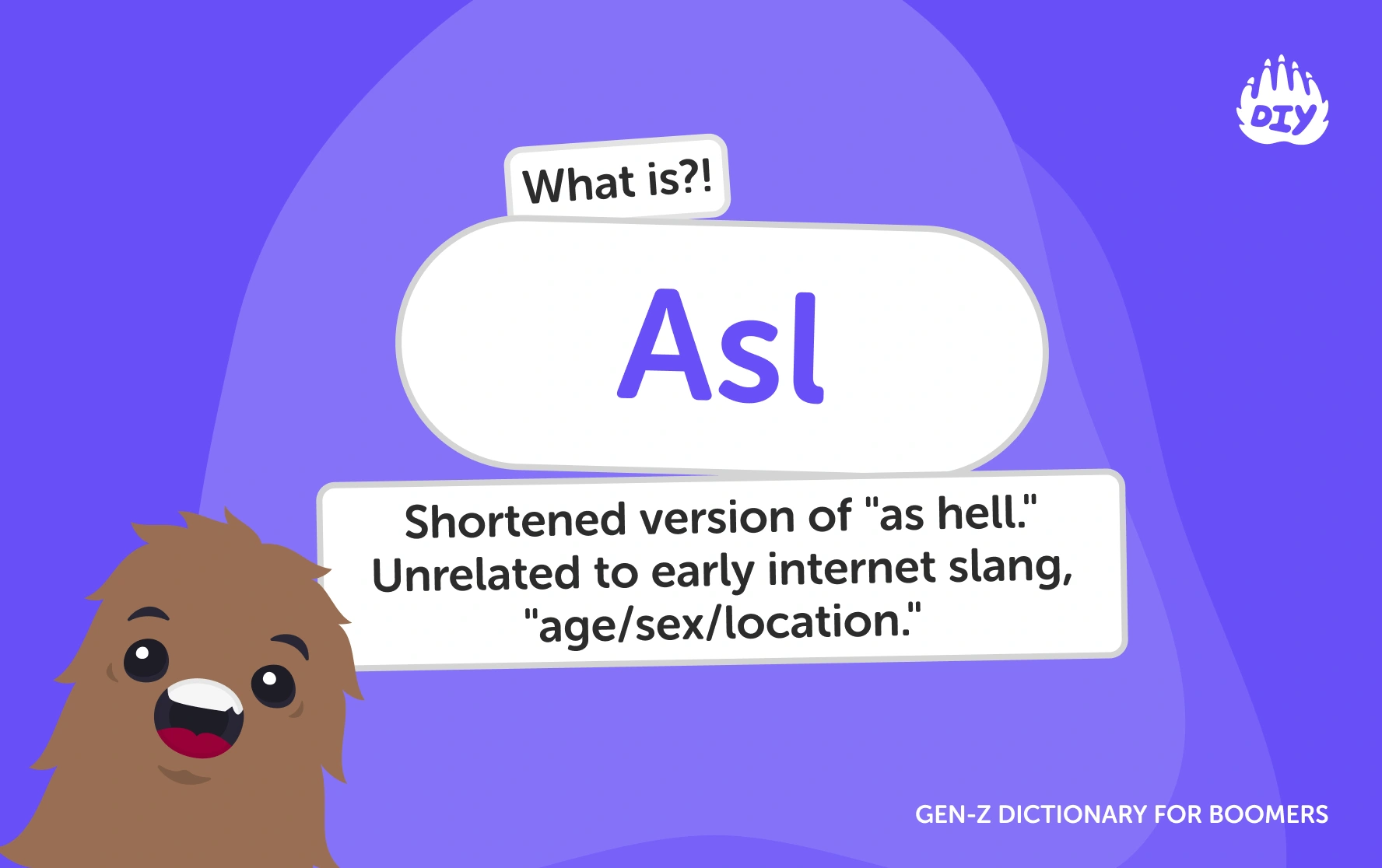
As we move toward more integrated digital experiences, the context in which we see “ASL” determines its technical meaning. Distinguishing between the two is vital for developers, moderators, and users alike.
Intentionality in Digital Messaging
In a direct messaging (DM) environment, the use of “ASL” can be a “vibe check.” If a user receives a message that says “ASL?” (with a question mark), it is almost certainly the legacy “Age, Sex, Location.” This is often a red flag in modern cybersecurity, as it mimics the behavior of “bots” or bad actors attempting to scrape personal identifiable information (PII).
Conversely, in a public comment section, “asl” (usually lowercase) functions as an adverb. Understanding this distinction is a matter of “contextual processing.” For users, navigating these two definitions requires an understanding of digital social cues. For platform developers, it represents a significant hurdle in automated content moderation.
Contextual Clues in App Ecosystems
The platform itself often dictates the meaning. On LinkedIn, a professional networking tool, you are unlikely to see “asl” used as slang. On Discord, a platform rooted in gaming culture, you might see both versions. The tech ecosystem acts as a filter. Modern users must be “platform-literate,” shifting their linguistic interpretation based on which app icon they tapped on their home screen.
The Technical Impact of Slang on Natural Language Processing (NLP)
One of the most fascinating tech-centric aspects of the “ASL” evolution is how it affects Artificial Intelligence and Machine Learning.
How AI Models Interpret Vernacular
Natural Language Processing (NLP) models, such as those powering ChatGPT or Google’s Gemini, must be constantly updated to understand shifting slang. If an AI interprets “I’m tired asl” using the 1990s definition, the sentiment analysis would fail. It would look for a location rather than recognizing the user’s level of exhaustion.
Engineers training these models must use diverse datasets that include “Internet Vernacular English.” This ensures that AI-driven customer service bots or sentiment analysis tools for brands can accurately parse what a user is saying. The “ASL” shift highlights the “temporal decay” of training data—what was true in a dataset from 2010 may be obsolete in 2024.
The Challenge of Semantic Shifts
The “ASL” phenomenon is what linguists and data scientists call a “semantic shift.” In the tech world, this creates challenges for search engine optimization (SEO) and hash-tagging. If a brand wants to target content to people who are “excited asl,” they must understand that they are entering a different digital space than someone looking for “American Sign Language” (another common “ASL” acronym). The technical challenge lies in disambiguation—using machine learning to determine which “ASL” the user is referring to based on the surrounding text.
Digital Etiquette and Security: Why “ASL” Still Matters
Finally, we must consider the implications of “ASL” regarding digital security and the health of the tech ecosystem.
Privacy Concerns with the Legacy Definition
In the context of digital security, the old-school “Age, Sex, Location” request is often viewed as a precursor to “social engineering” or “doxing.” Modern apps are designed to protect this data through privacy settings and encrypted profiles. When a user asks “ASL?” they are bypassing these technical safeguards to solicit private data directly. Tech-savvy users recognize this as a potential security risk, highlighting the importance of digital literacy in the modern era.
Managing Digital Footprints in Niche Communities
As slang like “asl” becomes part of a user’s digital footprint, it also plays a role in how they are perceived by algorithms. Engaging with specific slang can categorize a user into certain demographic clusters (e.g., “Gen Z,” “Interested in Urban Culture,” “High Social Media Usage”). This metadata is used by tech companies to serve targeted ads. Even a small piece of slang is a data point that contributes to a user’s overall digital profile.

Conclusion: The Language of the Future
The question “what does the slang asl mean?” reveals a much deeper story about how technology and human communication intersect. It is a story of how a term can travel from the rudimentary chat rooms of the 90s to the algorithmic powerhouses of the 2020s, changing its meaning entirely to fit the needs of a mobile-first, high-speed world.
Whether it is being used as a legacy tool for identity, a modern intensifier for expression, or a challenge for AI developers, “ASL” proves that in the tech world, brevity is king. As our devices continue to evolve, so too will our language, creating an ever-shifting landscape where staying “plugged in” means more than just having a Wi-Fi connection—it means understanding the code behind the conversation.
aViewFromTheCave is a participant in the Amazon Services LLC Associates Program, an affiliate advertising program designed to provide a means for sites to earn advertising fees by advertising and linking to Amazon.com. Amazon, the Amazon logo, AmazonSupply, and the AmazonSupply logo are trademarks of Amazon.com, Inc. or its affiliates. As an Amazon Associate we earn affiliate commissions from qualifying purchases.