
The Red-Headed Woodpecker (Melanerpes erythrocephalus) is often considered one of the most visually striking birds in North America. Beyond its vibrant crimson head and stark black-and-white wings, it is defined by a highly adaptive and opportunistic feeding strategy. Unlike many of its cousins that specialize in drilling deep into tree bark for wood-boring larvae, the Red-Headed Woodpecker is an omnivorous generalist. This dietary flexibility is its greatest evolutionary asset, allowing it to navigate fluctuating seasonal food sources across diverse habitats ranging from open woodlands and orchards to suburban parks.
The Omnivorous Diet: Balancing Insects and Vegetation
To understand the Red-Headed Woodpecker, one must look at the bird not merely as a wood-borer, but as a master harvester. Its diet is remarkably balanced, fluctuating significantly throughout the year based on environmental availability.
Insectivorous Hunting Strategies
During the late spring and summer months, the Red-Headed Woodpecker shifts its primary focus to protein-rich insects. Unlike other woodpeckers that spend the majority of their time hitching up tree trunks, this species is an agile “flycatcher.” It often perches on dead snags or fence posts, acting like a phoebe or a kingbird, watching for movement in the air or on the ground.
Once prey is spotted—be it a beetle, grasshopper, ant, or cricket—the bird launches itself into a rapid, undulating flight to capture the insect mid-air or snatch it from the foliage. This aerial dexterity is a distinct departure from the behavior of the Downy or Hairy woodpecker. They also actively forage on the ground, a behavior that puts them at higher risk of predation but provides access to a wealth of ground-dwelling insects like crickets and spiders.
The Role of Mast and Fruits
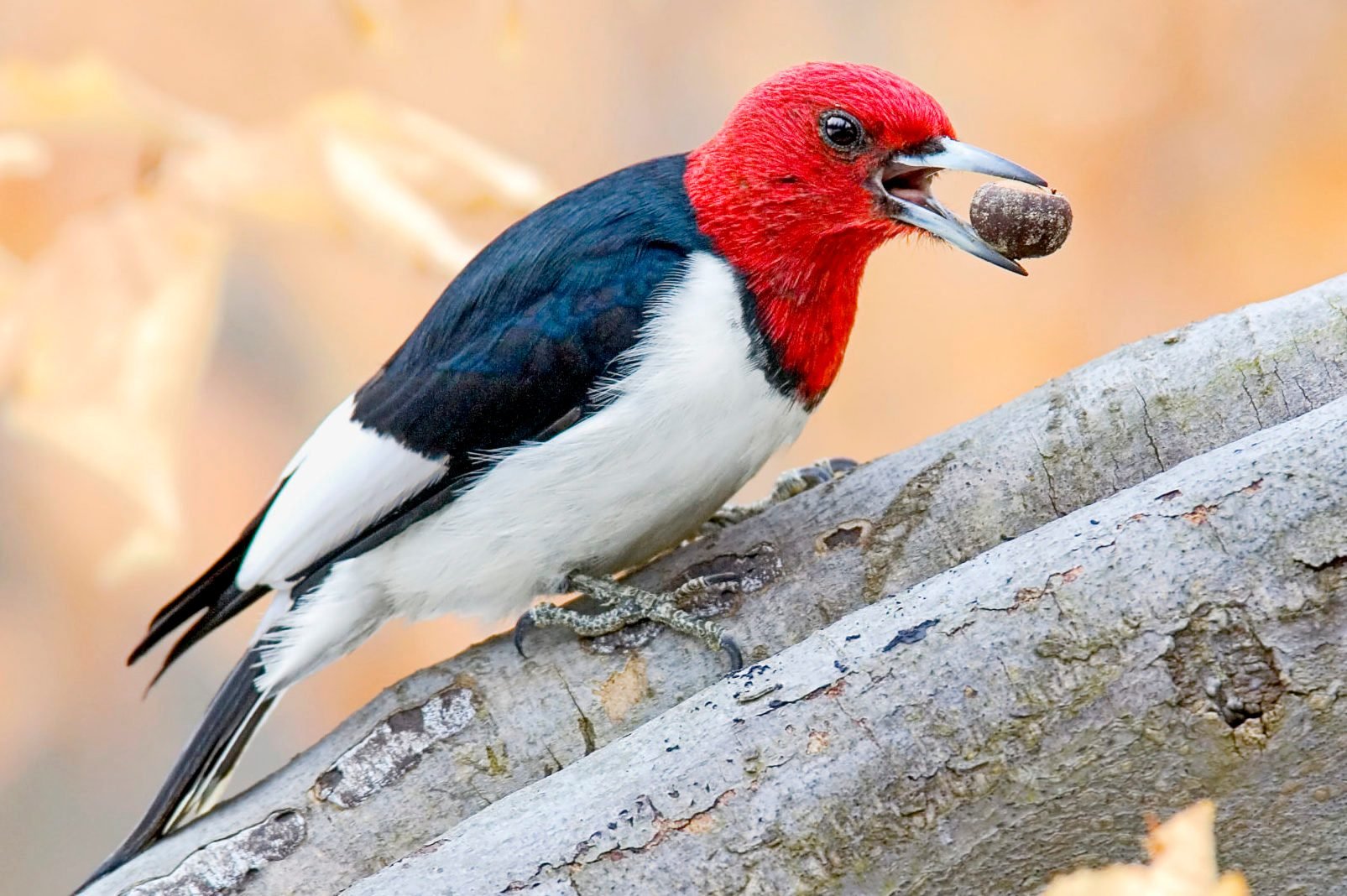
As autumn approaches and insect populations dwindle, the Red-Headed Woodpecker undergoes a fundamental shift in behavior. It transitions from an insectivore to a frugivore and granivore. During this phase, its diet is dominated by “mast”—the collective term for nuts and seeds produced by trees. Acorns, beechnuts, and hazelnuts become the backbone of their caloric intake. They are particularly fond of oak trees, as the high fat and protein content in acorns provides the essential energy needed for winter survival.
In addition to nuts, they feast on seasonal fruits and berries. Wild cherries, grapes, blackberries, and elderberries are frequent targets. They are also known to raid orchards, much to the chagrin of farmers, as they are particularly adept at consuming apples and pears when the fruit begins to ripen or fall to the ground.
The Art of Storing and Caching: A Survival Mechanism
Perhaps the most fascinating aspect of the Red-Headed Woodpecker’s feeding ecology is its sophisticated approach to food storage. While many birds cache food, few do so with the foresight and organizational complexity of the Red-Headed Woodpecker.
Creating “Larders” in Dead Wood
When food is abundant, this bird does not simply stop eating; it begins to build a pantry. Red-Headed Woodpeckers are known to wedge food items—typically acorns or large insects—into crevices in tree bark, fence posts, or even holes in telephone poles. What sets them apart is their dedication to security; they often cover these cached items with bark or wood splinters to hide them from potential thieves like Blue Jays or squirrels.

This behavior, known as hoarding, ensures that the bird has a reliable supply of sustenance during the lean winter months when insects are dormant and fresh fruit is non-existent. The energy stored in a single large acorn is significant, and by maintaining multiple “larders” throughout their territory, they minimize the need to travel long distances during harsh weather.
Defensive Feeding Behaviors
Because they invest so much energy into hoarding, Red-Headed Woodpeckers are fiercely territorial. They do not just defend their nesting cavity; they defend their food stores. You will frequently see these birds aggressively chasing off rivals or even larger birds that dare to approach their cache sites. This territoriality is essential; if a cache were raided, the bird’s chances of surviving until the following spring would be severely diminished.
Environmental Adaptability and Human Interaction
The diet of the Red-Headed Woodpecker is an excellent indicator of its adaptability, yet it also highlights the species’ vulnerability to habitat loss. As humans modify the landscape, the bird’s feeding habits often bring it into direct contact with human infrastructure.
Impacts on Suburban and Agricultural Landscapes
In suburban areas, Red-Headed Woodpeckers are frequent visitors to bird feeders. They are particularly attracted to suet, which provides a concentrated source of fat that mimics the nutrient profile of the insects and high-fat seeds they naturally consume. They are also drawn to peanut feeders and sunflower seeds. While this helps them survive in fragmented habitats, it also exposes them to increased risks, such as collisions with windows and domestic cat predation.
In agricultural settings, their love for corn can lead to conflict. They are known to feed on corn in the “milk” stage, which can occasionally lead to crop damage. However, these negative interactions are often outweighed by the benefits the bird provides to the ecosystem. By consuming large quantities of insects, including those that are considered pests to forests and crops, they play an essential role in natural pest control.
The Conservation Context
The reliance on dead wood—both for nesting and for creating food caches—makes the Red-Headed Woodpecker highly dependent on “snags” or standing dead trees. Modern forestry practices, which emphasize the removal of dead or dying trees to reduce fire risk or improve “neatness,” have inadvertently contributed to the decline of this species.
When a forest is cleared of its dead wood, the Red-Headed Woodpecker loses more than just a home; it loses its pantry. Without the crevices and cavities required to store acorns and insects, the birds cannot survive the winter. Conservation efforts focused on this species emphasize the “leave the snag” philosophy, encouraging landowners to keep dead trees standing in areas where they do not pose a safety risk. By preserving these natural feeding stations, we protect not just the bird, but the intricate food web they help maintain.
Understanding the Nutritional Cycle
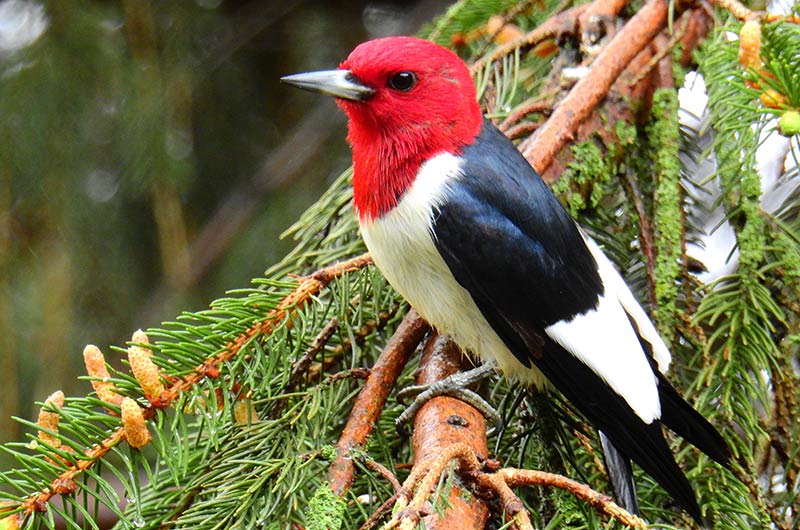
To summarize the Red-Headed Woodpecker’s diet, one must view it as a seasonal cycle of nutrient acquisition. Their physiology is tuned to capitalize on whatever is most energy-dense at a given time of year.
- Spring (The Protein Surge): Primarily insects, focused on reproduction and refueling after winter.
- Summer (The Opportunistic Phase): A mix of flying insects and early-season fruits.
- Autumn (The Storage Phase): High-fat nuts and berries, with intense effort put into cache creation.
- Winter (The Maintenance Phase): Relying almost exclusively on stored caches and occasional opportunistic scavenging.
By mastering these four stages, the Red-Headed Woodpecker maintains a level of resilience that allows it to thrive in environments that would be inhospitable to more specialized feeders. Whether they are snatching a beetle from mid-air or hammering a piece of corn into a telephone pole, their behavior is a testament to the versatility required to survive in an ever-changing natural world. Through the lens of their diet, we gain a deeper appreciation for the ecological connectivity between the trees, the insects, and the colorful sentinel of the forest canopy.
aViewFromTheCave is a participant in the Amazon Services LLC Associates Program, an affiliate advertising program designed to provide a means for sites to earn advertising fees by advertising and linking to Amazon.com. Amazon, the Amazon logo, AmazonSupply, and the AmazonSupply logo are trademarks of Amazon.com, Inc. or its affiliates. As an Amazon Associate we earn affiliate commissions from qualifying purchases.