
In the ever-evolving landscape of digital communication, emojis have transcended their initial playful purpose to become integral components of how we express ourselves online. They inject nuance, emotion, and shorthand into text-based interactions, bridging the gap between spoken and written word. Among the vast lexicon of these digital pictograms, some emerge with a peculiar ambiguity, sparking curiosity and often, confusion. One such emoji is the “question mark in box” symbol, officially known as the “Squared CJK Unified Ideograph-7D75” or, more commonly, the “replacement character.” While it might appear as a simple graphical glitch, its presence in our digital conversations, particularly within the tech sphere, is far from accidental and carries significant implications for understanding the flow of information and the underlying technologies that enable our communication.
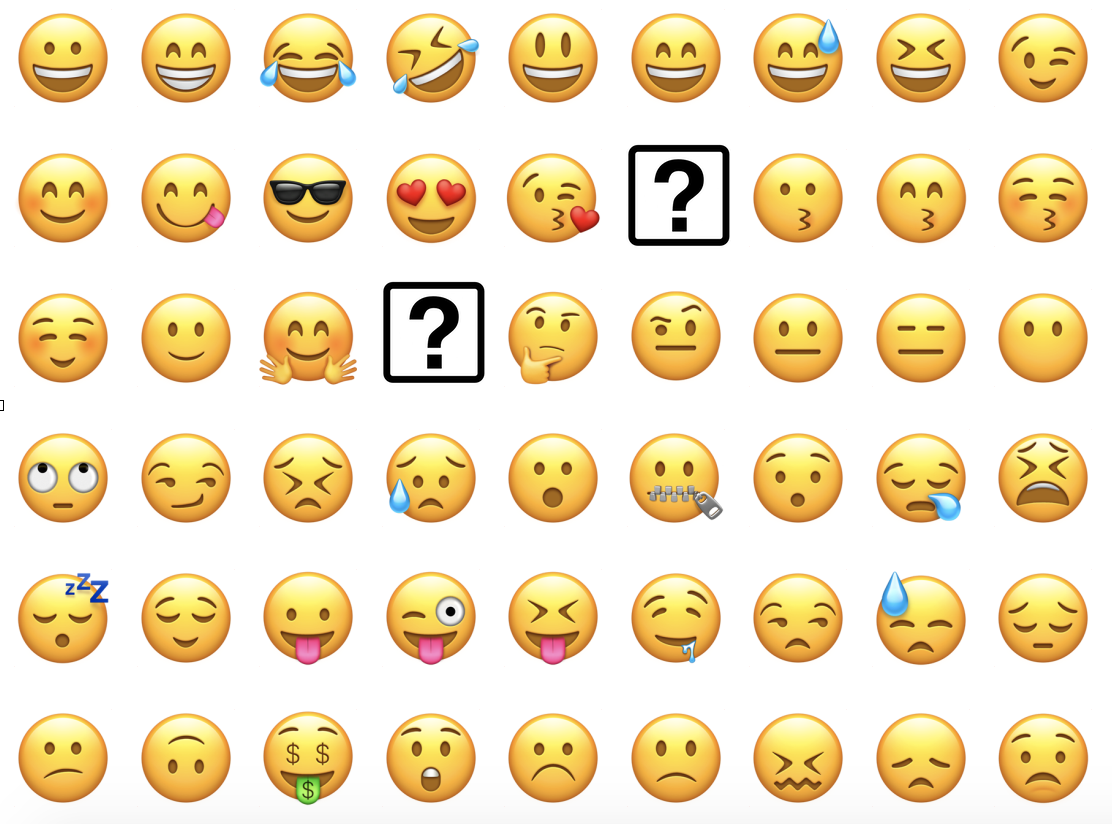
This emoji, often rendered as a hollow square box with a question mark inside (□ or ❓), isn’t a spontaneous creation of emoji designers. Instead, it’s a technical indicator, a digital placeholder that arises when systems encounter characters or data they cannot process or display correctly. Understanding its meaning requires a dive into the fundamental mechanisms of digital text encoding and transmission, a core concern within the realm of technology.
The Technical Underpinnings: Encoding, Decoding, and the Glyph Gap
The question mark in a box emoji is a symptom of a deeper technical issue: the inability of a device, software, or platform to render a specific character from a given encoding standard. To truly grasp its significance, we must first understand how text is represented digitally.
Character Encoding: The Language of Computers
Computers don’t inherently understand letters, symbols, or emojis. They operate on binary code – sequences of 0s and 1s. To display human-readable text, these characters must be translated into a numerical representation that computers can process. This translation is achieved through character encoding standards.
Early encoding systems, like ASCII (American Standard Code for Information Interchange), were limited in scope, primarily supporting English characters, numbers, and basic punctuation. As the world became more interconnected and digital communication expanded globally, the need for a more comprehensive encoding system became apparent. This led to the development of Unicode.
Unicode is a universal character set designed to represent every character from every writing system in the world, along with a vast array of symbols, emojis, and dingbats. Each character in Unicode is assigned a unique number called a code point. For instance, the letter ‘A’ has a code point of U+0041. Emojis also have their own unique code points, such as the smiling face with smiling eyes emoji ( ) which is U+1F60A.
The Role of Glyphs and Fonts
Once a character is represented by its code point, it needs to be visually displayed. This is where fonts come into play. A font is a collection of glyphs, which are the visual representations of characters. When you type text, your operating system and applications look up the corresponding glyphs for the characters’ code points in the currently active font.
If a system encounters a Unicode code point for which it does not have a corresponding glyph in its available fonts, it cannot display the character. This is where the question mark in a box emoji emerges as a fallback mechanism. Instead of displaying a blank space or causing a system crash, the software substitutes the unknown or unrenderable character with a placeholder that visually signifies an error in rendering. The most common placeholder is the replacement character, often depicted as a question mark within a box.
Transmission Errors and Compatibility Issues
The question mark in a box emoji can manifest for several reasons, primarily related to compatibility and data integrity during transmission or storage.
Inconsistent Encoding Standards
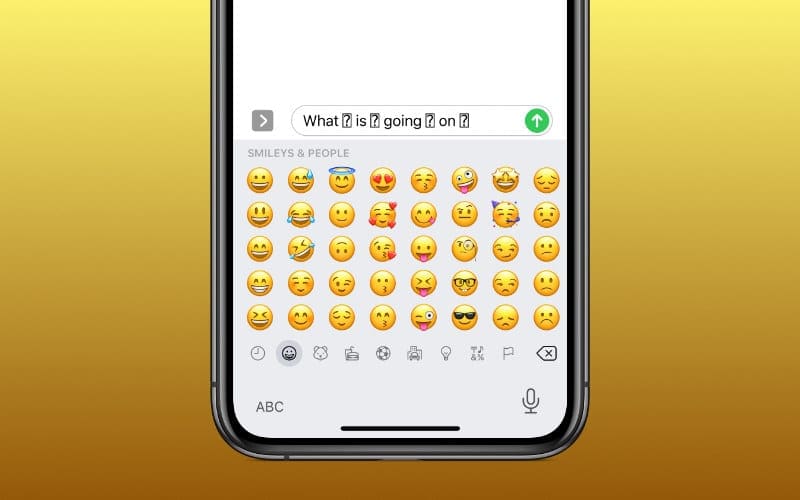
One of the most common culprits is the use of different encoding standards across devices and platforms. Imagine sending a message from a device using a newer, more comprehensive encoding that includes a specific emoji, to a device that is running older software or using a limited character set that doesn’t recognize that particular Unicode code point. The older system, unable to interpret the code point, will display the replacement character.
This is particularly prevalent when dealing with older operating systems, web browsers, or legacy applications that haven’t been updated to support the latest Unicode versions. The emoji might be perfectly valid in the sender’s environment, but the recipient’s system simply doesn’t have the “vocabulary” to understand it.
Missing or Corrupted Font Files
Even if a device correctly interprets the Unicode code point, it still needs a font that contains the visual representation (glyph) for that character. If the system is missing the necessary font file, or if the font file is corrupted, it won’t be able to display the emoji. Again, the replacement character serves as an indicator of this missing visual element. This can happen if a font is not properly installed, or if a website fails to load all its required font assets.
Data Corruption During Transmission
In some instances, the question mark in a box can indicate actual data corruption during the transmission of information. While less common with modern, robust internet protocols, if data packets are mishandled or if there are errors in the data stream, the Unicode code point representing an emoji could be altered or lost. When the receiving system attempts to decode this corrupted data, it may encounter an invalid sequence, leading to the display of the replacement character.
Decoding the Digital Silence: Why It Matters in Tech
The appearance of the question mark in a box emoji, while seemingly a minor annoyance, holds significant weight within the technology sector. It serves as a diagnostic tool and a reminder of the complexities inherent in digital communication.

A Signal of Digital Disconnect
For developers, system administrators, and anyone involved in the infrastructure of digital communication, the replacement character is a clear signal that something is amiss. It points to a breakdown in the expected chain of command for data processing and display. It can indicate:
- Software Outdatedness: A prevalence of this emoji might suggest that a particular platform or application is not keeping pace with current Unicode standards, leading to a poor user experience for those attempting to use modern communication features.
- Platform Incompatibility: It highlights the challenges of ensuring seamless communication across a diverse ecosystem of devices, operating systems, and software versions.
- Encoding Misconfigurations: In server environments or during data migration, incorrect encoding settings can lead to character display issues that manifest as the replacement character.
User Experience and Accessibility Challenges
From a user’s perspective, the question mark in a box emoji is a frustrating experience. It disrupts the intended message, creating confusion and hindering effective communication.
- Loss of Nuance: Emojis are often used to convey tone, emotion, or specific meanings that text alone might struggle to capture. When an emoji is replaced by a placeholder, this nuance is lost, potentially leading to misunderstandings or a feeling of detachment.
- Accessibility Barriers: For users with visual impairments who rely on screen readers, the replacement character might be announced in a way that is unhelpful or even misleading, further exacerbating accessibility issues. While screen readers are often programmed to announce emojis with descriptive text, encountering a replacement character can lead to a generic or nonsensical output.
Implications for Developers and Designers
For those building and maintaining digital platforms, the question mark in a box emoji is a constant reminder of the importance of robust character handling.
- Prioritizing Unicode Support: It underscores the necessity of ensuring that applications and systems are built with comprehensive Unicode support from the ground up. This includes using modern encoding standards like UTF-8 consistently.
- Font Management: Developers need to be mindful of font availability and ensure that the necessary fonts for displaying a wide range of characters, including emojis, are either bundled with the application or properly linked.
- Error Handling and Fallbacks: While the replacement character is itself a fallback, developers must implement intelligent error handling to gracefully manage situations where characters cannot be displayed. This might involve providing alternative text descriptions or informing the user about the rendering issue.
Navigating the Emoji Landscape: Best Practices and Solutions
The question mark in a box emoji, while indicative of technical challenges, also presents an opportunity to reinforce best practices in digital communication and technology development.
Embracing UTF-8: The Universal Standard
The most fundamental solution to prevent the appearance of the replacement character is the widespread adoption and correct implementation of UTF-8 encoding. UTF-8 is a variable-width character encoding that can represent every character in the Unicode standard. It is backward compatible with ASCII and is the de facto standard for text on the internet and in most modern computing systems.
Developers and system administrators should:
- Enforce UTF-8: Ensure all systems, databases, APIs, and communication protocols are configured to use UTF-8 encoding by default.
- Validate Input and Output: Implement checks to ensure that data is being transmitted and stored in UTF-8 format, and that any conversion processes maintain data integrity.
Keeping Software and Fonts Updated
Regularly updating operating systems, web browsers, applications, and fonts is crucial for ensuring compatibility with the latest Unicode standards and character sets.
- User Education: Educate users about the importance of keeping their software up-to-date to avoid encountering rendering issues.
- Platform Maintenance: For developers and businesses, this means consistent maintenance and updates for all software deployed, whether on servers or client devices.
Graceful Degradation and User Feedback
When an emoji or character cannot be rendered, the system should ideally degrade gracefully rather than displaying a confusing placeholder.
- Providing Alternative Text: For emojis, this could mean providing descriptive alt text that is displayed or read by assistive technologies when the emoji itself cannot be rendered.
- User Notifications: In some scenarios, it might be beneficial to inform the user that a particular character or emoji could not be displayed, perhaps with a suggestion to update their software. This provides valuable feedback about potential compatibility issues.
- Testing Across Platforms: Thoroughly test applications and websites across a variety of devices, operating systems, and browser versions to identify and resolve character rendering issues before they impact users.
The Future of Digital Symbolism
The question mark in a box emoji, or the replacement character, serves as a silent but potent reminder of the intricate technological infrastructure that underpins our seemingly simple digital interactions. As technology advances and our digital vocabulary, including emojis, continues to expand, the need for robust, universally compatible encoding standards and well-maintained software ecosystems becomes even more paramount. It’s a testament to the ongoing effort in the tech world to create a truly global and seamless communication experience, where every symbol, every character, and every emoji can be understood and appreciated in its intended form. By understanding the technical roots of this digital enigma, we gain a deeper appreciation for the unseen complexities that allow us to connect and communicate in the modern age.
aViewFromTheCave is a participant in the Amazon Services LLC Associates Program, an affiliate advertising program designed to provide a means for sites to earn advertising fees by advertising and linking to Amazon.com. Amazon, the Amazon logo, AmazonSupply, and the AmazonSupply logo are trademarks of Amazon.com, Inc. or its affiliates. As an Amazon Associate we earn affiliate commissions from qualifying purchases.