
For decades, the “number” in a bra size has been viewed through the lens of traditional tailoring—a simple tape measurement representing the ribcage circumference. However, in the contemporary era of e-commerce and precision engineering, that number has evolved into a critical data point within a complex technological ecosystem. As the fashion industry undergoes a massive digital transformation, the way we interpret sizing is shifting from manual measurement to algorithmic prediction.
The “number” is no longer just a physical dimension; it is a coordinate in a multi-dimensional space defined by fit-tech, machine learning, and computer vision. Understanding what this number means in today’s market requires a deep dive into how technology is bridging the gap between human anatomy and industrial manufacturing.

The Legacy Data: How Digital Transformation is Redefining Traditional Sizing
To understand the digital future of sizing, one must first understand the data architecture of the past. Traditionally, the number in a bra size—such as 32, 34, or 36—referred to the underbust measurement in inches, often with an arbitrary constant added to it (the “plus-four” method). This legacy system was designed for a world of static manufacturing and physical storefronts.
From Manual Measurement to Data Points
In the modern tech-driven retail environment, this number is being treated as a “seed value” for recommendation engines. When a user enters their number into a sizing app, the software doesn’t just look at the integer; it compares that value against a massive database of verified fit profiles. Companies are now utilizing Big Data to identify “statistical twins”—users with similar measurements whose purchasing behavior and return rates provide a predictive model for what will actually fit.
The transition from a manual measurement to a digital data point allows for “Dynamic Sizing.” Tech platforms like True Fit or Fit Analytics aggregate data from millions of transactions. They recognize that a “34” in one brand’s manufacturing specifications may vary by as much as 1.5 inches from another brand’s “34” due to fabric elasticity and machine calibration. The number, therefore, serves as the primary key in a relational database that correlates brand-specific manufacturing tolerances.
The Statistical Variance Problem in Global Standards
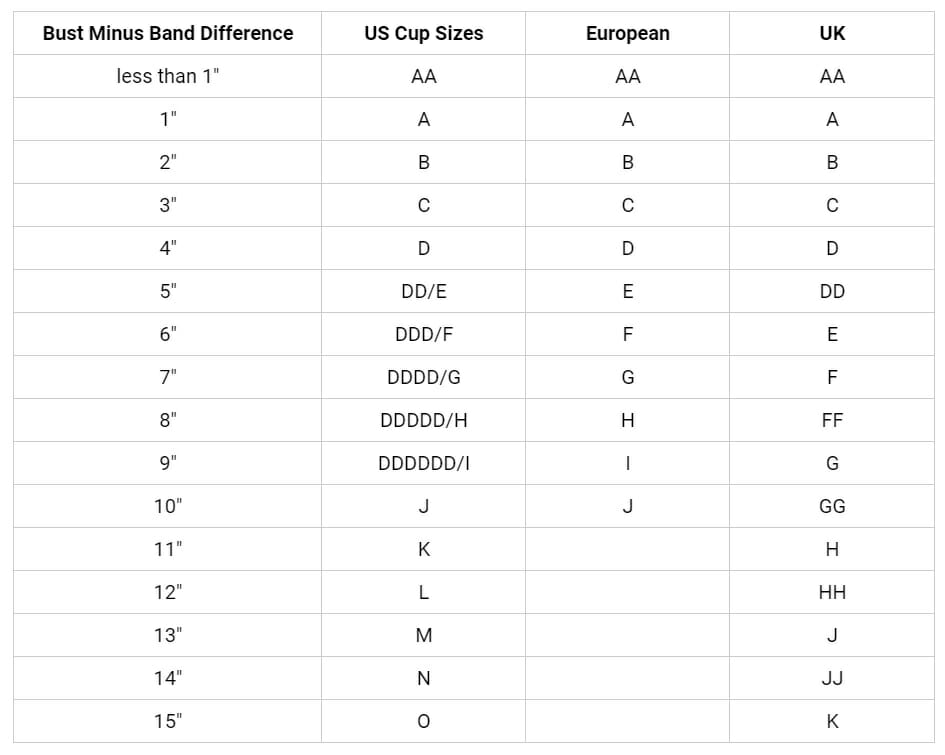
One of the greatest challenges in garment technology is the lack of a globalized digital standard. A number 75 in European sizing (centimeters) does not always align perfectly with a 34 in US/UK sizing (inches) when processed through automated inventory systems.
Tech startups are solving this through “Standardization Algorithms.” These tools act as a translation layer, normalizing disparate sizing data into a universal fit metric. By analyzing the “Digital Silhouette” of a consumer, software can bypass the numerical label entirely, focusing instead on volumetric data and pressure-mapping simulations.
The Architecture of an Algorithm: How Apps Calculate the “Perfect Number”
When a consumer interacts with a modern “Fit Finder” tool, a sophisticated sequence of calculations occurs in the background. The number is no longer a static input; it is a variable in a machine-learning model.
Machine Learning and Body Scanning Integration
The most advanced tech in the intimate apparel space involves 3D body scanning. Using LIDAR (Light Detection and Ranging) sensors found in modern smartphones, or specialized in-store kiosks, technology can now capture thousands of data points on the human torso.
In this context, the “number” in the bra size is derived from a 3D point cloud. The software calculates the circumference of the inframammary fold and the apex of the bust with sub-millimeter precision. This data is then fed into a neural network trained on thousands of body types. The AI doesn’t just ask “What is the number?” but rather “How does this volume behave under different levels of fabric tension?” This move toward “Volumetric Sizing” represents a significant leap over the one-dimensional measurements of the 20th century.
Predictive Modeling Based on Consumer Feedback Loops
The “meaning” of the size number is also being refined by Natural Language Processing (NLP) and sentiment analysis. When customers leave reviews stating a garment “runs small” or “the band is tight,” AI agents crawl this unstructured data to adjust the “Virtual Fit” of the product.
If the algorithm detects a high return rate for a specific size number within a specific product line, it automatically recalibrates the sizing recommendation for future users. For example, if a user inputs “36,” but the data suggests that 85% of similar users found the 36 too loose in a specific lace construction, the AI will recommend a 34. Here, the number is a fluid recommendation based on real-time consumer telemetry.
E-Commerce Personalization: The Tech Behind the Virtual Fit Room
The rise of the “Virtual Fit Room” has turned the numerical bra size into a tool for reducing the “Return Culture” that plagues e-commerce. In traditional retail, the cost of an incorrect size is high; in digital retail, it is a logistical nightmare and a sustainability crisis.
Computer Vision and Smartphone-Based Measurement
Companies like 3DLOOK and Bold Metrics are at the forefront of using computer vision to decode body measurements. By taking two photos—one front-facing and one profile—the software can extract accurate body measurements without the need for a physical tape measure.
The number generated by these apps is a product of “Pose Estimation” and “Semantic Segmentation.” The AI identifies the edges of the body against the background and calculates the distance between anatomical landmarks. This removes human error from the measurement process. The resulting number is far more accurate than a self-measured value, as the software accounts for posture, camera angle, and lens distortion.
Reducing the Environmental Impact of Returns via Precision Data
From a business technology perspective, the number in a bra size is a critical factor in “Reverse Logistics.” High return rates due to poor fit result in massive carbon footprints and lost revenue.
By utilizing “Predictive Fit Algorithms,” retailers can provide a “Confidence Score” alongside a size number. If a user sees a “98% Fit Match” for a size 34B, they are statistically less likely to “bracket”—the practice of buying three different sizes and returning two. This precision data optimizes the supply chain, as brands can use the aggregated “number” data to adjust their manufacturing runs to match the actual size distribution of their customer base.
The Future of Sizing: Moving Beyond Incremental Numbers
As we look toward the future, the very concept of a standardized “number” may become obsolete, replaced by hyper-personalized digital IDs.
3D Body Mapping and Custom Manufacturing
The next frontier is On-Demand Manufacturing. Using the data derived from the “number,” brands can move toward 3D knitting and automated cutting. In this scenario, the number 34 is merely a starting point for a bespoke digital pattern.
Techniques such as “Parametric Pattern Making” allow software to adjust the garment’s dimensions based on a user’s unique biometric data. The “number” becomes a “Unique Fit Profile” stored in the cloud. When a consumer shops across different brands, their profile automatically adjusts the garment’s specs to ensure a perfect fit, regardless of what the label says.
AI as a Consultant in the Purchasing Journey
We are entering the era of the “AI Stylist,” where the number in a bra size is integrated into a broader lifestyle data set. Future apps will likely combine sizing data with activity levels (using wearable tech data) to recommend different “numbers” or support levels for different times of the day or different physical activities.
For instance, an AI might note that based on a user’s biometric data from their Apple Watch and their historical size “number,” they require a different compression level for high-impact versus low-impact movement. The number, in this case, becomes a dynamic attribute of a functional garment rather than a static label of a fashion item.

Conclusion: The Data-Driven Evolution of Fit
The number in a bra size is currently in a state of transition. It is moving away from being a flawed, manual measurement and toward becoming a sophisticated digital asset. In the world of fit-tech, this number represents the intersection of human biology and machine logic.
As AI, computer vision, and big data continue to permeate the apparel industry, the “number” will increasingly serve as a gateway to personalized, sustainable, and high-performance clothing. For the tech-savvy consumer and the data-driven retailer, the number is no longer just a size—it is the key to unlocking a more efficient and accurate digital wardrobe.
aViewFromTheCave is a participant in the Amazon Services LLC Associates Program, an affiliate advertising program designed to provide a means for sites to earn advertising fees by advertising and linking to Amazon.com. Amazon, the Amazon logo, AmazonSupply, and the AmazonSupply logo are trademarks of Amazon.com, Inc. or its affiliates. As an Amazon Associate we earn affiliate commissions from qualifying purchases.