
In the realm of brand strategy, numbers are rarely just placeholders or mathematical units; they are containers for meaning, structure, and psychological resonance. When we ask what the number 5 symbolizes within the professional landscape of corporate identity and marketing, we move beyond ancient numerology into the high-stakes world of human perception. In branding, the number 5 symbolizes balance, human-centric design, and the “sweet spot” of cognitive retention. It represents a framework that is complex enough to be authoritative, yet simple enough to be remembered by a distracted consumer base.
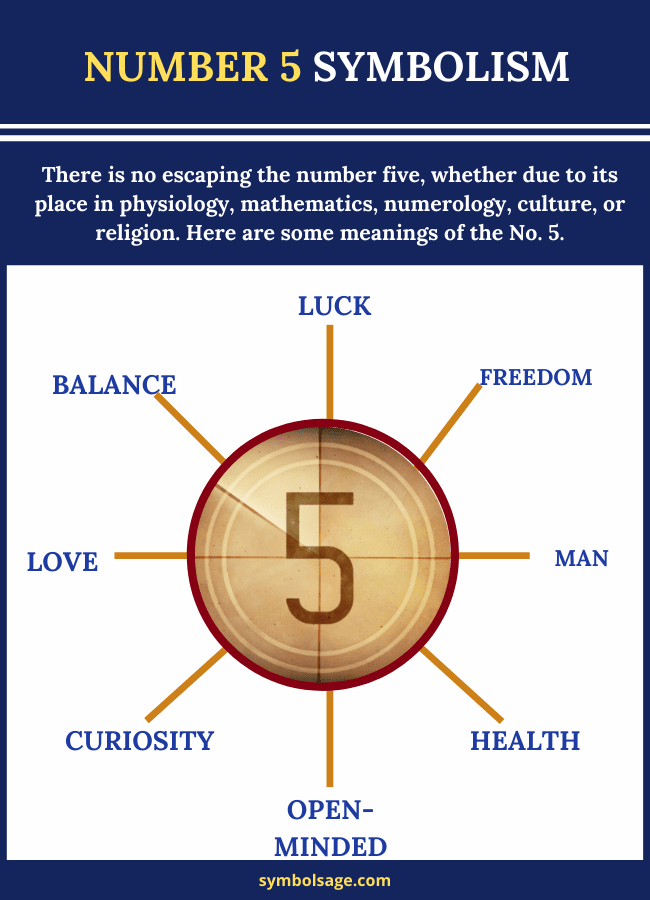
To build a brand that resonates, one must understand that the human brain seeks patterns. The number 5 serves as a cornerstone for these patterns, acting as a bridge between the minimalist “Rule of Three” and the more exhaustive lists that risk losing a customer’s attention. From the five senses used in experiential marketing to the five stages of the consumer journey, this number is a foundational architect of brand success.
The Psychology of Five: Creating Memorable Brand Anchors
The primary reason the number 5 holds such weight in brand strategy is its relationship with cognitive psychology. In a digital economy where attention is the most valuable currency, how we categorize information determines whether a brand stays top-of-mind or fades into the background noise.
Cognitive Load and the Magic Number 5
Early psychological studies, such as George Miller’s “The Magical Number Seven, Plus or Minus Two,” suggested that the human short-term memory can hold roughly seven bits of information. However, modern branding experts often argue that in the age of information overload, the “plus or minus two” has shifted downward. The number 5 has emerged as the true “Goldilocks” zone for brand architecture.
When a brand presents five core values or five product categories, it provides a sense of variety without triggering “choice paralysis.” Symbolically, 5 represents a complete set that the human mind can visualize all at once. For example, if a brand lists ten benefits, the consumer will likely forget six of them. If they list five, the consumer can recall them as a single, cohesive unit. In this context, 5 symbolizes accessibility.
Symbolizing Balance and Versatility
Visually and structurally, 5 is the first number that allows for a “center point” flanked by symmetry (two on each side). This symbolizes stability and versatility. In brand design, the pentagon or the five-pointed star is frequently used to represent excellence and high standards (think of five-star ratings). It suggests a brand that is well-rounded and has reached a pinnacle of performance. By utilizing the number 5, a brand communicates that it has considered all angles and has arrived at a balanced solution for the consumer’s needs.
The Five Pillars of Strategic Brand Identity
Beyond the abstract, the number 5 serves as a practical blueprint for building a corporate identity. Most successful brand strategies are built upon five specific pillars that define how a company exists in the marketplace. Here, 5 symbolizes structural integrity.
Purpose, Personality, and Positioning
The first three pillars—Purpose, Personality, and Positioning—form the internal “soul” of the brand.
- Purpose answers why the brand exists beyond making a profit.
- Personality dictates the tone of voice and the “human” traits the brand adopts.
- Positioning defines where the brand sits in relation to its competitors.
When these three are established, the number 5 is completed by adding Value Proposition and Visual Identity. These five elements together symbolize a “closed loop” of brand strategy. Without any one of these five, the brand becomes lopsided—it might have a great look (visuals) but no soul (purpose), or a great purpose but no way to communicate it (personality).
Perception and Profitability
The final two pillars focus on the external outcome. In the “Five Pillars” model, the symbolism of the number 5 shifts from internal construction to external validation. It represents the transition from what a company says it is to how the market perceives it. A brand that masters all five pillars creates a synergy where the perception of the brand directly fuels its profitability. This holistic approach is why 5 is often used as the benchmark for “Total Brand Equity.”
Five as a Symbol of Progress: The Lifecycle of Brand Evolution
In the context of marketing and business growth, the number 5 often symbolizes the evolutionary journey. No brand is static; they all move through cycles of growth, and these cycles are most frequently categorized into five distinct phases.
The Five Stages of Consumer Connection
To turn a stranger into a brand advocate, marketers follow a five-step symbolic ladder:
- Awareness: The first contact.
- Consideration: The evaluation of the brand’s value.
- Conversion: The first transaction.
- Retention: The repeat purchase.
- Advocacy: The stage where the consumer becomes a marketing channel for the brand.
In this model, the number 5 symbolizes loyalty. Reaching the fifth stage is the ultimate goal of any brand strategist. It suggests a relationship that has transcended the transactional and become emotional. Symbolically, the five fingers of a hand coming together to form a grip represent the brand “holding on” to its most valuable assets—its customers.
Scaling Through Five Core Verticals
When a brand moves from a startup to a legacy corporation, it often does so by dominating five core verticals: Product, Price, Place, Promotion, and the often-added fifth “P”—People. This classic marketing mix uses the number 5 to symbolize market dominance. By ensuring that all five “Ps” are optimized, a brand creates a shield against competition. This framework proves that the number 5 is not just a symbol of internal balance, but a weapon for external expansion.
Visual Symbolism: Using the Number 5 in Design Language
In the world of graphic design and brand aesthetics, the number 5 is a powerful tool for creating visual harmony and high-end appeal. It is often used to signal premium quality and meticulous attention to detail.
The Pentagonal Advantage in Logo Design
The geometry of the number 5—the pentagon—is unique because it does not occur naturally in a way that allows for “tiling” or perfect tessellation without gaps. In design symbolism, this makes the number 5 represent uniqueness and organic complexity. Brands that use five-sided elements or five-pointed stars in their logos are often trying to communicate that they are “stellar” or “above the rest.”
Consider the iconic nature of brands that have incorporated “5” directly into their identity, such as Chanel No. 5. Here, the number 5 symbolizes timelessness and curation. It suggests that out of many iterations, the fifth one was the perfect one. It implies a process of elimination and the selection of only the best, which is a powerful message for a luxury brand.
Five-Color Palettes and Harmonic Consistency
While many digital brands stick to a two-color palette for simplicity, high-end lifestyle and corporate brands often employ a “Five-Color System.” This system includes a primary color, a secondary color, two accent colors, and a neutral “grounding” color.
In this design application, the number 5 symbolizes sophistication. A five-color palette allows for enough variety to keep the brand’s visual output fresh across different platforms (social media, print, web, interior design) while maintaining a strict enough boundary to ensure the brand remains recognizable. It is the visual equivalent of a musical chord—five notes working together to create a harmony that a single note could never achieve.

Conclusion: The Quintessential Brand
In conclusion, when we examine what the number 5 symbolizes in the niche of brand strategy, we find it is the symbol of the “Quintessence.” In ancient philosophy, the quintessence was the fifth element—the pure, highly concentrated essence of a thing that stayed after all impurities were removed.
Modern branding adopts this symbolism wholeheartedly. The number 5 represents a brand that has been refined down to its most potent form. It symbolizes a strategy that is balanced, a consumer journey that is complete, and a visual identity that is both versatile and stable. For a brand strategist, the number 5 is more than a digit; it is a framework for excellence. By organizing a brand around the power of five, companies can create a sense of order and quality that resonates deeply with the human subconscious, ensuring that they don’t just exist in the market, but lead it.
aViewFromTheCave is a participant in the Amazon Services LLC Associates Program, an affiliate advertising program designed to provide a means for sites to earn advertising fees by advertising and linking to Amazon.com. Amazon, the Amazon logo, AmazonSupply, and the AmazonSupply logo are trademarks of Amazon.com, Inc. or its affiliates. As an Amazon Associate we earn affiliate commissions from qualifying purchases.