
The Nasdaq is more than just a name; it’s a powerhouse in the global financial landscape, often synonymous with innovation, technology, and growth. For many, a glance at the Nasdaq’s daily performance offers an immediate snapshot of the health of the tech sector and, by extension, a significant portion of the broader economy. However, understanding “what the Nasdaq measures” requires a deeper dive into its multifaceted role, not just as a stock exchange, but as a collection of indices, a facilitator of capital, and a barometer of investor sentiment towards the companies shaping our future.

At its core, the Nasdaq measures the collective performance and activity of thousands of companies, predominantly those in the technology, biotechnology, and other high-growth sectors. Unlike traditional exchanges rooted in physical trading floors, Nasdaq pioneered the electronic marketplace, making it a hub for companies seeking to list their shares and for investors looking to participate in the dynamic world of innovation. This article will unravel the layers of what Nasdaq truly measures, from its widely followed indices to its broader impact on personal finance and global markets.
The Nasdaq Composite Index: A Barometer of Growth
The Nasdaq Composite Index is arguably the most recognized measure associated with Nasdaq. It serves as a comprehensive barometer for the performance of nearly all stocks listed on the Nasdaq Stock Market. For anyone tracking market trends, the Nasdaq Composite’s daily fluctuations offer crucial insights into the performance of a vast array of growth-oriented companies.
Composition and Calculation
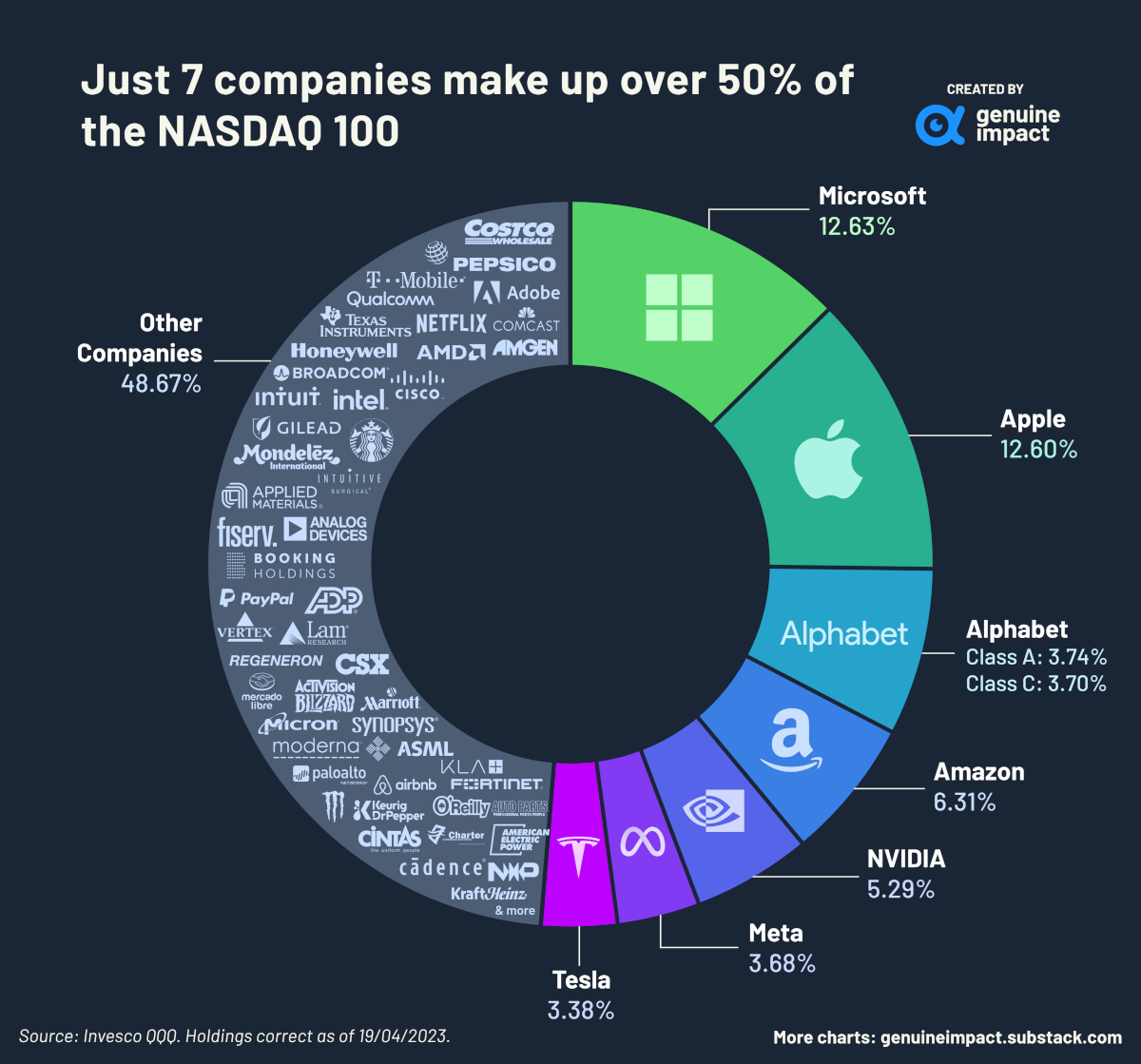
The Nasdaq Composite is a market-capitalization-weighted index, meaning that companies with larger market values have a greater impact on the index’s movement. It includes virtually every common stock and similar security listed on the Nasdaq Stock Market, encompassing over 3,000 companies. While often perceived as a “tech index,” its composition is actually quite diverse, spanning multiple sectors including technology, healthcare, consumer services, and industrials. However, due to the sheer size and market capitalization of its technology giants (like Apple, Microsoft, Amazon, Google, and Meta), the index does tend to be heavily influenced by their performance.
The calculation of the Composite is based on the total market value of all its constituent stocks. When the combined market value of these companies rises, the index goes up; when it falls, the index declines. This method ensures that the index accurately reflects the aggregate wealth creation or destruction within the Nasdaq ecosystem. Understanding this weighting is key: a small percentage change in a giant like Apple will have a far greater impact on the Composite than a much larger percentage change in a smaller, lesser-known company, even if both are listed on Nasdaq. This characteristic makes the Composite a genuine reflection of how investors are valuing the dominant players in the growth economy.
Why it Matters for Investors
For investors, the Nasdaq Composite is an invaluable tool. It acts as a bellwether for the performance of growth-oriented and technology companies, providing a pulse check on sectors that are often at the forefront of innovation and economic change. When the Composite is surging, it generally signals strong investor confidence in these sectors, often driven by positive earnings reports, technological breakthroughs, or favorable economic conditions. Conversely, a downturn in the Composite can indicate a broader market shift away from growth stocks, perhaps towards more value-oriented or defensive investments, or signal concerns about the economic outlook that might affect technology and innovation spending.
Comparing the Composite’s performance to other major indices, like the Dow Jones Industrial Average (which focuses on 30 large, established U.S. companies) or the S&P 500 (which tracks 500 large U.S. companies across diverse sectors), highlights its unique focus. While the S&P 500 is a broader representation of the U.S. economy, and the Dow offers a glimpse into industrial titans, the Nasdaq Composite specifically zeroes in on the dynamic, often disruptive, companies that drive much of the modern economy’s growth. Investors with a portfolio heavily weighted towards technology or growth stocks will find the Composite to be a more relevant benchmark for their own investment performance and a direct indicator of the health of their chosen investment themes.
The Nasdaq 100 Index: The Tech Titans’ Scorecard
While the Nasdaq Composite offers a broad view, the Nasdaq 100 Index provides a more concentrated look at the largest and most influential non-financial companies listed on the exchange. It is an elite group, often referred to as the “tech titans’ scorecard” due to its heavy emphasis on the technology sector.
Distinguishing from the Composite
The critical distinction between the Nasdaq 100 and the Composite is its selectivity. The Nasdaq 100 is a modified market-capitalization-weighted index composed of the 100 largest non-financial companies listed on the Nasdaq Stock Market. This exclusion of financial companies (like banks, brokerages, and insurance firms) ensures its focus remains squarely on industries driving innovation and consumer trends. As a result, its composition is even more heavily concentrated in technology, but also includes significant representation from consumer discretionary, healthcare, and industrial sectors.
This selectivity means the Nasdaq 100 often serves as a proxy for the performance of large-cap growth stocks, particularly those that are household names in the tech world. Its constituents are typically well-established companies with substantial market capitalization and a history of robust growth. This makes the Nasdaq 100 a much more volatile index than, say, the S&P 500, as it is more susceptible to the swings in sentiment and valuations of a smaller, more specialized group of companies, many of which operate in fast-changing industries. Its performance can therefore be more dramatic, offering both higher potential returns and greater risks.
Investment Implications and Popularity
For investors seeking exposure specifically to the leading edge of technology and growth, the Nasdaq 100 is a primary benchmark. It is widely tracked by institutional investors, fund managers, and individual investors alike. Its popularity is evident in the proliferation of investment vehicles designed to replicate its performance, most notably the Invesco QQQ Trust (QQQ), one of the most actively traded exchange-traded funds (ETFs) in the world. ETFs like QQQ allow investors to gain diversified exposure to the Nasdaq 100’s basket of companies with a single investment, making it accessible even for those with limited capital.
The Nasdaq 100’s movements often drive broader market sentiment, especially during periods when technology stocks are leading the market or experiencing significant corrections. Its performance can significantly influence the portfolios of investors who have allocated a substantial portion of their assets to growth-oriented sectors. Understanding its dynamics is crucial for making informed decisions about sector-specific investing, asset allocation, and risk management. While its potential for substantial gains is attractive, investors must also be mindful of its inherent volatility and the concentration risk associated with its relatively narrow focus on a hundred companies. This concentration means that the fortunes of a few dominant companies can heavily sway the entire index, requiring investors to maintain a long-term perspective and a diversified overall portfolio.
Beyond Indices: Nasdaq as a Market Ecosystem
While its indices are powerful measurement tools, Nasdaq’s influence extends far beyond mere numbers. It operates as a comprehensive market ecosystem, providing a platform for companies to raise capital, for investors to trade securities, and for the broader financial community to access crucial data and innovative services.
Facilitating Capital Formation
One of Nasdaq’s most fundamental roles is facilitating capital formation. It serves as a premier primary market for Initial Public Offerings (IPOs), particularly for innovative and growth-oriented companies. From biotech startups to disruptive software firms, companies choose to list on Nasdaq to access public capital, funding their expansion, research, and development. Nasdaq’s appeal lies in its history of attracting companies that are often at the forefront of technological advancement, making it an attractive destination for investors looking to back future leaders.
The process of going public on Nasdaq connects companies needing significant investment capital with millions of individual and institutional investors eager to provide it. This critical function not only fuels corporate growth but also drives job creation and economic progress. Nasdaq has cultivated an environment that supports emerging businesses, offering them visibility and a credible platform to raise billions, allowing them to scale operations and bring new products and services to market. Without robust markets like Nasdaq, many groundbreaking innovations might struggle to secure the necessary funding to realize their full potential.
Trading and Liquidity
Beyond IPOs, Nasdaq is a vibrant secondary market where listed stocks are traded efficiently and transparently. As the world’s first fully electronic stock market, Nasdaq eliminated the need for a physical trading floor, instead relying on a sophisticated network of computers and telecommunications technology. This electronic trading environment provides unparalleled liquidity, meaning investors can buy or sell stocks quickly and at competitive prices.
The exchange operates through a network of market makers who provide continuous bid and ask prices, ensuring that there is always a party willing to buy or sell a security. This system facilitates efficient price discovery and reduces transaction costs. The high volume of trading and robust infrastructure ensure that investors can react swiftly to market news and economic developments, making Nasdaq a dynamic and responsive marketplace. Its fully electronic nature has also made it a pioneer in global trading, allowing for seamless cross-border transactions and extending its reach to investors and companies worldwide. This commitment to liquidity and efficiency is paramount for maintaining investor confidence and the smooth functioning of global financial markets.
Data and Innovation
Nasdaq’s role as an ecosystem also involves its significant contributions to financial data and innovation. It provides a vast array of market data, analytics, and surveillance tools to investors, traders, and regulatory bodies. This data is critical for market analysis, risk management, and ensuring market integrity. The accuracy and real-time availability of Nasdaq data are essential for making informed investment decisions and maintaining fair and orderly markets.
Furthermore, Nasdaq is a leader in adopting and developing new technologies to enhance market operations. It has been at the forefront of exploring applications of artificial intelligence (AI), machine learning, and blockchain technology to improve trading efficiency, detect market manipulation, and develop new financial products. Its commitment to innovation extends beyond its own operations, as it also invests in and partners with fintech startups, solidifying its position as a forward-thinking institution shaping the future of finance. This continuous evolution ensures that Nasdaq remains at the cutting edge, providing the infrastructure necessary for the next generation of financial markets and services.
Understanding Nasdaq’s Broader Economic Significance
The metrics and functions of Nasdaq hold profound significance beyond individual stock prices or index levels. They serve as critical indicators of broader economic health and can inform personal finance strategies.
Indicator of Economic Health and Innovation
A thriving Nasdaq can be a strong signal of economic vitality, particularly regarding innovation and technological advancement. When the Nasdaq Composite or Nasdaq 100 indices are performing well, it often indicates robust growth in sectors that are crucial drivers of modern economies, such as software, biotechnology, and e-commerce. This performance reflects investor confidence in the future earnings potential of these companies, which in turn suggests a positive outlook for technological progress, job creation, and overall economic expansion. Conversely, significant downturns in Nasdaq indices can signal broader economic concerns, a shift in market sentiment away from growth stocks, or a re-evaluation of technological valuations. These movements provide economists, policymakers, and business leaders with valuable insights into the pulse of the innovation economy and its contribution to GDP growth. The Nasdaq’s ability to attract global capital and list companies from various countries also makes it a valuable gauge of international confidence in the U.S. technology sector and its global competitiveness.
Impact on Personal Finance and Investing Strategies
For individual investors, understanding what Nasdaq measures is paramount for effective personal finance and investing strategies. Many retirement accounts, mutual funds, and ETFs have significant exposure to Nasdaq-listed companies and indices. Therefore, tracking the Nasdaq’s movements helps investors gauge the performance of their tech-heavy or growth-oriented investments. It can inform decisions about asset allocation, prompting investors to consider whether they are over or under-exposed to certain sectors, and whether their portfolio aligns with their risk tolerance and financial goals.
Moreover, insights from Nasdaq performance can guide sector-specific investing. For example, sustained growth in the Nasdaq might encourage some investors to increase their allocation to technology funds, while a prolonged period of volatility might prompt others to diversify into more stable sectors or bonds. However, it’s crucial for investors to remember Nasdaq’s inherent volatility due to its concentration in growth stocks. A long-term perspective and diversification across various asset classes and geographic regions are essential to mitigate risks. Using Nasdaq data to inform, rather than dictate, investment decisions, coupled with a sound financial plan, is key to navigating the opportunities and challenges presented by this dynamic market. For many, Nasdaq represents the potential for significant wealth creation, but it also underscores the importance of informed, disciplined investing.

Conclusion
The Nasdaq measures a complex interplay of innovation, investment, and economic sentiment. From the expansive Nasdaq Composite, which tracks thousands of listed companies, to the focused Nasdaq 100, highlighting the largest non-financial powerhouses, these indices offer critical insights into the performance of the growth and technology sectors. Beyond these numerical indicators, Nasdaq functions as a vital market ecosystem, facilitating capital formation for emerging and established companies, providing unparalleled liquidity for trading, and driving financial innovation through data and technology.
For individual investors and the global economy alike, Nasdaq’s significance cannot be overstated. It serves as a powerful barometer of economic health and technological progress, influencing investment strategies and reflecting the collective confidence in the companies shaping our future. Understanding what the Nasdaq measures is therefore essential for anyone seeking to navigate the dynamic world of investing, grasp the pulse of the innovation economy, and make informed financial decisions in an ever-evolving market landscape. As technology continues to redefine industries, Nasdaq will undoubtedly remain a crucial hub, continuously evolving to measure and facilitate the next wave of global economic growth.
aViewFromTheCave is a participant in the Amazon Services LLC Associates Program, an affiliate advertising program designed to provide a means for sites to earn advertising fees by advertising and linking to Amazon.com. Amazon, the Amazon logo, AmazonSupply, and the AmazonSupply logo are trademarks of Amazon.com, Inc. or its affiliates. As an Amazon Associate we earn affiliate commissions from qualifying purchases.