
In the intricate symphony of a modern internal combustion engine, precision is paramount. Every millisecond, countless calculations and adjustments occur to ensure optimal performance, fuel efficiency, and emissions control. Among the myriad sensors facilitating this complex dance, the Mass Air Flow (MAF) sensor stands as a silent, yet indispensable, guardian of the engine’s air intake. Often overlooked until it malfunctions, this seemingly humble component plays a profoundly critical role in the sophisticated ballet of fuel combustion.
At its core, the MAF sensor is the engine’s primary means of measuring the amount of air entering the combustion chambers. Imagine your engine as a highly efficient furnace; just as a furnace needs the correct ratio of fuel and oxygen to burn cleanly and effectively, so too does your car’s engine. Without an accurate measure of incoming air, the Engine Control Unit (ECU) – the vehicle’s brain – would be left guessing how much fuel to inject. This article will delve into the ingenious mechanisms of the MAF sensor, unraveling its vital functions, impact on vehicle dynamics, and the tell-tale signs of its operational health. Understanding this piece of automotive technology is not just for mechanics; it’s for every driver who seeks to appreciate the engineering marvel under their hood and ensure their vehicle runs at its peak.
The Engine’s Respiratory System: Understanding Air Intake
For an internal combustion engine to produce power, it needs three fundamental elements: fuel, ignition, and air. While fuel and ignition are often the focus of discussions about engine performance, the role of air is equally, if not more, critical. The engine’s ability to “breathe” efficiently and accurately is the bedrock upon which all other performance metrics are built.
Why Airflow Measurement is Crucial
The combustion process inside your engine cylinders is a delicate chemical reaction that requires a very specific ratio of air to fuel to be efficient and clean. This ideal ratio, known as the stoichiometric ratio, is approximately 14.7 parts of air to 1 part of fuel by mass for gasoline engines. Deviations from this ratio lead to significant problems:
-
Too much fuel (rich mixture): Results in incomplete combustion, wasted fuel, increased emissions (soot, hydrocarbons, carbon monoxide), reduced power, and potential damage to the catalytic converter.
-
Too little fuel (lean mixture): Causes higher combustion temperatures, risking engine damage (e.g., burnt valves), misfires, reduced power, and increased nitrogen oxide (NOx) emissions.
The ECU’s primary task is to maintain this stoichiometric ratio as closely as possible across all engine speeds and loads. To do this, it needs precise, real-time data on how much air is actually entering the engine. This is where the MAF sensor steps in, acting as the engine’s precision “lung capacity” monitor, providing the foundational data for all subsequent fuel injection calculations.
The Limitations of Traditional Fuel Systems
Before the widespread adoption of electronic fuel injection (EFI) and advanced sensor technology, engines relied on carburetors to mix air and fuel. Carburetors were mechanical devices that used Bernoulli’s principle to draw fuel into the airstream. While effective for their time, they suffered from several limitations:
-
Inflexibility: Carburetors struggled to maintain an optimal air-fuel ratio across a wide range of engine speeds, loads, and environmental conditions (temperature, altitude).
-
Emissions: They were inherently less precise, leading to higher emissions and lower fuel efficiency compared to modern systems.
-
Complexity of tuning: Adjusting a carburetor for optimal performance was often a manual, time-consuming process.
The advent of EFI systems, coupled with sensors like the MAF, revolutionized engine management. By electronically controlling fuel delivery based on real-time sensor data, modern engines achieve unprecedented levels of precision, efficiency, and environmental compliance, leaving the carburetor largely in the annals of automotive history.
Unpacking the Mass Air Flow Sensor’s Core Function
The MAF sensor is a sophisticated piece of technology that translates the physical movement of air into an electrical signal the ECU can understand. While various designs exist, the most common type employs heated elements to infer airflow.
How a MAF Sensor Works: Hot Wire and Cold Wire Principles
Most MAF sensors used in today’s vehicles are of the “hot wire” type. Their operation is surprisingly elegant:
-
Heated Element: A platinum wire (the “hot wire”) is precisely heated to a constant temperature, typically several hundred degrees Celsius above the ambient air temperature.
-
Thermistor/Reference Wire: Another sensor, often a thermistor (the “cold wire”), measures the ambient air temperature. This is crucial because colder air is denser and carries away more heat from the hot wire than warmer air, even if the volumetric flow rate is the same.
-
Airflow and Cooling: As air flows past the heated wire, it cools the wire down. The greater the mass of air flowing past, the more heat is dissipated.
-
Maintaining Constant Temperature: To keep the hot wire at its constant target temperature, the control circuit must increase the electrical current flowing through it.
-
Signal Generation: The amount of electrical current required to maintain the hot wire’s temperature is directly proportional to the mass of air flowing past it. This current is then converted into a voltage signal (or sometimes a frequency signal) that is sent to the ECU.
By measuring the mass of the air rather than just its volume, the MAF sensor accounts for changes in air density caused by temperature and altitude. This mass measurement is critical because the chemical reaction of combustion depends on the mass of oxygen available, not merely the volume.
The Data Journey: From Sensor to ECU
Once the MAF sensor generates its electrical signal, this data embarks on a crucial journey to the ECU.
-
Signal Transmission: The voltage or frequency signal, representing the measured mass of incoming air, is transmitted via dedicated wiring to the ECU.
-
ECU Processing: The ECU receives this raw data and interprets it. It then cross-references this information with data from other sensors, such as the throttle position sensor, engine speed sensor (RPM), oxygen sensors, and coolant temperature sensor.
-
Fuel Injection Calculation: Using algorithms pre-programmed into its memory, the ECU calculates the precise amount of fuel to inject into each cylinder to achieve the ideal air-fuel ratio. This calculation considers not only the current air mass but also engine load, driver input (throttle position), and environmental factors.
-
Injector Actuation: Finally, the ECU sends electrical pulses to the fuel injectors, controlling how long they remain open and, therefore, how much fuel is delivered. This entire process occurs in milliseconds, continually adapting to changing driving conditions.
This sophisticated data loop ensures that the engine is always fed the optimal air-fuel mixture, regardless of whether the car is idling, accelerating rapidly, or cruising on the highway.
Impact on Vehicle Performance and Efficiency
The accuracy of the MAF sensor’s readings directly translates into tangible benefits for vehicle performance, fuel economy, and environmental responsibility. Its role is foundational to the modern engine’s ability to balance power with sustainability.
Optimizing Fuel Economy and Emissions
One of the most significant contributions of the MAF sensor is its role in optimizing fuel efficiency and reducing harmful emissions. By precisely measuring the incoming air, the ECU can inject just the right amount of fuel, avoiding both rich and lean conditions that waste fuel and produce pollutants.
-
Efficient Combustion: A perfectly balanced air-fuel mixture ensures complete combustion, extracting maximum energy from every drop of fuel. This translates directly to more miles per gallon.
-
Reduced Pollutants: Complete combustion minimizes the production of unburnt hydrocarbons (HC), carbon monoxide (CO), and nitrogen oxides (NOx) – the primary components of smog. This efficiency also prolongs the life of the catalytic converter, which works by further chemically reducing these pollutants.
Without accurate MAF data, the ECU would likely err on the side of a rich mixture to prevent engine damage from lean conditions, leading to significantly higher fuel consumption and emissions.
Enhancing Engine Power and Responsiveness
Beyond efficiency, a well-functioning MAF sensor contributes significantly to the engine’s power output and responsiveness.
-
Precise Power Delivery: When accelerating, the engine demands more air and fuel. The MAF sensor quickly and accurately communicates the increased airflow to the ECU, which in turn delivers the correct amount of fuel for a powerful, smooth acceleration.
-
Smooth Operation: An engine running on an optimal air-fuel ratio will idle smoothly, accelerate without hesitation, and maintain consistent power delivery throughout its RPM range. Inaccurate MAF readings can lead to noticeable dips in power, hesitation, or a feeling of “lagginess.”
The synergy between the MAF sensor and the ECU ensures that the engine responds precisely to the driver’s demands, offering a driving experience that is both engaging and reliable.
Preventing Engine Damage and Malfunctions

Perhaps less immediately apparent but equally critical is the MAF sensor’s role in protecting the engine from potential damage.
-
Avoiding Lean Conditions: As mentioned, a lean mixture (too much air, not enough fuel) can cause excessively high combustion temperatures. These high temperatures can lead to pre-ignition, detonation, and ultimately, severe damage to pistons, valves, and cylinder heads. The MAF sensor prevents this by ensuring adequate fuel delivery.
-
Catalytic Converter Protection: Rich mixtures can lead to excessive amounts of unburnt fuel entering the exhaust system, which can overheat and damage the catalytic converter – an expensive component to replace. By maintaining the correct air-fuel ratio, the MAF sensor indirectly safeguards the catalytic converter’s longevity.
In essence, the MAF sensor isn’t just about performance; it’s a vital diagnostic and protective component that ensures the long-term health and reliability of your vehicle’s most complex system.
Common Symptoms of a Failing MAF Sensor
Like any electronic component, MAF sensors can degrade or fail over time, often due to contamination from airborne particles, oil residue, or general wear. When a MAF sensor begins to malfunction, it transmits inaccurate data to the ECU, leading to a cascade of noticeable problems that affect driving performance and vehicle health.
Warning Lights and Diagnostic Codes
The most common and immediate indicator of a MAF sensor issue is the illumination of the Check Engine Light (CEL) on your dashboard. When the ECU receives illogical or out-of-range data from the MAF sensor, or if it detects a discrepancy between MAF readings and other sensor data (like oxygen sensor readings), it will trigger a diagnostic trouble code (DTC).
Common OBD-II (On-Board Diagnostics II) codes associated with MAF sensor problems include:
-
P0100: Mass or Volume Air Flow “A” Circuit
-
P0101: Mass or Volume Air Flow “A” Circuit Range/Performance
-
P0102: Mass or Volume Air Flow “A” Circuit Low
-
P0103: Mass or Volume Air Flow “A” Circuit High
-
P0104: Mass or Volume Air Flow “A” Circuit Intermittent
An OBD-II scanner can be used to retrieve these codes, providing a clear indication that the MAF sensor or its circuit is experiencing an issue.
Performance Issues: Rough Idling, Stalling, Hesitation
The direct consequence of inaccurate airflow data is an incorrect air-fuel mixture, which manifests as various performance problems:
-
Rough Idling: The engine may idle erratically, with RPMs fluctuating, or it might feel like the engine is “shaking.” This happens because the ECU is struggling to maintain a stable idle air-fuel ratio.
-
Stalling: In severe cases, particularly when coming to a stop or at low speeds, the engine may stall entirely because the ECU cannot deliver the correct amount of fuel to keep it running.
-
Hesitation or Lack of Power: When you accelerate, the engine might hesitate or feel sluggish, as if it’s struggling to gain speed. This is due to the ECU injecting too little or too much fuel for the actual amount of air entering the engine, preventing efficient combustion.
-
Poor Acceleration: Similar to hesitation, the vehicle may experience a noticeable decrease in acceleration capability, especially when merging onto highways or climbing hills.
-
Surging or Bucking: The vehicle might feel like it’s repeatedly accelerating and decelerating without driver input, or “bucking” at consistent speeds, as the ECU tries to compensate for incorrect air measurements.
These performance issues are not only inconvenient but can also be safety hazards, particularly during critical driving maneuvers.
Fuel Economy Deterioration and Emissions Increase
A malfunctioning MAF sensor directly impacts the efficiency of fuel combustion, leading to two undesirable outcomes:
-
Decreased Fuel Economy: If the MAF sensor reports less air than is actually entering the engine, the ECU will inject less fuel, leading to a lean condition. Conversely, if it reports more air, the ECU injects too much fuel (rich condition). In most cases of MAF failure, the ECU tends to default to a richer mixture to protect the engine, which inevitably burns more fuel than necessary. Drivers will notice more frequent trips to the gas station.
-
Increased Emissions: Both lean and rich mixtures are detrimental to emissions. Lean mixtures produce higher NOx, while rich mixtures produce higher CO and unburnt hydrocarbons. An illuminated CEL itself often indicates an emissions-related fault, and a failing MAF sensor is a common culprit. This can also lead to failure during mandatory emissions tests.
Recognizing these symptoms early and addressing a faulty MAF sensor is crucial not only for maintaining your vehicle’s performance and efficiency but also for protecting the environment and avoiding potentially costly repairs down the line.
Maintenance and Troubleshooting Tips
While a MAF sensor is a robust piece of technology, it’s not immune to issues. Proper maintenance and timely troubleshooting can significantly extend its lifespan and ensure your engine runs optimally. Understanding how to approach MAF sensor problems can save you both time and money.
When to Inspect and Clean Your MAF Sensor
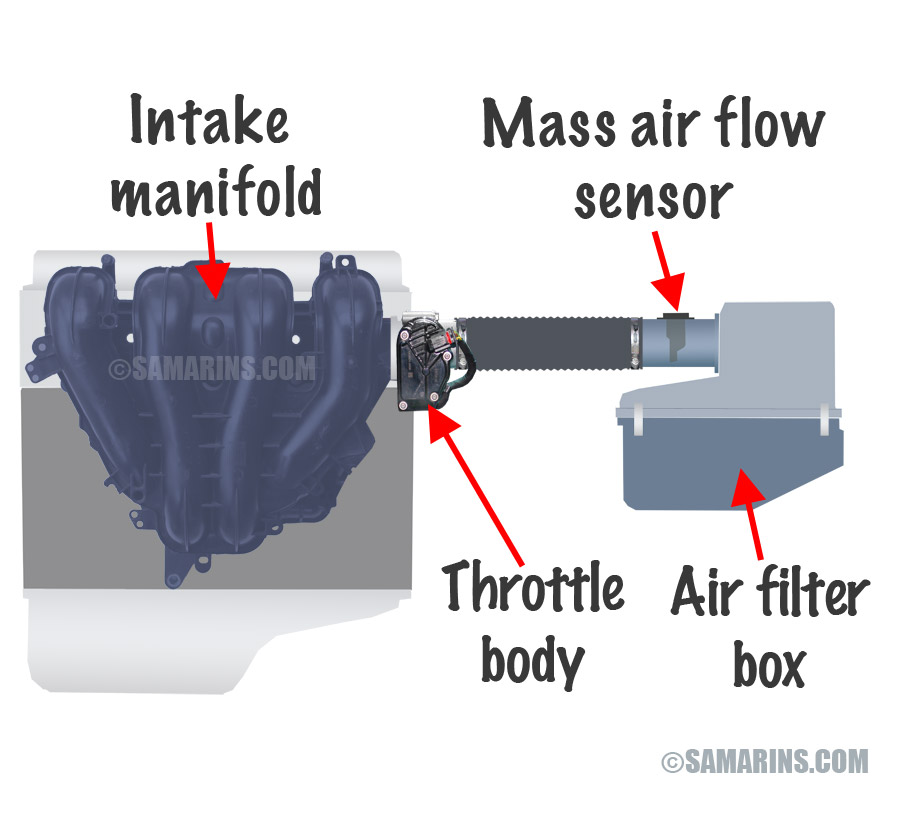
Preventive maintenance is key to avoiding MAF sensor failures. The sensor is located in the intake tract, typically between the air filter box and the throttle body. Over time, despite the air filter, minute particles, dust, and oil vapor from the crankcase ventilation system can accumulate on the hot wire element. This contamination acts as an insulator, preventing the wire from dissipating heat efficiently, leading to inaccurate readings.
-
Regular Intervals: While there’s no strict universal rule, many manufacturers recommend inspecting or cleaning the MAF sensor every 30,000 to 50,000 miles, or whenever the air filter is replaced.
-
Symptoms of Contamination: If you experience any of the symptoms of a failing MAF sensor but the Check Engine Light is not yet on, or if the light comes on intermittently, a contaminated sensor is often the first thing to check.
-
DIY vs. Professional: Cleaning a MAF sensor can be a DIY task for those comfortable working under the hood. It requires a specialized MAF sensor cleaner spray (never use carburetor cleaner or brake cleaner, as they can damage the delicate sensor elements) and careful handling. Disconnect the battery, remove the sensor, spray the elements thoroughly, and allow it to air dry completely before reinstallation. If uncomfortable, a professional technician can perform this service.
Cleaning can often resolve intermittent issues and restore proper function, saving the cost of a full replacement.
Replacing a Faulty MAF Sensor
If cleaning the sensor does not resolve the issue, or if the sensor is completely defunct (e.g., due to a broken wire or internal electronic failure), replacement becomes necessary.
-
Importance of OEM or Quality Aftermarket Parts: When replacing a MAF sensor, it’s highly recommended to use either an Original Equipment Manufacturer (OEM) part or a reputable aftermarket brand known for quality. Cheap, generic aftermarket sensors can sometimes provide inaccurate readings, leading to recurring performance issues or even new problems.
-
Installation: Replacement is generally straightforward, involving disconnecting the electrical connector, removing a couple of screws or clamps, and swapping the old sensor for the new one. Always ensure the new sensor is oriented correctly and all connections are secure.
-
Post-Replacement: After replacement, it’s often advisable to clear any stored diagnostic trouble codes using an OBD-II scanner. The ECU may need some drive cycles to “relearn” the new sensor’s readings and recalibrate fuel trims.
Replacing a MAF sensor is a common repair, and with the right part, it can quickly restore your vehicle to optimal health.
The Role of Digital Diagnostics
Modern vehicles are equipped with sophisticated diagnostic capabilities, and the MAF sensor is a prime example of where these tools shine.
-
OBD-II Scanners: A basic OBD-II scanner can retrieve DTCs, indicating a general problem with the MAF sensor circuit.
-
Live Data Monitoring: More advanced scanners or diagnostic software can read “live data” streams from the ECU. This allows technicians (or technically inclined DIYers) to monitor the MAF sensor’s output in real-time (e.g., grams per second of airflow) as the engine runs. By comparing these readings against manufacturer specifications or expected values, one can diagnose whether the sensor is reporting correctly, intermittently, or not at all.
-
Troubleshooting Electrical Circuits: Digital diagnostics also help in troubleshooting the electrical circuit connected to the MAF sensor. Issues might stem from wiring harnesses, connectors, or even the ECU itself, rather than the sensor. Checking voltage references and ground signals at the sensor connector can pinpoint electrical faults.
Leveraging digital diagnostic tools empowers technicians to accurately pinpoint MAF sensor issues, avoiding guesswork and ensuring an effective repair.

Conclusion
The mass air flow sensor, though a compact component, is a titan in the world of automotive technology. It serves as the engine’s primary sensory input for air intake, meticulously measuring the very breath that fuels combustion. Through its precise data, the MAF sensor directly influences everything from your vehicle’s power output and acceleration to its fuel efficiency and environmental footprint. It’s an unsung hero, constantly working to maintain the delicate balance required for optimal engine performance and longevity.
Understanding the MAF sensor’s function not only provides insight into the remarkable engineering of modern vehicles but also empowers drivers to recognize symptoms of potential failure. From a rough idle and sluggish acceleration to the illumination of the omnipresent Check Engine Light, these signs point to a component that, when compromised, can disrupt the entire engine management system. Proactive maintenance, such as timely cleaning, and informed troubleshooting, whether DIY or professional, are crucial for preserving its integrity.
In an era where technology continues to redefine the driving experience, the MAF sensor stands as a testament to the ingenuity that ensures our vehicles run cleaner, perform better, and last longer. It is a critical link in the chain of automotive innovation, demonstrating how a small piece of tech can have an enormous impact on the efficiency and reliability of complex machinery. Appreciating its role is to appreciate the sophisticated symphony that plays out under the hood of every modern car.
aViewFromTheCave is a participant in the Amazon Services LLC Associates Program, an affiliate advertising program designed to provide a means for sites to earn advertising fees by advertising and linking to Amazon.com. Amazon, the Amazon logo, AmazonSupply, and the AmazonSupply logo are trademarks of Amazon.com, Inc. or its affiliates. As an Amazon Associate we earn affiliate commissions from qualifying purchases.