
In the realm of software development, Python is often celebrated for its “Pythonic” nature—a philosophy that emphasizes readability, simplicity, and efficiency. One of the most common tasks a developer faces is iterating over a collection of data, such as a list, tuple, or string. While a standard for loop is sufficient for accessing elements, there are countless scenarios where you also need to know the position, or index, of the current item.
The phrase “for index, value in enum” refers to the use of Python’s built-in enumerate() function. It is a powerful tool that transforms a simple loop into a high-precision iteration mechanism. This guide explores the mechanics of enumerate(), why it is superior to traditional indexing methods, and how it fits into the broader ecosystem of modern software engineering.
Understanding the Fundamentals of Python Iteration
To appreciate what enumerate() brings to the table, we must first look at how iteration is traditionally handled in other programming languages and the evolution of the Pythonic approach.
The Limitations of the Standard for Loop
In Python, the basic for loop is designed to iterate directly over the items of a sequence. For example, for item in list: gives you the data immediately. However, it provides no context regarding the item’s location within the list. If your logic requires you to know that “Apple” is at index 0 and “Banana” is at index 1, the basic loop falls short.
Why Manual Counters and range(len()) Are Inefficient
Before discovering enumerate(), many developers resort to two “anti-patterns.” The first is creating a manual counter:
- Initialize
i = 0before the loop. - Access the list element.
- Manually increment
i += 1at the end of every iteration.
The second is the for i in range(len(my_list)): approach. While this provides the index, you then have to manually fetch the value using my_list[i]. This is considered non-Pythonic because it is verbose, more prone to “off-by-one” errors, and less readable. It forces the developer to manage the mechanics of the loop rather than focusing on the logic of the data.
Deep Dive: How Enumerate Works Under the Hood
The enumerate() function solves these problems by acting as a wrapper around an iterable. It yields a pair of values during each iteration: the count (starting from zero by default) and the value produced by iterating over the sequence.
The Anatomy of enumerate(iterable, start=0)
The function signature is deceptively simple: enumerate(iterable, start=0).
- Iterable: This can be any object that supports iteration (lists, strings, dictionaries, sets, or generators).
- Start: This is an optional argument that allows you to define the initial value of the index. If you are generating a list for human consumption, you might set
start=1so your index begins at 1 instead of the computer-centric 0.
Unpacking the Tuple: The index, value Syntax
When you write for index, value in enumerate(my_list):, you are utilizing a Python feature called “tuple unpacking.” The enumerate() function actually returns an enumerate object, which is an iterator that produces tuples—for example, (0, 'first_item'). By providing two variables (index and value), Python automatically assigns the first element of the tuple to the first variable and the second element to the second. This leads to clean, expressive code that clearly states its intent to the reader.
Practical Use Cases and Implementation Patterns
The utility of index, value iteration extends across various domains in software development, from data science to web backend logic.
Modifying List Elements and Data Validation
While it is generally discouraged to modify a list while iterating over it, there are times when you need to use the index to update a different, parallel data structure or to validate data based on its position. For instance, in a data cleaning script, you might use the index to flag specific rows in a spreadsheet that contain null values, allowing you to provide the user with the exact line number where the error occurred.
Formatting Output for User Interfaces
When building command-line tools or generating reports, presentation matters. Using enumerate(list, start=1) is the most efficient way to generate numbered lists. Instead of doing math within the print statement (like i + 1), the enumerate function handles the offset natively. This reduces cognitive load for the developer and makes the code more resilient to changes.
Working with Conditional Logic and Breakpoints
Often, you need to perform an action only on the first or last few elements of a dataset. By having the index readily available, you can implement logic like if index % 10 == 0: print("Progress update..."). This is significantly cleaner than maintaining an external counter and ensures that the logic is encapsulated within the loop structure itself.
Performance and Best Practices in Tech Development
In professional software environments, performance and maintainability are paramount. enumerate() is not just a syntactic convenience; it is an optimized C-implementation within the Python core.
Comparing enumerate() to range(len()) Performance
From a performance standpoint, enumerate() is highly efficient. When you use range(len(data)), Python must create a range object, then for every iteration, it performs a look-up in the original list using the index. enumerate(), conversely, retrieves the item and the index simultaneously. In large-scale data processing, these micro-optimations can add up, though the primary benefit remains code clarity.
Memory Management and Iterators
enumerate() returns an iterator, not a list. This means it generates the index-value pairs on the fly (lazy evaluation) rather than storing them all in memory at once. This is a critical distinction when working with massive datasets or “Big Data” applications where memory overhead must be kept to a minimum. You can iterate over a file with millions of lines using enumerate(), and Python will only keep the current line and its index in memory.
Avoiding Common Pitfalls and Misconceptions
Despite its simplicity, there are a few areas where developers—especially those new to the Python ecosystem—might get tripped up.
Confusing enumerate() with the enum Module
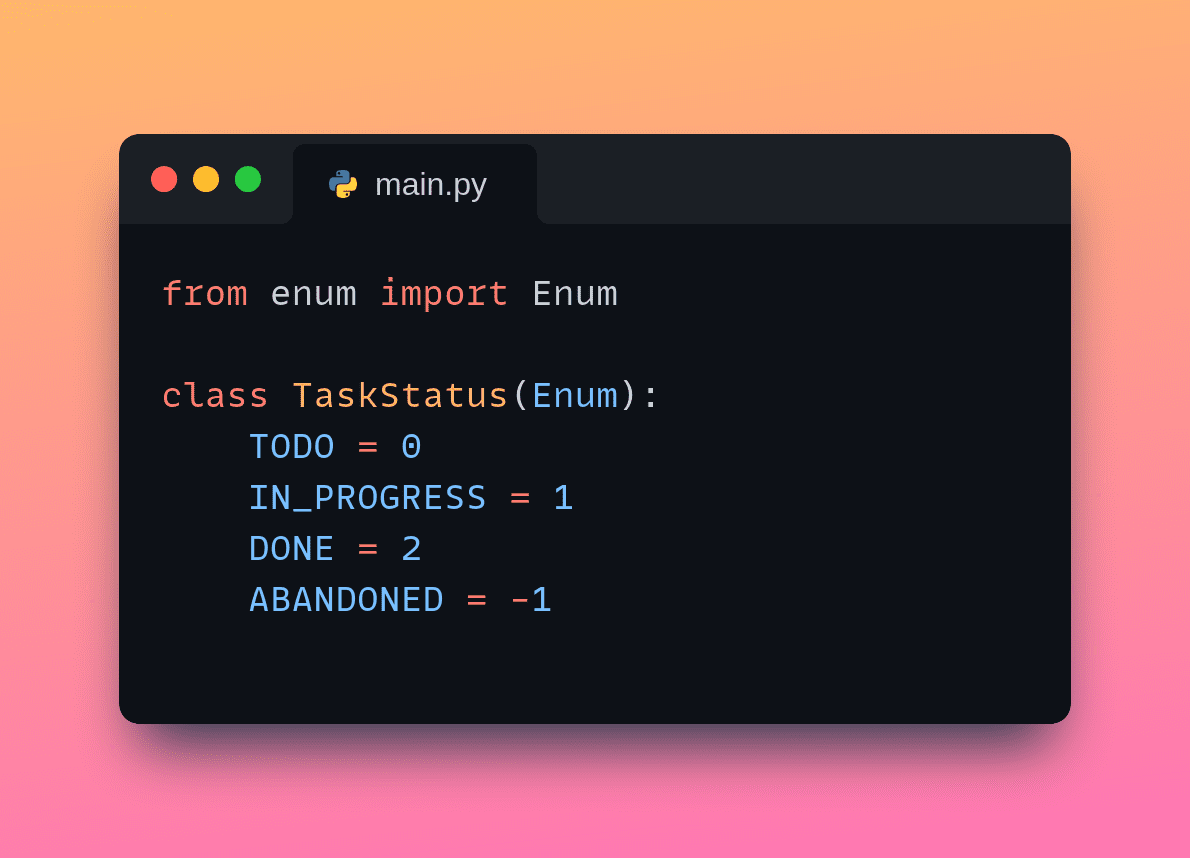
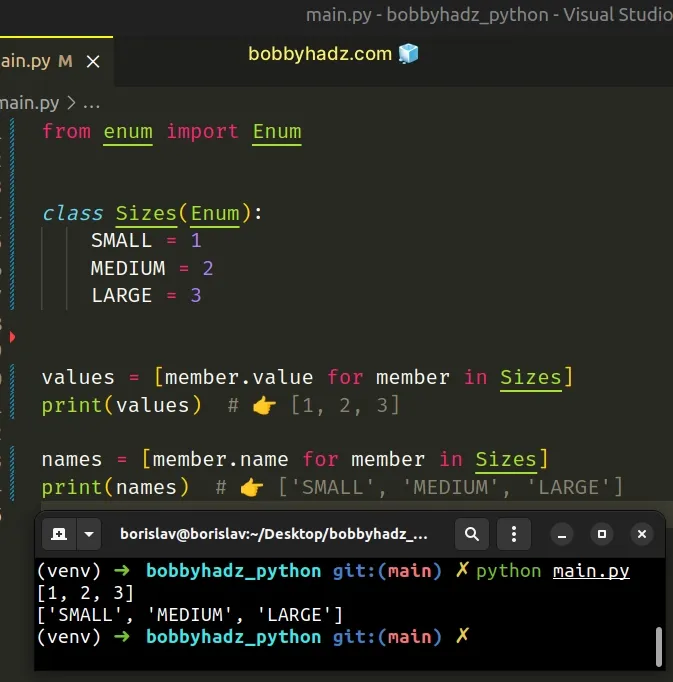
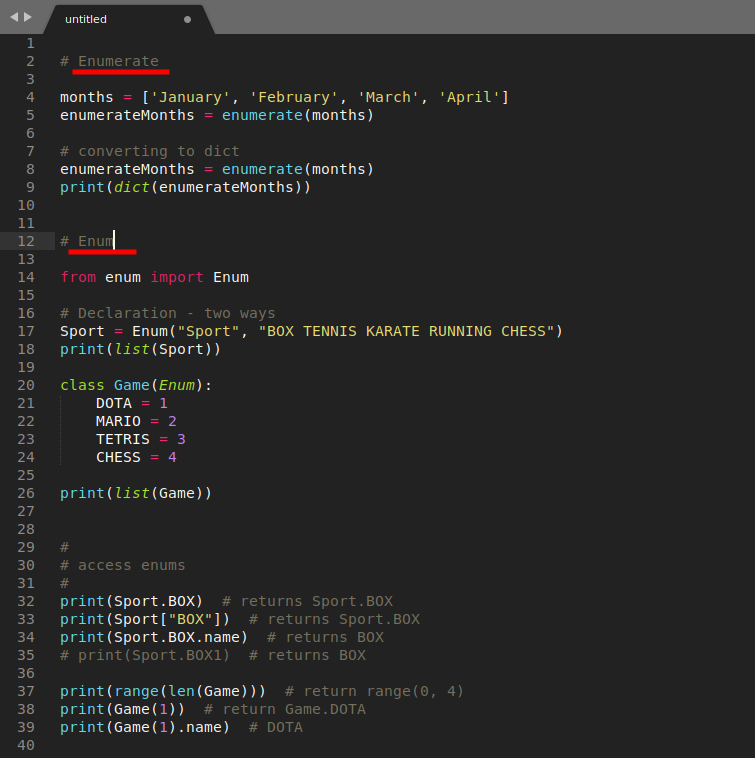
It is common for users to search for “index value in enum” and find results for the enum module. It is vital to distinguish between the two:
enumerate(): A built-in function used for counting iterations over a collection.enum(Enumerations): A module used to create sets of symbolic names bound to unique, constant values (similar to Enums in C# or Java).
While they share a linguistic root, their technical applications are entirely different. If you are trying to loop through a list and get an index, you want enumerate(). If you are trying to define a set of fixed categories (like Status.PENDING, Status.COMPLETE), you want the enum module.
Handling Dictionaries and Unordered Sets
A common mistake is trying to use enumerate() on a dictionary and expecting it to return the key and value. By default, enumerate(my_dict) will return the index and the key. If you need the index, the key, and the value, you must use enumerate(my_dict.items()). In this case, your loop header would look like for i, (key, value) in enumerate(my_dict.items()):. Understanding how nested unpacking works is key to mastering complex data structures.
Conclusion: The Power of Pythonic Code
The for index, value in enumerate() pattern is more than just a trick for getting a loop counter; it is a testament to Python’s design philosophy. By providing a clean, efficient, and readable way to handle indexed iteration, Python allows developers to write code that is “self-documenting.”
In the fast-paced world of technology, where codebases are often maintained by rotating teams of engineers, clarity is the ultimate feature. Using enumerate() signals to your peers that you understand the language’s idioms and that you prioritize code quality. Whether you are building an AI-driven data pipeline, a secure digital banking app, or a simple automation script, mastering this small but mighty function is an essential step in becoming a proficient Python developer. By removing the clutter of manual counters and the clunkiness of index lookups, you free yourself to solve the real-world problems that matter.