
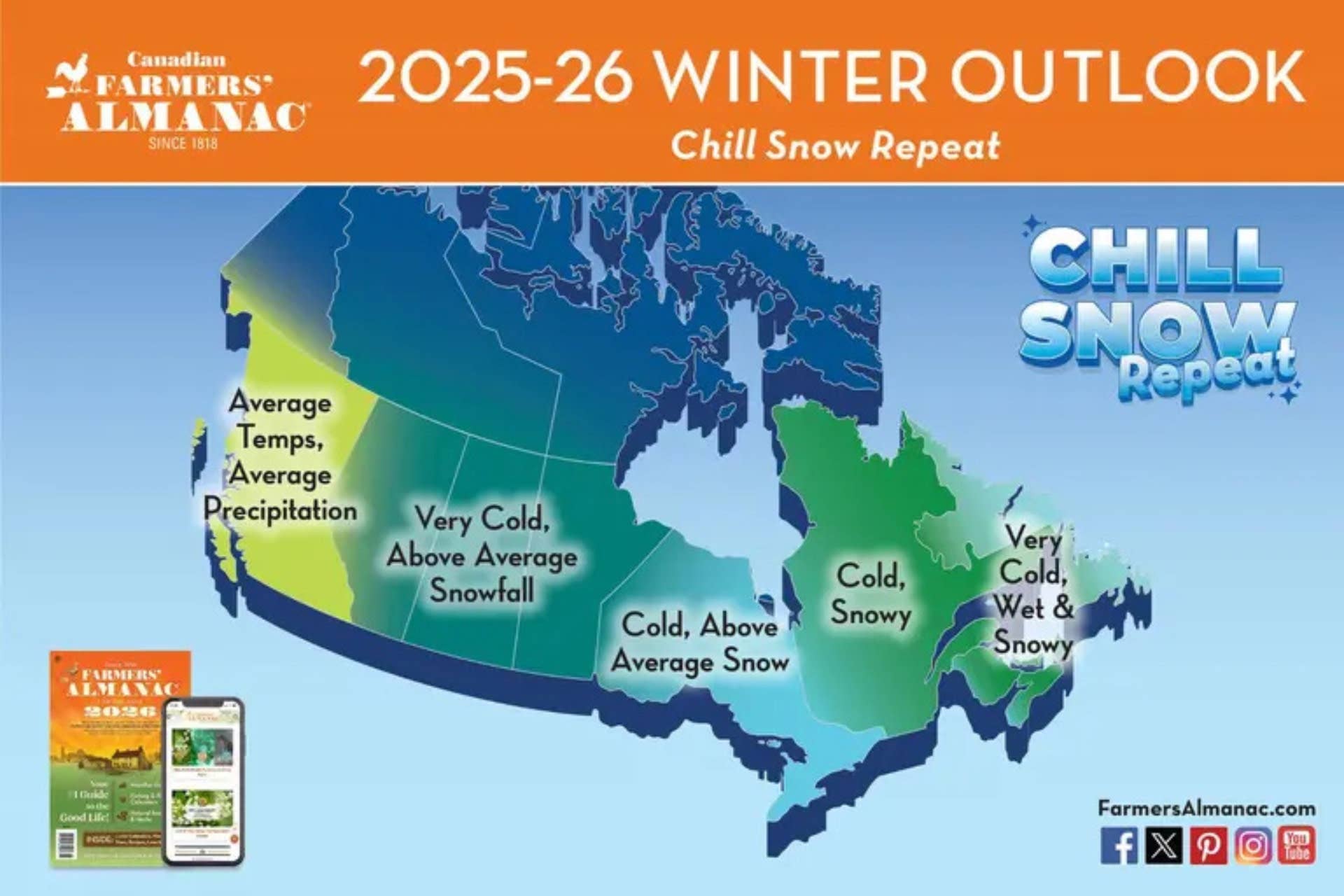
For over two centuries, the Farmer’s Almanac has been a staple in rural and urban households alike, offering a glimpse into the seasonal future through a blend of solar science, climatology, and secret mathematical formulas. While many view its predictions through the lens of tradition or folklore, the modern financial landscape views the “winter outlook” as a critical data point for risk management and economic planning. When the Almanac warns of a “Polar Coaster” or a “Shake, Shiver, and Shovel” season, it isn’t just a signal to buy a heavier coat; it is a leading indicator for energy markets, retail inventory shifts, and personal finance strategies.

Understanding what the Farmer’s Almanac says about winter is, in many ways, an exercise in economic foresight. Weather is one of the most significant variables in global finance, affecting everything from the price of a gallon of heating oil to the quarterly earnings of major home improvement retailers. This year’s outlook demands a sophisticated analysis of how cold temperatures and heavy precipitation will ripple through the markets.
The Macroeconomic Impact of Seasonal Predictions
When the Farmer’s Almanac issues its winter forecast, the first industry to take note is the energy sector. Weather remains the primary driver of volatility in natural gas and heating oil markets. A predicted “brutal” winter often correlates with a spike in demand, leading to upward pressure on prices well before the first snowflake falls.
Energy Markets and the Natural Gas Pivot
Natural gas is the primary heating source for a vast majority of households in the northern hemisphere. When the Almanac predicts an extended period of sub-zero temperatures, futures traders begin pricing in a depletion of storage inventories. For the investor, this means monitoring the “basis price” of energy. If the forecast suggests a particularly long winter—stretching into late March—the risk of a supply squeeze increases. This macro-level shift affects not only individual utility bills but also the operational costs for manufacturers that rely on high-energy inputs.
Agricultural Futures and Food Inflation
While we associate winter with dormant fields, the Farmer’s Almanac’s predictions for “wet and slushy” or “bitterly cold” conditions have profound implications for the following year’s agricultural yield. Extreme frost can damage winter wheat crops or threaten citrus groves in southern regions if the “cold snap” reaches further south than expected. From a money management perspective, these weather patterns contribute to food inflation. Investors often look to agricultural ETFs (Exchange Traded Funds) to hedge against the rising costs of commodities that are sensitive to these seasonal extremes.
Strategic Business Planning for a Volatile Winter
For business owners, the Farmer’s Almanac provides a roadmap for capital allocation and inventory management. The difference between a mild winter and a severe one can mean millions of dollars in “lost” or “gained” revenue depending on a company’s preparation.
Retail Inventory and Seasonal Revenue Cycles
Retailers operate on thin margins and precise timelines. A forecast of heavy snowfall in the Northeast triggers a massive logistical shift. Big-box retailers must decide by late summer how many snowblowers, bags of rock salt, and winter tires to stock. If the Almanac predicts a “mild and wet” winter, overstocking snow removal equipment can lead to a liquidity crisis, as capital is tied up in unsold, bulky inventory that must be discounted or stored until the following year. Conversely, failing to prepare for a “snowy blockbuster” results in missed revenue opportunities and a loss of market share to competitors who were better prepared.
Construction and Logistics: The Cost of Delays
The construction industry is perhaps the most sensitive to the Farmer’s Almanac’s “days of precipitation” forecasts. Deep freezes can halt foundation pours, while excessive snow stops site development entirely. For developers, a predicted harsh winter means factoring in “weather contingency” budgets. This includes the cost of specialized equipment like ground heaters or the financial impact of missed deadlines that trigger “liquidated damages” clauses in contracts. From a business finance perspective, winter isn’t just a season; it’s a potential bottleneck in the cash-flow cycle.

Personal Wealth Management and Winter Readiness
On an individual level, the Farmer’s Almanac serves as a prompt for personal financial “winterization.” Those who ignore the forecast often find themselves facing “emergency expenses” that could have been mitigated through proactive budgeting.
Home Equity Protection and Maintenance Costs
A home is often an individual’s largest asset. The Almanac’s prediction of high-moisture winters or “ice-storm cycles” is a warning to homeowners to invest in preventative maintenance. Spending $500 on gutter cleaning and roof inspection in the autumn is a strategic financial move when compared to a $10,000 insurance deductible for ice dam damage or a collapsed roof. In the world of personal finance, “risk mitigation” is just as important as “wealth accumulation.” By using the Almanac as a guide, homeowners can schedule capital improvements when labor is cheaper and materials are more available, rather than paying “emergency premiums” during a blizzard.
Utility Budgeting and “Peak-Shaving” Strategies
For households on a fixed income or a tight budget, the “shiver and shake” forecast is a signal to adopt “peak-shaving” financial habits. This involves setting aside a “winter energy fund” during the lower-cost spring and summer months. Many utility companies offer “budget billing” or level-payment plans, which smooth out the financial spikes caused by extreme winter weather. Understanding the Almanac’s outlook allows a consumer to decide whether to lock in a fixed-rate heating oil contract in August or to gamble on variable market rates through the winter.
Weather as an Asset Class: Investing in the Forecast
In the sophisticated world of finance, weather is no longer just something we endure; it is something we trade. Institutional investors and hedge funds use the predictions found in publications like the Farmer’s Almanac to inform their “alternative data” strategies.
Weather Derivatives and Hedging Risk
Weather derivatives are financial instruments used by companies to hedge against the risk of weather-related losses. For example, a ski resort might buy a derivative that pays out if the total snowfall is below a certain threshold. These instruments allow businesses to stabilize their income regardless of what the clouds deliver. The Farmer’s Almanac, with its high historical accuracy and widespread cultural influence, often acts as a sentiment driver in these niche markets. If the Almanac calls for a “bone-chilling” winter, the demand for “heating degree day” (HDD) contracts typically rises, as energy companies seek to protect their margins against extreme demand spikes.
The Role of Alternative Data in Modern Portfolios
In the age of AI and big data, the Farmer’s Almanac represents a unique form of “alternative data.” While modern meteorology focuses on short-term accuracy (7–10 days), the Almanac attempts to capture long-term cyclical trends. Professional traders often look for “confluence”—where the Almanac’s traditional formulas align with modern El Niño or La Niña projections. When both the “old school” and “high tech” forecasts agree on a severe winter, it creates a high-conviction environment for trades in the energy, transportation, and retail sectors.
Conclusion: The Bottom Line on Winter
Ultimately, what the Farmer’s Almanac says about winter is a call to action for anyone concerned with their financial health. Whether you are a retail investor looking for the next surge in natural gas prices, a business owner managing seasonal inventory, or a homeowner trying to keep utility costs under control, the winter forecast is an essential piece of the economic puzzle.
Winter is more than a change in temperature; it is a change in the flow of capital. By treating the Farmer’s Almanac not just as a piece of Americana, but as a strategic financial tool, you can position yourself to weather any storm—metaphorical or literal. In the world of money, those who prepare for the “shiver” are the ones who ultimately keep their portfolios warm. As the latest edition hits the stands, the message is clear: the most successful financial strategies are those that respect the power of the seasons and the predictability of the cold.
aViewFromTheCave is a participant in the Amazon Services LLC Associates Program, an affiliate advertising program designed to provide a means for sites to earn advertising fees by advertising and linking to Amazon.com. Amazon, the Amazon logo, AmazonSupply, and the AmazonSupply logo are trademarks of Amazon.com, Inc. or its affiliates. As an Amazon Associate we earn affiliate commissions from qualifying purchases.