
In the competitive landscape of global commerce, a brand’s visual identity serves as its silent ambassador. Beyond color palettes and typography, the use of zoomorphic symbols—animals used to represent corporate values—carries profound psychological weight. Among these, the dolphin stands as one of the most multifaceted and enduring symbols in brand strategy. While a lion may project power and a horse may signal speed, the dolphin occupies a unique niche that blends intelligence, social harmony, and ethical stewardship.
Understanding what the dolphin symbolizes within a professional context requires a deep dive into semiotics, consumer psychology, and the strategic alignment of brand archetypes. For organizations looking to project an image of fluidity, innovation, and approachability, the dolphin offers a rich tapestry of meanings that can be leveraged to build trust and emotional resonance with a target audience.

The Psychological Anchor: Intelligence and Social Connectivity
At its core, the dolphin is a universal shorthand for high-level cognition. In the realm of brand strategy, this translates to a promise of smart solutions, intuitive design, and sophisticated technology. Unlike the “cold” intelligence often associated with owls or abstract geometric shapes, dolphin-inspired branding suggests an intelligence that is interactive and user-centric.
Cognitive Branding and Innovation
When a company adopts dolphin symbolism, it often seeks to position itself as a leader in “soft” innovation. This is the type of progress that prioritizes human experience over raw mechanical power. In sectors such as software development or education, the dolphin signals that the brand’s tools are not just powerful, but “smart” enough to adapt to the user’s needs. The symbolism suggests a frictionless interface—smooth, agile, and capable of navigating complex data environments with the ease of a dolphin cutting through the ocean.
The Power of Social Proof and Community
Dolphins are famously social creatures, known for their pods and collaborative hunting techniques. In brand strategy, this translates to “Community-Centric Identity.” Modern brands, particularly those in the SaaS (Software as a Service) or lifestyle sectors, use dolphin motifs to signal that they are not solitary entities but part of a larger ecosystem. It communicates that the brand values its community, encourages collaboration, and thrives on the collective success of its users. This makes the dolphin an ideal symbol for brands that rely on networking effects or peer-to-peer interactions.
Visual Identity: Translating the Dolphin into Design Elements
The physical form of the dolphin—streamlined, curved, and inherently graceful—provides a masterclass in visual communication. Brand designers often extract specific physical attributes of the dolphin to convey movement and reliability without ever showing a literal illustration of the animal.
Fluidity and Kinetic Energy
One of the most powerful aspects of dolphin symbolism is the concept of “Flow.” In professional branding, flow represents efficiency and the removal of barriers. A logo that incorporates the arc of a dolphin’s leap suggests a brand that is dynamic and forward-moving. This kinetic energy is crucial for companies in logistics, telecommunications, or any industry where the “speed of delivery” is a primary value proposition. The curve of the dolphin is softer than a straight line, suggesting that while the brand is fast, it is also safe and controlled.
Color Psychology: The Dominance of Blue and Teal
The dolphin is inextricably linked to the ocean, which brings the psychology of the color blue into the branding equation. Blue is the color of trust, stability, and professionalism. By leveraging the dolphin symbol, brands automatically tap into the calming and authoritative nature of the sea.
Strategically, this allows a brand to occupy a “Safe Harbor” position in the market. When consumers see the combination of a dolphin’s silhouette and a deep navy or a vibrant teal, the brain registers a sense of reliability. This is why financial services or insurance companies—industries that rely heavily on the perception of security—occasionally lean into aquatic symbolism to soften their corporate edges.
Archetypal Alignment: Finding the Brand’s Soul
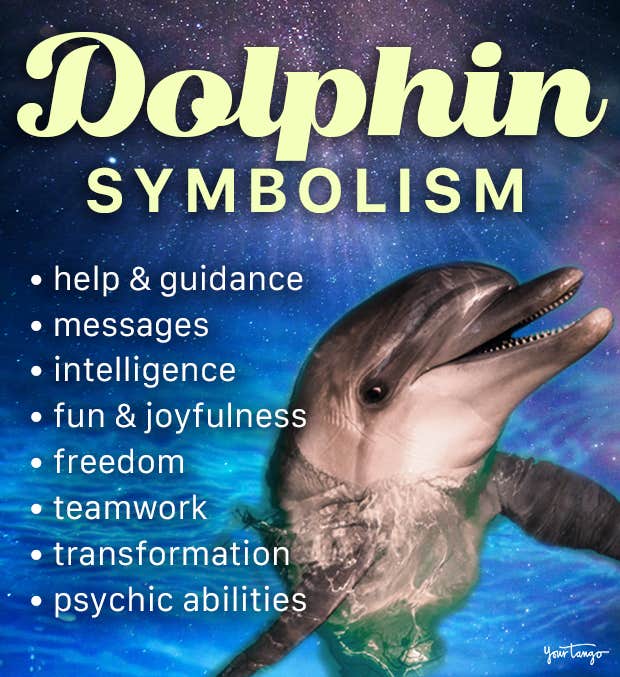
In the framework of Jungian archetypes applied to marketing, the dolphin rarely fits into a single category. Instead, it acts as a bridge between several distinct personas, allowing a brand to project a complex and nuanced identity.
The Sage and the Guide
The dolphin is often viewed as a protector of sailors and a guide through treacherous waters. In a corporate context, this aligns with the “Sage” archetype. A brand using this symbolism positions itself as a mentor or a navigator for its clients. This is particularly effective for consultancy firms or financial advisors who want to signify that they can guide their clients through the volatile “waves” of the market toward a successful destination.
The Everyman and the Jester: Approachability and Joy
Despite its intelligence, the dolphin is perceived as playful and non-threatening. This allows brands to lean into the “Everyman” or “Jester” archetypes. While a shark represents a predatory, winner-takes-all business philosophy, the dolphin represents a “blue ocean” strategy—one where there is room for everyone and where business can be conducted with a sense of joy and ethical play. For consumer-facing brands in the travel or leisure industry, the dolphin symbolizes a departure from the mundane and an invitation to experience the wonder of the natural world.
Strategic Implementation: When to Use Aquatic Symbolism
Choosing the dolphin as a brand symbol is a strategic decision that must align with the company’s long-term goals and ethical positioning. It is not a “one-size-fits-all” icon, and its effectiveness depends heavily on the industry and the desired brand perception.
Ethical Branding and Corporate Social Responsibility (CSR)
In the modern era, the dolphin is a potent symbol of environmental consciousness. Brands that use dolphin imagery often do so to signal their commitment to sustainability and ocean health. This is a form of “Values-Based Branding.” By associating with the dolphin, a brand takes on a silent pledge to be “dolphin-safe”—a term that has evolved from tuna labeling to a broader metaphor for ethical business practices.
For companies in the beauty, fashion, or food industries, the dolphin can serve as a shorthand for “cruelty-free” or “eco-friendly” initiatives. However, this strategy requires radical transparency. Because the dolphin is a highly emotive symbol, any perceived breach of ethics by the brand can lead to a significant backlash, as the symbol sets a high moral bar in the consumer’s mind.
Differentiation in Saturated Markets
In markets crowded with aggressive imagery, the dolphin offers a path to differentiation through “Gentle Authority.” In the tech space, for example, where many brands use sharp, robotic, or abstract minimalist logos, a brand that utilizes the organic, fluid lines of a dolphin stands out as more “human.” It suggests that the technology serves the person, rather than the person serving the technology. This strategy is particularly effective for startups looking to disrupt an industry dominated by legacy firms with rigid, “stiff” identities.

The Evolution of the Dolphin Symbol in a Digital Landscape
As we move further into a digital-first economy, the symbolism of the dolphin is evolving. It is no longer just a static image on a letterhead; it is an animated icon in a mobile app, a mascot for an AI assistant, and a badge of membership in digital communities.
The “digital dolphin” symbolizes agility in the face of rapid change. Just as a dolphin uses echolocation to navigate the dark depths of the ocean, modern brands use data and feedback loops to navigate the “dark” uncertainty of the digital market. The dolphin symbol represents a brand’s ability to send out signals, listen for the echo (consumer feedback), and pivot with grace.
Furthermore, the dolphin’s reputation for altruism—stories of dolphins saving humans from sharks—is being repurposed in the context of “Brand Advocacy.” In an age where consumers are looking for brands that “have their back,” the dolphin becomes a powerful metaphor for customer support and advocacy. It represents a brand that is not just a vendor, but a literal lifesaver in its specific niche.
In conclusion, the dolphin is a sophisticated tool in the brand strategist’s arsenal. It moves beyond simple aesthetics to tap into deep-seated human emotions regarding intelligence, trust, and social harmony. Whether a brand is seeking to project an image of high-tech innovation or ethical stewardship, the dolphin provides a versatile and emotionally resonant foundation. By understanding the layered meanings of this marine icon, companies can craft identities that are not only visually striking but strategically sound, ensuring they swim ahead of the competition in the vast, ever-changing ocean of the global market.
aViewFromTheCave is a participant in the Amazon Services LLC Associates Program, an affiliate advertising program designed to provide a means for sites to earn advertising fees by advertising and linking to Amazon.com. Amazon, the Amazon logo, AmazonSupply, and the AmazonSupply logo are trademarks of Amazon.com, Inc. or its affiliates. As an Amazon Associate we earn affiliate commissions from qualifying purchases.