
While often perceived primarily as a lifesaving and law enforcement agency operating within domestic waters, the United States Coast Guard (USCG) undergoes a significant technological and structural shift when the nation transitions to a state of war. Under Title 14 of the U.S. Code, the Coast Guard is a branch of the armed forces at all times, but during wartime—or when the President directs—it operates as a specialized service under the Department of the Navy. In this capacity, the Coast Guard’s mission evolves from maritime safety to high-stakes defense operations, powered by a sophisticated suite of technology designed for surveillance, cyber warfare, and tactical interoperability.
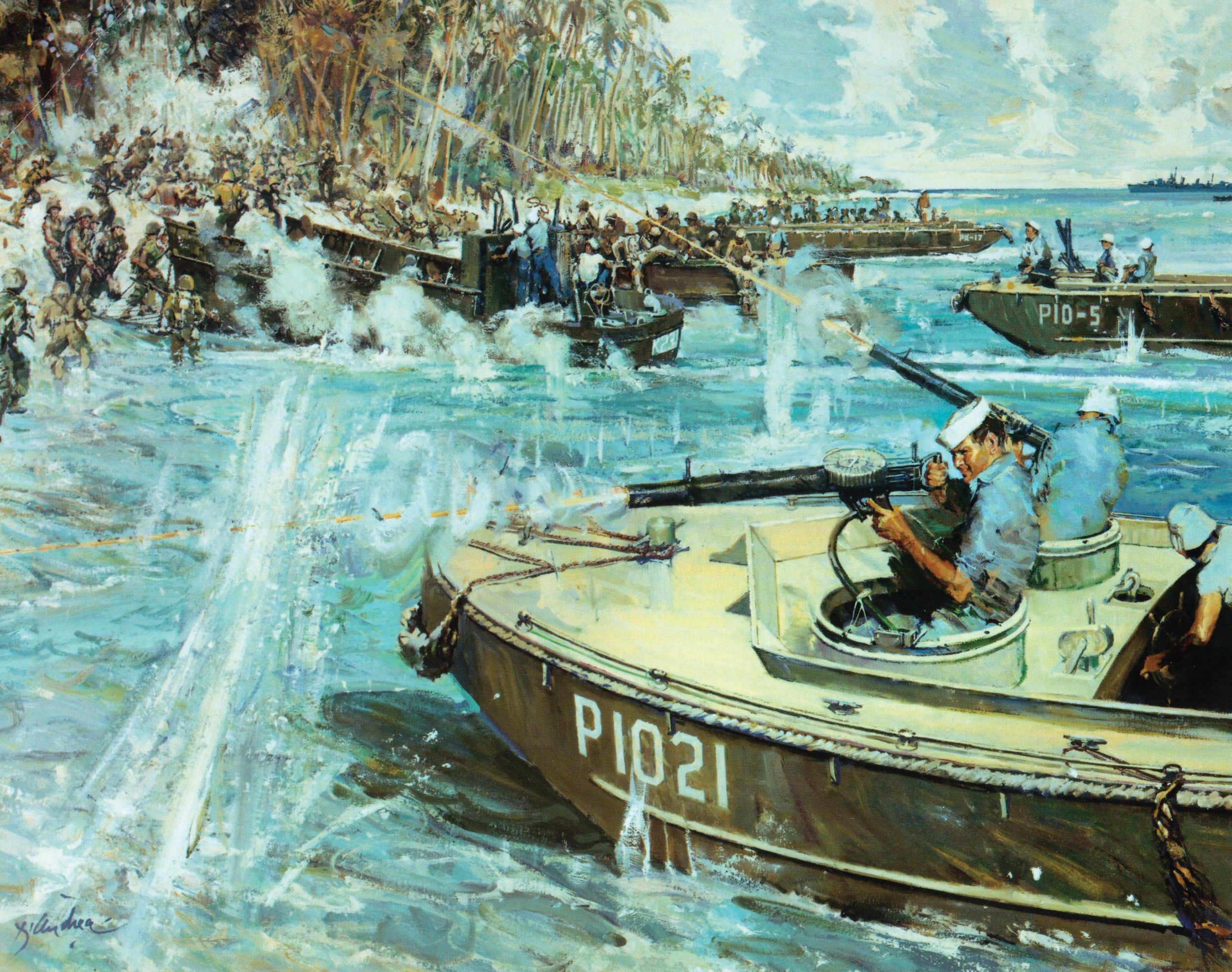
The modern wartime role of the Coast Guard is defined not just by the courage of its personnel, but by the cutting-edge hardware and software that allow it to integrate seamlessly with the broader Department of Defense (DoD) ecosystem. From advanced C4ISR systems to the implementation of artificial intelligence in littoral combat zones, the Coast Guard serves as a technologically advanced force multiplier in global conflicts.
Advanced Surveillance and Intelligence-Gathering Systems
In a wartime environment, information is the most valuable commodity on the battlefield. The Coast Guard’s primary technological contribution often involves Intelligence, Surveillance, and Reconnaissance (ISR). Because Coast Guard cutters frequently operate in “green water” (coastal) and “brown water” (riverine) environments where larger Navy destroyers might struggle to maneuver, they utilize specialized sensor suites to monitor enemy movements and secure vital shipping lanes.
Satellite Integration and Real-Time Monitoring
The Coast Guard utilizes Integrated Deepwater System protocols to maintain a common operating picture (COP) with other military branches. During wartime, Coast Guard cutters tap into the Wideband Global SATCOM (WGS) system, allowing for high-capacity communication and data transfer. This satellite tech enables cutters to transmit high-definition video feeds from remote locations back to Central Command in real-time. By leveraging Space-Based Radio Frequency (SBRF) data, the Coast Guard can identify and track “dark vessels”—ships that have turned off their Automatic Identification Systems (AIS) to avoid detection—providing critical data to the Navy’s strike groups.
Unmanned Aerial Systems (UAS) and Drone Reconnaissance
One of the most significant technological leaps for the Coast Guard in recent years is the integration of long-endurance drones. The MQ-9B SeaGuardian, for instance, provides the Coast Guard with an “eye in the sky” that can stay aloft for over 30 hours. These drones are equipped with multi-mode maritime surface search radar and Inverse Synthetic Aperture Radar (ISAR). In a combat scenario, this allows the Coast Guard to perform wide-area surveillance, detecting surface threats or submerged mines long before they pose a risk to the fleet. The use of small, cutter-launched UAS like the Boeing Insitu ScanEagle further extends the visual horizon of individual ships, providing tactical video for boarding parties and port security units.
Cyber Defense and Digital Security in Littoral Warfare
Modern warfare is no longer confined to physical battlefields; the digital front is equally critical. The Coast Guard plays a unique role in protecting the Maritime Transportation System (MTS), which is the backbone of global commerce and military logistics. During wartime, the technological focus shifts heavily toward Coast Guard Cyber Command (CGCYBER) and the protection of digital infrastructure.
Protecting Maritime Communication Infrastructure
The global supply chain relies on a complex web of automated systems, from port crane software to GPS-guided navigation. Enemy actors often use cyber-attacks to disrupt these systems, effectively “choking” a nation’s ability to move troops and supplies. The Coast Guard deploys Cyber Protection Teams (CPTs) that use advanced diagnostic tools to hunt for malware within port networks. These teams utilize sophisticated intrusion detection systems (IDS) and endpoint detection and response (EDR) software to fortify the digital perimeter of strategic ports of embarkation.
Electronic Warfare and Signal Scrambling
On the high seas, the Coast Guard’s National Security Cutters (NSCs) are equipped with the AN/SLQ-32 Electronic Warfare (EW) suite. This technology is designed to detect and deceive enemy radar-guided anti-ship missiles. In a wartime scenario, the Coast Guard uses EW tech to “mask” the electronic signature of high-value targets, such as cargo ships carrying military equipment. By employing signal jamming and electronic decoys, the Coast Guard ensures that the “noise” of the electromagnetic spectrum works in favor of allied forces, preventing the enemy from gaining a clear targeting solution.
Modernizing the Fleet: The Technology of Cutters and Tactical Crafts
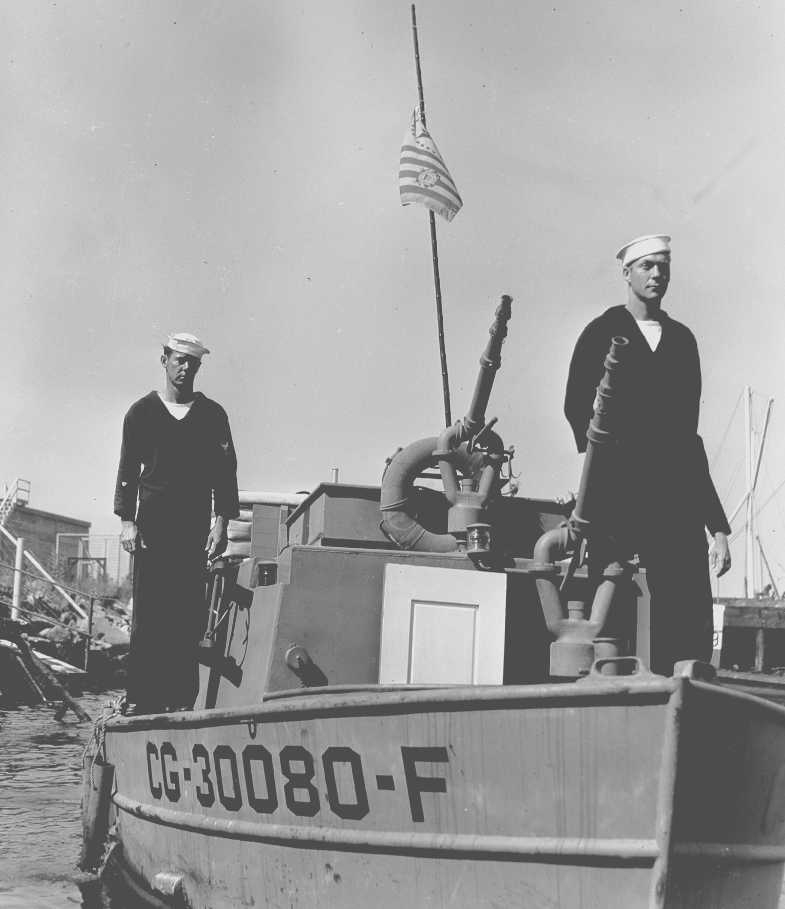
The vessels the Coast Guard sends into war zones are among the most technologically advanced ships in the world. No longer just “white hulls” for search and rescue, modern cutters are built with modularity and combat systems that rival those of traditional naval frigates.
High-Endurance Cutters and Integrated Weapons Systems
The Legend-class National Security Cutter (NSC) is the flagship of the Coast Guard’s wartime fleet. These vessels feature the Sea Commander C4ISR system, which integrates radar, sensors, and weaponry into a single user interface. This system is compatible with the Navy’s Aegis Combat System, allowing a Coast Guard vessel to “talk” to a Navy destroyer and share targeting data. In terms of hardware, these ships are equipped with the MK 110 57mm gun, which utilizes programmable 3P (Pre-fragmented, Programmed, Proximity-fuzed) ammunition. This tech allows the gun to engage everything from swarming small boats to aerial drones with extreme precision.
AI-Driven Navigation and Collision Avoidance
Operating in congested war zones or during “blackout” conditions requires superior navigational technology. The Coast Guard has begun integrating Artificial Intelligence (AI) into its bridge systems to assist with situational awareness. AI algorithms can process data from LIDAR, thermal imaging, and sonar to identify hazards that the human eye might miss, especially in low-visibility environments. This “computer vision” allows cutters to navigate safely through mined waters or narrow straits while maintaining a stealthy profile by minimizing active radar emissions.
Secure Communications and Interoperability with the Department of Defense
A primary challenge during war is ensuring that different branches of the military can communicate without being intercepted. The Coast Guard utilizes a sophisticated array of encrypted communication tools to bridge the gap between civilian maritime authorities and military commanders.
Encrypted Tactical Data Links
The backbone of wartime interoperability is the Tactical Data Link (TDL), specifically Link-16. This is a military tactical data link network used by the U.S. and NATO. By equipping Coast Guard assets with Link-16 terminals, the service can exchange near-real-time tactical data among several platforms. This means a Coast Guard helicopter can identify an enemy position and instantly “send” those coordinates to a Navy fighter jet or an Army artillery unit. This seamless data sharing is facilitated by software-defined radios (SDR) that can switch between frequencies and encryption protocols on the fly.
Biometric Scanning and Tactical Tech for Boarding Teams
During war, the Coast Guard is often tasked with Visit, Board, Search, and Seizure (VBSS) missions to prevent the smuggling of weapons or high-value targets. Boarding teams use handheld biometric devices, such as the HIIDE (Handheld Interagency Identity Detection Equipment), which can scan irises, fingerprints, and facial features. This data is instantly cross-referenced against global terrorist and combatant databases via encrypted satellite links. This ensures that enemy combatants hiding among civilian crews are identified and detained using data-driven precision rather than guesswork.
The Future of Maritime Combat: AI and Automation on the High Seas
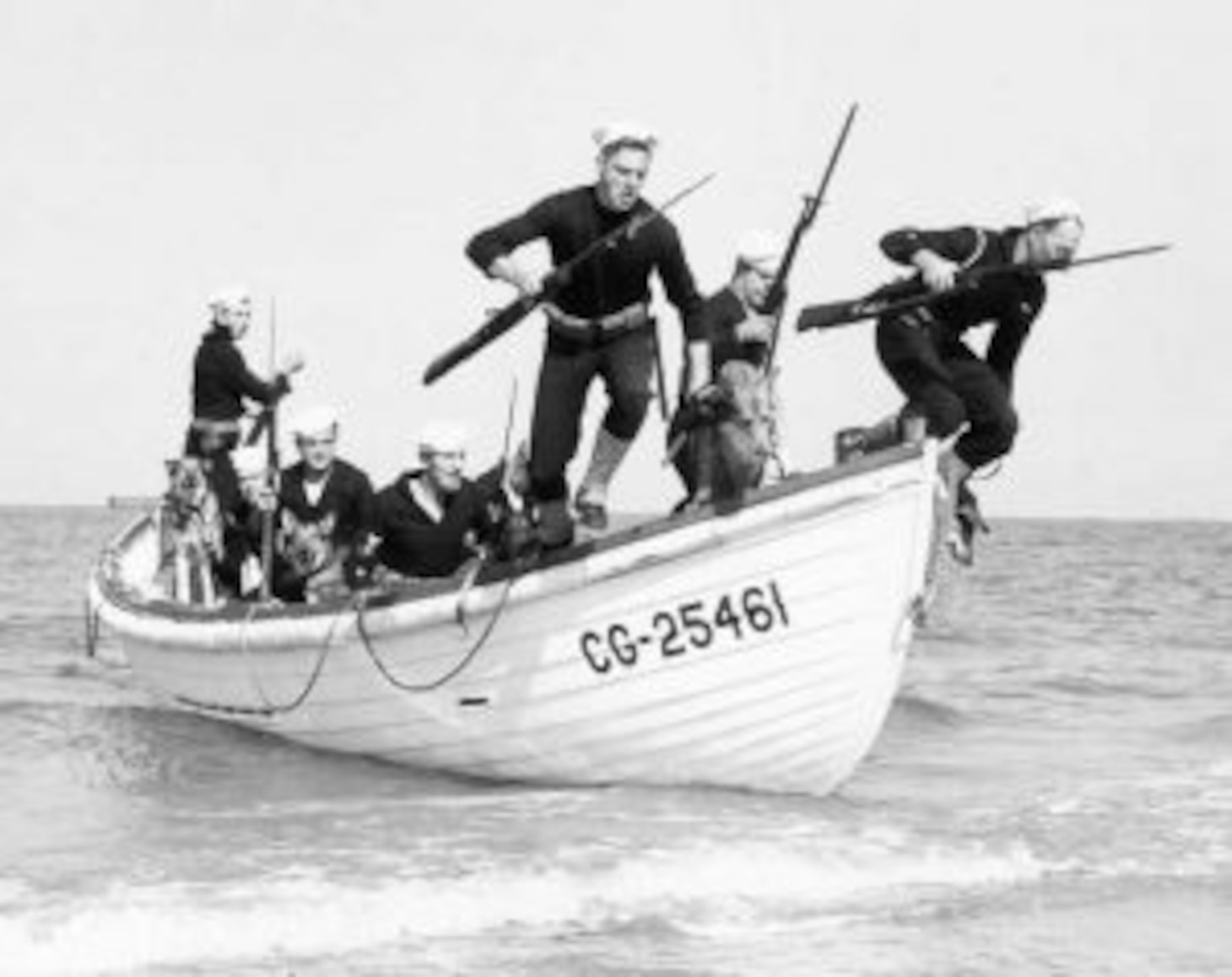
As the landscape of global conflict shifts toward “Great Power Competition,” the Coast Guard is increasingly looking toward the future of autonomous technology. The integration of Uncrewed Surface Vessels (USVs) is the next frontier. These “ghost ships” can be deployed in high-risk areas to act as remote sensor nodes, extending the reach of a manned cutter by hundreds of miles.
The use of AI-driven predictive analytics is also becoming a staple of Coast Guard wartime strategy. By analyzing historical traffic patterns and current intelligence, AI models can predict where illicit activity or enemy incursions are likely to occur. This allows the Coast Guard to pre-position its most advanced technological assets in a proactive, rather than reactive, posture.
In summary, when the Coast Guard goes to war, it serves as a high-tech sentinel of the seas. By leveraging advancements in satellite communications, cyber defense, autonomous systems, and integrated combat hardware, the USCG ensures that the nation’s maritime interests are protected. The shift from a lifesaving agency to a combat-ready force is made possible by a relentless focus on technological innovation, proving that even in the chaos of war, the Coast Guard remains Semper Paratus—Always Ready—through the power of digital and mechanical excellence.
aViewFromTheCave is a participant in the Amazon Services LLC Associates Program, an affiliate advertising program designed to provide a means for sites to earn advertising fees by advertising and linking to Amazon.com. Amazon, the Amazon logo, AmazonSupply, and the AmazonSupply logo are trademarks of Amazon.com, Inc. or its affiliates. As an Amazon Associate we earn affiliate commissions from qualifying purchases.