
In the intricate symphony of modern automotive engineering, countless small components work in harmony to deliver comfort, safety, and performance. Among these, often overlooked yet critically important, is the blend door actuator. This unassuming electromechanical device plays a pivotal role in your vehicle’s Heating, Ventilation, and Air Conditioning (HVAC) system, acting as the silent conductor of airflow that determines the precise temperature of your cabin. Far from a mere switch, the blend door actuator is a piece of essential automotive technology, directly translating your temperature preferences into tangible environmental control within your vehicle. Understanding its function is key to appreciating the sophistication of contemporary climate control systems and diagnosing issues that can significantly impact your driving experience.

The Core Technology Behind Climate Control
At its heart, the blend door actuator represents a fundamental interface between user input and mechanical output in the domain of vehicular climate management. It’s a testament to how small, precise electronic components can govern major comfort systems.
Deconstructing the HVAC System’s Brain
To fully grasp the blend door actuator’s significance, one must first understand the ecosystem it operates within: the vehicle’s HVAC system. This system is a complex network designed to provide heated, cooled, and filtered air to the passenger compartment. Key components include:
- Blower Motor: Forces air through the system.
- Evaporator Core: Cools air using refrigerant (for AC).
- Heater Core: Heats air using engine coolant.
- Blend Door (or Air Mix Door): A physical flap that controls the proportion of hot air from the heater core and cold air from the evaporator core that enters the cabin.
The blend door actuator is strategically positioned to manipulate this blend door. It doesn’t generate heat or cold itself, but rather regulates the mixture of already conditioned air. When you adjust the temperature dial or digital control panel in your car, you’re sending an electronic signal, not directly to the air itself, but to a control module. This module then interprets your desired temperature and sends a command to the blend door actuator, instructing it on how to position the blend door. This makes the actuator a crucial part of the system’s “brain,” executing precise instructions that originate from the user interface.
The Actuator: An Electromechanical Marvel
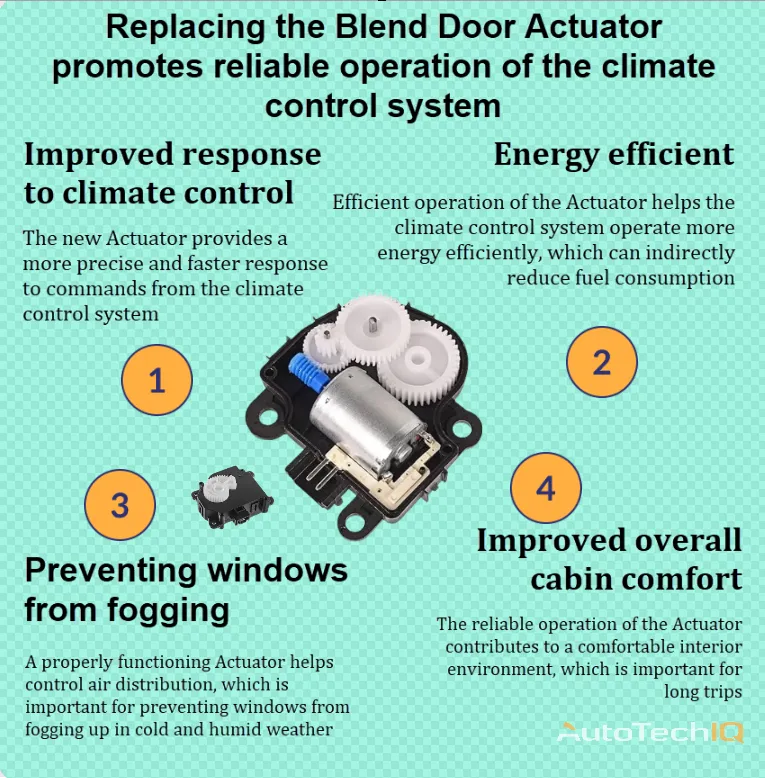
At a micro-level, the blend door actuator is a compact yet robust piece of engineering. Typically, it consists of a small electric motor, a set of gears, and sometimes a position sensor. When the control module sends a voltage signal, the electric motor within the actuator rotates. This rotation is then translated through the gear mechanism to move the blend door.
The position sensor, if present, is a critical component for modern, automatic climate control systems. It provides feedback to the control module, informing it of the exact angle or position of the blend door. This closed-loop feedback system allows for highly accurate temperature control. For instance, if you set your cabin temperature to 22°C (72°F), the system will continually monitor the cabin temperature and adjust the blend door position via the actuator to maintain that exact setting, making micro-adjustments as needed. This interplay between electronic command, mechanical movement, and sensor feedback is a hallmark of sophisticated electromechanical systems prevalent in contemporary automotive technology.
Precision Temperature Regulation and Driver Comfort
The evolution from rudimentary lever-and-cable climate controls to today’s digitally precise systems owes much to the development and integration of components like the blend door actuator. Its role extends beyond mere functionality; it directly enhances the driving experience by providing unparalleled comfort.
Blending Airflows for Optimal Comfort
The primary function of the blend door actuator is to achieve optimal temperature within the vehicle cabin by precisely mixing heated and cooled air. Imagine the system as having two separate air paths: one passing through the heater core and another through the evaporator. The blend door, controlled by the actuator, acts as a dynamic valve, opening or closing one path while simultaneously opening or closing the other.
- Cooler Temperatures: The actuator positions the blend door to allow more air to bypass the heater core and flow through the evaporator.
- Warmer Temperatures: The actuator shifts the blend door to direct more air through the heater core.
- Moderate Temperatures: The actuator finds a specific intermediate position, blending hot and cold air in precise proportions to achieve the desired temperature set point.
This granular control means that instead of just “hot” or “cold,” drivers and passengers can enjoy a stable, consistent temperature, free from uncomfortable fluctuations. It’s this continuous, subtle adjustment by the actuator that defines the quality of modern climate control.
From Manual Dials to Digital Precision

Early automotive climate control systems often relied on mechanical cables connected to levers on the dashboard. These cables directly manipulated the blend door and other flaps, offering limited precision and responsiveness. The introduction of electronic actuators marked a significant technological leap.
- Faster Response: Electronic signals travel instantaneously, allowing the blend door to react much more quickly to user input or changes in automatic climate control algorithms.
- Greater Accuracy: The electric motor and gear mechanisms in actuators, combined with position sensors, enable far more precise positioning of the blend door than mechanical linkages ever could. This means temperatures can be maintained within a much tighter range.
- Integration with Automatic Climate Control: This is perhaps the most significant benefit. Electronic actuators are essential for automatic climate control systems, which rely on sensors (cabin temperature, ambient temperature, sunlight) and algorithms to autonomously maintain a desired temperature. Without the precise, electronically controlled movement offered by the actuator, automatic systems simply wouldn’t be possible. This integration elevates user experience from simply adjusting a dial to setting a desired outcome, trusting the vehicle’s technology to manage the rest.
Recognizing and Diagnosing Actuator Malfunctions
Despite their robust design, blend door actuators, like any electromechanical component, can fail. When they do, the impact on cabin comfort is immediate and often frustrating. Recognizing the symptoms and understanding the diagnostic process is crucial for effective troubleshooting.
Common Symptoms of a Failing Actuator
A malfunctioning blend door actuator typically manifests through distinct symptoms related to inconsistent or uncontrollable temperature settings:
- Inconsistent Temperatures: The most common sign is an inability to control the cabin temperature. You might set the temperature to warm, but only cold air comes out, or vice versa. Sometimes, only one side of the vehicle (driver or passenger) might experience the correct temperature, especially in vehicles with dual-zone climate control, which often have multiple blend door actuators.
- Clicking, Thumping, or Grinding Noises: A common audible symptom is a repetitive clicking, thumping, or grinding noise coming from behind the dashboard. This often indicates stripped gears within the actuator itself. The motor tries to move the blend door, but the worn gears prevent proper movement, causing the motor to “slip” or engage incorrectly.
- Failure of Automatic Climate Control: If your automatic climate control system struggles to maintain the set temperature, or if the temperature constantly fluctuates without user input, a faulty actuator could be the culprit. The system might be sending commands, but the actuator isn’t executing them correctly.
- Diagnostic Trouble Codes (DTCs): Modern vehicles are equipped with sophisticated onboard diagnostics (OBD-II). A failing blend door actuator, particularly one with a position sensor, can trigger specific Diagnostic Trouble Codes (DTCs) related to the HVAC system, which can be read with a scanner.
The Diagnostic Process: A Tech Perspective
Diagnosing a blend door actuator issue requires a methodical approach, often leveraging specialized diagnostic tools:
- Using OBD-II Scanners: The first step for many technicians is to connect an OBD-II scanner to the vehicle’s diagnostic port. This tool can retrieve any stored DTCs, which might specifically point to an issue with an HVAC actuator. Advanced scanners can even command the actuator to move, allowing a technician to observe its response (or lack thereof) and listen for unusual noises.
- Visual Inspection and Auditory Checks: Sometimes, the issue is visibly apparent. If the actuator is accessible, a visual check for physical damage or loose connections can be performed. Listening carefully to the location of the noise while changing temperature settings can help pinpoint the exact actuator (many vehicles have multiple for various functions like defrost, vent, or floor).
- Testing Actuator Functionality: Beyond reading codes, a technician might use the scanner to perform “actuator tests,” cycling the blend door through its range of motion. Observing if the door moves smoothly, if the noise stops, or if the feedback sensor reports correct positions helps confirm a diagnosis. In some cases, power and ground signals to the actuator itself might be tested using a multimeter to rule out wiring issues. This blend of electronic diagnostics and hands-on observation underscores the technical expertise required.
Maintenance, Replacement, and Future Trends in HVAC Tech
While blend door actuators are generally designed for the lifespan of the vehicle, understanding factors influencing their longevity, the complexities of replacement, and the future trajectory of HVAC technology is important for any automotive enthusiast or owner.
Extending Actuator Lifespan
Direct maintenance for a blend door actuator is minimal due to its sealed nature and internal components. However, general vehicle maintenance practices can indirectly contribute to its longevity:
- Regular HVAC System Checks: Ensuring the entire HVAC system (refrigerant levels, cabin air filter cleanliness, heater core function) operates efficiently prevents any single component from being overworked. A clogged cabin filter, for example, can force the blower motor and potentially other components to work harder.
- Software Updates: In vehicles with advanced climate control modules, software updates released by the manufacturer can sometimes optimize actuator operation, refine calibration, and even address minor glitches that might otherwise lead to premature wear.
- Avoiding Extreme Settings (where possible): While designed to operate across its full range, constantly cycling the blend door from one extreme to another (e.g., full cold to full hot repeatedly) can induce more wear than stable operation. Using automatic climate control, which makes gradual adjustments, can be gentler on the components.
The Replacement Process: A Technical Challenge
Replacing a blend door actuator is often not a straightforward task, primarily due to its location. In many vehicles, actuators are buried deep within the dashboard, requiring significant disassembly of the interior. This can involve removing the glove compartment, parts of the center console, or even the entire dashboard.
- Complexity and Labor: The extensive labor involved often makes actuator replacement a costly repair, even though the part itself might be relatively inexpensive.
- Importance of Proper Calibration: After replacement, especially in vehicles with sophisticated automatic climate control, the new actuator often needs to be calibrated. This process teaches the control module the full range of motion of the new actuator, ensuring precise temperature control. Calibration typically involves specific steps outlined by the manufacturer or is performed using a diagnostic scan tool. Improper calibration can lead to persistent temperature issues even with a new actuator. This highlights the need for specialized tools and technical know-how.
The Road Ahead: Smarter Climate Control
The future of automotive HVAC systems, and by extension, the blend door actuator, points towards greater intelligence, efficiency, and personalization:
- Integration with Smart Car Features: Expect seamless integration with voice control, remote pre-conditioning via smartphone apps, and even predictive climate control based on calendar schedules or route information.
- More Efficient and Durable Designs: Manufacturers will continue to innovate with more robust materials, quieter motors, and more energy-efficient designs to improve actuator lifespan and reduce noise.
- Personalized Climate Zones: While dual-zone climate control is common, future systems may offer even finer granularity, allowing individual passengers to set highly personalized micro-climates within their seating area, potentially involving multiple, even smaller, actuators.
- Advanced Sensor Technology: Expect more sophisticated sensors that can detect individual occupant presence, skin temperature, and even physiological states to dynamically adjust climate control for maximum comfort and energy efficiency.
In conclusion, the blend door actuator, while a small cog in the grand machinery of a vehicle, is a powerful example of how discreet technological components contribute profoundly to the overall user experience. It embodies precision engineering, bridging the gap between digital command and mechanical execution to ensure your journeys are as comfortable as they are efficient. Understanding its role not only sheds light on the intricacies of modern vehicle systems but also underscores the continuous innovation driving automotive technology forward.
aViewFromTheCave is a participant in the Amazon Services LLC Associates Program, an affiliate advertising program designed to provide a means for sites to earn advertising fees by advertising and linking to Amazon.com. Amazon, the Amazon logo, AmazonSupply, and the AmazonSupply logo are trademarks of Amazon.com, Inc. or its affiliates. As an Amazon Associate we earn affiliate commissions from qualifying purchases.