
The human body, a marvel of intricate design and function, operates on principles that have long inspired scientific inquiry and technological innovation. At the forefront of this exploration lies the muscular system, with the biceps brachii muscle playing a pivotal role in our daily interactions with the physical world. While seemingly simple in its primary action, understanding what the bicep muscle does offers profound insights into biomechanics, the design of artificial limbs, the development of robotics, and even the creation of advanced human-computer interfaces. Far from being just a biological component, the bicep serves as a case study in efficient mechanical engineering, demonstrating principles of leverage, force generation, and coordinated movement that are actively replicated and augmented in the realm of technology.

The Fundamental Mechanics of Bicep Function: Biological Engineering in Action
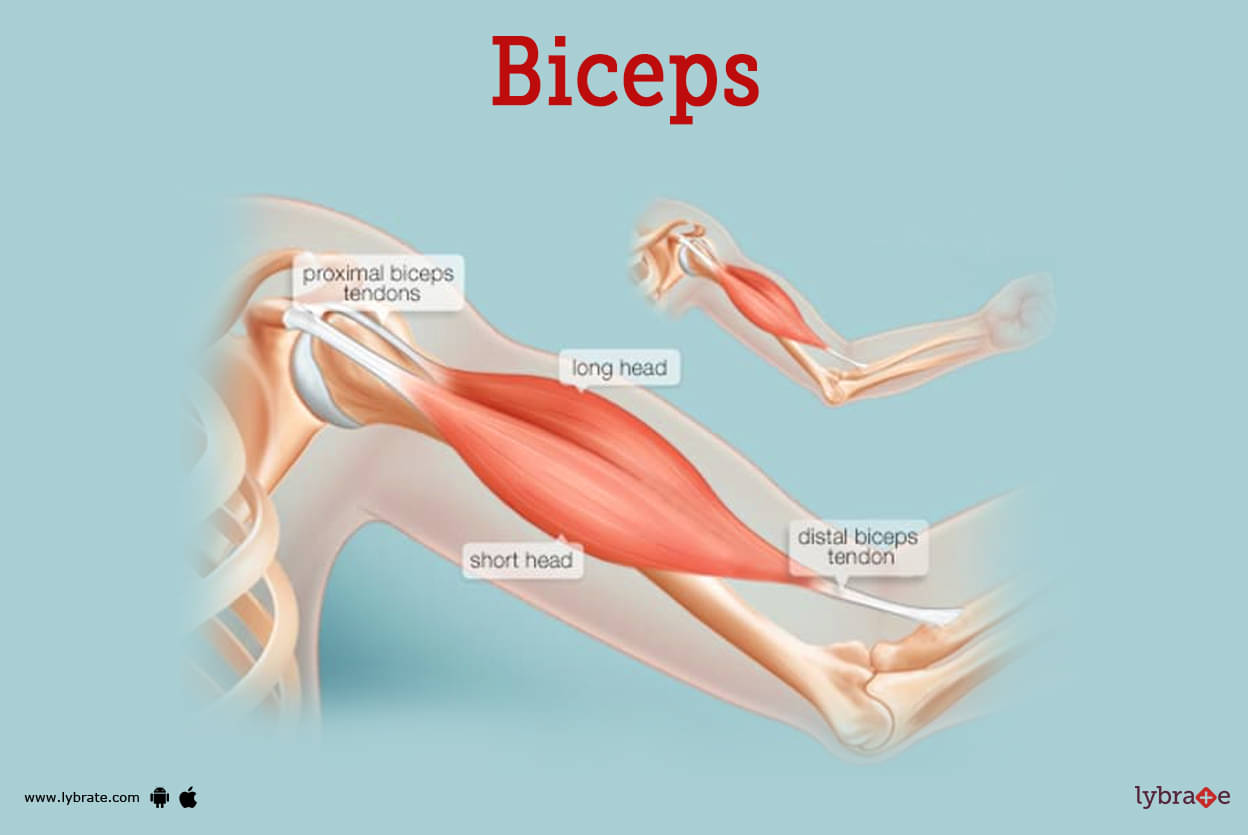
The biceps brachii, aptly named for its two heads (long and short), is situated on the anterior (front) of the upper arm. Its primary function is flexion of the elbow joint – the action of bending the arm. However, its role is more nuanced, involving not just the act of pulling, but also crucial contributions to forearm rotation and stabilizing the shoulder joint. From a purely biomechanical perspective, the bicep acts as a biological actuator, a sophisticated motor that translates neural signals into mechanical work. This process, refined over millions of years of evolution, embodies principles of efficiency and adaptability that engineers strive to emulate in artificial systems.
Force Generation and Leverage: The Bicep as a Biological Pulley System
At its core, the bicep muscle’s ability to move the forearm relies on the principles of leverage and force generation. The muscle belly itself, when it contracts, shortens. This shortening is transmitted through its tendon, which attaches to the radius bone in the forearm. The elbow joint acts as a pivot point (fulcrum). When the bicep contracts, it pulls the radius bone upwards, causing the forearm to bend. This is a classic example of a Class 3 lever system, where the effort (force applied by the bicep) is between the fulcrum (elbow joint) and the load (the forearm and anything it’s holding).
The anatomical arrangement of the bicep’s insertion point on the radius is critical. It is positioned relatively close to the elbow joint. This proximity means that while the bicep has to generate a greater force to overcome the weight of the forearm and any external load, it gains significant speed and range of motion at the hand. This biological design prioritizes rapid and extensive movement over brute strength for a given muscle size, a trade-off that is often considered in the design of mechanical systems where speed and dexterity are paramount. Understanding this delicate balance of force, leverage, and speed is fundamental to grasping the bicep’s functional elegance. It’s a testament to efficient biological engineering, where the structure dictates function, and that function is optimized for a wide range of tasks, from delicate manipulation to lifting moderate weights.
Supination: The Bicep’s Role in Rotational Dexterity
Beyond simple elbow flexion, the bicep brachii plays a significant role in the supination of the forearm – the rotation of the forearm so that the palm faces upwards or forwards. This action is achieved by the bicep’s unique attachment to the radius bone, which wraps around the ulna. When the bicep contracts, it not only pulls the radius to flex the elbow but also twists it, producing supination. This capability is essential for a vast array of everyday tasks, from holding a cup to turning a doorknob, and is a key component of fine motor control.
The integration of flexion and supination within a single muscle is a remarkable example of biological efficiency. It allows for complex, multi-planar movements to be executed with a relatively compact muscular structure. In technological terms, this dual function would be analogous to a robotic actuator capable of both linear extension/retraction and rotational manipulation. Such integrated capabilities in robotics are highly sought after, as they reduce the number of individual components required, leading to lighter, more energy-efficient, and more agile machines. The bicep, therefore, offers a blueprint for how biological systems can achieve complex kinematic outputs through elegant anatomical design.
Shoulder Stability: A Secondary but Critical Function
While the primary actions of the bicep are centered on the elbow and forearm, the long head of the biceps brachii tendon also passes through the shoulder joint capsule and inserts onto the supraglenoid tubercle of the scapula. This anatomical relationship means that the bicep also contributes to stabilizing the shoulder joint, particularly during arm movements. It helps to hold the head of the humerus (upper arm bone) in the glenoid cavity (shoulder socket), preventing dislocation and providing a stable base for more powerful movements generated by other muscles around the shoulder.
This secondary stabilizing role highlights the interconnectedness of the musculoskeletal system, where a single muscle can contribute to multiple biomechanical functions. In robotics and prosthetics, this concept translates to the design of systems where components serve dual or even triple purposes. A robotic arm might have actuators that not only move a limb but also help maintain structural integrity or dampen vibrations. The bicep’s contribution to shoulder stability underscores the principle of optimizing a biological structure for multiple, overlapping functional requirements, a key consideration in the development of sophisticated artificial systems that aim to replicate or surpass human dexterity and resilience.
Technological Emulation: From Prosthetics to Robotics
The detailed understanding of how the bicep muscle functions has been a cornerstone in the development of technologies designed to replicate or augment human movement. The principles of biological actuation, leverage, and multi-functional capabilities observed in the bicep are directly translated into the engineering of artificial limbs, advanced robotics, and even sophisticated human-computer interaction systems. By dissecting the bicep’s mechanics, engineers gain blueprints for creating more intuitive, efficient, and capable artificial counterparts.
Advanced Prosthetics: Replicating Bicep Dexterity
The development of advanced prosthetic limbs has been heavily influenced by the biomechanics of muscles like the biceps brachii. Early prosthetics were often rudimentary, offering basic grasping capabilities. However, modern prosthetics aim to mimic the natural range of motion, strength, and dexterity of a biological limb. For upper limb prosthetics, replicating the bicep’s combined elbow flexion and forearm supination is a critical goal.
Myoelectric prosthetics, for instance, use sensors to detect electrical signals generated by the contraction of remaining muscles in the residual limb. These signals are then processed to control motors within the prosthetic arm, which can perform elbow flexion and rotation. The challenge lies in translating these subtle electrical cues into the smooth, fluid, and precise movements that a biological bicep achieves. Engineers analyze the force-velocity relationships of the bicep, its fatigue characteristics, and its ability to perform dynamic tasks. This detailed understanding allows them to design control algorithms and actuator systems that can approximate the bicep’s capabilities, offering users a higher degree of functional restoration. Furthermore, the bicep’s role in stabilization has led to research in developing prosthetics that can actively stabilize the elbow joint, preventing unwanted movement and improving overall limb control. The aspiration is to create prosthetics that are not just tools, but extensions of the user’s will, seamlessly integrating with their intended actions, much like the natural bicep.

Robotics and Actuation: The Bicep as an Engineering Model
The field of robotics draws extensively from biological inspiration, and the bicep muscle provides a compelling model for actuation systems. The elegant combination of flexion and supination, along with its inherent efficiency and ability to adapt to different loads, makes it an ideal subject for robotic design. Engineers look at the bicep’s architecture – the arrangement of muscle fibers, tendons, and their attachment points – to inform the design of artificial muscles and actuators.
For example, research into soft robotics often draws from biological muscles. These robots utilize compliant materials and novel actuation methods to achieve movements that are more fluid and safer for human interaction than traditional rigid robots. Concepts inspired by muscle contraction, like pneumatic artificial muscles (PAMs) or electroactive polymers (EAPs), aim to mimic the way muscles shorten and generate force. Understanding the bicep’s biomechanical advantages, such as its ability to generate significant torque for its size and its smooth transitions between different states of contraction, guides the development of more sophisticated robotic manipulators. The bicep’s role in both power generation and fine motor control presents a challenge for roboticists: how to create actuators that are both strong enough for heavy lifting and precise enough for delicate manipulation. The biological solution, with its complex but integrated design, offers a powerful benchmark.
Human-Computer Interfaces (HCIs): Sensing and Responding to Biological Signals
The functional understanding of the bicep also has implications for the development of advanced Human-Computer Interfaces (HCIs). As HCIs evolve beyond keyboards and mice, there is a growing interest in leveraging biological signals to control digital devices. This includes not only the direct detection of muscle activity (electromyography or EMG) but also understanding how intended muscle actions translate into physical movements.
By studying how the bicep contracts and how those contractions are coordinated with other muscles to achieve specific tasks (like lifting a cup, turning a page, or typing), researchers can develop more intuitive control schemes for computers, virtual reality environments, and augmented reality systems. For instance, knowing that bicep flexion and supination are fundamental components of many common gestures allows for the design of interfaces that can interpret these movements. This could lead to hands-free control systems that are more natural and less prone to errors. The bicep’s contribution to fine motor control also informs the development of haptic feedback systems, where users can “feel” virtual objects, requiring an understanding of the forces and resistances that muscles like the bicep naturally experience. The functional output of the bicep, therefore, becomes a critical data point in the quest to create seamless and intuitive interactions between humans and machines.
Beyond Simple Movement: The Bicep’s Role in Performance and Ergonomics
The bicep muscle’s function extends beyond basic biological necessity. It is a key player in athletic performance, industrial ergonomics, and even in the development of assistive technologies that enhance human capabilities. Understanding its nuanced contributions allows for optimized training regimens, safer work environments, and the design of tools and equipment that better support human physiology.
Athletic Performance: Strength, Power, and Injury Prevention
In sports and athletic activities, the bicep is often associated with upper body strength. Its ability to generate force is crucial for activities like weightlifting, throwing, climbing, and even sports that involve gripping and manipulating objects, such as tennis or baseball. Athletes train their biceps to increase their force-generating capacity, improve their contraction speed, and enhance their endurance. This training aims to optimize the muscle’s ability to perform under high-demand conditions, contributing to overall athletic prowess.
However, effective athletic performance is not just about raw strength. It also involves coordinated movement and injury prevention. The bicep’s role in stabilizing the shoulder, as mentioned, is vital for preventing injuries during forceful movements. Furthermore, understanding the bicep’s biomechanics allows for the design of training programs that emphasize proper form and muscle activation. This helps to ensure that the bicep is working efficiently and in conjunction with other muscle groups, reducing the risk of strains, tears, or other common athletic injuries. The study of how the bicep performs under various stresses and strains provides critical data for sports scientists and physical therapists in developing rehabilitation protocols and performance enhancement strategies. It’s about understanding the muscle’s limits and how to push them safely and effectively.
Industrial Ergonomics: Designing for Efficient and Safe Work
The principles governing bicep function are directly applicable to industrial ergonomics, the science of designing workplaces and tools to maximize efficiency and minimize risk of injury. In environments where repetitive lifting, carrying, or manipulating objects is common, understanding how the bicep is engaged is crucial.
For instance, when designing assembly lines or material handling equipment, engineers consider the biomechanics of the arm and shoulder, including the role of the bicep. The angle of lift, the weight of the object, and the frequency of movement all impact the stress placed on the bicep and surrounding structures. By applying ergonomic principles informed by biomechanical studies of the bicep, designers can create workstations and tools that reduce strain, prevent fatigue, and lower the incidence of musculoskeletal disorders, such as carpal tunnel syndrome or rotator cuff injuries, which can be exacerbated by improper arm mechanics. This might involve designing tools with optimized grips, adjusting conveyor belt heights, or implementing assistive lifting devices that distribute the load more effectively, thereby reducing the demand on individual muscles like the bicep. The bicep’s functional limitations and capabilities serve as a critical guide in creating work environments that are both productive and safe.
Assistive Technologies: Augmenting Human Capabilities
The understanding of the bicep muscle’s function is also integral to the development of assistive technologies that augment human capabilities for individuals with physical impairments. This can range from simple tools designed to aid grip and lifting to more complex exoskeletons and robotic assistance devices.
For example, exoskeletons designed to assist with lifting or carrying heavy loads often incorporate actuators that mimic the power-generating capabilities of muscles like the bicep. These devices can offload a significant portion of the burden from the user’s own muscles, allowing them to perform tasks that would otherwise be impossible or extremely strenuous. Similarly, for individuals with limited arm strength due to injury or disease, devices that provide powered elbow flexion or forearm rotation can restore a significant degree of functional independence. The bicep’s primary functions of flexion and supination are often primary targets for these assistive technologies. By carefully studying the force, speed, and range of motion characteristics of a healthy bicep, engineers can design systems that provide appropriate levels of support and augmentation, helping individuals to regain lost function and improve their quality of life. The bicep’s biomechanical blueprint is thus instrumental in creating solutions that empower individuals and expand their physical potential.
In conclusion, the bicep muscle, while a fundamental part of human anatomy, serves as a sophisticated piece of biological engineering. Its multifaceted functions – from flexing the elbow and supinating the forearm to stabilizing the shoulder – are not merely about individual actions but about an integrated system of biomechanics that has profound implications for technological advancement. By studying what the bicep muscle does, we gain invaluable insights that drive innovation in prosthetics, robotics, human-computer interfaces, athletic training, industrial ergonomics, and assistive technologies. The continuous exploration of its capabilities allows us to build smarter, more efficient, and more human-centric technologies, ultimately enhancing our interaction with the physical world and improving the quality of life for many.
aViewFromTheCave is a participant in the Amazon Services LLC Associates Program, an affiliate advertising program designed to provide a means for sites to earn advertising fees by advertising and linking to Amazon.com. Amazon, the Amazon logo, AmazonSupply, and the AmazonSupply logo are trademarks of Amazon.com, Inc. or its affiliates. As an Amazon Associate we earn affiliate commissions from qualifying purchases.