
In the hyper-accelerated landscape of the 21st-century economy, the concept of “rest” is often viewed as a luxury, or worse, a sign of inefficiency. From the “rise and grind” culture of Silicon Valley to the relentless pace of the global gig economy, the pressure to produce is constant. However, when examining what the Bible says about the Sabbath, we find much more than a religious ritual; we discover a sophisticated economic framework designed to regulate productivity, manage debt, and ensure the long-term sustainability of personal and corporate wealth.
The Sabbath, as presented in the biblical text, serves as a foundational principle of financial stewardship. It is a mandatory interruption of the labor cycle that challenges the modern obsession with perpetual growth and offers a blueprint for achieving a balanced, prosperous financial life.

The Economics of the Seventh Day: Challenging the Perpetual Growth Myth
At its core, the biblical Sabbath is an economic protest. When the command to “Remember the Sabbath day, to keep it holy” was first given in the Decalogue, it was addressed to a people who had recently escaped a system of 24/7 forced labor. In the Egyptian model of production, there was no rest; the goal was the infinite accumulation of bricks for a centralized power structure. The Sabbath broke this cycle by introducing a hard stop to the production process every seven days.
From Extraction to Stewardship
The biblical narrative begins the concept of the Sabbath in the creation account of Genesis, where the Creator rests on the seventh day. From a financial perspective, this establishes the principle of “completion.” It suggests that productivity is not meant to be an endless, linear climb, but a rhythmic cycle. In business terms, this translates to the transition from an extractive mindset—where one attempts to squeeze every possible ounce of utility out of every hour—to a stewardship mindset.
Stewardship recognizes that the resources at our disposal, including our time and energy, are finite. By observing a Sabbath, a business owner or an individual investor acknowledges that their wealth is not solely a product of their own ceaseless activity. It fosters a psychological shift from “scarcity” (the fear that if I stop working, I will lose everything) to “abundance” (the belief that six days of focused, strategic labor are more effective than seven days of exhausted, mediocre effort).
The Theology of “Enough”
In the book of Exodus, the concept of the Sabbath was reinforced through the provision of manna in the wilderness. The Israelites were told to gather only what they needed for the day, but on the sixth day, they were to gather a double portion to cover the Sabbath. This is a profound lesson in financial planning and trust.
In a modern personal finance context, the Sabbath teaches the importance of the “buffer.” It encourages individuals to build systems where their survival and growth are not dependent on the very last hour of the work week. It challenges the “hustle culture” that views every moment of downtime as a lost opportunity for monetization. Instead, the Bible suggests that there is a point of “enough”—a financial boundary that allows for rest without the fear of ruin.
The Sabbatical Year: Ancient Debt Relief and Modern Financial Planning
While the weekly Sabbath is the most well-known iteration, the Bible expands this principle into larger economic cycles. The “Sabbatical Year” (Shemitah), described in Leviticus and Deuteronomy, occurs every seven years and has massive implications for debt management and capital allocation.
The Shemitah: A Systemic Reset for Debt-Ridden Economies
According to Deuteronomy 15, the seventh year was to be a year of “release.” Specifically, all debts between fellow Israelites were to be canceled. This was not merely a suggestion for charitable giving; it was a structural requirement for the economy. The purpose was to prevent the permanent entrenchment of a debtor class.
In today’s financial terms, the Sabbatical Year addresses the dangers of over-leveraging. It recognizes that debt, when left to accumulate indefinitely, becomes a weight that stifles innovation and consumes the consumer. While our modern legal systems use bankruptcy as a last resort, the biblical model suggests that periodic debt resets are necessary for a healthy, functioning economy. It encourages lenders to be cautious and borrowers to be mindful of the long-term cycles of their financial commitments.
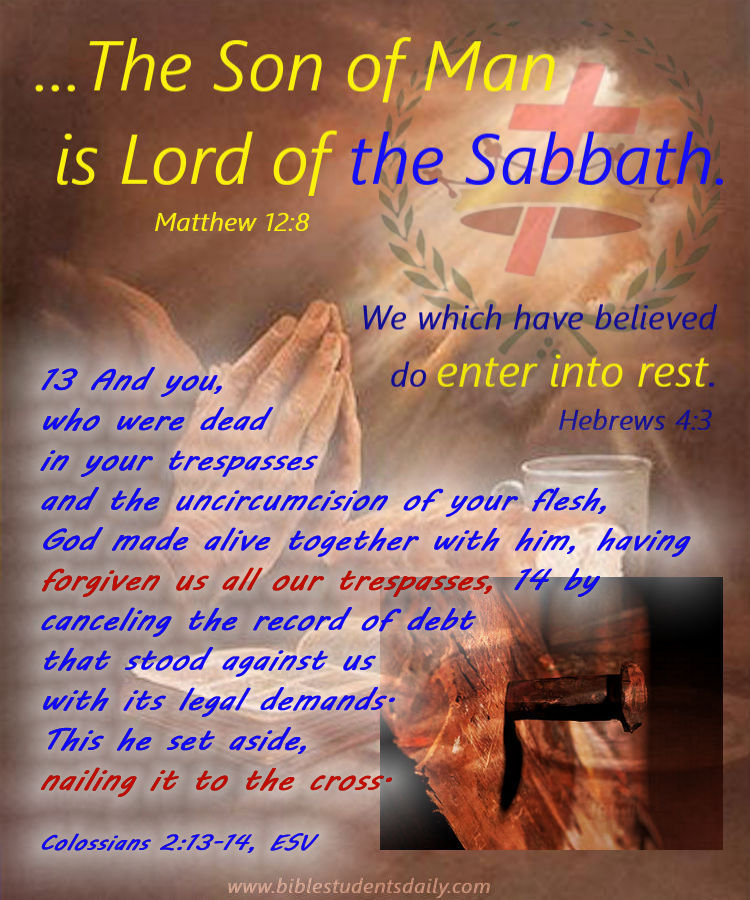
Strategic Reserves and the Seven-Year Cycle
The logic of the Sabbatical Year also applies to agricultural and resource management. The land was to lie fallow every seventh year. For a farmer, this meant no income from the fields for an entire year. This required rigorous financial planning and the building of “strategic reserves.”
Applying this to modern business finance, the Sabbatical principle advocates for a “margin of safety.” Just as the ancient Israelites had to save enough from years one through six to survive year seven, modern entrepreneurs and investors must build capital reserves that allow their businesses to survive downturns or periods of intentional inactivity. This is the antithesis of the “just-in-time” financial model, which leaves companies vulnerable to the slightest disruption in cash flow. The Sabbath teaches us that the highest form of financial sophistication is not maximizing profit in the short term, but ensuring survival and health over the long term.
Investing in Human Capital: Why the Sabbath is a Strategic Business Asset
A common misconception is that the Sabbath is purely a spiritual or “non-productive” day. However, when viewed through the lens of human capital management, the Sabbath is one of the most effective tools for increasing long-term ROI (Return on Investment).
Cognitive Capital and the Cost of Burnout
The Bible specifies that the Sabbath is for everyone: the employer, the employee, the foreigner, and even the livestock. This is a universal mandate for the preservation of the “means of production.” In the modern economy, our primary “means of production” is our cognitive ability—our focus, creativity, and decision-making capacity.
The financial cost of burnout is astronomical. Studies in organizational psychology consistently show that sleep-deprived and overworked individuals make poor investment decisions, lack creativity in problem-solving, and are prone to expensive errors. By mandating a day of total disconnection from labor, the Bible provides a mechanism for cognitive “rebooting.” This ensures that when the work week begins again, the individual is operating at peak efficiency. In this sense, the Sabbath is not an interruption of work; it is the very thing that makes high-quality work possible.
Sustainable Wealth Building vs. Rapid Extraction
The Sabbath forces a long-term perspective on wealth. Rapid extraction—the process of working oneself or one’s employees to the point of exhaustion to hit short-term targets—is a recipe for volatility. Sustainable wealth, as modeled in biblical wisdom literature, is built through steady, disciplined effort punctuated by rest.
Investors who practice a form of “Financial Sabbath”—perhaps by refusing to check market fluctuations on weekends or by taking periodic breaks from the “noise” of financial news—often find that they make more rational, less emotional decisions. They are not reactive to the 24-hour news cycle; instead, they are grounded in a rhythm that prioritizes clarity over activity.
The Sabbath and the Future of the Global Economy
As we move further into an era dominated by AI, automation, and the 24/7 digital marketplace, the biblical principles of the Sabbath are more relevant than ever. The lines between “work” and “life” have blurred, leading to a state of permanent availability that erodes our financial and mental well-being.
Sustainable Growth vs. Exponential Extraction
The global financial system is currently predicated on the idea of infinite, exponential growth. However, the Sabbath introduces the concept of “limits.” It suggests that for a system to be holy—or in secular terms, “healthy”—it must have boundaries. A market that never sleeps eventually consumes itself.
By integrating Sabbath-like rhythms into our personal finances and corporate cultures, we move toward a more sustainable economic model. This might involve the implementation of four-day work weeks, the “right to disconnect” laws being seen in some jurisdictions, or simply the personal discipline of a “Digital Sabbath” where one unplugs from all financial and professional platforms.

Final Thoughts on Financial Stewardship
Ultimately, what the Bible says about the Sabbath is that humans were not made to be mere units of production. Our value is not strictly tied to our hourly output or our net worth. Paradoxically, it is by stepping away from the pursuit of money for one day out of seven that we gain the perspective necessary to manage it wisely for the other six.
The Sabbath is a declaration of financial independence. It is a statement that we are not slaves to the market, to our debts, or to our own ambition. By honoring the Sabbath, we align ourselves with a rhythm of rest and restoration that protects our health, preserves our capital, and ensures that our pursuit of wealth does not come at the cost of our soul. In the end, the most profitable investment one can make is in the discipline of the pause.
aViewFromTheCave is a participant in the Amazon Services LLC Associates Program, an affiliate advertising program designed to provide a means for sites to earn advertising fees by advertising and linking to Amazon.com. Amazon, the Amazon logo, AmazonSupply, and the AmazonSupply logo are trademarks of Amazon.com, Inc. or its affiliates. As an Amazon Associate we earn affiliate commissions from qualifying purchases.