
The intersection of faith and finance is a subject that has occupied the minds of philosophers, economists, and theologians for millennia. In a modern era defined by rapid wealth accumulation, complex investment vehicles, and a globalized economy, the ancient wisdom found within biblical texts offers a surprisingly sophisticated framework for understanding the role of the affluent. Far from being a simple condemnation or a blanket endorsement of prosperity, the biblical perspective on rich people provides a nuanced blueprint for stewardship, ethical wealth management, and the psychological impact of financial success.
To understand what the Bible says about rich people, one must look past the surface-level warnings and examine the underlying principles of capital, influence, and responsibility. In the context of personal finance and business ethics, these principles serve as a guide for navigating the complexities of high-net-worth living while maintaining a focus on purpose over mere profit.

The Principle of Stewardship: Wealth as a Trust
One of the most foundational concepts regarding wealth in the Bible is the idea of stewardship. From a biblical perspective, the “rich” are not seen as the ultimate owners of their assets, but rather as managers or “stewards” of resources entrusted to them. This shift in perspective—from ownership to management—fundamentally changes how a person approaches financial planning and investment.
The Concept of Delegated Authority
In the biblical framework, all resources are viewed as belonging to a higher power, with individuals tasked to multiply and protect those resources for the greater good. This is perhaps most clearly illustrated in the Parable of the Talents. In this narrative, three servants are given different amounts of capital to manage while their master is away. The two who invest the capital and generate a return are commended, while the one who hides the capital out of fear is rebuked. For the modern wealthy individual, this suggests that the accumulation of wealth is not an end in itself but a means to produce value and growth.
The Responsibility of the High-Net-Worth Individual
Because wealth is seen as a trust, the Bible places a high premium on how that wealth is acquired and maintained. Proverbs and the prophetic books are replete with warnings against gaining wealth through exploitation, dishonest scales, or oppressive business practices. This aligns closely with modern concepts of Socially Responsible Investing (SRI) and Environmental, Social, and Governance (ESG) criteria. To be “rich” in a biblical sense involves a commitment to ethical excellence, ensuring that one’s portfolio does not grow at the expense of others’ dignity or well-being.
The Psychological Hazards of Affluence
While the Bible does not inherently condemn the possession of wealth, it is deeply concerned with the effect that wealth has on the human psyche. The “rich” are often warned about the seductive nature of financial security, which can lead to a sense of self-sufficiency that ignores the volatility of the material world.
The “Love of Money” vs. the Possession of Money
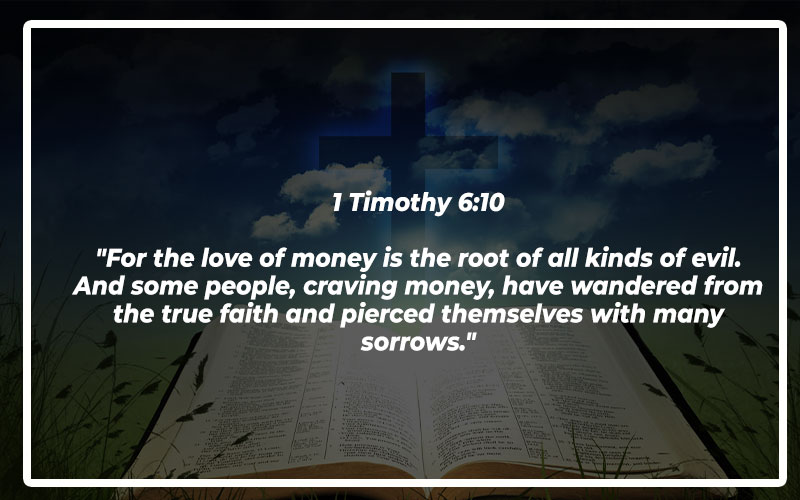
A common misquotation is that “money is the root of all evil.” However, the actual text in 1 Timothy 6:10 states that “the love of money is a root of all kinds of evil.” This is a crucial distinction in the world of personal finance. Money is an amoral tool—a medium of exchange. The “love of money,” however, describes an unhealthy emotional and psychological attachment to wealth that prioritizes accumulation over character and relationships. For the affluent, the challenge is to possess wealth without being possessed by it.
The Camel and the Eye of the Needle
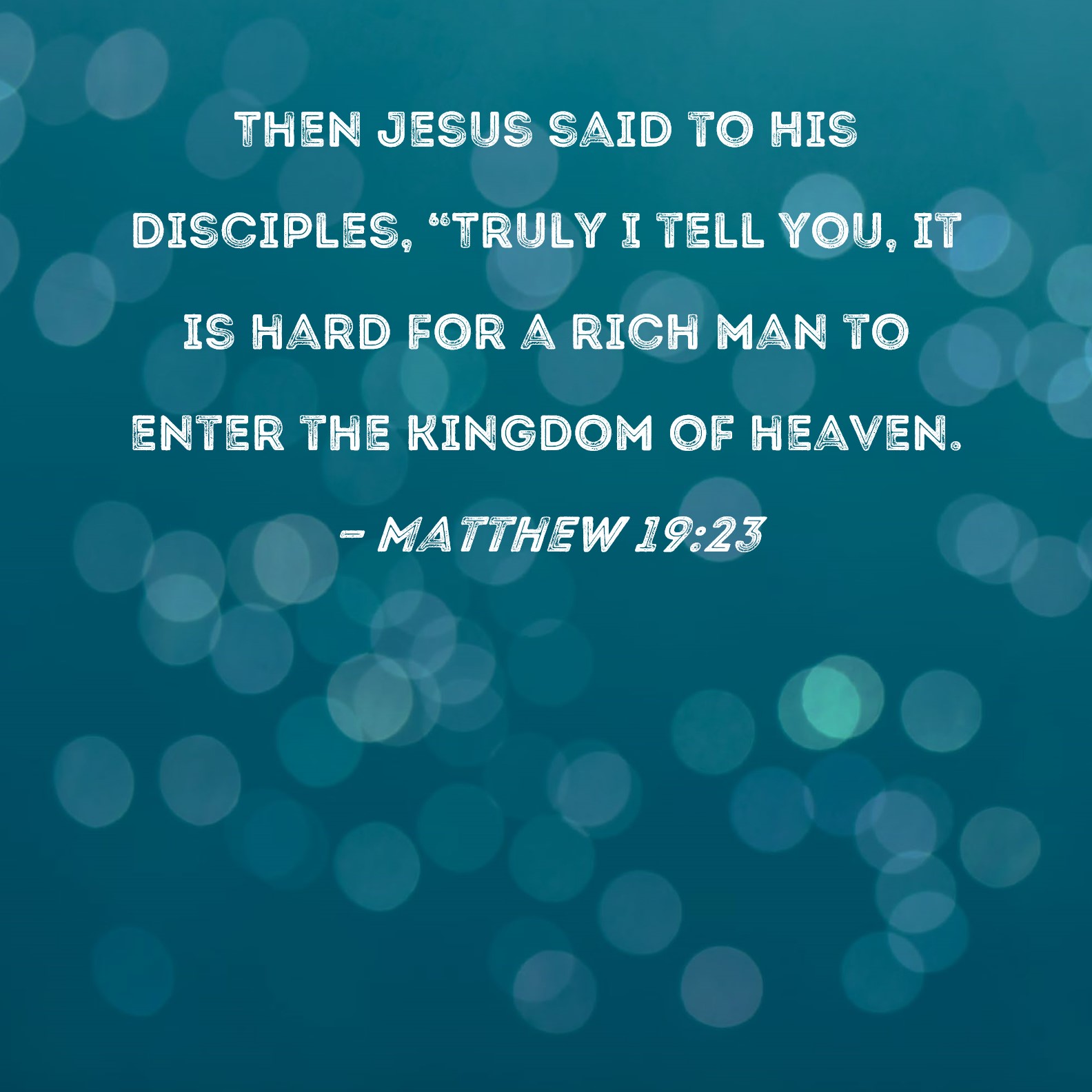
Jesus’ famous statement that it is easier for a camel to go through the eye of a needle than for a rich person to enter the kingdom of God is often interpreted as a total rejection of wealth. However, historical and linguistic context suggests it is a warning about the “clutter” of affluence. Wealth creates a safety net that can make an individual feel invincible, leading to a “hardening” of the heart against the needs of others and the reality of their own limitations. The biblical advice to the rich is not necessarily to divest of all assets, but to ensure that their identity is not anchored in their balance sheet.
Strategic Wealth Management and Long-Term Thinking
Beyond ethical warnings, the Bible offers practical, strategic advice that mirrors high-level financial planning. It advocates for a balanced approach to wealth that emphasizes diversification, patience, and the avoidance of debt.
Diversification and Risk Mitigation
Ecclesiastes 11:2 offers a primitive but effective strategy for asset allocation: “Invest in seven ventures, yes, in eight; you do not know what disaster may come upon the land.” In modern terms, this is a clear endorsement of diversification. The Bible recognizes that markets are volatile and that “rich people” must protect their capital by spreading risk across various sectors and asset classes. This pragmatic view acknowledges the uncertainty of the future and the necessity of prudent risk management.
The Power of Compounding and Patience
The Book of Proverbs frequently contrasts “get-rich-quick” schemes with the steady accumulation of wealth. Proverbs 13:11 notes that “wealth gained hastily will dwindle, but whoever gathers little by little will increase it.” This is the biblical equivalent of the principle of compound interest. It encourages the rich to focus on long-term sustainability rather than volatile, high-risk speculation. A professional approach to wealth management, according to these texts, involves discipline, time, and the avoidance of “the borrower is slave to the lender” dynamics (Proverbs 22:7).
The Social Utility of Wealth: Beyond Personal Consumption
A central theme in biblical teachings regarding the rich is the concept of “conduit wealth.” The idea is that wealth should flow through an individual to meet the needs of the community, rather than pooling in a stagnant reservoir of personal luxury.
Radical Generosity as a Financial Strategy
The Bible encourages the wealthy to be “rich in good deeds.” This is not merely a moral suggestion but is presented as a way to achieve a “firm foundation for the coming age.” In a modern financial context, this translates to philanthropy and impact investing. The affluent are encouraged to view their excess capital as a tool for systemic change—supporting education, alleviating poverty, and funding innovation. This level of generosity is intended to break the psychological grip of greed while simultaneously improving the economic ecosystem in which the wealthy person operates.
The Tithe and the Concept of First-Fruits
The tradition of the “tithe” (giving ten percent of one’s income) served as a structural reminder of the stewardship principle. For the wealthy, the tithe represented a baseline of participation in the communal welfare. However, the biblical expectation for those with significant surplus often goes beyond the ten percent. The rich are called to practice “grace-based giving,” which is proportional to their success. This creates a cycle of circulation that prevents the economic stagnation often associated with extreme wealth inequality.
Integrity in the Marketplace: The Foundation of Sustainable Success
For those who are “rich” or aspiring to be, the Bible places a high premium on the methods used to build a business or investment portfolio. Economic success is viewed as sustainable only when built on a foundation of integrity.
Honest Scales and Fair Wages
The Bible is uncompromising when it comes to business ethics. It demands “just weights and measures” (Leviticus 19:36) and the timely payment of fair wages. For the modern entrepreneur or corporate executive, this means that profitability should never come at the expense of transparency or fair labor practices. Biblical wisdom suggests that wealth built on exploitation is structurally unsound and will eventually collapse. Conversely, wealth built on trust and value creation is seen as a blessing that can endure for generations.
The Legacy of the Righteous
The ultimate goal of wealth in the Bible is often described in terms of “legacy.” Proverbs 13:22 says, “A good man leaves an inheritance to his children’s children.” This implies a multi-generational view of wealth. It is not about the consumption of the present generation but the empowerment of the next. This requires a sophisticated approach to estate planning, succession, and the transmission of values along with assets. The “rich” are tasked with building something that outlasts their own lifespan, ensuring that their financial success serves as a platform for future generations to build upon.
Conclusion: A Balanced Perspective on Prosperity
In summary, the Bible’s stance on rich people is neither a condemnation of success nor a carte blanche for greed. Instead, it offers a rigorous ethical and psychological framework for managing high levels of capital. It views wealth as a powerful tool that carries significant risks of pride and isolation, but also immense potential for social good and generational impact.
For the modern investor or business leader, these ancient texts suggest that the highest form of wealth is found in “stewardship”—the disciplined, ethical, and generous management of resources. By viewing wealth as a trust, maintaining psychological distance from one’s assets, practicing diversification, and prioritizing social impact, the affluent can navigate the complexities of the financial world with a sense of purpose that transcends the bottom line. The biblical message to rich people is clear: wealth is a responsibility to be managed, a tool to be used, and a legacy to be built with integrity.
aViewFromTheCave is a participant in the Amazon Services LLC Associates Program, an affiliate advertising program designed to provide a means for sites to earn advertising fees by advertising and linking to Amazon.com. Amazon, the Amazon logo, AmazonSupply, and the AmazonSupply logo are trademarks of Amazon.com, Inc. or its affiliates. As an Amazon Associate we earn affiliate commissions from qualifying purchases.