
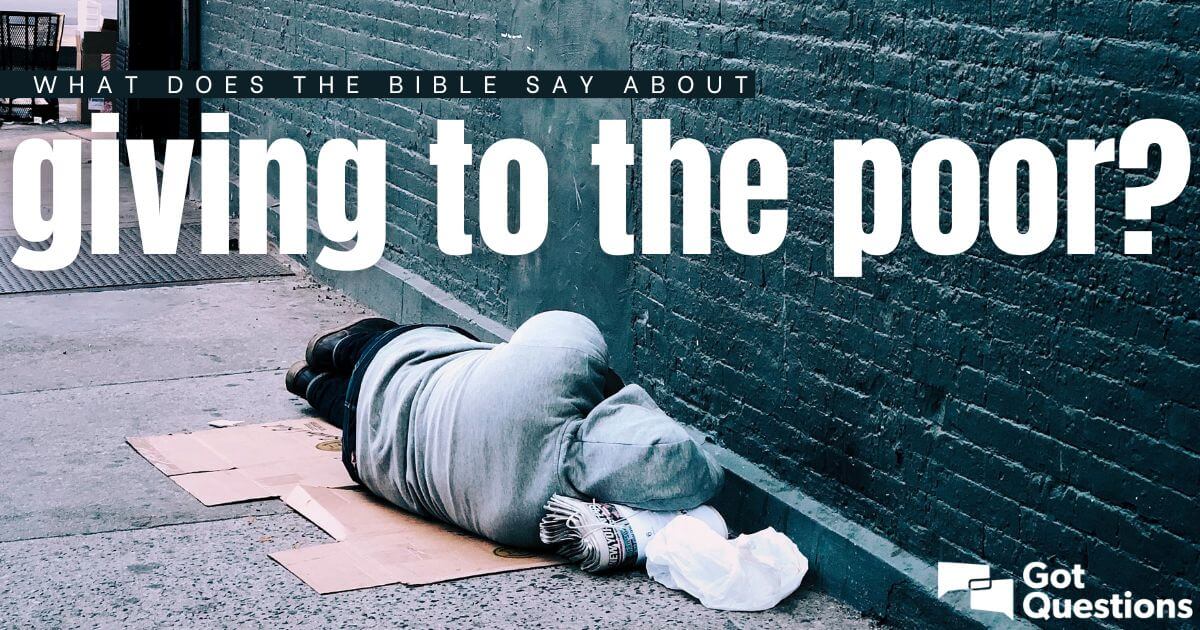
In the modern financial landscape, wealth is often measured by accumulation, net worth, and the compounding interest of diversified portfolios. However, when examining the intersection of ancient wisdom and contemporary personal finance, a different metric emerges. The Bible, a text that contains more than 2,000 verses regarding money and possessions, offers a comprehensive framework for how capital should be managed, specifically regarding its distribution to those in need. For the modern investor or business professional, understanding what the Bible says about giving to the poor is not merely a matter of religious observance; it is a lesson in stewardship, financial psychology, and the ethical allocation of resources.
The Foundational Principle: Stewardship vs. Ownership
To understand the biblical approach to giving, one must first master the concept of stewardship. In mainstream personal finance, the individual is viewed as the absolute owner of their assets. In the biblical model, however, the individual serves as a “steward” or a fund manager. The foundational premise is that all capital belongs to a higher authority, and the individual is tasked with its management for the greater good.
The Concept of the Trustee
When an individual views their wealth as a trust rather than a personal possession, the act of giving to the poor shifts from an act of “losing” money to an act of “deploying” capital according to the owner’s instructions. This perspective is a powerful tool in mitigating the psychological pain of parting with money. Financial experts often note that the “pain of paying” can hinder long-term wealth strategies. By adopting a stewardship mindset, an investor can make more objective decisions about charitable allocations, viewing them as necessary line items in a balanced financial life.
Breaking the Scarcity Mindset
A scarcity mindset—the belief that resources are finite and one must hoard to survive—often leads to poor financial decision-making, such as panic selling or refusing to diversify. The biblical injunction to give to the poor challenges this mindset. It operates on the principle of abundance: that by releasing a portion of one’s capital, one creates room for further growth and avoids the stagnation that comes with “clutching” resources too tightly. This is essentially an early form of circulation theory, suggesting that for an economy (or a personal portfolio) to be healthy, capital must flow.
Biblical Mandates for Philanthropy and Wealth Distribution
The Bible does not merely suggest giving; it provides specific, structured mandates that resemble a modern social security or welfare system. These structures were designed to ensure that the most vulnerable members of society—the “widow, the orphan, and the stranger”—were not left behind by the mechanisms of trade and agriculture.
The Law of the Tithe and the Poor Tithe
In the ancient Hebrew economy, the tithe (meaning a tenth) was a standard tax-like contribution. While much of it supported the religious infrastructure, every third year, a specific “poor tithe” was collected to be distributed locally. This provides a clear financial guideline: a structured, percentage-based approach to giving. In modern personal finance, this translates to “percentage-based budgeting.” Instead of giving what is “left over,” the Bible suggests that a percentage should be allocated off the top—a strategy similar to the “Pay Yourself First” model, but redirected as “Pay the Community First.”
Gleaning: The Original Social Safety Net
One of the most profound biblical economic laws is the practice of “gleaning.” Landowners were commanded not to harvest the very edges of their fields or to go back over the vines a second time. These “leavings” were reserved for the poor. From a business perspective, this is a lesson in intentional inefficiency for social benefit. It suggests that a corporation or a business owner should not seek to extract every last cent of profit if doing so comes at the expense of community resilience. It is a call for a “socially responsible” profit margin, where the “corners” of our business models are left accessible for those in need of opportunity.
The Financial Psychology of Giving
Generosity is often discussed in moral terms, but it has significant implications for financial psychology and behavioral economics. The Bible frequently connects the act of giving to the poor with the internal state of the giver, suggesting that how we treat the less fortunate is a direct reflection of our relationship with money itself.
The Correlation Between Generosity and Wealth Management
Research in behavioral finance suggests that individuals who practice regular giving tend to have better control over their impulsive spending. The Bible echoes this, warning that “the one who loves money will not be satisfied with money.” By giving to the poor, a person periodically “breaks the power” of accumulation. It serves as a psychological recalibration, ensuring that money remains a tool for service rather than a master of one’s identity. This emotional intelligence is crucial for high-net-worth individuals who must navigate the pressures of maintaining and growing wealth without succumbing to the “hedonic treadmill.”
Asymmetric Returns: The Promise of Reward
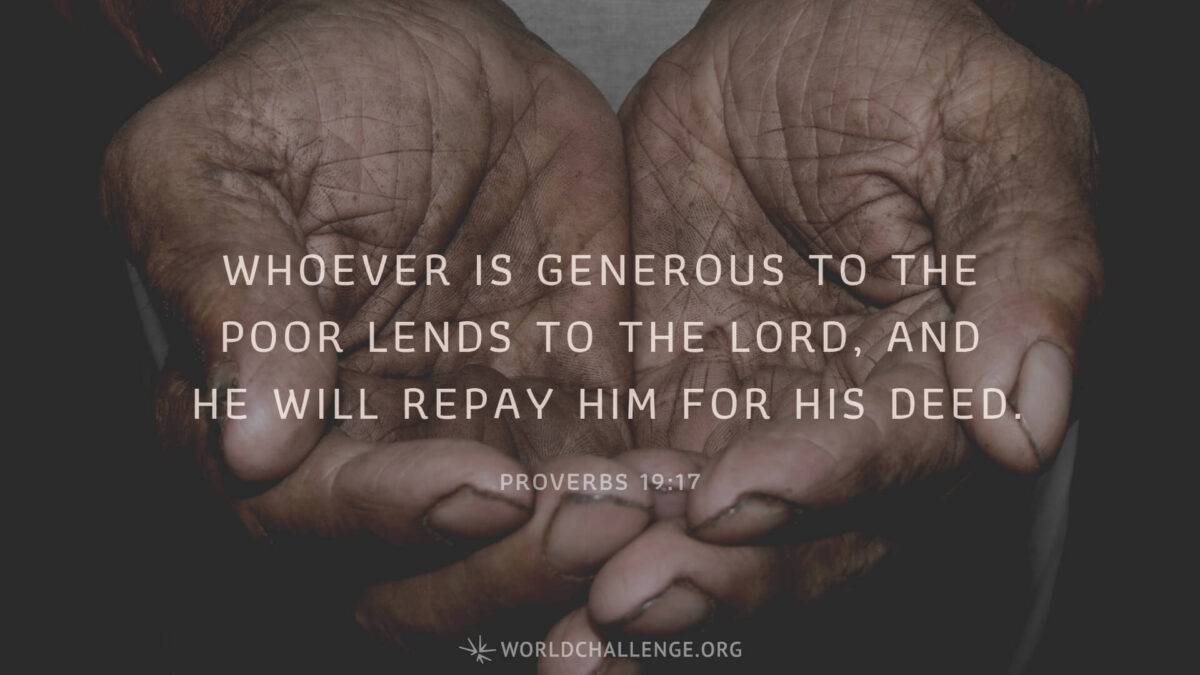
The Bible often uses investment language when discussing giving. Proverbs 19:17 famously states, “Whoever is kind to the poor lends to the Lord, and he will reward them for what they have done.” This frames giving as a high-yield investment with a guaranteed return, albeit one that might not always be measured in liquid currency. In a financial sense, this encourages a long-term view. While a charitable donation is a 100% loss of capital in the short term, the biblical perspective suggests it is a strategic placement of assets into a “heavenly” or “eternal” account that yields dividends in peace, purpose, and community stability.
Practical Frameworks for Modern Biblical Giving
Applying biblical principles to giving in the 21st century requires more than just dropping a coin in a bucket. It requires the same level of due diligence, strategy, and analytical rigor that one would apply to a stock market investment or a real estate deal.
Strategic Philanthropy and Impact Investing
The Bible encourages giving “cheerfully” and “purposely.” In financial terms, this means avoiding “guilt-based” giving and instead moving toward “impact-based” giving. Strategic philanthropy involves identifying organizations that tackle the root causes of poverty—such as lack of education, poor healthcare, or systemic injustice—rather than just treating the symptoms. For the modern professional, this might involve using a Donor Advised Fund (DAF) to maximize tax advantages while ensuring a steady stream of capital is available for charitable causes.
Evaluating Impact and Financial Due Diligence
Just as a venture capitalist vets a startup, a biblical giver should vet the “stewardship” of the organizations they support. The Bible warns against the waste of resources. Therefore, giving to the poor should involve looking at the administrative overhead, the transparency, and the measurable outcomes of a non-profit. Does the organization empower the poor to become self-sufficient, or does it create a cycle of dependency? Biblical giving is ultimately aimed at restoration—helping the poor move from a state of deficit to a state of agency and productivity.
Long-term Wealth and the Legacy of Generosity
Finally, the Bible views giving to the poor as a key component of a multi-generational wealth strategy. It is not just about the current balance sheet; it is about the legacy that is left behind.
Building a Multi-generational Financial Identity
One of the greatest risks to intergenerational wealth is the “shirtsleeves to shirtsleeves in three generations” phenomenon, where the third generation squanders the family fortune. Often, this happens because the descendants have a sense of entitlement but no sense of responsibility. Teaching the next generation to give to the poor, based on biblical mandates, instills a sense of duty and stewardship. It provides a “North Star” for the family’s wealth, ensuring that the capital is used for more than just personal consumption.

The Role of Compassion in Business Finance
In a corporate context, giving to the poor is often categorized under Corporate Social Responsibility (CSR). However, a biblical approach integrates this into the very DNA of the business. Companies that prioritize the well-being of the poor—whether through fair wages, ethical sourcing, or direct community investment—often see higher levels of employee engagement and consumer loyalty. In the long run, “doing good” often leads to “doing well,” creating a sustainable ecosystem where the business and the community flourish together.
In conclusion, what the Bible says about giving to the poor is a sophisticated blueprint for financial health. It moves beyond simple charity and into the realms of capital allocation, psychological resilience, and long-term legacy. By viewing wealth through the lens of stewardship, adhering to structured generosity, and applying rigorous due diligence to charitable acts, individuals can build a financial life that is not only prosperous but also profoundly meaningful. Giving to the poor is not a subtraction from one’s net worth; it is an investment in a more equitable, stable, and purposeful world.
aViewFromTheCave is a participant in the Amazon Services LLC Associates Program, an affiliate advertising program designed to provide a means for sites to earn advertising fees by advertising and linking to Amazon.com. Amazon, the Amazon logo, AmazonSupply, and the AmazonSupply logo are trademarks of Amazon.com, Inc. or its affiliates. As an Amazon Associate we earn affiliate commissions from qualifying purchases.