
The Bible, a foundational text for billions worldwide, offers a comprehensive perspective on financial matters, including the complex issue of debt. Far from being a silent observer, scripture provides principles and admonishments that have guided believers through centuries of economic realities. Understanding this biblical counsel is crucial for anyone seeking financial stewardship and freedom, whether they are grappling with existing debt or contemplating taking on new obligations. This exploration delves into the biblical stance on debt, examining its wisdom for navigating our modern financial landscape.
The Risks and Consequences of Debt
The Bible repeatedly highlights the inherent dangers and potential pitfalls associated with debt, framing it not merely as a financial transaction but as a matter with spiritual and relational implications. The proverbs, in particular, are replete with warnings about the burdens and entanglements that debt can bring.

Debt as a Form of Bondage
One of the most profound biblical perspectives on debt is its portrayal as a form of bondage. The book of Proverbs states, “The rich rules over the poor, and the borrower is the slave of the lender” (Proverbs 22:7). This verse succinctly captures the power imbalance inherent in debt. When one incurs debt, they enter into a dependency relationship. The lender, by virtue of holding a claim over the borrower’s future resources or assets, gains a significant degree of control. This control can manifest in various ways, from dictating payment terms to influencing financial decisions. Over time, accumulating debt can erode a person’s autonomy, making it difficult to pursue personal goals, make independent choices, or even respond to unexpected life events without the lender’s constraints looming large. The “slave” metaphor is not hyperbole; it speaks to the real loss of freedom and the oppressive weight that debt can impose.
The Wisdom of Avoiding Unnecessary Borrowing
Scripture encourages a lifestyle of prudence and self-sufficiency, advocating for the avoidance of debt whenever possible. The book of Deuteronomy contains a series of commands and principles related to debt, particularly concerning the release of debts and the treatment of those who owe. While these laws were part of a specific covenant for ancient Israel, the underlying principles of responsible financial behavior remain relevant. The emphasis on careful consideration before borrowing stems from the understanding that debt can easily spiral out of control, leading to hardship and regret. The temptation to acquire goods or services immediately, often fueled by societal pressure or personal desires, can lead to borrowing that is not truly necessary. The Bible’s counsel pushes against this instant gratification mentality, promoting patience and diligent saving instead. This approach safeguards individuals from the stress and potential ruin that can accompany unmanageable debt.
The Impact of Debt on Relationships and Testimony
Beyond the individual, debt can have a detrimental impact on relationships and one’s spiritual testimony. Financial strain is a leading cause of stress and conflict within families. When individuals or couples are burdened by debt, it can create tension, arguments, and a sense of hopelessness that spills over into all areas of their lives. Moreover, for believers, how they manage their finances, including debt, can either reflect positively or negatively on their faith. A consistent pattern of financial irresponsibility, characterized by accumulating and failing to repay debt, can undermine their credibility and make it harder for others to see the transformative power of their beliefs. Conversely, a commitment to financial integrity and a diligent effort to manage and eliminate debt can serve as a powerful testimony to the principles they uphold.
Principles of Responsible Debt Management
While the Bible strongly cautions against debt, it also acknowledges that there may be circumstances where borrowing is unavoidable or even necessary. In such situations, scripture provides principles for responsible debt management that emphasize fairness, honesty, and a commitment to fulfilling one’s obligations.
The Importance of Keeping Promises and Repaying Dues
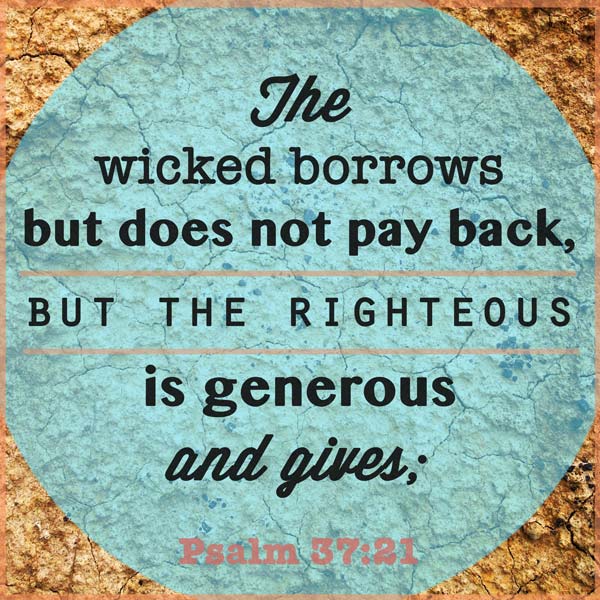
A recurring theme in biblical teachings on financial matters is the sanctity of a promise and the imperative to honor one’s commitments. “Let your ‘Yes’ be ‘Yes,’ and your ‘No’ be ‘No'” (Matthew 5:37) is a principle that extends to all agreements, including financial ones. When an individual borrows money, they are making a promise to repay it. Failing to do so is not just a breach of contract; in a biblical framework, it is a failure to uphold one’s word. The book of Psalms extols the virtues of a righteous person, stating, “He who walks righteously and works righteousness, and speaks truth in his heart; who does not slander with his tongue, nor does evil to his neighbor, nor takes up a reproach against his neighbor; who despises a vile person but honors those who fear the LORD; who swears to his own hurt and does not change; who does not put out his money at usury, nor does he take a bribe against the innocent” (Psalm 15:2-5). While “usury” has specific historical connotations, the broader principle is about honorable dealings and fulfilling one’s obligations without exploiting others. This commitment to repaying debts is foundational to ethical financial behavior.
The Value of Prudence and Planning
The Bible consistently advocates for foresight and diligent planning. Jesus Himself instructed His followers to consider the cost before undertaking significant projects: “For which of you, intending to build a tower, does not first sit down and count the cost, to see if he has enough to complete it?” (Luke 14:28). This parable is a powerful illustration of the need for financial prudence. It suggests that before taking on a commitment that will require future resources, such as a large loan, one should carefully assess their ability to meet those future obligations. This involves not just understanding the immediate costs but also projecting future income, expenses, and potential unexpected needs. Such a proactive approach helps prevent falling into the trap of overwhelming debt by ensuring that borrowing is done with a clear understanding of the repayment capacity and a well-thought-out plan.
The Role of Generosity and Stewardship
Even within the context of managing debt, the Bible encourages a spirit of generosity and responsible stewardship. This might seem counterintuitive when one is struggling to meet their own obligations. However, the principles of tithing and giving are presented as fundamental aspects of a believer’s life, regardless of their financial circumstances. Malachi 3:10 speaks of God’s promise to bless those who bring their tithes to the storehouse, suggesting that even in times of financial constraint, faithfulness in giving can lead to greater provision. Furthermore, the concept of stewardship implies that all resources, including borrowed funds, are ultimately entrusted to us by God. This perspective fosters a sense of accountability for how these resources are used and repaid, encouraging a commitment to manage them wisely and honorably.
Debt and the Pursuit of Financial Freedom
The ultimate aspiration for many, both secularly and biblically, is financial freedom. This state of being free from the oppressive burden of debt allows for greater peace, increased opportunities, and the ability to live life according to one’s values and calling. The Bible offers insights into how to move towards this goal, emphasizing diligent work, wise management, and a reliance on divine wisdom.
The Blessing of Being Debt-Free
The state of being debt-free is consistently portrayed as a desirable and blessed condition. It signifies a release from the constraints of owing others and a greater capacity for self-determination. The Proverbs states, “The righteous is delivered from trouble, and the wicked comes into it instead” (Proverbs 11:8). While this verse has broader spiritual implications, it also resonates with the practical reality that debt can be a significant source of trouble and distress. Freedom from debt allows individuals to allocate their income towards their goals, whether that be saving for retirement, investing in their education, supporting their family, or engaging in charitable giving, without the constant drain of interest payments and principal repayment. This liberation fosters a sense of security and opens up new possibilities for personal and spiritual growth.
Diligent Work and Wise Stewardship as Pathways to Freedom
The Bible places a strong emphasis on the value of hard work and diligent effort as foundational to financial well-being. “Go to the ant, you sluggard; consider its ways and be wise! It has no commander, no overseer or ruler, yet it stores its provision in summer and gathers its food in harvest” (Proverbs 6:6-8). This imagery underscores the importance of proactive effort, foresight, and consistent application. Through diligent work, individuals can generate the income necessary to meet their needs and, crucially, to repay any existing debts. Coupled with wise stewardship – making sound decisions about how to earn, save, and spend – this diligent effort becomes a powerful engine for achieving financial freedom. This includes budgeting, living within one’s means, and actively seeking ways to reduce expenses and increase income.
Trusting in God’s Provision
While diligent work and wise management are essential, the biblical perspective also emphasizes a reliance on God’s provision and wisdom in the pursuit of financial freedom. The Apostle Paul wrote, “And my God will supply every need of yours according to his riches in glory in Christ Jesus” (Philippians 4:19). This assurance does not negate the need for human effort but rather frames it within a broader context of divine sovereignty and care. For believers, the journey towards financial freedom often involves prayer, seeking God’s guidance in financial decisions, and trusting that He will provide the means to overcome challenges, including debt. This spiritual dimension adds a layer of peace and resilience to the often-difficult process of financial recovery and stability. It is a reminder that ultimate security is found not solely in one’s financial resources but in a relationship with the Creator who sustains all things.

Conclusion: Applying Biblical Wisdom to Modern Debt
The Bible’s teachings on debt offer a timeless framework for navigating financial challenges. While modern financial instruments and economies have evolved significantly since biblical times, the core principles of prudence, honesty, responsibility, and the avoidance of bondage remain remarkably relevant. The scriptural warnings against the enslavement of debt are particularly poignant in an era of widespread credit card debt, high-interest loans, and easy access to consumer credit.
By embracing the biblical counsel to live within one’s means, to keep promises, to plan diligently, and to work with integrity, individuals can mitigate the risks associated with debt and move towards a state of financial freedom. The emphasis on avoiding unnecessary borrowing and the recognition of debt as a form of potential bondage serve as powerful deterrents against reckless financial decisions. Simultaneously, the principles of responsible repayment, wise stewardship, and ultimately, trust in divine provision, offer a roadmap for those seeking to overcome existing debt and build a secure financial future. Applying these ancient principles to our modern financial lives can lead not only to economic stability but also to greater peace of mind and a life lived with greater integrity and purpose.
aViewFromTheCave is a participant in the Amazon Services LLC Associates Program, an affiliate advertising program designed to provide a means for sites to earn advertising fees by advertising and linking to Amazon.com. Amazon, the Amazon logo, AmazonSupply, and the AmazonSupply logo are trademarks of Amazon.com, Inc. or its affiliates. As an Amazon Associate we earn affiliate commissions from qualifying purchases.