
The pursuit of wealth is a fundamental aspect of human society, a constant driver of economies, innovations, and personal aspirations. Yet, alongside this drive, humanity has long grappled with the ethical and moral dimensions of riches. For billions, the Bible serves as a foundational text, offering profound insights into every facet of life, including finance. But what exactly does this ancient, revered book say about being rich? Is wealth inherently good, evil, or something more nuanced?
Contrary to popular misconception, the Bible does not universally condemn wealth. Instead, it presents a complex and multifaceted perspective, distinguishing between wealth itself and the love of wealth, between divine blessing and corrupting influence, and between personal prosperity and communal responsibility. For individuals navigating the modern financial landscape—from investing and entrepreneurship to personal budgeting and charitable giving—understanding these biblical principles can offer invaluable guidance, fostering a more balanced, ethical, and ultimately, more fulfilling approach to money. This exploration aims to uncover these nuances, providing an insightful and professional examination of biblical financial wisdom for today’s world.

Wealth as a Blessing and a Responsibility
One of the most immediate takeaways from biblical narratives is that wealth, when rightly acquired and managed, can be a profound blessing from God. Many figures throughout the Old Testament were described as exceedingly rich, often as a direct result of divine favor. However, this blessing was almost invariably coupled with significant responsibilities.
Divine Provision and Prosperity
The Bible provides numerous examples of individuals who were not only blessed with immense wealth but whose prosperity was seen as a sign of God’s favor. Abraham, often called the father of faith, was “very rich in livestock, in silver, and in gold” (Genesis 13:2). King Solomon was granted extraordinary wisdom and, consequently, accumulated unprecedented riches, surpassing “all the kings of the earth in riches and wisdom” (1 Kings 10:23). Even Job, after enduring immense suffering, had his fortunes restored twofold, becoming extraordinarily wealthy once more.
These accounts underscore that wealth itself is not inherently sinful. In fact, it can be a tangible manifestation of divine provision and blessing, a reward for faithfulness, diligence, and obedience. From a modern financial perspective, this can be interpreted as an encouragement towards honest enterprise, wise investment, and diligent work, recognizing that financial abundance can be a positive outcome when pursued with integrity. It suggests that striving for financial stability and even prosperity is not at odds with a biblical worldview, provided the underlying intentions are pure and the methods are righteous.
The Stewardship Mandate
A crucial biblical concept underpinning the discussion of wealth is stewardship. The Bible consistently teaches that everything we possess, including our financial resources, ultimately belongs to God, and we are merely stewards or managers of these resources. Psalm 24:1 declares, “The earth is the Lord’s, and everything in it, the world, and all who live in it.” This perspective fundamentally shifts the understanding of ownership, moving it from absolute personal possession to a temporary trust.
This stewardship mandate imposes a significant responsibility on those who accumulate wealth. It implies accountability for how wealth is acquired, managed, and utilized. It’s not just about what one has, but what one does with it. This concept is incredibly relevant to contemporary financial discussions, touching upon ethical investing, responsible consumption, and philanthropic giving. A steward is expected to be faithful, prudent, and productive, using resources not solely for personal gain but also for the betterment of others and the fulfillment of a larger purpose. This calls for intentional financial planning, wise budgeting, and thoughtful distribution of resources, reflecting a higher purpose than mere self-enrichment.
The Perils and Pitfalls of Riches
While acknowledging wealth as a potential blessing, the Bible also issues strong and frequent warnings about the inherent dangers and temptations associated with riches. These warnings are not against money itself, but against the attitudes, behaviors, and priorities that wealth can foster.
The Love of Money vs. Money Itself
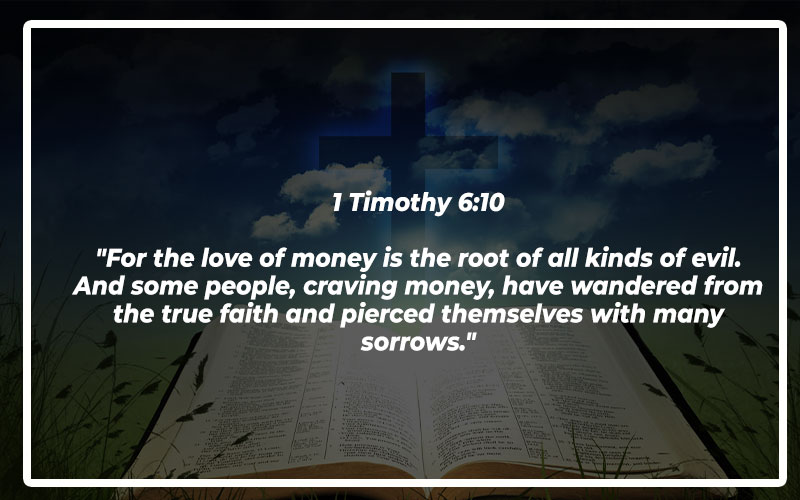
Perhaps the most famous biblical quote regarding wealth is found in 1 Timothy 6:10: “For the love of money is a root of all kinds of evil.” It’s critical to note the precise wording: it is the love of money, not money itself, that is identified as problematic. This distinction is paramount. Money is a tool, a medium of exchange, an inanimate object. The passionate, idolatrous pursuit and devotion to money—placing it above God, family, community, or ethical principles—is what leads to destructive outcomes.
This “love of money” manifests as greed, avarice, and an insatiable desire for more, regardless of the cost. It can drive individuals to dishonesty, exploitation, and moral compromise. In a modern context, this translates to the dangers of consumerism, materialism, and prioritizing profit over people or the planet. It warns against becoming enslaved to financial ambition, where one’s identity and happiness become inextricably linked to their net worth. The Bible cautions that those who fall into this trap “pierce themselves with many pangs.” For financial professionals and individuals alike, this means constantly examining motivations, ensuring that financial goals serve a higher purpose rather than becoming an end in themselves.
Obstacles to Spiritual Growth
The New Testament, particularly the teachings of Jesus, frequently highlights how wealth can create significant obstacles to spiritual growth and entry into God’s kingdom. The famous interaction with the rich young ruler (Matthew 19:16-26) culminates in Jesus’ profound statement: “It is easier for a camel to go through the eye of a needle than for a rich man to enter the kingdom of God.” This hyperbolic statement underscores the immense difficulty wealth can pose.
Wealth can foster a false sense of security, leading individuals to trust in their riches rather than in God. It can create self-sufficiency, making one feel less dependent on divine provision. It can also distract from eternal perspectives, anchoring a person too firmly to earthly possessions and temporal concerns. This isn’t to say that all wealthy individuals are excluded, but rather that the attachment to wealth can become an idol, making it incredibly challenging to surrender fully to spiritual principles that often demand sacrifice, humility, and a detachment from material comforts. This biblical warning prompts reflection on how financial independence goals are pursued—do they lead to complacency or do they empower greater purpose and generosity?
Unjust Gain and Exploitation
The Bible contains stern condemnations against acquiring wealth through unjust means, exploitation, or oppression. Proverbs frequently warns against ill-gotten gain, stating that “wealth gained hastily will dwindle, but whoever gathers little by little will increase it” (Proverbs 13:11). The prophet Amos and the book of James vehemently denounce those who oppress the poor, withhold wages, or accumulate riches through fraudulent practices.
These passages speak to the ethical dimensions of business and financial dealings. They are a call for integrity, fairness, and justice in all economic transactions. This is highly relevant to contemporary discussions around ethical investing, corporate social responsibility, fair labor practices, and the equitable distribution of wealth. The biblical perspective unequivocally states that wealth accumulated at the expense of others, through deceit, or by exploiting vulnerabilities, is not only morally wrong but ultimately detrimental to the accumulator. It challenges modern financial systems to uphold justice and fairness, urging individuals to scrutinize the sources of their income and investments.
Principles for Righteous Wealth Management
Given the dual nature of wealth—as a potential blessing and a potent pitfall—the Bible offers clear principles for how to manage financial resources righteously. These principles form a framework for ethical and purposeful financial living.
Generosity and Giving
A recurring and central theme in biblical financial wisdom is generosity. From tithing in the Old Testament to Jesus’ teachings on giving to the poor and Paul’s exhortations for cheerful giving, the Bible consistently positions generosity as a hallmark of faithful stewardship. Deuteronomy 15:7-8 commands Israel to open their hand generously to the needy, while 2 Corinthians 9:7 instructs believers to give “not reluctantly or under compulsion, for God loves a cheerful giver.”
Generosity serves multiple purposes: it provides for those in need, supports communal spiritual endeavors, and acts as an antidote to greed, demonstrating a detachment from material possessions. For those seeking to integrate biblical principles into their financial lives, this means cultivating a generous spirit, making conscious decisions to allocate a portion of their income to charitable causes, and actively seeking opportunities to help others. This principle extends beyond monetary giving to sharing resources, time, and talents, recognizing that true wealth is measured not just by what one accumulates, but by what one contributes. It encourages individuals to view their financial plans not just through the lens of personal accumulation, but also through the lens of impact and contribution.
Diligence and Hard Work
While the Bible warns against the love of money, it strongly advocates for diligence, hard work, and responsible planning. The book of Proverbs is replete with verses extolling the virtues of industriousness and condemning laziness. “Go to the ant, you sluggard; consider its ways and be wise!” (Proverbs 6:6). It emphasizes that wealth should be acquired through honest labor and prudent management, not through idleness or speculative ventures that promise quick riches without effort.
This principle encourages a strong work ethic, wise saving, and thoughtful investment strategies. It dismisses the notion that a faithful person should simply wait for divine intervention without putting in effort. Instead, it calls for active participation in creating value, earning a living, and managing resources responsibly. In modern terms, this supports entrepreneurship, career development, disciplined saving, and long-term investing, all grounded in integrity and hard work. It’s about being a productive member of society and responsibly contributing to the economy.
Contentment and Perspective
Amidst the pursuit of financial goals, the Bible calls for a radical contentment. Hebrews 13:5 advises, “Keep your lives free from the love of money and be content with what you have, because God has said, ‘Never will I leave you; never will I forsake you.'” Philippians 4:11-13, similarly, speaks of learning to be content in all circumstances.
Contentment is not about stagnation or a lack of ambition, but rather a mental and spiritual state that detaches happiness from material possessions. It allows individuals to appreciate what they have rather than constantly striving for what they lack. This principle provides a powerful counter-narrative to the relentless consumerism and comparison culture prevalent in modern society. It encourages financial wellness that prioritizes peace of mind and gratitude over endless accumulation. It’s about finding satisfaction in one’s current financial situation while still working towards responsible goals, understanding that true joy and security come from a deeper source than earthly wealth.
Integrating Biblical Financial Wisdom in Modern Life
Applying these timeless biblical principles in today’s complex financial world requires careful thought and intentionality. The goal is not to reject modern financial tools or opportunities, but to leverage them in a manner consistent with an ethical and purposeful worldview.
Ethical Investing and Business Practices
For investors, biblical principles can guide decisions about where and how to allocate capital. This involves evaluating companies based on their ethical practices, their treatment of employees, their environmental impact, and their contribution to society. Avoiding investments in industries that cause harm or exploit others becomes a natural extension of righteous stewardship. For business owners and entrepreneurs, it means operating with integrity, offering fair wages, providing honest products and services, and contributing positively to the community. It’s about aligning financial endeavors with moral values, seeking profit through ethical means.
Building a Legacy Beyond Money
The Bible consistently emphasizes the transient nature of earthly wealth compared to eternal treasures. Jesus advised, “Do not store up for yourselves treasures on earth, where moths and vermin destroy, and where thieves break in and steal. But store up for yourselves treasures in heaven…” (Matthew 6:19-20). This perspective challenges individuals to think beyond monetary inheritance and consider the broader legacy they are building.
Financial planning, in this light, expands to include investing in relationships, character development, spiritual growth, and making a lasting positive impact on the world. It’s about passing on values and wisdom to future generations, not just assets.
The Ultimate Treasure
Ultimately, the Bible redirects the focus from the pursuit of earthly riches to the pursuit of a deeper, spiritual treasure. While acknowledging the practical necessity and potential blessing of wealth, it firmly places God, relationships, and eternal values as the ultimate priorities. This perspective offers a liberating freedom from the anxieties and endless striving that often accompany the love of money, allowing individuals to use their financial resources as tools for good, rather than being used by them.
In conclusion, the Bible’s teaching on being rich is far from simplistic. It neither demonizes nor glorifies wealth, but rather frames it within a comprehensive worldview centered on stewardship, generosity, justice, and contentment. For those navigating the complexities of personal finance, investing, and wealth creation today, these ancient yet ever-relevant principles offer a robust framework for managing money in a way that is not only financially sound but also ethically grounded and spiritually enriching. The challenge, then, is to approach wealth with wisdom, humility, and a clear understanding that true richness transcends the material.
aViewFromTheCave is a participant in the Amazon Services LLC Associates Program, an affiliate advertising program designed to provide a means for sites to earn advertising fees by advertising and linking to Amazon.com. Amazon, the Amazon logo, AmazonSupply, and the AmazonSupply logo are trademarks of Amazon.com, Inc. or its affiliates. As an Amazon Associate we earn affiliate commissions from qualifying purchases.