
In the modern landscape of personal finance, side hustles, and complex investment vehicles, the concept of “laziness” is often viewed through the lens of productivity hacks or time-management software. However, some of the most profound insights into the relationship between work ethic and financial stability come from ancient biblical wisdom. For the modern professional or investor, understanding what the Bible says about laziness—often termed “slothfulness” or “the way of the sluggard”—is not merely a moral exercise; it is a fundamental lesson in capital management, resource allocation, and the psychological discipline required to achieve long-term wealth.
Biblical texts provide a stark contrast between the “sluggard” and the “diligent.” This dichotomy serves as a foundational principle for anyone looking to build a sustainable financial future. By examining these ancient warnings and prescriptions, we can derive a strategic framework for managing our careers, our portfolios, and our personal brands.
The Proverbs of Productivity: Understanding the Link Between Effort and Equity
The Book of Proverbs is perhaps the most concentrated source of biblical teaching on the financial consequences of laziness. It repeatedly warns that a lack of industry leads directly to a lack of capital. In a modern context, this translates to the erosion of purchasing power and the missed opportunities inherent in a stagnant career or an unmanaged investment account.
The Anatomy of the Sluggard in Modern Markets
The Bible describes the lazy individual, or the “sluggard,” as someone who is full of excuses. Proverbs 26:13 notes, “The sluggard says, ‘There is a lion in the road, a fierce lion roaming the streets!'” In the world of finance, this “lion” manifests as market volatility, economic uncertainty, or the fear of failure. Many people fail to start a side business or invest in the stock market because they are paralyzed by the potential for risk.
Biblical wisdom suggests that while the sluggard uses these fears as an excuse for inaction, the diligent professional acknowledges the risk but moves forward with a calculated plan. Laziness is often a mask for procrastination. When we delay setting up a high-yield savings account, researching a new asset class, or refining our professional skills, we are succumbing to the biblical definition of sloth—a refusal to engage with the reality of work required to produce a harvest.
Leveraging the “Ant Mentality” for Side Hustle Success
One of the most famous financial analogies in the Bible is found in Proverbs 6:6-8: “Go to the ant, you sluggard; consider its ways and be wise! It has no commander, no overseer or ruler, yet it stores its provisions in summer and gathers its food at harvest.”
This is a masterclass in self-starting and the diversification of income. The ant does not wait for an external nudge or a corporate mandate to begin accumulating resources. In the context of “Money,” this represents the importance of the side hustle and the proactive accumulation of assets. The “summer” represents periods of economic prosperity or personal energy. The ant understands that the harvest is not perpetual. Therefore, it works during the periods of abundance to prepare for the periods of scarcity. For the modern investor, this means maximizing contributions to retirement accounts and building an emergency fund during peak earning years, rather than waiting for a financial crisis to trigger a change in habits.
The Parable of the Talents: A Blueprint for Capital Investment and Growth
Moving into the New Testament, the “Parable of the Talents” provides a sophisticated look at business finance and the ethical obligation to grow one’s resources. In this narrative, a master entrusts his servants with “talents” (a significant unit of currency). Two servants invest their capital and double it, while the third, out of fear and laziness, buries his talent in the ground.
Risk Management and the Sin of Stagnation
The master’s reaction to the third servant is telling. He calls him “wicked and lazy.” From a financial perspective, the third servant’s failure was not that he lost the money, but that he failed to put it to work. He opted for the “safety” of stagnation. In modern personal finance, leaving large sums of cash in a zero-interest checking account while inflation rises is the contemporary equivalent of burying a talent in the dirt.
The Bible suggests that resources are not meant to be hoarded in a state of inactivity; they are meant to be managed and multiplied. Diligence, in this context, is synonymous with being a good steward of capital. It requires active research, an understanding of ROI (Return on Investment), and the courage to engage with the market. Laziness is defined here as the refusal to take the necessary steps to ensure growth.
Compounding Diligence: The Biblical View on Long-Term Wealth
Financial freedom is rarely the result of a single “lucky break.” Instead, it is the result of what the Bible calls “steady plodding.” Proverbs 13:11 states, “Wealth gained hastily will dwindle, but whoever gathers little by little will increase it.”

This verse perfectly encapsulates the power of compound interest and the danger of “get-rich-quick” schemes. Laziness often manifests as a desire for the reward without the process. This leads individuals toward high-risk, speculative gambles that promise immediate returns but lack a foundation of labor or value creation. Biblical diligence favors the disciplined approach—consistently investing a portion of one’s income over decades. This “little by little” accumulation is the most reliable path to financial security and is the antithesis of the sluggard’s desire for unearned profit.
Practical Stewardship: Transitioning from Laziness to Financial Freedom
To apply biblical principles to one’s finances, one must move beyond the theory of work and into the practice of stewardship. Stewardship is the management of resources that have been entrusted to you, whether that is a salary, a business, or an inheritance.
Budgeting as an Act of Discipline
Laziness is not always about a lack of physical movement; it is often a lack of mental discipline. Managing a complex budget requires cognitive effort. It requires tracking expenses, analyzing trends, and making difficult choices about discretionary spending.
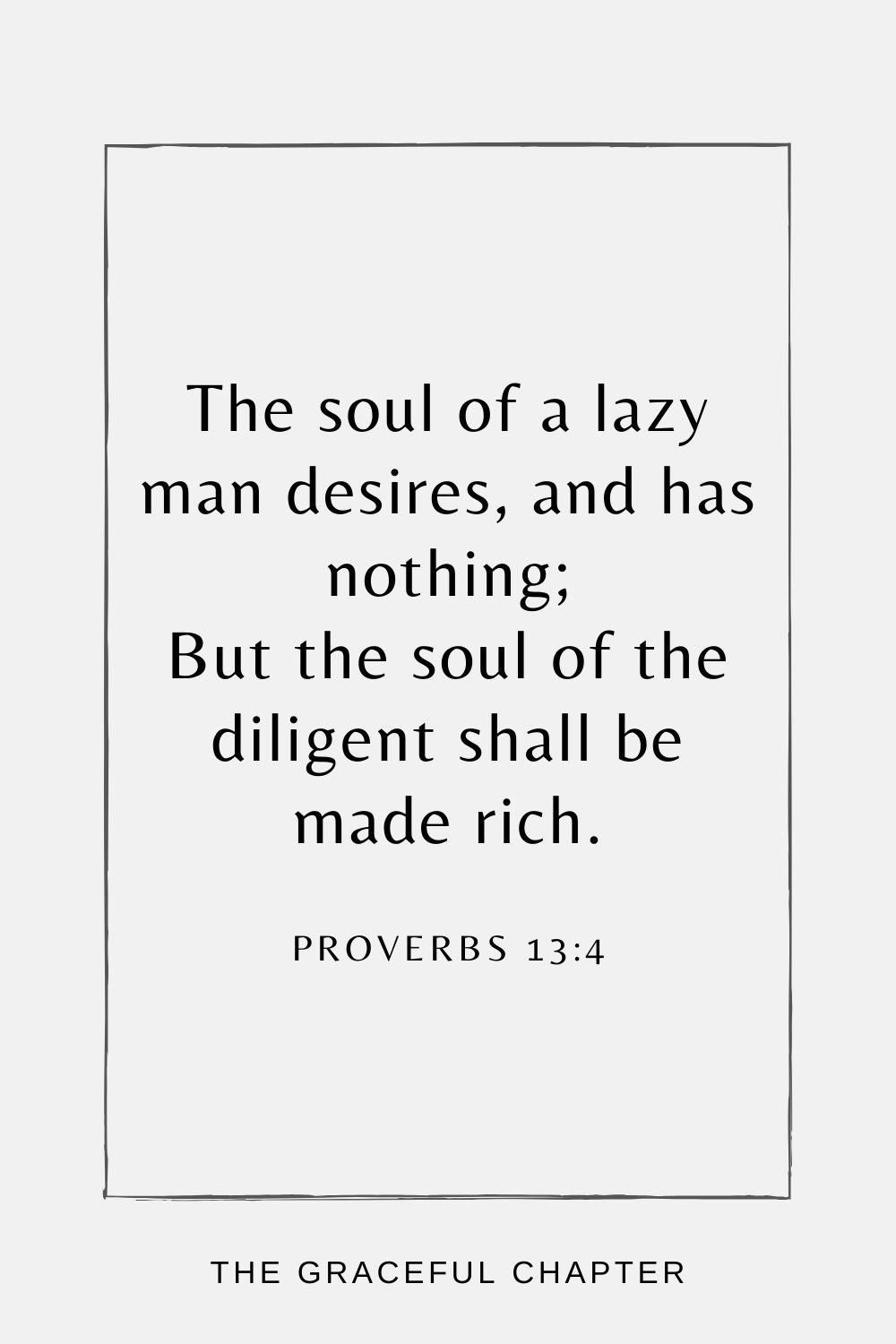
The Bible warns that “the soul of the sluggard craves and gets nothing, while the soul of the diligent is richly supplied” (Proverbs 13:4). In financial terms, “craving” without a budget leads to debt. When we are too “lazy” to track our spending, we lose control of our financial narrative. A disciplined budget is the primary tool for conquering financial sloth. It forces us to confront our habits and ensures that our capital is being directed toward our long-term goals rather than being wasted on temporary impulses.
Avoiding the Pitfalls of Get-Rich-Quick Schemes
A common trait of the “sluggard” described in biblical texts is a fascination with vanity and easy paths. Proverbs 28:19 notes, “Whoever works his land will have plenty of bread, but he who follows worthless pursuits will have plenty of poverty.”
In the digital age, “worthless pursuits” can look like day-trading on hype without a strategy, falling for multi-level marketing schemes that promise passive income without effort, or chasing the latest meme coin in hopes of an overnight windfall. Biblical diligence focuses on “working the land”—which, in modern terms, means building a career, developing a specialized skill set, or investing in proven business models. The financial health of an individual is tied to the value they provide to the marketplace, not the shortcuts they attempt to take.
The Role of Rest vs. The Trap of Sloth
It is important to distinguish between the biblical condemnation of laziness and the biblical command for rest. The “Sabbath” is a central theme in the Bible, advocating for a rhythmic cessation of work. This is not laziness; it is strategic recovery.
Reclaiming the Sabbath for Strategic Financial Reflection
In the high-pressure world of finance and entrepreneurship, burnout is a real threat. A “lazy” person avoids work because they lack the will to engage; a “diligent” person rests because they understand that their value is not solely defined by their output, and they need to recharge to maintain their long-term productivity.
From a money management perspective, taking time away from the “grind” allows for a higher-level perspective. It is the time when an investor can review their overall strategy, assess their goals, and ensure that their work is aligned with their values. Sloth is a permanent state of avoidance; rest is a temporary state of preparation. By incorporating structured rest, the diligent professional avoids the fatigue that often leads to the mental “laziness” of poor decision-making.
Building a Legacy Through Consistent Action
Ultimately, the Bible’s stance on laziness is rooted in the concept of legacy. Wealth is seen as a tool for blessing others, supporting one’s family, and contributing to the community. Proverbs 13:22 says, “A good man leaves an inheritance to his children’s children.”
Leaving a legacy requires a lifetime of diligence. It requires the rejection of the “sluggardly” impulse to consume everything in the present. By choosing to work hard, invest wisely, and avoid the traps of laziness, an individual can build a financial foundation that lasts for generations. This is the ultimate goal of biblical money management: using the fruits of one’s labor to create a lasting, positive impact on the world.
In conclusion, what the Bible says about being lazy is a sobering reminder that our financial outcomes are deeply tied to our internal discipline. By rejecting the path of the sluggard and embracing the “ant mentality” of proactive, consistent effort, we can navigate the complexities of the modern financial world with wisdom and success. Whether you are managing a corporate budget, a personal portfolio, or a burgeoning side hustle, the principles of diligence remain the surest path to wealth and security.
aViewFromTheCave is a participant in the Amazon Services LLC Associates Program, an affiliate advertising program designed to provide a means for sites to earn advertising fees by advertising and linking to Amazon.com. Amazon, the Amazon logo, AmazonSupply, and the AmazonSupply logo are trademarks of Amazon.com, Inc. or its affiliates. As an Amazon Associate we earn affiliate commissions from qualifying purchases.