
In the landscape of modern professional growth and personal development, the adage “you are the average of the five people you spend the most time with” has become a cornerstone of success strategy. While this is often framed as a secular networking principle, the foundational wisdom regarding the influence of one’s inner circle finds its roots in ancient scripture. When we analyze biblical texts through the lens of personal brand strategy and corporate social capital, we uncover a rigorous framework for network management and strategic association. Protecting your reputation, energy, and long-term vision requires a disciplined approach to selecting—and occasionally removing—those who do not align with your professional trajectory.
The Strategic Importance of Association
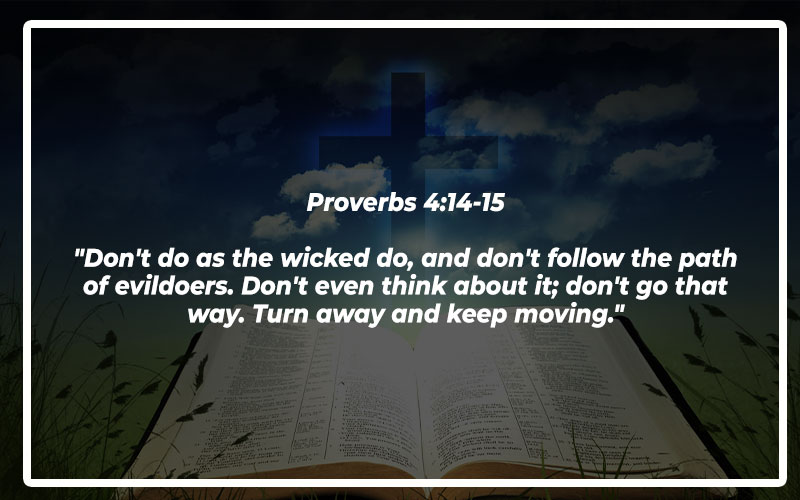
In the context of personal branding, your network is your net worth. The Bible repeatedly emphasizes that the company you keep acts as a multiplier—either accelerating your progress or depleting your intellectual and emotional capital. From a strategic perspective, toxic associations are not merely inconvenient; they are liabilities that erode the integrity of your personal brand.
The Multiplier Effect of Influence
Proverbs 13:20 serves as the foundational text for strategic networking: “He who walks with wise men will be wise, but the companion of fools will be destroyed.” In modern terminology, this speaks to the “contagion effect” of professional circles. If your inner circle lacks vision, fiscal discipline, or integrity, those traits will inevitably permeate your own decision-making processes. When building a personal brand, you are essentially curating a community that reflects your values. If that community is characterized by volatility or short-sightedness, your brand suffers by association.
Protecting Your Brand Equity
Your reputation is your most valuable asset. The Bible suggests that one’s character is often judged by the character of those they champion. In the professional world, this is known as the “halo effect”—or, conversely, the “horn effect.” Aligning yourself with individuals who lack professional ethics or reliability creates a negative signal to your stakeholders. Scripture warns against being yoked with those whose values contradict your own, noting that such associations inevitably lead to a compromise of standards. To maintain a high-value personal brand, you must audit your relationships with the same scrutiny you would apply to a business partnership or a high-stakes investment.
Identifying Liabilities in Your Network
Not every “bad friend” is overtly malicious. Many of the most detrimental associations in a professional career are simply those that are misaligned with your growth trajectory. Identifying these individuals requires a clear-eyed assessment of how they influence your output, your mindset, and your integrity.
The Danger of the “Short-Term” Influence
There is a biblical emphasis on avoiding those who are easily angered or prone to volatile shifts in temperament. From a professional standpoint, volatility is the enemy of productivity and strategic planning. A friend who thrives on drama or chaos provides a constant distraction that forces you to shift focus away from your professional goals. When your internal energy is spent managing the fallout of a peer’s poor judgment, your ability to perform at your peak is significantly diminished.
The Cost of Complacency
Scripture frequently warns against the influence of the “sluggard” or the undisciplined. In the realm of personal development, complacency is a silent killer. If you surround yourself with individuals who are comfortable with mediocrity and possess no desire for growth, you will find it increasingly difficult to maintain your own momentum. The “pull” of a stagnant peer group is strong; it encourages you to lower your standards to match the collective output of the room. Strategically, you must recognize that your friends should be stakeholders in your future success—people who challenge you to sharpen your skills rather than encouraging you to settle.
The Strategy of Strategic Withdrawal
Decoupling from toxic or misaligned associations is not an act of arrogance; it is an act of stewardship. You are the steward of your own time, reputation, and emotional capital. The Bible provides clear directives for navigating the “de-hiring” of negative influences in your personal life.
The Principle of Prudent Distance
Proverbs 22:24-25 advises, “Make no friendship with an angry man, and with a furious man do not go, lest you learn his ways and set a snare for your soul.” This is a masterclass in risk mitigation. Note that the instruction is to “make no friendship”—meaning the prevention of a toxic bond is more efficient than attempting to manage the fallout of one. In professional terms, this is a call to be highly selective in your vetting process. Before investing deep trust or time into a connection, evaluate the trajectory and character of the individual. If they represent a “snare”—a disruption to your professional goals—the most strategic move is to maintain a professional distance.
Managing Transitions Gracefully
While the Bible is clear about the dangers of bad company, it also emphasizes wisdom in how these separations occur. You do not need to burn bridges to change your association. In personal branding, bridge-burning is counterproductive. Instead, the goal is to shift your proximity. By becoming less available to those who drain your resources and more available to those who contribute to your growth, you naturally transition out of toxic associations without creating unnecessary conflict. This is a subtle, disciplined approach that preserves your character while ensuring your environment remains conducive to your professional and personal evolution.
Curating Your Inner Circle for Maximum Impact
Once you have identified and distanced yourself from individuals who do not serve your professional and ethical objectives, you must aggressively cultivate a circle that promotes high performance and values-based success.
The Value of “Iron Sharpening Iron”
Proverbs 27:17, “As iron sharpens iron, so one man sharpens another,” is the blueprint for a high-performance professional network. This verse implies friction—constructive, purposeful friction. A true peer is someone who challenges your assumptions, demands higher standards, and holds you accountable to your professional identity. When you surround yourself with individuals who are also pursuing excellence, you create a feedback loop that fosters innovation and resilience. This is the ultimate goal of professional networking: to be in a constant state of mutual elevation.
Aligning Values with Outcomes
The final step in managing your inner circle is ensuring that the values of your associates align with your long-term legacy. Scripture places a high premium on integrity, honesty, and foresight. When your circle shares these foundational pillars, the “friction” mentioned in Proverbs becomes a productive force. You are no longer wasting time defending your standards or explaining your work ethic; instead, you are leveraging the collective wisdom of your peers to solve problems and advance your brand.
By applying these ancient principles to your contemporary life, you move beyond the concept of “friendship” as a purely social construct and begin to view it as a critical component of your success architecture. Selecting, maintaining, and refining your circle is a life-long project. It requires the courage to say “no” to the wrong influences and the intentionality to say “yes” to those who truly sharpen your character and drive your professional brand toward sustainable, high-impact growth. Your associations are your most significant investment—ensure they are paying dividends.
aViewFromTheCave is a participant in the Amazon Services LLC Associates Program, an affiliate advertising program designed to provide a means for sites to earn advertising fees by advertising and linking to Amazon.com. Amazon, the Amazon logo, AmazonSupply, and the AmazonSupply logo are trademarks of Amazon.com, Inc. or its affiliates. As an Amazon Associate we earn affiliate commissions from qualifying purchases.