
In the context of personal branding and professional networking, the people you surround yourself with act as a living index of your professional value. While the ancient texts provide a moral framework for relationships, the principles of association are remarkably applicable to the modern landscape of career development, corporate culture, and personal brand trajectory. Just as the adage “you are the average of the five people you spend the most time with” suggests, the biblical warning against “bad company” serves as a strategic mandate for curating your professional ecosystem.
The Strategic Architecture of Your Professional Network
In the modern marketplace, your network is your net worth. Biblical literature frequently emphasizes that the character of one’s associates inevitably bleeds into one’s own reputation. From a brand strategy perspective, this is not merely a moral imperative; it is a matter of market positioning. If your brand is defined by the quality of your output and the integrity of your process, your associations function as social proof—either validating your standards or eroding them.
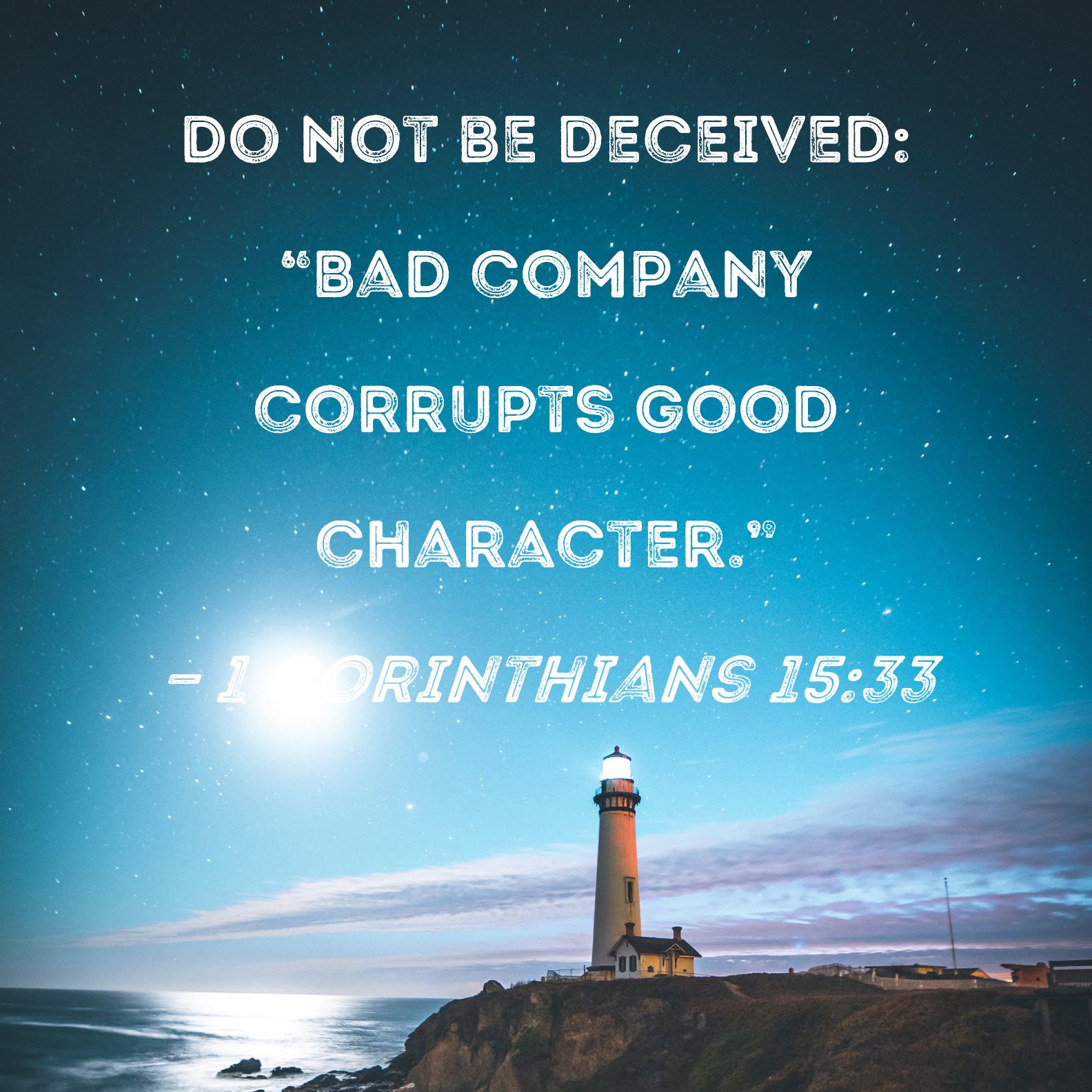
Association as Brand Equity
Your professional brand is a composite of your expertise, your communication style, and your affiliations. When you align yourself with individuals who prioritize shortcuts, lack professional rigor, or operate within toxic cultures, you are effectively “branding by association.” Just as a luxury brand would never compromise its prestige by partnering with a low-tier, unreliable distributor, you must be judicious about the stakeholders you allow into your inner circle. Biblical wisdom posits that “bad company corrupts good character,” a principle that mirrors the concept of brand dilution in marketing. If you allow your professional reputation to be tethered to those who do not reflect your core values, the market will eventually conflate your personal brand with their shortcomings.
The Influence of Peer Groups on Professional Standards
In corporate settings, we often discuss the importance of “culture fit.” This is essentially an organizational-level application of the biblical principle regarding the company one keeps. Teams that foster innovation and high performance are built on the foundation of shared expectations. If an individual joins a high-output team but maintains a professional inner circle defined by apathy or unprofessionalism, their performance often suffers a regression to the mean. Your inner circle dictates your standard of excellence. If your peers do not challenge you to improve, your professional growth becomes stagnant.
Curating Your Inner Circle for Brand Longevity
Strategically curating your environment is essential for long-term career sustainability. It requires the ability to audit your connections, recognize patterns of behavior, and pivot when an association no longer serves the trajectory of your brand identity.
Auditing Your Professional Ecosystem
To maintain a high-value personal brand, you must perform regular audits of your professional network. This involves looking beyond superficial metrics like “connection counts” on LinkedIn and examining the quality of influence. Ask yourself: Does this person’s approach to business reflect the brand I want to cultivate? Are they adding value to my perspective, or are they a source of friction that distracts from my core goals? The Bible suggests that walking with the wise leads to wisdom, while the companion of fools suffers harm. In business terms, “fools” are those who lack foresight, ethical discipline, or the drive to innovate. Engaging with them consistently drains your creative energy and clouds your strategic judgment.

Leveraging Mentorship and High-Impact Alliances
Conversely, seeking out “good company”—mentors and peers who represent the standard you aspire to reach—is the fastest way to accelerate your personal brand. In modern branding, this is known as “positioning through association.” By aligning yourself with thought leaders and industry experts, you elevate your own market status. The professional equivalent of “walking with the wise” is active networking with individuals who hold themselves to higher standards of intellectual property protection, ethical marketing, and service delivery. These relationships provide a feedback loop that sharpens your skills and protects your reputation.
The Cost of Toxic Associations in Corporate Identity
In a corporate or entrepreneurial context, the “bad company” warned against by ancient wisdom often manifests as individuals or entities that operate in a gray area of integrity. When your personal or corporate brand is associated with such entities, the reputational damage can be irreversible.
Protecting Your Brand Integrity
Your brand is your most valuable asset. Once trust is compromised, the cost of customer acquisition skyrockets, and your brand equity plummets. Allowing yourself to be associated with bad company—whether through partnerships, vendor relationships, or client representation—can lead to “brand contagion.” Just as one bad review can impact the perception of an entire product line, one poorly chosen professional alliance can call your judgment into question. The lesson here is to prioritize integrity over proximity. It is better to have a smaller, more exclusive circle of high-integrity partners than a vast network of individuals who compromise your values for the sake of temporary gains.
Navigating Professional Disentanglement
Often, the hardest part of brand management is knowing when to end an association. Whether it is a business partner whose ethics have shifted or a professional contact whose reputation has soured, knowing how to gracefully pivot away from these relationships is a vital skill. This is the professional application of the biblical directive to “avoid” those who lead away from your path of excellence. It does not necessarily require public conflict; it requires a strategic realignment of your time, attention, and energy toward individuals who align with your brand’s mission and ethical framework.
The Long-Term ROI of Character-Driven Networking
Ultimately, the choice of your company is a long-term investment strategy. By focusing on people who demonstrate resilience, ethics, and innovation, you are building a professional foundation that can withstand market volatility.
Building Resilience Through Community
Business is inherently volatile, and you will eventually face professional crises. The “company” you have built around you will either be a source of support and strategic counsel or a source of added complexity. When you surround yourself with those who share a high bar of personal and professional conduct, you create a buffer against the negative impacts of industry fluctuations. This is the modern manifestation of wisdom: investing in relationships that offer dividends of integrity and mutual growth.

Defining Your Legacy
Your professional legacy will not be defined solely by what you achieved, but by whom you brought along with you and who you chose to be influenced by. As you ascend in your career, the quality of your associations becomes an increasingly loud signal to the market. By intentionally distancing yourself from bad company and gravitating toward those who mirror your highest aspirations, you solidify your position as a leader in your field.
The biblical perspective on company is fundamentally about legacy and outcome. If you want a brand that is respected, trusted, and sustainable, you must be ruthless in how you curate your professional environment. The people you spend time with are not just friends or colleagues—they are the board of directors for your personal brand. Choose them with the same level of scrutiny you would apply to your business strategy, and your brand will reflect the wisdom of those you have chosen to keep.
aViewFromTheCave is a participant in the Amazon Services LLC Associates Program, an affiliate advertising program designed to provide a means for sites to earn advertising fees by advertising and linking to Amazon.com. Amazon, the Amazon logo, AmazonSupply, and the AmazonSupply logo are trademarks of Amazon.com, Inc. or its affiliates. As an Amazon Associate we earn affiliate commissions from qualifying purchases.