
The question of whether women are permitted to preach in a formal, authoritative capacity within Christian traditions is a complex one, deeply rooted in biblical interpretation and historical context. Throughout centuries, theological discussions have grappled with various passages, leading to a spectrum of views among denominations and individual believers. This article delves into the biblical texts and theological arguments that inform this ongoing discourse, aiming to provide a comprehensive overview of the different perspectives without endorsing any single one. Understanding these varying interpretations is crucial for anyone seeking to engage with the spiritual and practical implications of women’s roles in ministry today.

Examining Key Pauline Epistles: Romans and 1 Corinthians
The letters of the Apostle Paul are frequently cited in discussions about women in leadership and public ministry. Romans and 1 Corinthians, in particular, contain passages that have been central to these debates.
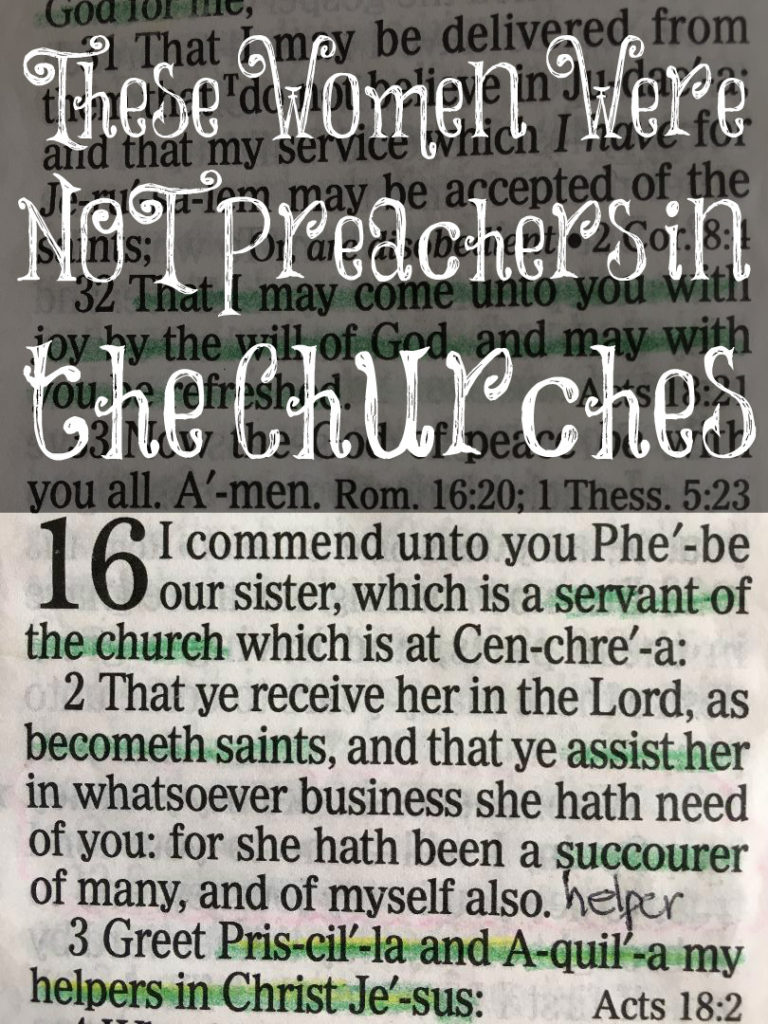
Romans 16:1-2: Phoebe, a Deacon and Helper
In Romans 16:1-2, Paul commends Phoebe, identifying her as a “deacon” (Greek: diakonos) and a “helper” (Greek: prostatis) of many, including himself. The term diakonos can be translated as “deacon” or “servant.” In the early church, deacons often held significant roles, including assisting in ministry and caring for the community. Some scholars interpret Phoebe’s role as exceeding mere service, suggesting she held an official office within the church at Cenchreae. Her designation as a prostatis further implies a position of leadership and support, a patron or protector.
The interpretation of Phoebe’s role hinges on the understanding of the term diakonos. If it signifies an ordained office, then Phoebe’s example suggests that women held such positions in the early church. Conversely, some argue that diakonos in this context simply denotes a general servant or helper, without implying a formal, authoritative role comparable to modern ordination. Nevertheless, her commendation by Paul, who explicitly asks the Roman church to receive her and assist her in whatever she needs, indicates a respected and influential position.
1 Corinthians 14:33b-36: Silence in the Churches?
One of the most contentious passages is found in 1 Corinthians 14, where Paul writes, “As in all the churches of the saints, women should remain silent in the churches. For they are not permitted to speak, but must be in submission, as the Law says. If they want to learn something, they should ask their husbands at home, for it is shameful for a woman to speak in church.” (NIV). This instruction appears to directly prohibit women from speaking in public worship gatherings.
The interpretation of this passage is multifaceted. Some take these verses at face value, concluding that women are Biblically forbidden from public preaching or teaching in the church. This perspective often emphasizes the emphasis on “submission” and links it to the creation order or the cultural norms of the time.
However, many scholars and theologians offer alternative interpretations. One common argument is that Paul’s comments in 1 Corinthians 14 are context-specific. He is addressing issues of order and intelligibility in the Corinthian church, particularly concerning the gift of tongues and prophecy. Some scholars suggest that Paul might be addressing disruptive behavior by women in the Corinthian assembly, or perhaps the practice of women speaking out of turn without proper understanding, rather than a blanket prohibition against all forms of female ministry or teaching. The mention of asking husbands at home could be interpreted as a cultural accommodation or a way to ensure proper understanding within the domestic sphere, not necessarily a universal decree against women speaking in church.
Furthermore, some scholars point out the internal inconsistencies or potential textual issues within 1 Corinthians 14. The flow of the argument, especially around verses 33b-36, has led some to question whether these verses were originally part of Paul’s letter or were later additions. Regardless of these scholarly debates, the passage remains a significant hurdle for those advocating for unrestricted women’s preaching roles.
The Role of 1 Timothy 2:11-15: A Controversial Passage
The pastoral epistles, particularly 1 Timothy, also contain instructions that significantly impact the discussion on women’s preaching.
1 Timothy 2:11-15: Learning in Quietness and Authority
In 1 Timothy 2:11-15, Paul instructs, “A woman should learn in quietness and full submission. I do not permit a woman to teach or to assume authority over a man; she must be quiet. For Adam was formed first, then Eve. And Adam was not the one deceived; it was the woman who was deceived and became a sinner.” (NIV). This passage is perhaps the most direct and frequently cited text used to argue against women holding positions of public teaching authority over men in the church.

The interpretation of “teach or to assume authority” (Greek: authentein) is crucial. Authentein is a strong word, implying “to have authority,” “to exercise dominion,” or “to originate.” For those who believe women should not preach in an authoritative capacity, this verse is seen as a clear prohibition. They often link it to the creation account mentioned immediately after, suggesting a divinely ordained order where men hold headship and authority in the church.
Conversely, proponents of women in ministry offer several counter-interpretations. Some argue that Paul’s prohibition is specific to the situation in Ephesus, where Timothy was serving. They suggest that there may have been particular issues with unqualified women causing disruption or heresy in that specific church. Another common argument focuses on the context of “teaching or assuming authority over a man.” This could imply a prohibition against women teaching men in a hierarchical or dominative way, rather than a ban on all forms of teaching or preaching.
Others interpret the passage through a lens of cultural context, arguing that Paul was addressing prevailing societal norms in the Roman world where women’s education and public roles were significantly limited. It is argued that Paul might have been providing instruction that was culturally specific and not intended as a perpetual, universal prohibition. The reasoning based on the creation account is also debated, with some arguing that the New Covenant in Christ transcends the Old Testament creation order, and that in Christ “there is no male or female” (Galatians 3:28).
The passage concludes with a reference to childbearing being a means of salvation for women, which is also subject to varied interpretations, often seen as either a spiritual metaphor or a literal statement about the role of women in procreation.
Diverse Interpretations and the Concept of “Complementarianism” vs. “Egalitarianism”
The biblical texts, when interpreted through different hermeneutical frameworks, lead to two primary theological stances on the issue of women in ministry: complementarianism and egalitarianism.
Complementarianism: Distinct Roles, Equal Worth
Complementarianism posits that men and women are created with equal worth and dignity but have been designed by God for different, complementary roles, particularly within the home and the church. Proponents of this view typically adhere to interpretations that restrict women from holding senior pastoral or preaching roles that involve spiritual authority over men.
They often rely heavily on passages like 1 Timothy 2 and 1 Corinthians 14, interpreting them as establishing a norm for church leadership. The arguments often center on concepts of male headship, the male priesthood of Christ, and the roles of elders and overseers in the New Testament, which are almost exclusively described using male terminology. Complementarians emphasize that this does not imply inferiority but a divinely ordained distinction in function. They believe that while women can and should teach and minister in many capacities, the specific role of public, authoritative preaching and elder leadership is reserved for men.
Egalitarianism: Equal Access and Ministry
Egalitarianism, in contrast, argues that the Bible teaches the full equality of men and women in all aspects of life, including ministry. Egalitarians interpret the disputed passages in a way that either downplays their prohibitory force or sees them as culturally bound and superseded by New Testament principles of spiritual gifting and service.
They emphasize passages like Galatians 3:28 (“there is no male or female, for you are all one in Christ Jesus”) and the ministry of women in the early church, such as Phoebe and Priscilla (who, along with her husband Aquila, taught Apollos). Egalitarians believe that spiritual gifts are given to both men and women without regard to gender, and that the church should recognize and empower all gifted individuals to serve in whatever capacity God calls them, including preaching and pastoral leadership. They argue that the male-only language for certain church offices is a reflection of the patriarchal culture of the time, not a divine mandate for all ages.
Conclusion: Navigating the Biblical Landscape
The question of whether the Bible permits women to preach is not answered with a simple “yes” or “no” by all Christians. The biblical texts, when examined, offer a rich and complex tapestry of instruction, example, and cultural context. Different denominations and theological traditions have arrived at varying conclusions based on their methods of biblical interpretation, their understanding of historical context, and their theological frameworks.
For some, the clear prohibitions in passages like 1 Timothy 2 and 1 Corinthians 14 are the definitive word, leading to a complementarian view where women do not hold authoritative preaching roles over men. For others, the overarching themes of equality in Christ, the examples of women in ministry, and the work of the Holy Spirit in gifting individuals, regardless of gender, lead to an egalitarian perspective where women are fully empowered to preach and lead.
Ultimately, navigating this biblical landscape requires careful study, humility, and a commitment to understanding the diverse perspectives that arise from a prayerful engagement with Scripture. The conversation continues, driven by a desire to honor God, understand His Word, and faithfully embody His will in the church today.
aViewFromTheCave is a participant in the Amazon Services LLC Associates Program, an affiliate advertising program designed to provide a means for sites to earn advertising fees by advertising and linking to Amazon.com. Amazon, the Amazon logo, AmazonSupply, and the AmazonSupply logo are trademarks of Amazon.com, Inc. or its affiliates. As an Amazon Associate we earn affiliate commissions from qualifying purchases.