
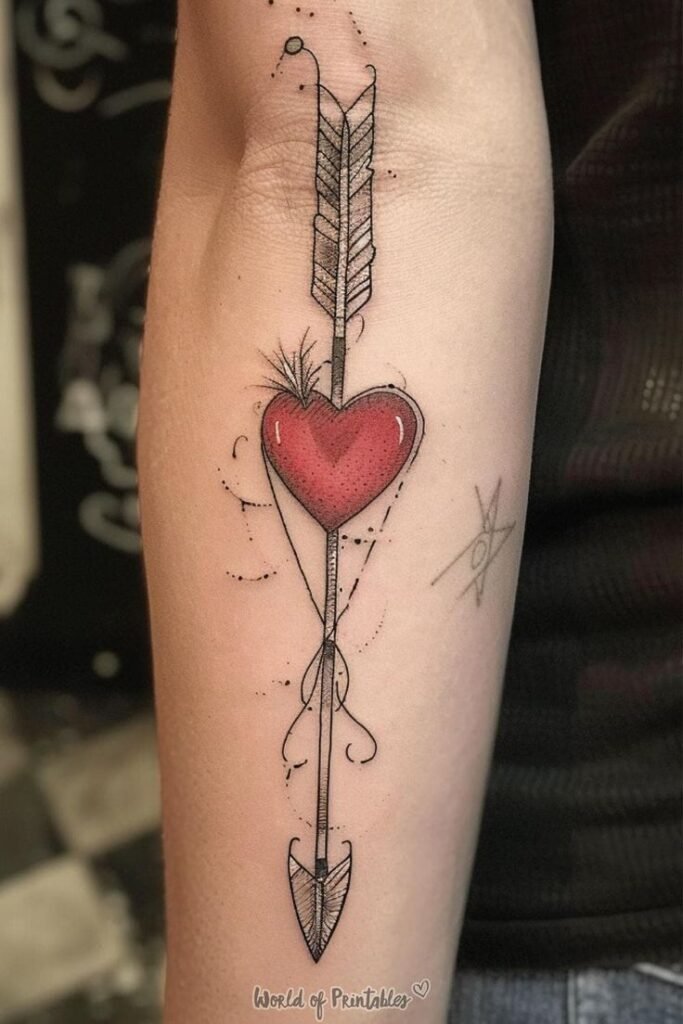
The image of an arrow piercing a heart is a universally recognized symbol, steeped in centuries of history and laden with profound emotional significance. While often immediately associated with romantic love and Valentine’s Day, its meaning extends far beyond simple affection, encompassing themes of vulnerability, passion, and even sacrifice. For brands navigating the intricate landscape of visual communication, understanding the multi-faceted implications of such an icon is paramount. Harnessing its power effectively can forge deep emotional connections with audiences, but misinterpreting its nuances can lead to unintended messaging or cultural missteps.

The Enduring Symbolism of Love and Vulnerability
At its core, the arrow through the heart is an emblem of intense emotional impact, specifically pertaining to matters of the heart. Its ancient origins and consistent portrayal across diverse cultures speak to a shared human experience of love’s compelling, sometimes overwhelming, force.
Cupid’s Arrow: Ancient Roots and Romantic Resonance
The most pervasive interpretation of the arrow through the heart stems from classical mythology, specifically the Roman god Cupid (or Eros in Greek mythology). Cupid, depicted as a winged cherub, is famed for shooting golden arrows into the hearts of mortals and gods alike, causing them to fall irresistibly in love. Conversely, leaden arrows inspired aversion. This myth established the arrow as a metaphor for being “struck” by love – an involuntary, potent, and often sudden experience that leaves one vulnerable.
From a branding perspective, this immediate association with romantic love makes the symbol a powerful, shorthand way to evoke passion, desire, and intense connection. Brands in industries like jewelry, confectionery, floral services, and relationship apps frequently leverage this imagery to communicate their offerings as conduits for deep romantic bonds. It’s a visual language that transcends linguistic barriers, instantly conveying a message of love, commitment, or affection, particularly around holidays like Valentine’s Day where these emotions are celebrated.
Beyond Romance: The Spectrum of Emotional Expression
While romance is its primary connotation, the arrow through the heart also encapsulates a broader spectrum of emotional experiences. The act of piercing implies an impact, a wound, or a profound alteration of state. This can symbolize:
- Vulnerability: The heart, often seen as the seat of emotion, being pierced suggests openness, susceptibility, and the willingness to be affected deeply by another. For brands, this can be an intriguing avenue for messaging that encourages empathy, shared human experience, or even a brand’s own ‘vulnerability’ in sharing its story or mission.
- Passion and Intensity: The forceful nature of the arrow signifies a powerful, all-consuming emotion, not just a gentle affection. This intensity can be harnessed by brands to convey deep commitment, unwavering dedication, or even a passionate pursuit of a cause or ideal. Think of brands advocating for social change or those deeply committed to their craft.
- Sacrifice and Devotion: In some contexts, particularly religious iconography (e.g., the Immaculate Heart of Mary), the arrow can represent suffering, sacrifice, or a heart pierced by sorrow and divine love. While less common in mainstream commercial branding, understanding this depth can be crucial for brands operating in specific cultural or philanthropic niches, allowing for respectful and profound communication.
For brand strategists, recognizing this broader emotional range allows for a more nuanced and versatile application of the symbol, moving beyond mere romantic clichés to tap into deeper psychological resonance.
Brand Identity and Visual Language: Harnessing Emotional Symbols
In the realm of brand identity, visual symbols are not just decorative elements; they are potent communication tools. The arrow through the heart, with its rich emotional baggage, presents both significant opportunities and challenges for brand designers and marketers.
Crafting Connections: How Brands Utilize Evocative Imagery
Brands aim to build emotional connections with their target audience, and evocative imagery is a direct route to achieving this. The arrow through the heart can be used in several ways:
- Direct Representation: For brands directly related to love, relationships, or sentimental gifts, the symbol can be a straightforward, explicit representation of their core offering. Wedding planners, dating services, and greeting card companies often use variations of this motif.
- Subtle Implication: More subtly, brands might integrate elements of the symbol (e.g., stylized arrows, heart shapes) into their logos, packaging, or ad campaigns to evoke feelings of warmth, care, or deep affection without being overly literal. A non-profit focusing on community support might use a heart with an upward-pointing arrow to symbolize hope and progress, while still tapping into the heart’s emotional core.
- Narrative Building: The symbol can serve as a powerful narrative device. A marketing campaign might tell a story where the product or service helps someone “find their heart’s desire,” subtly referencing the arrow’s role in guiding destiny or igniting passion. This allows brands to tap into universal human narratives without being overtly branded as ‘romantic’.
The key is intentionality. A brand must align the symbol’s inherent meaning with its brand values, mission, and the emotional benefit it seeks to deliver to its customers.
Navigating Nuance: Context and Cultural Interpretation
One of the greatest challenges in utilizing universal symbols is the potential for varying interpretations across different contexts and cultures. While the arrow through the heart is broadly understood, specific nuances can shift:
- Cultural Differences: While dominant in Western cultures, other societies might have their own primary symbols for love or vulnerability. A global brand must research and understand if the symbol carries any negative connotations or different primary meanings in target markets. For instance, in some contexts, a pierced object might imply harm or aggression rather than love.
- Target Audience Demographics: Different age groups or subcultures might interpret the symbol with varying degrees of seriousness or irony. A younger audience might see it as kitsch or nostalgic, while an older demographic might perceive it as genuinely sentimental.
- Brand Tone and Voice: A high-end luxury brand might use a highly stylized, minimalist version of the symbol to convey sophisticated passion, whereas a whimsical, playful brand might use a cartoonish, exaggerated depiction. The chosen aesthetic dramatically impacts the message.
Effective branding demands a deep dive into these nuances, ensuring the chosen imagery reinforces, rather than detracts from, the desired brand perception.
Marketing & Messaging: Striking the Emotional Core
In marketing, the goal is often to create a memorable impression and drive action, frequently by appealing to emotions. The arrow through the heart is a direct conduit to deeply felt human emotions, making it a powerful tool for compelling messaging.
Campaign Strategies: The Power of Emotional Storytelling
Emotional advertising resonates more deeply and is often more memorable. Campaigns that utilize the arrow through the heart can leverage:

- Love and Connection: Directly associating products with the joy of giving, receiving, or sharing love. This is prevalent in holiday advertising, particularly for gifts.
- Passion for a Cause: Non-profits or socially conscious brands can use the symbol to convey a deep, unwavering commitment to their mission, appealing to their audience’s empathy and desire to support meaningful causes. For example, an organization dedicated to heart health might use a stylized heart and arrow to symbolize both vulnerability and intervention.
- Authenticity and Vulnerability: Brands can craft narratives that highlight their own journey, their struggles, or their core values with an honesty that mirrors the vulnerability inherent in a “pierced heart.” This can build trust and foster a more authentic relationship with consumers.
- Personal Transformation: The “being struck” aspect can be reframed as a transformative experience. A self-improvement brand might use it to symbolize the moment a customer is inspired to change their life, metaphorically “pierced” by a new idea or motivation.
The most effective campaigns weave the symbol into a broader narrative that aligns with the brand’s identity and speaks directly to the emotional needs or aspirations of the consumer.
Design Considerations: Aesthetics, Impact, and Brand Alignment
The visual execution of the arrow through the heart symbol is critical. It’s not enough to simply use the symbol; how it’s designed dictates its impact and integration with the brand:
- Stylization: From realistic to abstract, minimalist to ornate, the style of the illustration or graphic greatly influences perception. A sleek, modern rendering conveys sophistication, while a hand-drawn, whimsical style suggests playfulness or craft.
- Color Palette: The colors chosen for the heart and arrow can significantly alter the message. Red is universally associated with love and passion, but shades of pink, gold, or even blues and greens can soften, elevate, or diversify the emotional tone.
- Placement and Context: Is the symbol a central part of a logo, a subtle watermark, or an element within a larger advertisement? Its prominence and surrounding elements contribute to its overall meaning and perceived importance.
- Uniqueness vs. Universality: While leveraging a universal symbol, brands must also consider how to make its application unique to stand out. This often involves combining it with other distinct brand elements or giving it a signature twist. A unique typeface or an innovative texture could be applied to differentiate it.
Ultimately, the design choices must be meticulously aligned with the brand’s overarching aesthetic, messaging goals, and the specific emotional response it aims to elicit.
Personal Branding and the Authentic Self
The arrow through the heart isn’t just for corporations; it holds significance in personal branding too. Individuals, especially those in creative fields, public figures, or advocates, often use symbols to communicate their core identity, values, and passions.
Expressing Values Through Symbolism
For personal brands, adopting or referencing the arrow through the heart can be a way to express:
- Deep Passion and Dedication: A writer deeply committed to their craft, an artist driven by intense emotion, or an activist with unwavering dedication to a cause might subtly integrate this imagery to communicate their profound emotional investment.
- Authenticity and Vulnerability: In an age where transparency is valued, a personal brand willing to show genuine emotion, even vulnerability, can build stronger, more authentic connections. The symbol can represent a willingness to be open-hearted, to be affected by the world, and to share those experiences honestly.
- A “Heart-Centered” Approach: Many professionals position themselves as operating from a place of genuine care, empathy, or intuitive wisdom. The arrow through the heart can visually underscore this “heart-centered” philosophy in their branding, whether it’s on a website, business card, or social media profile.
However, just like corporate branding, careful consideration is needed to ensure the symbol genuinely reflects the individual’s true self and professional persona, avoiding clichés or inauthenticity.
The Pitfalls and Power of Overt Emotionality
Using such a potent emotional symbol in personal branding carries both power and potential pitfalls.
- Power: It can create immediate recognition, evoke empathy, and establish a strong emotional rapport with an audience, making the personal brand more memorable and relatable. It communicates without words, tapping into shared human understanding.
- Pitfalls: Over-reliance or unsubtle use can be perceived as overly sentimental, unprofessional, or even inauthentic. There’s a fine line between expressing genuine emotion and appearing to manipulate emotions. For professional contexts, the symbol might need to be highly stylized or subtly integrated to maintain a sense of gravitas and professionalism.
The most effective personal brands use such powerful symbols with discernment, ensuring they enhance rather than overshadow the individual’s unique skills and expertise.
The Digital Age: Symbols in a Globalized Marketplace
The digital landscape has amplified the reach and reinterpretation of symbols like the arrow through the heart. Emojis, social media, and global communication platforms create new contexts and challenges for brands utilizing such imagery.
Emoji and Digital Communication: New Contexts for Old Symbols
The digital emoji of an arrow through a heart ( ) is a ubiquitous shorthand for love, affection, and being smitten. For brands, this presents both an opportunity and a challenge:
- Opportunity for Quick Communication: Brands engaging in social media marketing can use the emoji for instant, relatable communication, especially in direct engagement with customers or in lighthearted campaigns. It’s a quick way to convey approval, affection, or enthusiasm.
- Challenge of Context and Tone: The casual nature of emojis means brands must be careful not to diminish their seriousness or professionalism if that’s their desired brand image. An emoji might be appropriate for a casual, youthful brand but inappropriate for a formal, luxury brand’s primary communication.
- Global Reach and Interpretation: Emojis are global, but their nuances can still vary. Brands need to be aware of how different cultures perceive and use specific emojis to avoid miscommunication.
Integrating emojis into brand communication requires a keen understanding of brand voice and platform etiquette.
Protecting Brand Integrity: Avoiding Misinterpretation
In a world saturated with digital content and rapid information flow, brands must be vigilant in protecting the integrity of their chosen symbols.
- Consistency: Consistent use of the symbol across all brand touchpoints (website, social media, advertising, products) reinforces its meaning and association with the brand. Inconsistent use can dilute its impact or confuse the audience.
- Brand Guidelines: Clear brand guidelines on the usage, stylization, and context of the arrow through the heart symbol are essential. This ensures all internal teams and external partners maintain a unified brand message.
- Monitoring and Feedback: Brands should actively monitor how their chosen symbols are being perceived and discussed online. Social listening tools can help identify any unintended interpretations or negative associations forming, allowing for swift corrective action.
- Legal Protection: For unique stylizations or combinations of the symbol that become distinctive to a brand, seeking trademark protection can be crucial to prevent unauthorized use and maintain brand equity.
Understanding “what the arrow through the heart means” is not merely an academic exercise in semiotics; it’s a strategic imperative for any brand seeking to connect deeply, communicate effectively, and differentiate itself in a crowded marketplace. By respecting its history, embracing its emotional depth, and navigating its nuanced interpretations, brands can wield this powerful symbol to truly pierce the hearts of their audience.
aViewFromTheCave is a participant in the Amazon Services LLC Associates Program, an affiliate advertising program designed to provide a means for sites to earn advertising fees by advertising and linking to Amazon.com. Amazon, the Amazon logo, AmazonSupply, and the AmazonSupply logo are trademarks of Amazon.com, Inc. or its affiliates. As an Amazon Associate we earn affiliate commissions from qualifying purchases.