
The transition from internal combustion engine (ICE) vehicles to electric vehicles (EVs) represents one of the most significant shifts in personal finance and consumer behavior in the 21st century. At the center of this transition is Tesla, a brand that has become synonymous with the electric revolution. However, for the prospective buyer, the question “What does a Tesla cost?” extends far beyond the sticker price found on the manufacturer’s website. To truly understand the financial commitment, one must evaluate the total cost of ownership (TCO), which includes acquisition costs, tax incentives, infrastructure investments, insurance premiums, and long-term depreciation.

The Initial Investment: MSRP and Acquisition Costs
The first layer of the Tesla financial puzzle is the purchase price. Unlike traditional dealerships, Tesla utilizes a direct-to-consumer model with transparent, non-negotiable pricing. This removes the stress of haggling but also means the price you see is the price you pay, subject to market adjustments by the company.
The Current Lineup and Price Points
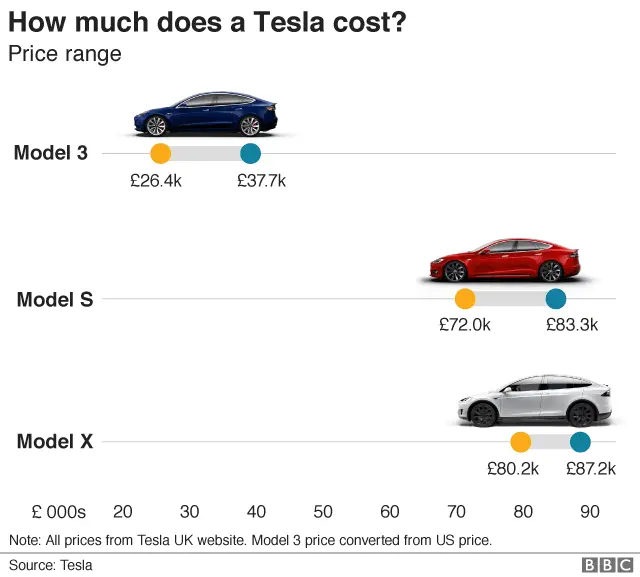
As of 2024, Tesla’s fleet is divided into distinct tiers catering to different market segments. The Model 3 and Model Y represent the “mass market” entry points. The Model 3, a compact sedan, typically starts in the high-$30,000 range for the Rear-Wheel Drive (RWD) base model, while the Long Range and Performance variants can push the price toward $55,000. The Model Y, currently the world’s best-selling vehicle, commands a slight premium, usually starting in the mid-$40,000s.
For the luxury and utility segments, the Model S and Model X offer higher performance and range but at a significantly higher capital requirement. These vehicles often start between $75,000 and $80,000, with “Plaid” versions exceeding $90,000. Finally, the Cybertruck, Tesla’s foray into the pickup market, occupies a unique pricing bracket that varies significantly based on configuration and delivery timelines.
The Impact of Federal and State Incentives
From a personal finance perspective, the “true” cost of a Tesla is often mitigated by government subsidies. In the United States, the federal EV tax credit (Section 30D) provides up to $7,500 for eligible buyers. A critical development in 2024 is the ability for consumers to apply this credit at the “point of sale,” effectively acting as a down payment rather than a credit claimed on the following year’s tax return.
However, these incentives come with strict income caps and vehicle MSRP limits ($55,000 for sedans and $80,000 for SUVs/trucks). Understanding your eligibility is a vital step in budgeting, as it can reduce the effective cost of a Model Y or Model 3 by over 15%.
The Cost of Infrastructure and Home Charging
One of the most overlooked expenses in the Tesla ecosystem is the initial setup required to move away from gas stations. While Tesla vehicles come with the ability to charge via a standard 120V wall outlet (Level 1 charging), this is rarely sufficient for daily use, providing only 2-3 miles of range per hour.
Hardware and Installation
To maximize the financial benefits of an EV, owners typically invest in a Level 2 charging station. The Tesla Wall Connector currently retails for approximately $450 to $500. However, the hardware is only half the expense. Professional installation by a certified electrician can range from $500 to over $2,000, depending on the age of your home’s electrical panel and the distance between the panel and the garage. If your home requires a service upgrade to 200 amps to handle the additional load, the “cost” of your Tesla just increased by several thousand dollars before you’ve even driven a mile.
Supercharging vs. Home Charging
The ongoing cost of “fuel” is where Tesla begins to show a favorable return on investment. Charging at home, where average residential electricity rates in the U.S. hover around $0.16 per kWh, is significantly cheaper than gasoline. For a Model 3, a full charge might cost less than $10, providing 250+ miles of range.
Conversely, relying on Tesla’s Supercharger network is more expensive. Supercharger rates are often tiered based on peak demand or flat rates that can be double or triple the cost of home electricity. While still generally cheaper than gas for a comparable luxury sedan, frequent road-trippers should budget for these higher energy costs.
Insurance, Maintenance, and Operating Expenses
Budgeting for a Tesla requires a shift in how one views recurring vehicle expenses. While EVs have fewer moving parts than ICE vehicles, they present unique financial variables in insurance and maintenance.
The Insurance Premium Gap
Insurance is often where new Tesla owners experience “sticker shock.” On average, Teslas are more expensive to insure than comparable gas-powered vehicles. This is due to several factors: the high cost of repair for the vehicle’s aluminum-intensive structure, the sophisticated suite of cameras and sensors (Autopilot hardware), and the limited number of Tesla-certified body shops.
In some states, Tesla offers its own insurance product that uses “real-time driving behavior” to determine premiums. For safe drivers, this can lead to significant savings, but for those with aggressive driving habits, the monthly premium can fluctuate upward, making it a variable rather than a fixed cost.
Maintenance: Savings and Surprises
The maintenance schedule of a Tesla is remarkably light. There are no oil changes, spark plug replacements, or emissions tests. Over a five-year period, this can save an owner between $2,000 and $5,000 compared to a luxury ICE vehicle.
However, Teslas are notorious for consuming tires at a faster rate. Because of the instant torque of electric motors and the heavy weight of the battery packs, owners often find themselves replacing tires every 20,000 to 30,000 miles. A set of high-quality, EV-specific tires can cost between $1,000 and $1,500, which can quickly erode the savings gained from skipping oil changes.
Software and the “Add-on” Economy
Tesla has pioneered the concept of the “software-defined vehicle,” which introduces a recurring revenue model similar to a smartphone. This adds a layer of “optional” costs that can change the long-term financial profile of the car.
Full Self-Driving (FSD) and Premium Connectivity
The most significant software expense is the Full Self-Driving (FSD) package. Tesla historically offered this for a one-time fee ranging from $5,000 to $15,000, but they have increasingly moved toward a subscription model (currently $99 per month in the U.S.). From an investing standpoint, the one-time purchase of FSD is often viewed as a depreciating asset that rarely recovers its full value in the secondary market.
Furthermore, “Premium Connectivity,” which provides live traffic maps and streaming capabilities, costs approximately $10 per month or $99 per year. While these figures are small in isolation, they contribute to the “subscription creep” that characterizes modern Tesla ownership.
Depreciation and the Secondary Market
The most significant “cost” of any vehicle is the loss in value over time. Historically, Teslas held their value remarkably well compared to other luxury brands. However, aggressive price cuts by Tesla in 2023 and 2024 to spur volume have drastically altered the depreciation curve.
Market Volatility
When Tesla lowers the price of a new Model 3 by $5,000 overnight, the value of every used Model 3 on the road drops by a similar margin. This volatility makes it difficult for owners to predict their equity in the vehicle. For those who finance with low down payments, there is a heightened risk of being “underwater” on the loan—owing more than the car is worth.
Long-term Resale Value
Despite the recent volatility, Teslas still benefit from a high degree of brand desirability and a robust charging infrastructure that keeps them more relevant than many competing EVs on the used market. However, the “cost” of depreciation remains the largest line item in a five-year TCO analysis, often exceeding the cost of electricity and insurance combined.
Conclusion: The Total Cost of Ownership Outlook
What does a Tesla cost? For a buyer of a Model Y Long Range, the math might look like this over five years:
-
Acquisition: $48,000 (MSRP) – $7,500 (Tax Credit) + $4,000 (Tax/Fees) = $44,500.
-
Charging: $600/year (12,000 miles at home) = $3,000.
-
Insurance: $2,000/year = $10,000.
-
Maintenance: Tires and filters = $2,500.
-
Depreciation: Estimated 50% loss of MSRP = ($24,000).
When you aggregate these figures, the Tesla often emerges as financially competitive with a mid-range Toyota or Honda when viewed over a long horizon, despite the higher initial price. The “cost” is not merely the number on the window sticker, but a complex calculation of energy efficiency, tax policy, and market trends. For the financially savvy consumer, a Tesla represents a shift from high operating costs (gas and maintenance) to higher upfront and fixed costs (acquisition and insurance)—a trade-off that, in the right circumstances, offers a compelling value proposition in the modern economy.
aViewFromTheCave is a participant in the Amazon Services LLC Associates Program, an affiliate advertising program designed to provide a means for sites to earn advertising fees by advertising and linking to Amazon.com. Amazon, the Amazon logo, AmazonSupply, and the AmazonSupply logo are trademarks of Amazon.com, Inc. or its affiliates. As an Amazon Associate we earn affiliate commissions from qualifying purchases.