
When navigating the complex landscape of higher education and professional certification, students often encounter a dizzying array of acronyms. Among the most significant for those pursuing a career in nursing is the TEAS test. Understanding exactly what this acronym represents is the first step toward unlocking a future in the healthcare industry. In the context of educational assessment and academic advancement, the TEAS test is a pivotal milestone that serves as the gateway to nursing school admissions.
Decoding the Acronym: Defining TEAS
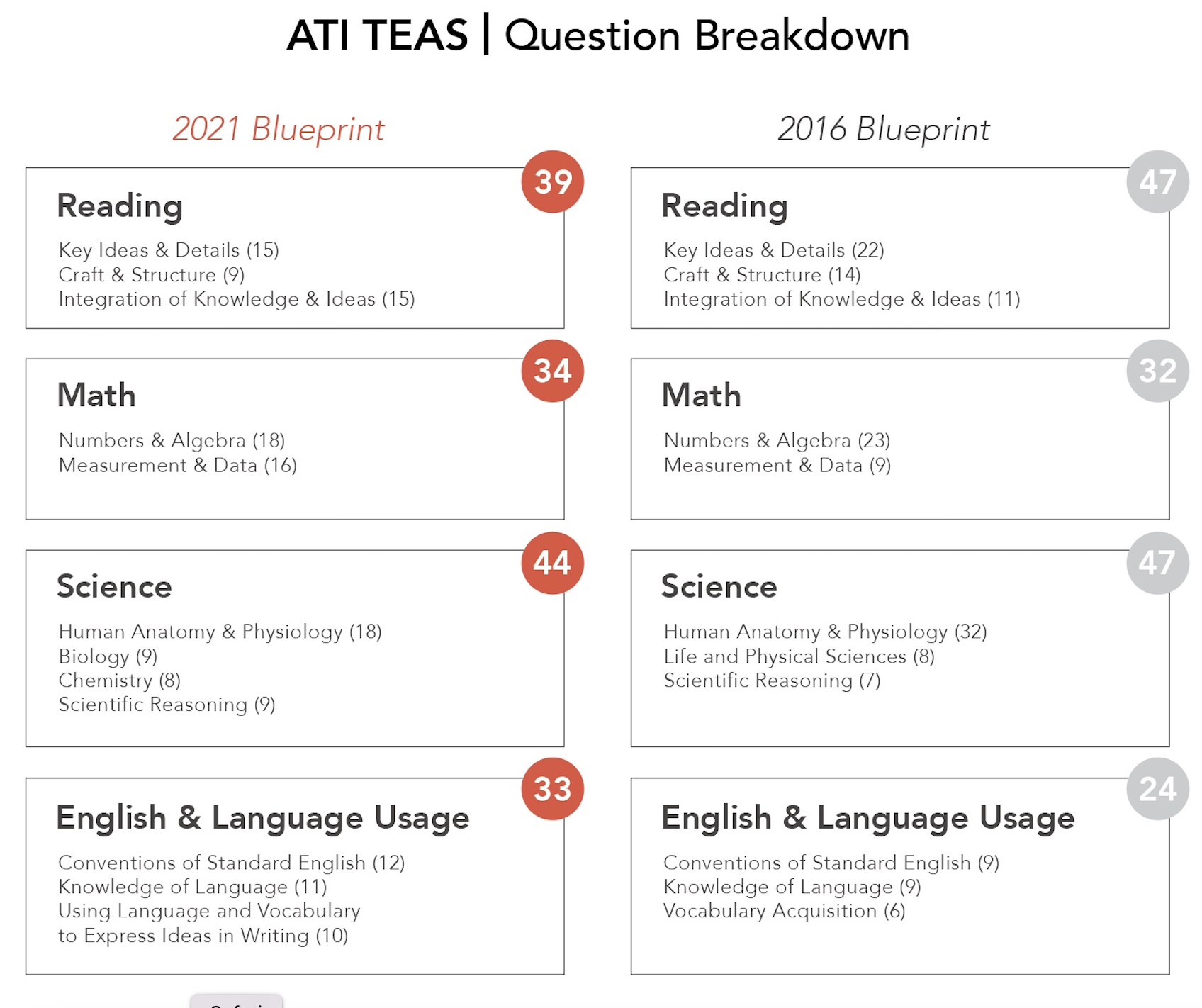
The TEAS test stands for the Test of Essential Academic Skills. Administered by the Assessment Technologies Institute (ATI), this standardized examination is designed specifically to measure a candidate’s readiness to succeed in a nursing program. Unlike general college entrance exams like the SAT or ACT, the TEAS is highly specialized. It focuses on the core competencies—reading, mathematics, science, and English—that are absolutely critical for understanding clinical coursework and patient care protocols.
The Objective of the Examination
The primary purpose of the TEAS test is to provide nursing schools with a predictive metric regarding an applicant’s potential for academic success. Admissions committees use these scores to evaluate whether a student possesses the foundational knowledge necessary to handle the rigorous pace of a nursing curriculum. Because nursing programs are notoriously competitive, with many having more applicants than available seats, the TEAS score functions as a standardized filter to ensure that admitted students are adequately prepared for the demands of anatomy, physiology, and pharmacology.
Who Should Take the TEAS?
The target audience for the TEAS includes prospective students applying for Associate Degree in Nursing (ADN), Bachelor of Science in Nursing (BSN), and Practical Nursing (PN) or Vocational Nursing (VN) programs. Depending on the specific institution’s requirements, an applicant may be required to submit their scores as a mandatory component of the admissions packet. Because different programs utilize the TEAS in different ways—some as a minimum threshold and others as a competitive ranking tool—it is essential for candidates to consult the specific admission requirements of their target schools.
Analyzing the Four Pillars of the TEAS
The structure of the TEAS is built upon four distinct sub-tests. Each section is designed to isolate a specific area of cognitive aptitude that nursing educators deem vital for professional practice. By breaking down the content, students can better understand why the TEAS is considered a comprehensive assessment of academic viability.
Reading and English Language Usage
The Reading section accounts for a significant portion of the test, evaluating a student’s ability to comprehend complex texts, identify key ideas, and synthesize information. In a clinical environment, a nurse must be able to read medical charts, understand policy manuals, and interpret research data quickly and accurately. The English and Language Usage section complements this by assessing knowledge of grammar, punctuation, sentence structure, and vocabulary. Clear communication is the cornerstone of patient safety; thus, the test ensures that candidates can document information and communicate with medical teams without ambiguity.
Mathematics: The Logic of Dosages
The Mathematics section of the TEAS focuses on the fundamental skills that directly translate to daily nursing tasks. This includes proficiency in numbers, algebraic expressions, data interpretation, and, most critically, measurements and conversions. Nurses must perform precise drug dosage calculations daily. A mistake in a decimal point or a misunderstanding of a conversion factor can have life-altering consequences for a patient. Consequently, the TEAS math section is not merely about abstract arithmetic; it is a direct assessment of the student’s ability to perform the safety-critical calculations required in clinical nursing.
Science: The Biological Foundation
The Science section of the TEAS is arguably the most challenging for many students, as it encompasses a broad range of topics including human anatomy, physiology, life sciences, and scientific reasoning. Nursing students must understand how the human body functions, how disease processes affect systems, and the basic principles of chemistry that govern medicine. By testing these topics, the exam ensures that incoming students have an adequate baseline knowledge to handle the heavy load of clinical science courses that await them in the program.

Strategic Preparation for Success
Passing the TEAS is not just about raw intelligence; it is about strategic preparation. Because the test covers a wide array of content, candidates often find that even those with strong academic records need a structured study plan to perform well on test day.
Developing a Study Schedule
Preparation should ideally begin at least two to three months before the test date. A structured schedule allows students to dedicate specific blocks of time to their weaker subjects. For example, a student with a strong background in science might spend more time refining their mathematical calculation speeds or practicing their grammar conventions. Utilizing official ATI study guides and practice assessments is the gold standard for preparation, as these materials provide the most accurate representation of the test’s difficulty and question style.
The Role of Practice Testing
Practice tests are the most valuable tools in a candidate’s arsenal. They serve two primary functions: content review and endurance training. The TEAS is a timed exam, and many students struggle not because they lack knowledge, but because they run out of time. By taking full-length, timed practice exams, students learn to pace themselves, identify the types of questions that cause them to lose time, and build the mental stamina required to remain focused throughout the entire duration of the testing session.
The Significance of Scores in Admissions
Once the exam is complete, the resulting score becomes a defining element of an applicant’s profile. Understanding how these scores are perceived by institutions can help students manage expectations and strategize their applications.
Interpreting Scores and Percentiles
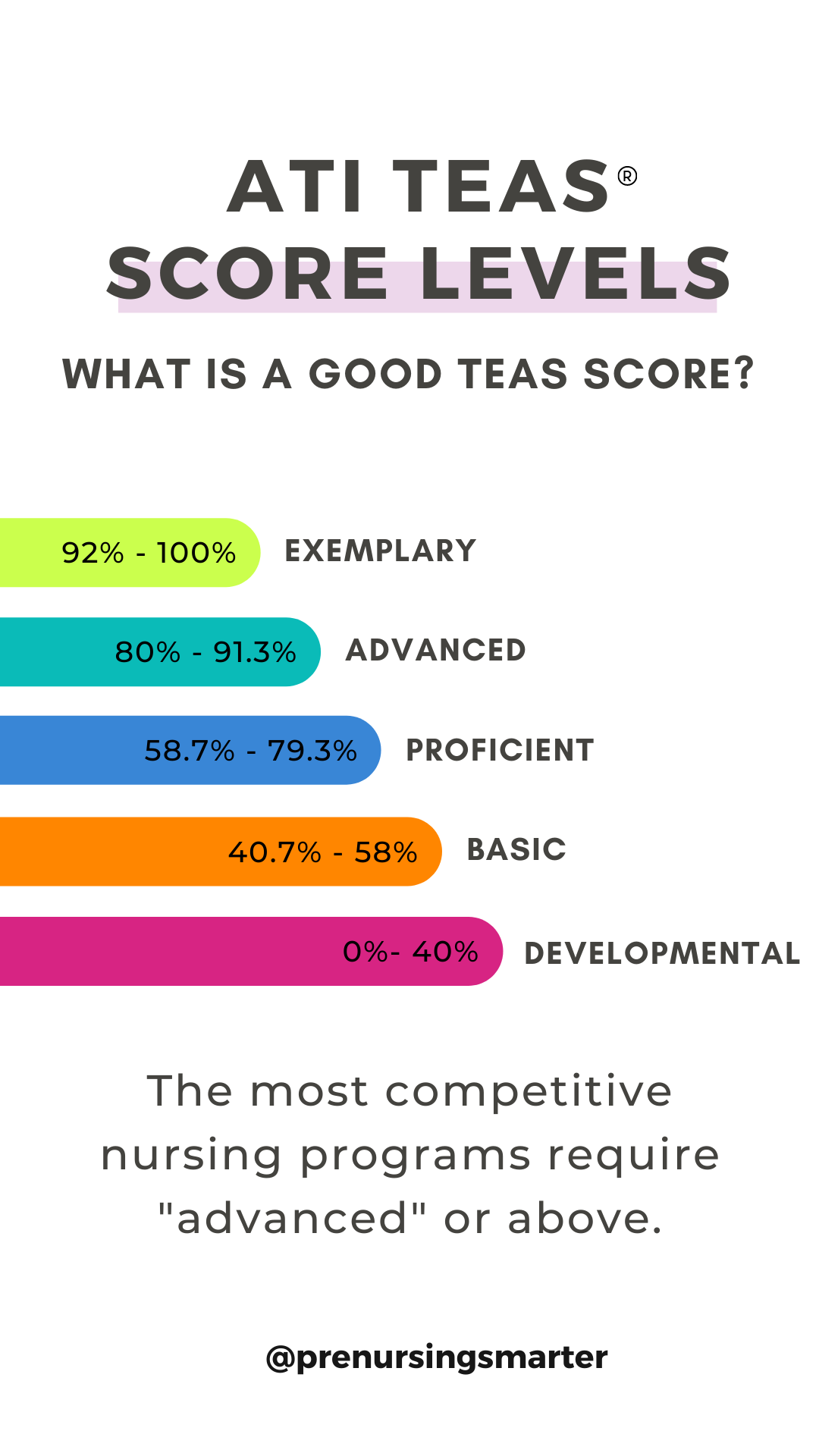
ATI reports scores in several ways, including an overall adjusted individual score and category-specific scores. Most nursing programs provide a “passing” or “proficient” score requirement. However, in highly competitive programs, simply reaching the minimum score may not be sufficient for admission. Admissions committees often look at the “National Percentile Rank,” which places the student’s performance in the context of all other test-takers across the country. A high percentile rank demonstrates a superior level of academic readiness compared to peers.
Managing Retakes and Improvement
One of the most important things for students to realize is that the TEAS is not necessarily a one-time endeavor. While schools have different policies regarding retakes—some allowing multiple attempts within a certain timeframe—the opportunity to improve a score exists. If a candidate does not meet the necessary threshold, they should view the score report as a diagnostic tool rather than a final judgment. By analyzing the breakdown of results, a student can pinpoint exactly which areas need additional study before re-registering for the exam.
Conclusion: Beyond the Acronym
The Test of Essential Academic Skills is far more than just a hurdle to jump on the way to a nursing degree. It is a systematic, data-driven method for ensuring that the next generation of nurses is equipped with the mental rigor required for a demanding and vital profession. By understanding that TEAS stands for the assessment of the exact skills that sustain patient safety and clinical excellence, students can approach the exam with the gravity and preparation it deserves.
As nursing education continues to evolve, the necessity for high-quality, standardized evaluations remains constant. Whether it is calculating a precise medication dosage, reading a patient’s medical history with precision, or understanding the biological impact of a treatment, the skills tested by the TEAS are the bedrock of clinical competence. Success on this test is the first tangible sign that a student is ready to leave the classroom and begin the profound work of healing others. Through diligent study and a clear understanding of the test’s structure, prospective nurses can confidently move toward their professional goals, knowing they have already proven their capability to meet the high standards of the healthcare industry.
aViewFromTheCave is a participant in the Amazon Services LLC Associates Program, an affiliate advertising program designed to provide a means for sites to earn advertising fees by advertising and linking to Amazon.com. Amazon, the Amazon logo, AmazonSupply, and the AmazonSupply logo are trademarks of Amazon.com, Inc. or its affiliates. As an Amazon Associate we earn affiliate commissions from qualifying purchases.