
In the pantheon of automotive engineering, the suspension system is often the unsung hero of the driving experience. While engines receive the accolades for horsepower and aesthetics capture the consumer’s eye, the suspension system serves as the critical interface between the vehicle and the road. At its core, the question of “what does suspension do for a car” is answered by the delicate balance of physics, mechanical engineering, and increasingly, sophisticated digital technology. In the modern era, suspension is no longer just a collection of springs and shocks; it is a complex, data-driven ecosystem designed to maximize tire contact, ensure occupant comfort, and maintain structural integrity under diverse stresses.
The Mechanics of Equilibrium: Understanding the Core Components
To understand the technological evolution of suspension, one must first grasp the fundamental mechanical principles it employs. A vehicle’s suspension system serves two primary functions: keeping the wheels in contact with the road surface to provide traction and isolating the cabin from road imperfections to ensure passenger comfort.
Springs and Dampers: The Hardware of Handling
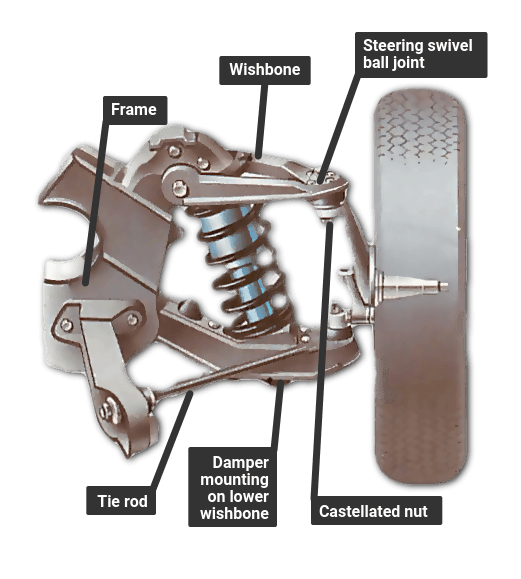
The primary mechanical components are the springs and the dampers (commonly known as shock absorbers). The springs—whether they be coil, leaf, or air-based—support the vehicle’s weight and absorb the initial energy of an impact. However, a spring alone would cause the car to bounce uncontrollably. This is where the damper enters the technological equation.
Dampers utilize kinetic energy dissipation, typically by forcing oil through small orifices within a piston. This creates resistance, “damping” the spring’s oscillation. Modern high-performance dampers utilize multi-stage valving, allowing the tech to respond differently to low-speed movements (like body roll during a turn) versus high-speed movements (like hitting a pothole).
Control Arms and Linkages: Managing Geometric Precision
The geometry of a suspension system—the angles at which the wheels sit relative to the road and the chassis—is managed by control arms and multi-link setups. These components represent a triumph of mechanical tech, designed to maintain the “patch” of the tire in full contact with the asphalt regardless of the vehicle’s lean. Sophisticated multi-link systems allow for independent movement of each wheel, ensuring that a disturbance on the front-left corner does not destabilize the rear-right, a leap in tech that has revolutionized handling stability over the last three decades.
The Digital Revolution: From Passive to Active Suspension Systems
The most significant leap in what suspension “does” for a car in the 21st century is the transition from passive hardware to active, software-controlled systems. Passive suspension is a compromise; it must be tuned to be either “sporty” (stiff) or “comfortable” (soft). Modern technology has eliminated this binary choice.
Adaptive Dampers and Electronic Control Units (ECUs)
Active and semi-active suspensions utilize an array of sensors—including accelerometers, wheel position sensors, and steering angle sensors—to feed data into a dedicated Electronic Control Unit (ECU). This computer processes data hundreds of times per second to adjust the damping rates in real-time. By using solenoid valves to restrict or open fluid flow within the shocks, the car’s tech can “stiffen” the outside wheels during a sharp turn to prevent leaning, and then “soften” them immediately once the road straightens out.
Predictive Suspension: Utilizing LiDAR and Camera Data
The cutting edge of suspension technology is no longer reactive; it is predictive. High-end vehicles now integrate their suspension systems with the car’s ADAS (Advanced Driver Assistance Systems) suite. Using forward-looking stereo cameras or LiDAR (Light Detection and Ranging), the vehicle “sees” a speed bump or a dip in the road before the tires ever touch it. The tech then pre-loads the suspension, adjusting the struts to glide over the obstacle. This integration of optical data and mechanical response represents the pinnacle of current automotive software engineering.
Magnetic Ride Control and the Application of Smart Materials
One of the most fascinating technological breakthroughs in the automotive sector is the use of magnetorheological (MR) fluid. This is a prime example of how materials science and digital control converge to redefine vehicle dynamics.
Magnetorheological Fluid: Real-Time Viscosity Adjustment
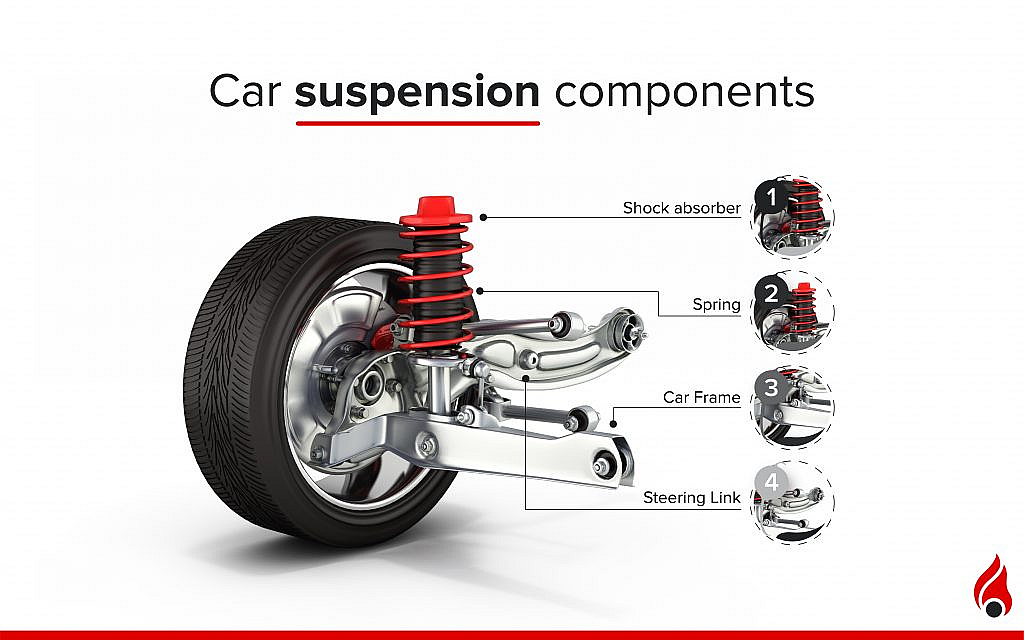
Unlike traditional dampers that use standard hydraulic oil, MR dampers are filled with a fluid containing tiny magnetic particles. When an electromagnetic coil inside the damper is energized, the particles align, instantly changing the fluid’s viscosity from a liquid state to a near-solid state. Because this change happens at the sub-millisecond level, the suspension can adapt to road conditions almost instantaneously.
Enhancing Safety Through Nanosecond Response Times
The tech behind magnetic ride control isn’t just about luxury; it’s a critical safety feature. In an emergency maneuver, such as swerving to avoid an obstacle, the system can instantly maximize the stiffness of the suspension to prevent the vehicle from rolling or losing traction. By managing the “pitch and heave” of the vehicle body through digital signals rather than mechanical valves, the system provides a level of stability that was once thought physically impossible.
The Future of Suspension: AI-Driven Dynamics and Electrification
As we move toward a future dominated by Electric Vehicles (EVs) and Autonomous Vehicles (AVs), the role of suspension is evolving to meet new technological challenges.
Machine Learning in Ride Quality Optimization
Artificial Intelligence is beginning to play a role in how suspension systems are calibrated. Instead of a “one-size-fits-all” factory tune, AI algorithms can learn a driver’s preferences and the specific topography of their daily commute. By analyzing vast amounts of telemetric data, the car can optimize its damping profiles to provide the perfect balance of efficiency and comfort for specific geographic routes.
Dealing with EV Weight: The Tech Challenge of Battery Packs
The transition to electrification has introduced a significant hurdle: weight. EVs are substantially heavier than their internal combustion counterparts due to massive battery packs. This requires a technological shift in suspension design. Air suspension systems are becoming more common in the EV space because they allow for load-leveling. As passengers or cargo are added, the tech automatically inflates the air bladders to maintain a constant ride height, ensuring that the heavy battery pack remains at a safe distance from the ground while maintaining optimal aerodynamics.
Maintenance and Diagnostics in the Digital Age
In the tech-heavy landscape of modern vehicles, the way we monitor suspension health has shifted from visual inspections to digital diagnostics.
Telematics and Remote Health Monitoring
Modern suspension systems are part of the vehicle’s broader “Internet of Things” (IoT) ecosystem. Through telematics, a vehicle can monitor the wear and tear on its dampers and bushings. If the ECU detects that a damper is no longer responding within its programmed parameters, it can trigger a dashboard alert or even send a diagnostic report to the manufacturer.

The Role of Software Updates (OTA)
We are entering an era where a car’s suspension performance can actually improve after it has left the factory. Through Over-The-Air (OTA) software updates, manufacturers can refine the algorithms that control active suspension. A “firm” ride that customers complain about can be smoothed out via a software patch sent to the car’s wireless module, demonstrating that in the modern world, what a suspension does for a car is as much about the code it runs as the steel it is built from.
In conclusion, the suspension system is the fundamental technology that enables every other aspect of vehicle performance. It is the bridge between the digital commands of the driver and the physical reality of the road. From the basic physics of springs to the complex AI-driven predictive systems of tomorrow, suspension remains a primary frontier of automotive innovation. It ensures that no matter how much power is under the hood or how heavy the batteries are, the vehicle remains a stable, safe, and comfortable vessel for its occupants. In the world of high-tech mobility, the suspension is the silent processor that keeps the world moving smoothly.
aViewFromTheCave is a participant in the Amazon Services LLC Associates Program, an affiliate advertising program designed to provide a means for sites to earn advertising fees by advertising and linking to Amazon.com. Amazon, the Amazon logo, AmazonSupply, and the AmazonSupply logo are trademarks of Amazon.com, Inc. or its affiliates. As an Amazon Associate we earn affiliate commissions from qualifying purchases.