
In the landscape of modern social media, few platforms have mastered the art of non-verbal communication quite like Snapchat. While other apps rely on likes, shares, and comments, Snapchat uses a sophisticated, data-driven system of visual indicators known as “Friend Emojis.” These icons act as a dynamic shorthand for the platform’s underlying social graph, providing users with immediate insights into their interaction patterns. Among these symbols, the sunglasses emoji—often referred to as the “Mutual Besties” icon—serves as a fascinating case study in how software algorithms can map human relationships through data.

Understanding what the sunglasses emoji means is more than just learning a piece of digital slang; it is about understanding how Snapchat’s proprietary ranking algorithm monitors user behavior, calculates engagement metrics, and visualizes social proximity. In this technical deep dive, we will explore the specific meaning of the sunglasses emoji, the logic that triggers its appearance, and how it fits into the broader ecosystem of Snapchat’s user interface.
The Architecture of Snapchat’s Social Graph
To understand the sunglasses emoji, one must first understand the concept of “Best Friends” within the Snapchat environment. Unlike other platforms where a “friend” is a static binary state (you are either connected or you are not), Snapchat views friendship as a fluid, high-frequency interaction model.
The Logic of the Best Friends List
Snapchat’s software continuously monitors the frequency of Snaps (photos and videos) and Chats exchanged between users. The individuals with whom you interact most frequently are categorized by the system as your “Best Friends.” This list is private to the user; however, the platform uses Friend Emojis to signal the status of these relationships to the parties involved.
The algorithm prioritizes two-way communication. If you send many Snaps to a user but they rarely reply, they are unlikely to reach “Best Friend” status. The system rewards reciprocal engagement, creating a real-time reflection of your most active digital connections.
Metadata and Relationship Mapping
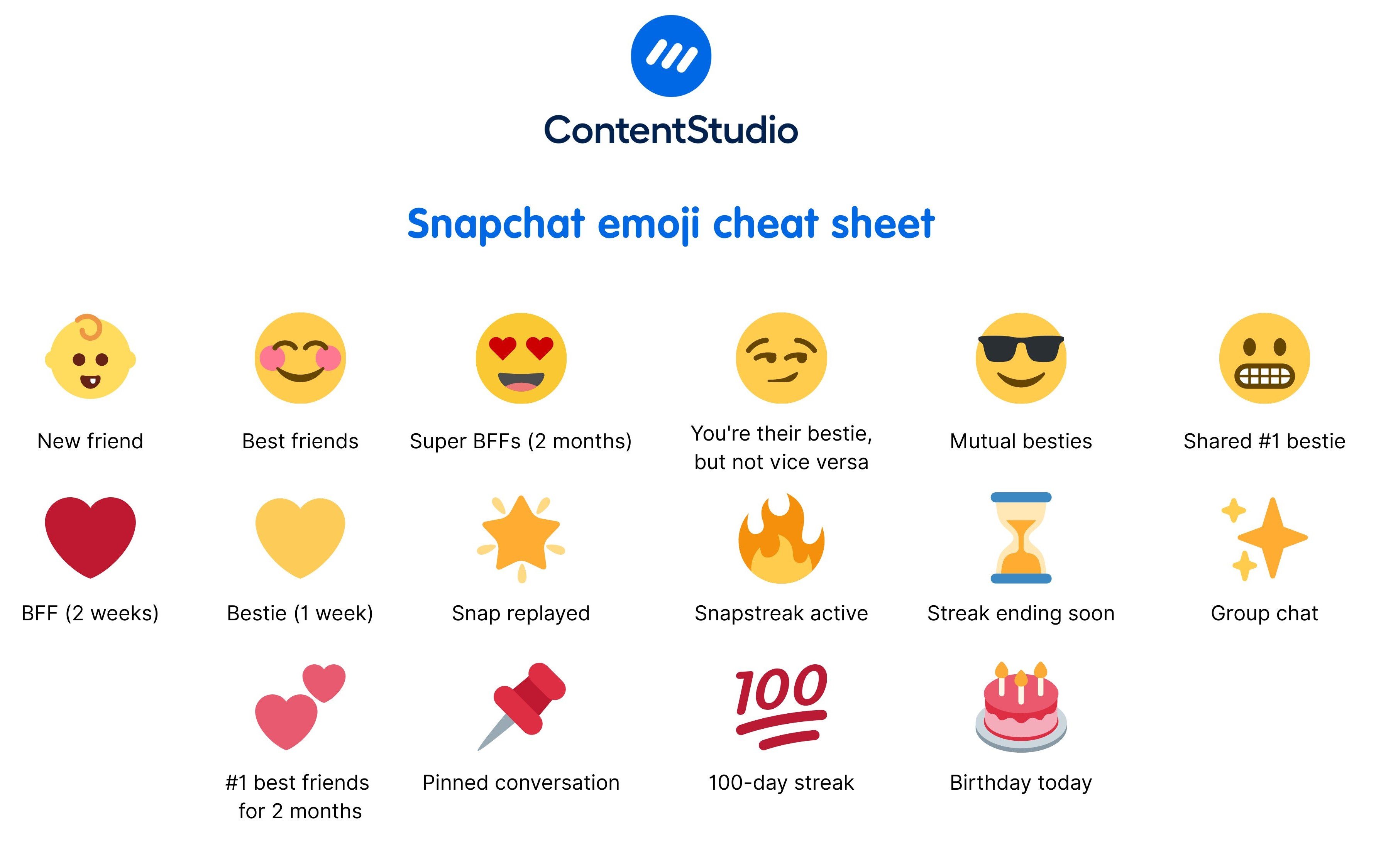
Behind every emoji is a set of data points. Snapchat’s servers track the timestamp, frequency, and consistency of interactions. This metadata is then processed to assign specific icons. The sunglasses emoji ( ) appears next to a contact’s name when you share a mutual Best Friend. Specifically, it means that one of your Best Friends is also one of their Best Friends. It is a visual representation of social overlap—a digital indicator that you and another user are part of the same high-frequency interaction circle.
Decoding the Sunglasses Emoji: Mutual Besties and Network Proximity
The sunglasses emoji is often confused with other similar icons, such as the “Grimacing Face” or the “Smiley Face.” However, in the hierarchy of Snapchat’s social indicators, the sunglasses emoji occupies a specific niche related to network proximity.
Mutual Besties vs. Mutual BFFs
In the technical terminology of Snapchat, the sunglasses emoji represents “Mutual Besties.” This indicates that a person on your Best Friends list is also on the other person’s Best Friends list. This differs from the “Grimacing Face” ( ), which signifies that your #1 Best Friend is also their #1 Best Friend.
The sunglasses emoji is a broader indicator. It does not necessarily mean you are competing for the top spot with someone, but it does highlight that your digital social circles are tightly intertwined. For users who prioritize digital privacy or those who are curious about how their friends interact with others, this emoji provides a window into the “hidden” social graph of their contacts.
The Algorithm’s Refresh Cycle
Friend Emojis are not permanent. Because they are based on rolling windows of interaction (typically measured over the last week), the sunglasses emoji can appear and disappear based on shifting behavior. If the mutual friend stops interacting as frequently with one of you, the algorithm will recalculate the rankings, and the emoji will be removed during the next data refresh. This dynamic nature keeps the user interface “live,” reflecting the current state of social connectivity rather than a historical record.
The Impact of Gamification on User Engagement
The use of emojis to represent data is a masterclass in UI/UX gamification. By turning interaction metrics into visual rewards and indicators, Snapchat encourages users to maintain high levels of activity.

Psychological Triggers in UI Design
The sunglasses emoji acts as a “social proof” mechanism. Seeing that you share mutual best friends with someone can reinforce a sense of community or, conversely, spark curiosity and increased usage. This is a deliberate design choice intended to increase the “stickiness” of the app. Users are more likely to return to the platform to see if their statuses have changed, if they have achieved a “Snapstreak,” or if their relationship with a specific contact has evolved in the eyes of the algorithm.
Behavioral Feedback Loops
When a user sees the sunglasses emoji, it often prompts further investigation or interaction. This creates a feedback loop: the app provides a visual cue based on data, the user reacts to that cue by sending more Snaps, and the algorithm processes that new data to further refine the social graph. This cycle is what has allowed Snapchat to maintain a highly engaged user base even in a competitive social media landscape.
Data Privacy and Visibility within the Snapchat Ecosystem
While the sunglasses emoji is a tool for engagement, it also raises questions regarding data privacy and how much information a platform should reveal about its users’ interactions.
What Others Can See
A common concern for Snapchat users is whether their entire Best Friends list is visible to others. In the current iteration of the software, your full Best Friends list is private. However, the sunglasses emoji provides a “leak” of sorts. While a third party cannot see your entire list, they can deduce who you are close to based on the appearance of mutual friend emojis.
For example, if User A sees the sunglasses emoji next to User B, User A knows that they share a common high-frequency contact. While the identity of that mutual friend isn’t explicitly named by the emoji itself, it is often easy to deduce within small social circles. This represents a form of “soft data” exposure—information that is not explicitly stated but can be inferred through the system’s logic.
Customizing Friend Emojis
Recognizing that users may want more control over their interface, Snapchat allows for the customization of Friend Emojis. Users can navigate to their profile, access the “Settings” menu, and locate the “Manage” or “Additional Services” section to find “Friend Emojis.”
From a technical standpoint, this feature allows users to map different emoji assets to the underlying data triggers. You could, for instance, change the sunglasses emoji to a computer icon or a shield. This does not change the underlying algorithm—the mutual friend logic remains the same—but it allows the user to customize the visual representation of that data on their local device.
Technical Troubleshooting: When Emojis Don’t Appear or Change Unexpectedly
Sometimes, users find that the sunglasses emoji does not appear when they expect it to, or it disappears despite continued interaction. This is usually due to the specific technical constraints of the Snapchat ranking system.
Delayed Data Processing
The Snapchat algorithm does not always update in real-time. Data processing for millions of users requires significant server resources. Consequently, there can be a lag between an increase in interaction and the appearance of the corresponding emoji. Typically, the system refreshes every 24 to 48 hours, though this can vary based on server load and app updates.
The 8-Friend Limit
Snapchat limits the number of “Best Friends” a user can have—usually capped at eight. If you have a high volume of interactions with many people, someone who was previously a “Best Friend” might be pushed off the list by a more active contact. If that person was the link that triggered the sunglasses emoji with another user, the emoji will disappear because the “Mutual Bestie” criteria are no longer met.
App Cache and Versioning
In some cases, visual bugs can prevent emojis from displaying correctly. Clearing the app cache or ensuring that the software is updated to the latest version is the standard technical fix. Because Snapchat frequently updates its UI and algorithm parameters, running an outdated version of the app can lead to discrepancies between the server-side data and the client-side visualization.
Conclusion
The sunglasses emoji on Snapchat is a sophisticated marriage of data science and user interface design. It serves as a real-time visualization of a user’s social network, calculated through a proprietary algorithm that prioritizes reciprocal, high-frequency digital communication. By understanding the technical logic behind “Mutual Besties,” users can gain a deeper insight into how their behavior is tracked and mapped within the Snapchat ecosystem.
As social media platforms continue to evolve, the use of such visual indicators will likely become more complex, integrating AI and more nuanced data points to define our digital relationships. For now, the sunglasses emoji remains one of the most recognizable and analyzed components of the Snapchat experience—a small icon that carries the weight of significant algorithmic calculations.
aViewFromTheCave is a participant in the Amazon Services LLC Associates Program, an affiliate advertising program designed to provide a means for sites to earn advertising fees by advertising and linking to Amazon.com. Amazon, the Amazon logo, AmazonSupply, and the AmazonSupply logo are trademarks of Amazon.com, Inc. or its affiliates. As an Amazon Associate we earn affiliate commissions from qualifying purchases.