
In the landscape of American retail, few names evoke as immediate and visceral a reaction as Spencer’s. For over seven decades, the brand has occupied a unique, somewhat provocative niche in the consumer psyche. While many legacy retailers have succumbed to the pressures of e-commerce or lost their identity in an attempt to appeal to everyone, Spencer’s has thrived by doing the exact opposite. By answering the question “What does Spencer’s sell?” through the lens of brand strategy, we discover that they don’t just sell physical products—they sell an identity, a sense of rebellion, and a specific brand of social currency.

The Core Identity: More Than a Novelty Shop
To understand what Spencer’s sells, one must first understand the architecture of its brand identity. Spencer’s does not view itself as a general gift shop; rather, it positions itself as the ultimate destination for “life’s party.” This corporate identity is built on a foundation of irreverence, humor, and a refusal to adhere to traditional retail norms.
Curating a Culture of Rebellion
Spencer’s brand strategy is centered on the concept of the “outsider.” Since its inception as a mail-order company in 1947 and its subsequent move into shopping malls in the 1960s, the brand has catered to the counter-culture. In a brand audit, Spencer’s stands out because it leverages psychological “reactance”—the idea that people are drawn to things that feel slightly forbidden or non-conformist. By selling products that might make a grandparent blush, Spencer’s cements its status as the brand for the youth and the young-at-heart who wish to deviate from the status quo.
The Intersection of Pop Culture and Adult Humor
A critical component of the Spencer’s brand identity is its ability to bridge the gap between mainstream pop culture and niche adult humor. Their strategy involves rapid-response product development. When a meme goes viral or a new television series captures the cultural zeitgeist, Spencer’s is often the first to market with licensed merchandise that carries a “Spencer’s twist.” This agility allows the brand to remain relevant across generations, from Boomers looking for classic rock memorabilia to Gen Z seeking the latest internet-inspired irony.
Strategic Product Curation as Brand Narrative
The inventory of a Spencer’s store is a carefully choreographed collection of sub-brands and categories that serve a singular narrative: self-expression. Every item on the shelf is a tool for the consumer to communicate something about their personality, their sense of humor, or their lifestyle.
Apparel and Expressionism
Apparel at Spencer’s is not about fashion in the traditional sense; it is about “statement.” The brand sells a massive array of graphic t-shirts, hats, and hoodies that serve as wearable billboards. Whether it is a shirt featuring a cult-classic movie, a band tee, or a slogan that pushes the boundaries of social etiquette, the clothing line is designed to spark conversation. From a brand management perspective, this creates high customer engagement; the product itself becomes a social interaction.
The Gift of Shock Value
A significant portion of Spencer’s revenue comes from its “gag gift” and novelty category. This is where the brand’s “Corporate Identity” truly shines. While competitors like Hallmark focus on sentimentality, Spencer’s focuses on shock value and humor. This niche allows them to dominate the market for “white elephant” exchanges and bachelor/bachelorette parties. By owning the “shock” niche, Spencer’s ensures that it is the first brand consumers think of when they need a gift that is memorable, if not entirely functional.
Lifestyle and Home Decor for the Non-Conformist
Beyond apparel and gags, Spencer’s sells a lifestyle. This includes everything from “dorm-core” aesthetic lighting (like the iconic lava lamps) to specialized barware and room decor. This category is vital for brand loyalty, as it allows the consumer to bring the Spencer’s “vibe” into their personal living space. It transforms the brand from a store you visit into a brand you live with.
The Experiential Retail Model
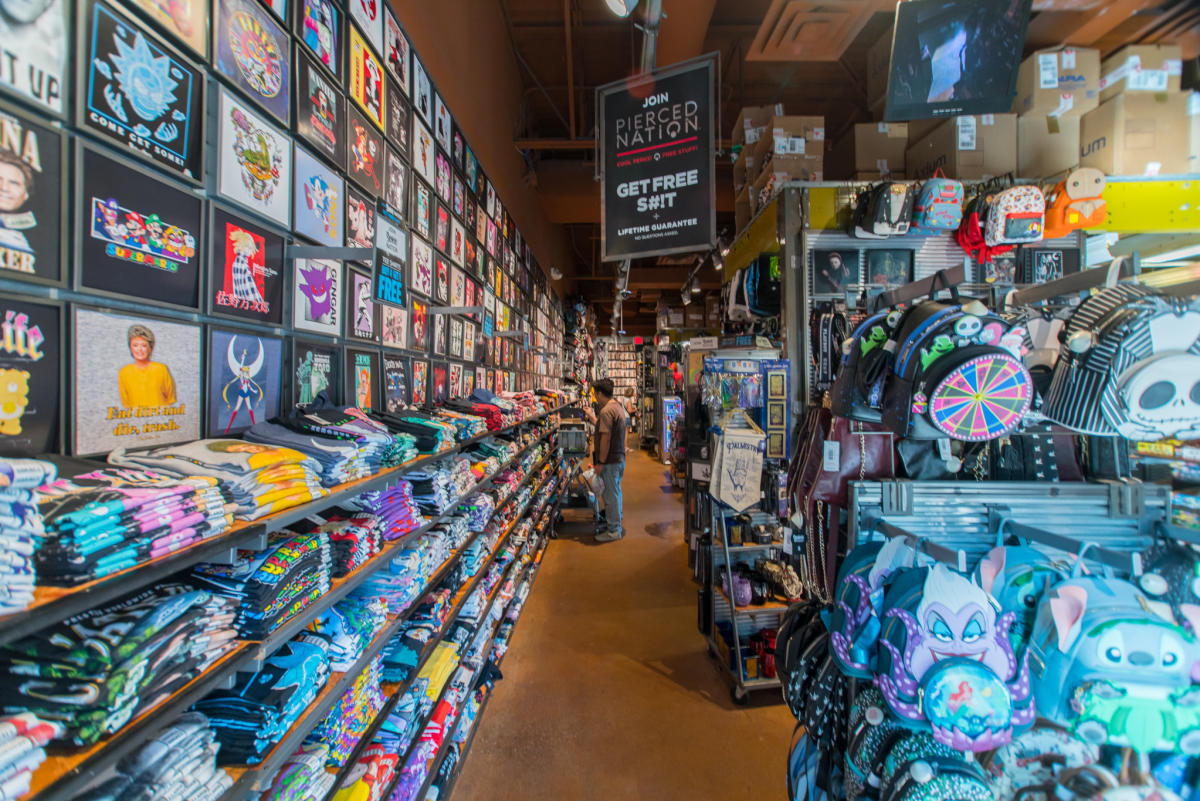
In the age of digital dominance, Spencer’s has maintained a remarkably strong brick-and-mortar presence. This is not an accident; it is a result of a sophisticated experiential brand strategy. Spencer’s understands that its products are often tactile and experiential, requiring a physical environment that matches the brand’s energy.
The “Back of the Store” Mystique
One of the most famous aspects of Spencer’s brand layout is the “back of the store” section, which houses adult-oriented products. Strategically, this creates a “velvet rope” effect. It adds an element of mystery and adult-exclusivity that has become a rite of passage for teenagers and young adults. By managing this boundary carefully, Spencer’s maintains its edgy reputation while remaining accessible to a broad mall-going audience.
Sensory Branding in Brick-and-Mortar
Walking into a Spencer’s is a multi-sensory experience. The dimmed lighting, the neon glows, the specific scent profile, and the curated playlists all work in tandem to create an immersive brand environment. This “sensory branding” is a powerful tool for retail retention. It creates an emotional state—usually one of amusement or excitement—that shoppers associate specifically with the Spencer’s logo. This level of immersion is something that an e-commerce storefront can mimic but never fully replicate, ensuring the longevity of their physical locations.
Adapting to the Digital Age: Brand Evolution
While Spencer’s is a titan of the shopping mall, its brand strategy has evolved to embrace the digital-first consumer. The company’s digital transformation focuses on maintaining its “edgy” voice while leveraging modern marketing tools to drive both online and offline sales.
Omnichannel Personalization
Spencer’s has successfully implemented an omnichannel strategy that integrates its physical stores with a robust e-commerce platform. Their digital presence isn’t just a catalog; it’s an extension of the store’s personality. Through email marketing and a mobile-optimized site, they use data analytics to suggest products based on a user’s specific “niche”—whether that’s anime, classic rock, or party games. This personalization ensures that the brand remains a “curator” rather than just a “vendor.”
Social Media and Community Engagement
The Spencer’s brand thrives on social media, where its content is highly “shareable.” By leaning into memes, user-generated content, and influencer partnerships that align with their “alternative” aesthetic, they have built a community rather than just a customer base. Their social media strategy avoids the “corporate” feel that plagues many legacy brands, instead opting for a tone that feels like a peer or a funny friend. This builds “brand equity”—the intangible value that keeps customers coming back even when cheaper alternatives exist.
The Business of Being Bold: Resilience and Loyalty
The ultimate indicator of a successful brand strategy is resilience. Spencer’s has survived economic downturns, the “retail apocalypse,” and shifting cultural sensitivities. This resilience is rooted in their unwavering commitment to their target demographic.
Resilience in the Declining Mall Landscape
As anchor department stores have closed their doors, Spencer’s has remained a steady tenant. Their business model is built on high margins and high foot traffic. Because they offer products that are difficult to find in one place elsewhere, they serve as a destination store. Furthermore, their ownership of the “Spirit Halloween” pop-up brand provides a seasonal synergy that bolsters the parent company’s financial health, allowing the Spencer’s brand to experiment and take risks that other retailers cannot afford.

Target Audience and Brand Loyalty
Spencer’s understands its “Core Consumer” perfectly: the 18-to-24-year-old looking for self-expression, and the older consumer looking for nostalgia. By catering to these two groups simultaneously, they create a lifecycle of brand loyalty. A teenager might buy their first band t-shirt at Spencer’s, and twenty years later, they return to buy a nostalgic gift or a “gag” item for a friend’s party. This “multi-generational edginess” is a rare achievement in marketing.
In conclusion, when we ask what Spencer’s sells, the answer is far more complex than “t-shirts and lava lamps.” Spencer’s sells identity. They sell the permission to be loud, the opportunity to be funny, and the tools to be different. Through a masterclass in brand positioning, experiential retail, and strategic curation, Spencer’s has transformed from a simple novelty shop into a cultural institution. They have proven that in a world of sanitized, corporate retail, there is immense value—and significant profit—in remaining unapologetically yourself.
aViewFromTheCave is a participant in the Amazon Services LLC Associates Program, an affiliate advertising program designed to provide a means for sites to earn advertising fees by advertising and linking to Amazon.com. Amazon, the Amazon logo, AmazonSupply, and the AmazonSupply logo are trademarks of Amazon.com, Inc. or its affiliates. As an Amazon Associate we earn affiliate commissions from qualifying purchases.