
In the rapidly evolving landscape of technology, efficiency is the currency of progress. As we generate quintillions of bytes of data daily, the way we store, process, and interpret that information determines the speed of innovation. At the heart of this optimization lies a concept that sounds deceptively simple: sparsity. To ask “what does sparse mean” in a technological context is to explore the fundamental architecture of modern computing, from the algorithms that power your favorite search engine to the neural networks driving generative AI.
In tech, “sparse” refers to a condition where most of the elements in a dataset, matrix, or signal are zero or empty. While it might seem counterintuitive to focus on “nothingness,” the ability to identify and leverage these gaps is what allows us to run complex simulations, compress high-definition video, and train massive language models on hardware that would otherwise be overwhelmed.

The Mathematical Foundation: Sparse vs. Dense Data
To understand the technological implications of sparsity, we must first look at its mathematical origin in data structures. In computer science, we often represent information in grids known as matrices.
Sparse Matrices Defined
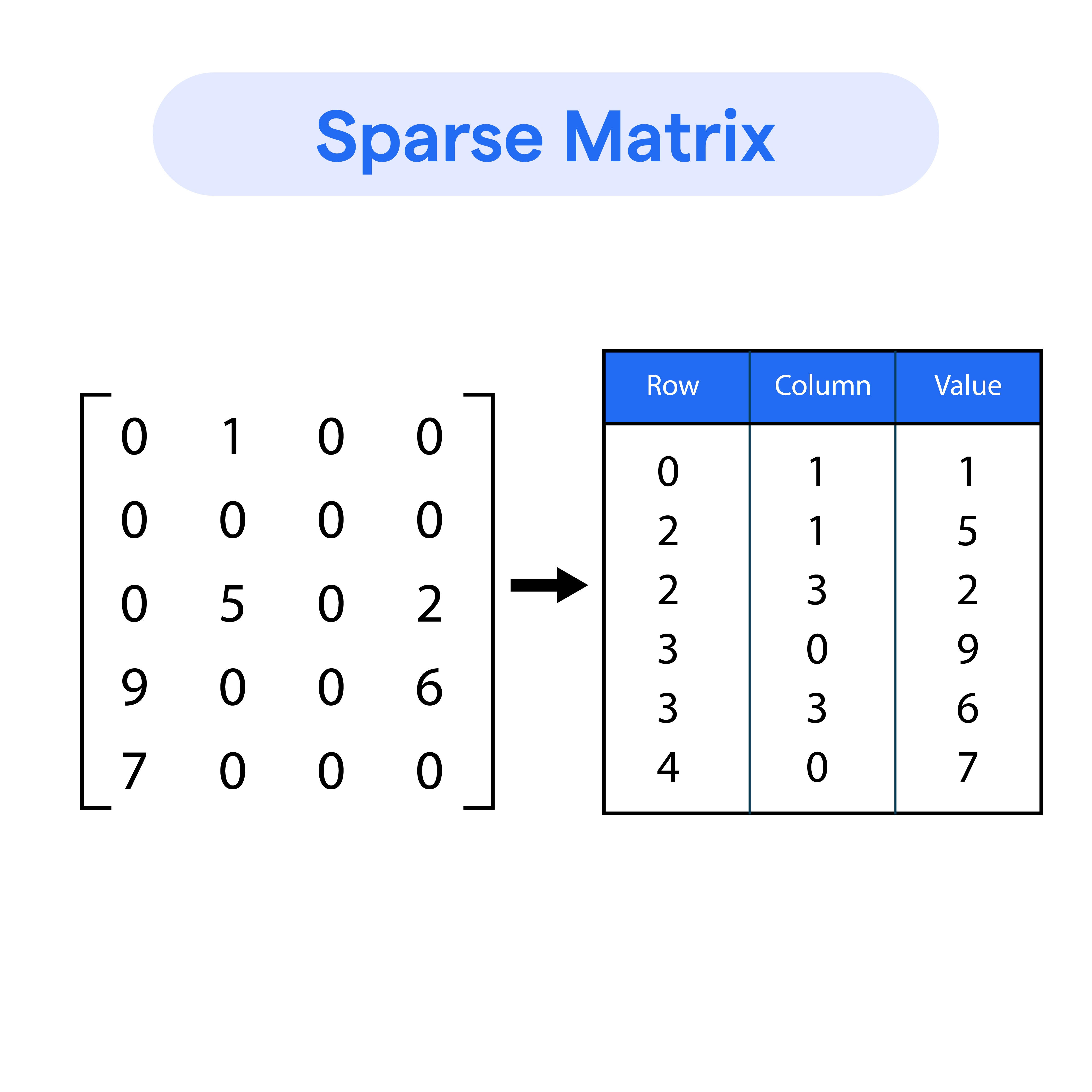
A sparse matrix is a matrix in which the number of zero elements significantly outweighs the number of non-zero elements. Conversely, if most of the elements are non-zero, the matrix is considered “dense.” Imagine a map of a vast ocean where only a few islands exist. If you were to record the coordinates of every square meter of water, you would have a dense dataset filled with redundant information. If you only recorded the coordinates of the islands, you would have a sparse dataset.
Storage Optimization and Compressed Formats
When dealing with “Big Data,” storing every single zero in a dense format is a massive waste of memory and energy. Tech professionals use specialized storage formats to handle sparsity. The most common are Compressed Sparse Row (CSR) and Compressed Sparse Column (CSC).
By storing only the non-zero values and their corresponding indices, developers can reduce memory requirements by orders of magnitude. For example, a social media platform like LinkedIn uses a sparse matrix to represent the connections between users. With nearly a billion users, a dense matrix would require a quadrillion entries. Since most users are only connected to a few hundred people, a sparse representation makes the data manageable and searchable in real-time.
Sparsity in Artificial Intelligence and Machine Learning
Perhaps the most exciting application of sparsity today is within the realm of Artificial Intelligence. As Large Language Models (LLMs) grow in size, the computational cost of running them becomes a bottleneck. Sparsity is the primary tool used to break this barrier.
Weight Pruning and Model Compression
In a neural network, “weights” are the parameters that determine how information flows through the system. During training, many of these weights become negligible or zero. “Pruning” is the process of identifying these unimportant weights and removing them from the model entirely.
A pruned, sparse model requires less storage space and fewer calculations during inference (the process of generating an answer). This is how developers are able to take massive models and “distill” them into smaller versions that can run locally on a smartphone or a laptop without needing a constant connection to a high-powered server.
Mixture of Experts (MoE)
Modern AI architectures, such as those used in some versions of GPT-4 or Mistral, utilize a technique called “Mixture of Experts.” This is a form of conditional sparsity. Instead of activating the entire neural network for every prompt, the system only activates specific “expert” sub-networks that are relevant to the query.
If you ask an AI a question about French history, the “experts” related to coding or biology remain “sparse” (inactive), while only the history-related parameters are engaged. This allows the model to have a massive total parameter count while maintaining the operational speed of a much smaller system.
Sparse Embeddings in Search Engines
When you type a query into a search engine, the system uses “embeddings” to understand the meaning of your words. Sparse embeddings are high-dimensional vectors where most values are zero. This format is particularly effective for keyword-based retrieval and document indexing. It allows search engines to cross-reference your query against billions of web pages in milliseconds by focusing only on the active “dimensions” of your search terms.
Sparsity in Digital Media and Signal Processing
Beyond data science and AI, sparsity is a foundational principle in how we consume digital media. Without the concept of sparse representation, the modern internet—defined by high-resolution streaming and instant photo sharing—would be impossible.
Transform Coding and Image Compression
Consider a high-resolution JPEG image. If the computer stored the exact color and brightness value of every single pixel, the file size would be enormous. However, most images contain significant amounts of redundant or “sparse” information (such as a large blue sky or a black background).
Using techniques like the Discrete Cosine Transform (DCT), engineers convert image data into a format where most of the high-frequency components are zero or near-zero. By discarding these “sparse” components, we can compress the file to a fraction of its original size with almost no perceptible loss in quality. This is the essence of sparsity: identifying what is essential and ignoring the rest.
Compressive Sensing
Compressive sensing is a revolutionary signal-processing technique that challenges the traditional laws of digital sampling. It suggests that if a signal is sparse (meaning it contains only a few important components), it can be reconstructed perfectly from far fewer measurements than previously thought possible.
This technology has profound implications for medical imaging, such as MRI scans. By leveraging sparsity, MRI machines can collect less data from the patient, resulting in much faster scan times while still producing high-resolution images. This reduces the time a patient must remain still and increases the number of scans a hospital can perform in a day.
The Engineering Challenge: The “Sparse Overhead”
While sparsity offers incredible benefits in terms of efficiency, it is not a “free lunch.” Implementing sparse systems introduces unique engineering challenges that developers and hardware architects must navigate.
The Memory Access Pattern
Standard computer processors (CPUs) and graphics processors (GPUs) are designed for “dense” computations. They are highly optimized for reading long, continuous blocks of data. Sparse data, by its nature, is fragmented. Accessing non-zero values scattered throughout a dataset can lead to “random memory access,” which is significantly slower than sequential access.
This is often referred to as the “sparse overhead.” In some cases, if a dataset is not “sparse enough,” the extra logic required to track the locations of non-zero values can actually make the system slower than if it had just processed the zeros.
Sparse-Aware Hardware
To combat these challenges, a new generation of hardware is emerging. Companies like Graphcore, Cerebras, and NVIDIA are developing chips specifically designed to handle sparse workloads. These “AI accelerators” include specialized circuitry that can skip zero-value calculations entirely, leading to massive gains in energy efficiency and processing speed. This hardware shift is crucial for the next phase of AI development, where energy consumption is becoming a primary concern for data center operators.
The Future of Tech: A Sparse-First Approach
As we look toward the future, the concept of sparsity is moving from a niche optimization trick to a central design philosophy. The pursuit of “Green AI” and sustainable computing is driving researchers to find even more ways to embrace sparsity.
Neuromorphic Computing
One of the most promising frontiers is neuromorphic computing—chips designed to mimic the human brain. The brain is the ultimate sparse processor; only a tiny fraction of your neurons are firing at any given moment. Neuromorphic chips use “event-based” processing, where components only consume power when there is a change in data (a “spike”). By ignoring the “sparse” periods of inactivity, these chips can operate on a fraction of the power required by traditional silicon.
Sparse Algorithms for the Edge
The “Internet of Things” (IoT) consists of billions of small, battery-powered devices. These devices don’t have the luxury of massive power supplies. Sparse algorithms allow these edge devices to perform complex tasks—like voice recognition or anomaly detection in a factory—by minimizing the amount of data they need to process and transmit.

Conclusion
In the world of technology, “sparse” does not mean “empty” or “lacking.” Instead, it represents a sophisticated form of focus. By understanding and leveraging the gaps in data, tech professionals can build systems that are faster, smaller, and more energy-efficient.
Whether it is through the compressed matrices of a global database, the pruned weights of a neural network, or the efficient signals of a digital image, sparsity is the silent engine of the modern digital age. As we continue to push the boundaries of what is possible with AI and Big Data, the ability to do more with less—to find the signal within the silence—will remain the most critical skill in the technologist’s toolkit. Understanding “what sparse means” is more than a vocabulary exercise; it is an insight into the future of computing itself.
aViewFromTheCave is a participant in the Amazon Services LLC Associates Program, an affiliate advertising program designed to provide a means for sites to earn advertising fees by advertising and linking to Amazon.com. Amazon, the Amazon logo, AmazonSupply, and the AmazonSupply logo are trademarks of Amazon.com, Inc. or its affiliates. As an Amazon Associate we earn affiliate commissions from qualifying purchases.