
The acronym “S&P” is ubiquitous in the financial world, frequently appearing in news headlines, investment reports, and economic analyses. For many, it’s instantly synonymous with the S&P 500, a powerful barometer of the U.S. stock market’s health. However, the true breadth and historical significance of “S&P” extend far beyond this single index. S&P stands for Standard & Poor’s, a name that represents a sprawling global financial intelligence firm with a legacy stretching back over a century and a half. Understanding what S&P truly encompasses is crucial for anyone navigating the complexities of personal finance, investing, business strategy, or global economics. It signifies a provider of essential data, analytics, benchmarks, and credit ratings that underpin countless financial decisions worldwide.

The Genesis of Standard & Poor’s: A Legacy of Financial Intelligence
The journey of Standard & Poor’s is a testament to the enduring demand for reliable financial information. From humble beginnings collecting obscure data to becoming a global titan, its evolution mirrors the growth and increasing complexity of modern financial markets.
From Railroad Bonds to Global Ratings
The origins of S&P can be traced back to the mid-19th century, a period marked by rapid industrial expansion and the burgeoning railroad industry in the United States. In 1860, Henry Varnum Poor published “History of Railroads and Canals in the United States,” followed by “Poor’s Manual of Railroads” in 1868. These publications were groundbreaking, offering investors an unprecedented level of detailed financial and operational data on America’s then-dominant industry. Poor’s work laid the foundation for systematic financial reporting and analysis, recognizing the critical need for transparency in an era of speculative investment.
Fast forward to the early 20th century, another key player emerged. In 1906, Luther Blake founded the Standard Statistics Bureau. Blake’s vision was to provide a broader range of company data beyond just railroads, offering up-to-date financial information on industrial, utility, and other types of corporations. The Bureau quickly gained prominence for its analytical reports and, significantly, introduced bond ratings, a crucial innovation for assessing credit risk.
The culmination of these independent but complementary ventures occurred in 1941 when Poor’s Publishing Company merged with the Standard Statistics Bureau, forming the Standard & Poor’s Corporation. This merger combined two of the most respected names in financial data and analysis, creating a powerhouse capable of serving an increasingly sophisticated market. The unified entity brought together a wealth of historical data, analytical expertise, and a commitment to independent financial intelligence, setting the stage for its future dominance.
Evolution of Financial Services
From its formation, Standard & Poor’s rapidly expanded its suite of financial services. While initially focused on collecting and disseminating data, the corporation evolved into a multi-faceted provider of critical financial insights. Its services grew to include:
- Market Indices: The creation and maintenance of stock market indices became a cornerstone of its offerings. The S&P 500, introduced in 1957, would revolutionize how investors measured market performance, providing a broad, representative benchmark of the U.S. equity market.
- Credit Ratings: Building on Luther Blake’s early work, S&P Global Ratings developed into one of the world’s leading providers of independent credit ratings. These ratings, assessing the creditworthiness of companies, sovereign governments, and structured finance vehicles, became indispensable tools for investors, lenders, and regulators.
- Financial Research and Analytics: S&P developed extensive research capabilities, offering in-depth analysis on various sectors, asset classes, and economic trends. Its analytical tools and platforms provided institutional investors and financial professionals with the insights needed to make informed decisions.
This evolution cemented S&P’s reputation as a trusted, independent source of financial information, moving beyond mere data provision to become a vital part of the global financial infrastructure.
Deconstructing the S&P 500: More Than Just an Index
When most people refer to “S&P,” they are almost certainly thinking of the S&P 500. This index is not merely a random collection of stocks; it is a meticulously constructed and maintained benchmark that reflects the pulse of the U.S. economy and corporate landscape.
What the “500” Represents
The “500” in S&P 500 refers to 500 of the largest publicly traded companies in the United States. These are not just any 500 companies; they are selected to represent a broad cross-section of industries and are weighted by their market capitalization. This means that companies with larger market values (share price multiplied by the number of outstanding shares) have a proportionally greater impact on the index’s overall movement. This market-cap weighting ensures that the index accurately reflects the aggregate value of the largest American corporations. The S&P 500 covers approximately 80% of the total market capitalization of the U.S. equity market, making it an incredibly comprehensive gauge.
The Criteria for Inclusion
Being included in the S&P 500 is a mark of prestige and a significant milestone for any public company. The selection process is not arbitrary but rather governed by strict criteria set by the S&P Dow Jones Indices committee. Key factors for eligibility include:
- Market Capitalization: A company must meet a minimum market cap threshold (which fluctuates but is typically in the multi-billion dollar range).
- Liquidity: The company’s stock must be highly liquid, ensuring that its shares can be easily bought and sold without significantly impacting the price.
- Public Float: A substantial portion of the company’s shares must be available for public trading.
- Domicile: The company must be a U.S. company.
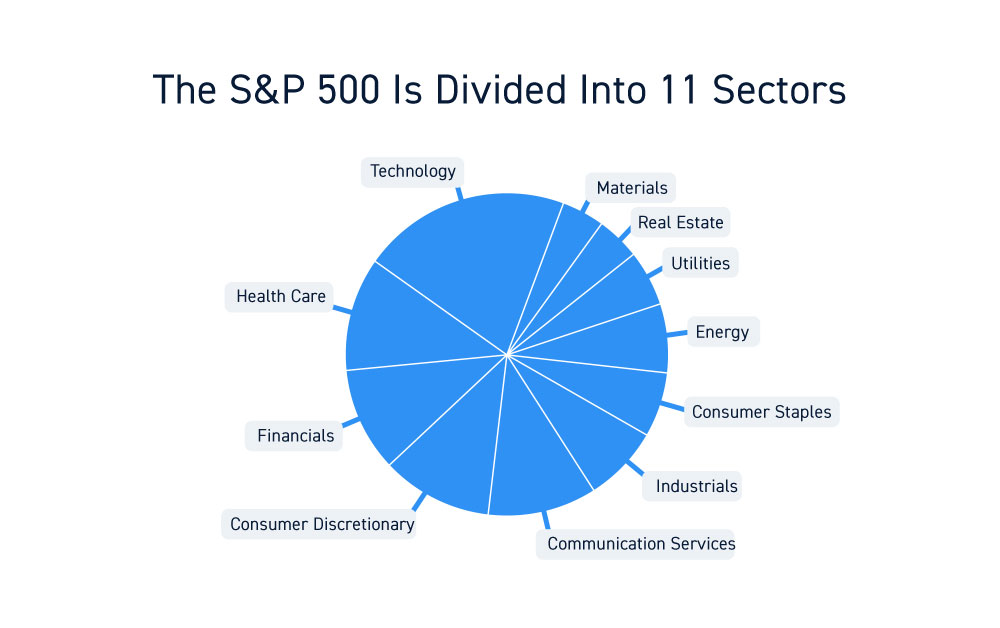
- Sector Representation: While not a strict quota, the committee aims to maintain a balance across different sectors (classified using the Global Industry Classification Standard, or GICS) to ensure the index remains representative of the broader economy.
- Profitability: The company must have a track record of positive earnings in the most recent quarter and positive aggregate earnings over the past four consecutive quarters.
Companies are added or removed from the index periodically (e.g., due to mergers, acquisitions, bankruptcies, or a decline in market value) to ensure it remains relevant and reflective of the current market.
Why the S&P 500 Matters
The significance of the S&P 500 cannot be overstated for several key reasons:
- Benchmark for U.S. Equities: It is widely considered the best single gauge of large-cap U.S. equities and, by extension, the overall health of the U.S. stock market and economy.
- Performance Measurement: Professional fund managers often benchmark their performance against the S&P 500. Outperforming the index is a key measure of success (generating “alpha”).
- Investment Vehicle: The index serves as the underlying basis for numerous investment products, most notably S&P 500 index funds and exchange-traded funds (ETFs). These allow individual and institutional investors to gain diversified exposure to the large-cap U.S. market with a single investment.
- Economic Indicator: Analysts and economists closely watch the S&P 500’s movements as a leading indicator of investor sentiment and future economic prospects.
Its broad coverage, rigorous methodology, and long historical track record make it an indispensable tool for investors, economists, and policymakers alike.
Beyond the S&P 500: The Broader Landscape of S&P Global
While the S&P 500 commands the most attention, the entity behind it, S&P Global (the parent company), offers a much wider array of crucial financial services and products that impact nearly every corner of the global economy.
A Universe of Indices
S&P Global’s index division, S&P Dow Jones Indices, manages thousands of indices beyond just the S&P 500. These indices are designed to track various market segments, asset classes, and geographies, providing benchmarks for a myriad of investment strategies. Examples include:
- S&P MidCap 400 and S&P SmallCap 600: These indices track U.S. companies with medium and small market capitalizations, respectively, offering insight into different segments of the domestic equity market.
- S&P Global 1200: This index provides a broad measure of global equity markets, combining major regional and country-specific indices.
- International Indices: S&P also maintains prominent indices for specific countries and regions, such as the S&P/ASX 200 (Australia), S&P/TSX Composite (Canada), and various emerging market indices.
- Fixed Income, Commodity, and ESG Indices: Beyond equities, S&P offers indices for bonds, commodities (like the S&P GSCI), and increasingly, environmental, social, and governance (ESG) factors, allowing investors to track specific investment themes and asset classes.
These specialized indices enable investors to dissect market performance with precision, creating targeted investment products and allowing for more nuanced performance comparisons.
S&P Global Ratings
Another critical component of S&P Global is S&P Global Ratings. This division is one of the “Big Three” credit rating agencies globally, alongside Moody’s and Fitch Ratings. S&P Global Ratings provides independent credit opinions on the creditworthiness of various entities and financial obligations, including:
- Corporate Bonds: Assessing the ability of companies to meet their debt obligations.
- Sovereign Debt: Rating the creditworthiness of national governments and their ability to repay their debts.
- Structured Finance: Evaluating complex financial instruments like mortgage-backed securities.
- Financial Institutions: Assessing the stability and solvency of banks and other financial firms.
These credit ratings (expressed as letter grades, e.g., AAA, BBB, CC) are invaluable to investors as they provide a concise, standardized assessment of default risk. A higher rating indicates lower risk, typically leading to lower borrowing costs for the issuer, while a lower rating signals higher risk and often results in higher interest rates. Governments, corporations, and investors rely on these ratings to make informed decisions about borrowing, lending, and investment allocations.
Other S&P Global Divisions
S&P Global’s expansive reach includes several other specialized divisions, each contributing vital intelligence to specific sectors:
- S&P Global Market Intelligence: This segment provides multi-asset class data, research, news, and analytics to institutional investors, corporations, and financial professionals. It offers deep insights into financial markets, companies, and industries, empowering strategic decision-making.
- S&P Global Commodity Insights: Focusing on the energy, metals, mining, and agriculture sectors, this division delivers independent benchmarks, pricing, analytics, and news. It is crucial for professionals operating in global commodity markets, providing transparency and facilitating trading.
- S&P Global Mobility: This division offers data, insights, and solutions for the automotive industry, covering everything from production forecasts and sales trends to supply chain dynamics and future mobility technologies.
Collectively, these divisions highlight that “S&P” is far more than just a stock index; it is a comprehensive ecosystem of financial intelligence, data, and analytical tools that plays a foundational role in global commerce and investment.
Investing in the S&P 500: Strategies and Considerations
For individual investors, gaining exposure to the S&P 500 is one of the most popular and often recommended strategies for building long-term wealth. Its appeal lies in diversification, simplicity, and historical performance.
Index Funds and ETFs
The most common and efficient ways for individual investors to invest in the S&P 500 are through index funds and Exchange-Traded Funds (ETFs).
- Index Funds: These are mutual funds designed to track a specific index, in this case, the S&P 500. They hold the same stocks in the same proportions as the index, aiming to replicate its performance.
- ETFs: Similar to index funds, S&P 500 ETFs also hold the underlying stocks of the index. However, ETFs trade like individual stocks on an exchange throughout the day, offering greater flexibility. Popular S&P 500 ETFs include SPDR S&P 500 ETF Trust (SPY), iShares Core S&P 500 (IVV), and Vanguard S&P 500 ETF (VOO).
The primary advantages of investing in S&P 500 index funds or ETFs include:
- Diversification: You gain exposure to 500 large U.S. companies across various sectors with a single investment, significantly reducing company-specific risk.
- Low Cost: These are typically passively managed funds, meaning they don’t have a team of analysts actively picking stocks. This results in very low expense ratios compared to actively managed funds.
- Simplicity: It’s an easy way to get broad market exposure without needing to research individual stocks.
Long-Term Growth and Volatility
Historically, the S&P 500 has demonstrated impressive long-term growth, reflecting the innovative capacity and economic expansion of the United States. Over several decades, its average annual returns have been around 10-12%, making it a powerful engine for wealth creation for patient investors.
However, it’s crucial to understand that “long-term” does not mean “smooth.” The S&P 500 experiences volatility—periods of significant ups and downs, including market corrections (10% declines) and bear markets (20% or more declines). These downturns are a normal part of market cycles. Investors in the S&P 500 should embrace a long-term perspective, understanding that short-term fluctuations are inevitable, but the market has historically recovered and reached new highs over extended periods. Strategies like dollar-cost averaging (investing a fixed amount regularly, regardless of market highs or lows) can help mitigate the impact of volatility.
Understanding Market Cap Weighting
While diversification is a key benefit, it’s also important for investors to understand the implications of the S&P 500’s market-capitalization weighting. Because larger companies have a greater influence on the index, the performance of a few mega-cap stocks (e.g., major technology companies) can significantly drive the index’s overall movement. This means that while you’re diversified across 500 companies, the concentration of the top 10 or 20 holdings can be substantial, and the index’s performance can be heavily swayed by the fortunes of these dominant players. This is not necessarily a drawback, but an important characteristic to be aware of when assessing the index’s composition and drivers of return.
The Future and Influence of S&P Global
As financial markets continue to evolve at an unprecedented pace, S&P Global remains at the forefront, adapting its offerings and expanding its influence.
Adapting to Market Dynamics
S&P Global’s indices are not static; they continually adapt to reflect new economic realities and investment trends. This includes incorporating new sectors (like disruptive technologies or cybersecurity), developing specialized ESG indices to meet the growing demand for sustainable investing, and refining methodologies to ensure continued relevance and accuracy. The dynamic nature of S&P’s index construction ensures that its benchmarks remain reliable barometers of market performance.
Global Impact and Standards
S&P Global’s impact extends far beyond the U.S. stock market. Its credit ratings set benchmarks for risk assessment in capital markets worldwide, influencing borrowing costs for governments and corporations across continents. Its global indices provide frameworks for international asset allocation. By establishing rigorous standards for financial data, analytics, and risk assessment, S&P Global plays a pivotal role in promoting transparency, efficiency, and informed decision-making in the global financial system. Its influence helps allocate capital more effectively, enabling economic growth and stability across diverse markets.

Conclusion
So, what does S&P stand for? It stands for Standard & Poor’s, a name synonymous with robust financial intelligence, unparalleled data, and global market benchmarks. From its origins in documenting railroad statistics to its current role as a multi-billion dollar provider of indices, credit ratings, and market insights, S&P Global is a foundational pillar of the modern financial world. The S&P 500, its most famous creation, serves as a crucial gauge for the U.S. economy, while its broader suite of services empowers investors, businesses, and governments to navigate complex financial landscapes. Understanding the full scope of S&P’s contributions is essential for anyone seeking to comprehend the mechanics of global finance, make informed investment decisions, or track the pulse of economic health worldwide. It is more than just an acronym; it is a legacy of trust, accuracy, and indispensable financial insight.
aViewFromTheCave is a participant in the Amazon Services LLC Associates Program, an affiliate advertising program designed to provide a means for sites to earn advertising fees by advertising and linking to Amazon.com. Amazon, the Amazon logo, AmazonSupply, and the AmazonSupply logo are trademarks of Amazon.com, Inc. or its affiliates. As an Amazon Associate we earn affiliate commissions from qualifying purchases.