
In the world of finance, few acronyms carry as much weight as “S&P.” Whether you are a seasoned investor, a casual follower of the evening news, or someone just beginning to build a retirement portfolio, you have likely heard the term used as a shorthand for the health of the economy. But “S&P” is more than just a stock market ticker or a three-letter abbreviation. It represents Standard & Poor’s, a financial services company that has become the definitive arbiter of market performance and creditworthiness across the globe.

To understand what S&P means is to understand the mechanics of modern capitalism. It encompasses the indices that track the performance of the world’s largest companies and the credit ratings that determine how much countries and corporations pay to borrow money. For the individual investor, the S&P 500 is often the benchmark against which all personal financial success is measured. This guide explores the history, the mechanisms, and the practical implications of S&P in the realm of personal finance and global investing.
The Origins of Standard & Poor’s: A Legacy of Information
The name “Standard & Poor’s” is a legacy of a 1941 merger between two distinct financial information providers: Poor’s Publishing and the Standard Statistics Company. However, its roots stretch back much further into the 19th century, a time when the American economy was rapidly expanding through the development of the transcontinental railroad system.
Henry Varnum Poor and the Need for Transparency
In 1860, Henry Varnum Poor published History of Railroads and Canals in the United States. At the time, the railroad industry was the “tech boom” of the era, but it was also rife with speculation and opaque financial reporting. Poor’s goal was to provide investors with reliable, data-driven information about the financial health of these massive infrastructure projects. His motto, “The investor’s right to know,” became the bedrock of the company’s philosophy.
The Evolution into a Financial Giant
Decades later, in 1906, the Standard Statistics Bureau was established to provide information on companies beyond the railroad sector. When these two entities merged in 1941, they formed Standard & Poor’s Corp. Since then, the organization has evolved from a publisher of financial manuals into a global leader in financial data, index provision, and credit analytics. Today, it operates as a division of S&P Global, a multi-billion dollar enterprise that influences trillions of dollars in capital flow.
The S&P 500: The Gold Standard of Market Indices
For most people, the question “What does S&P mean?” is usually a reference to the S&P 500 Index. Launched in its current form in 1957, the S&P 500 is a stock market index that tracks the performance of 500 of the largest companies listed on stock exchanges in the United States. It is widely regarded as the best single gauge of large-cap U.S. equities.
How Companies Are Selected
Unlike some indices that are purely quantitative, the S&P 500 is governed by a committee that selects companies based on specific eligibility criteria. To be included, a company must:
-
Be a U.S. company: While many constituents have global operations, they must be headquartered and listed in the United States.
-
Have a massive market capitalization: As of recent years, the threshold for entry is often above $14 billion, though this number is adjusted periodically.
-
Maintain high liquidity: The stock must be easy to buy and sell.
-
Show positive earnings: The company must have reported positive earnings over the most recent quarter and the sum of the previous four quarters.
This selection process ensures that the S&P 500 represents the “blue-chip” core of the American economy. When you hear that “the S&P is up 2%,” it means that the collective value of these 500 industrial, technological, and financial giants has increased.
Market Capitalization Weighting
One of the most important technical aspects of the S&P 500 is that it is “float-adjusted market-capitalization weighted.” This means that the influence of a single company on the index’s performance is proportional to its total market value (the price of all its outstanding shares).
For example, a trillion-dollar technology giant like Apple or Microsoft has a much larger impact on the index than a company with a market cap of $20 billion. This weighting method reflects the reality of the market, where the largest companies dominate the economic landscape. However, it also means that the “S&P” can sometimes be skewed by the performance of a handful of massive tech firms, even if the majority of the other 490+ companies are struggling.
Beyond the 500: The Broader Family of Indices
While the 500 is the flagship, S&P Global manages thousands of other indices that allow investors to track specific sectors, regions, or company sizes. This ecosystem provides a granular view of the global financial markets.
The S&P MidCap 400 and SmallCap 600
Investors who want to look beyond the massive corporations of the S&P 500 often turn to the S&P MidCap 400 and the S&P SmallCap 600.
-
S&P 400: This tracks companies that have outgrown “small” status but aren’t yet giants. Mid-cap companies often offer a balance of growth potential and stability.
-
S&P 600: This tracks smaller companies. While more volatile, these stocks can offer significant upside for investors willing to take on more risk.
Together with the S&P 500, these form the S&P Composite 1500, which covers approximately 90% of the U.S. market capitalization.
Sector and Thematic Indices
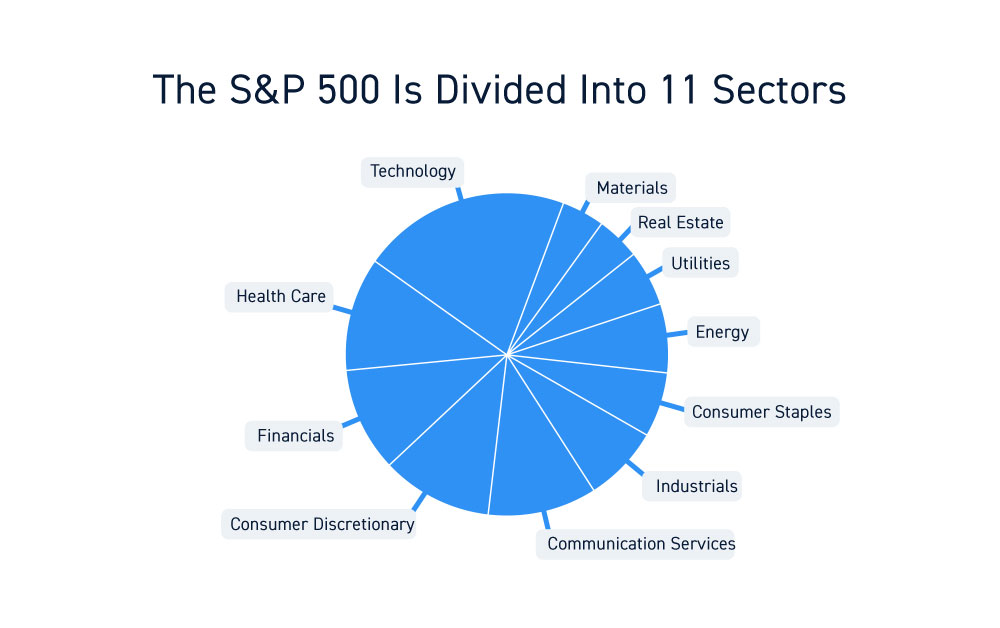
S&P also breaks the market down into 11 Global Industry Classification Standard (GICS) sectors, such as Technology, Healthcare, Energy, and Consumer Staples. These indices allow investors to “bet” on specific parts of the economy. For instance, if you believe that renewable energy will outperform traditional oil, you might look at S&P’s specific ESG (Environmental, Social, and Governance) or Energy indices.
The Credit Rating Side: Assessing Risk and Debt
The second major pillar of what S&P means involves credit ratings. While indices track equity (stocks), credit ratings evaluate debt (bonds). S&P Global Ratings provides credit ratings for corporations, municipal governments, and even sovereign nations.
The Grading Scale
S&P uses a letter-based grading system to signal the likelihood that a borrower will be able to pay back its debts.
-
AAA: The highest rating. It indicates an extremely strong capacity to meet financial commitments.
-
BBB and Above: These are considered “Investment Grade” ratings. Banks and pension funds are often required by law to only invest in debt with these ratings.
-
BB and Below: These are known as “High Yield” or “Junk Bonds.” They offer higher interest rates to compensate for the higher risk of default.
-
D: This indicates that the entity is currently in default.
Why Credit Ratings Matter to You
You might think credit ratings for countries or big banks don’t affect your personal finances, but they do. When S&P downgrades a country’s credit rating (as it did to the United States in 2011), it can cause interest rates to rise across the board. This can lead to higher mortgage rates, more expensive car loans, and increased volatility in the stock market. For the savvy investor, understanding S&P ratings is crucial when choosing fixed-income investments like corporate or municipal bonds.
How to Use the S&P in Your Personal Investment Strategy
Understanding the definition of S&P is the first step; the second is knowing how to apply that knowledge to grow your wealth. The S&P 500 is the foundation of the “passive investing” revolution, a strategy that has helped millions of people build retirement savings with minimal fees.
The Rise of Index Funds and ETFs
Before the 1970s, most investors tried to pick individual stocks to beat the market—a task that is notoriously difficult. John Bogle, the founder of Vanguard, changed this by creating the first index fund, which simply sought to track the S&P 500 rather than beat it.
Today, you can buy an Exchange-Traded Fund (ETF) that mimics the S&P 500 with the click of a button. Symbols like SPY, VOO, and IVV represent funds that hold all 500 companies in the index in their exact proportions. This provides instant diversification, as your money is spread across 500 different businesses across all major industries.
Benchmarking Your Performance
Even if you prefer picking individual stocks or investing in AI-driven startups, the S&P 500 remains your primary benchmark. If your portfolio returned 8% last year, but the S&P 500 returned 12%, you actually “underperformed” the market. Professional money managers are constantly compared to the S&P, and data shows that over long periods (10–20 years), the vast majority of active managers fail to beat the S&P 500. For the average person, “buying the S&P” is often the most efficient way to build long-term wealth.
The Role of S&P in Risk Management
Finally, S&P’s data helps in risk assessment. By looking at the S&P 500’s Price-to-Earnings (P/E) ratio, investors can determine if the overall market is overvalued (expensive) or undervalued (a bargain). Similarly, checking the S&P credit rating of a bond-issuing company can prevent you from putting your savings into a business on the verge of bankruptcy.
In essence, S&P is the language of the financial markets. It provides the vocabulary we use to describe growth, the metrics we use to measure success, and the warnings we use to avoid catastrophe. Whether it is through an index fund in your 401(k) or the credit rating of your local municipality, the influence of Standard & Poor’s is a constant presence in your financial life. Understanding what it means is not just an academic exercise—it is a fundamental requirement for anyone looking to navigate the modern economic world with confidence.
aViewFromTheCave is a participant in the Amazon Services LLC Associates Program, an affiliate advertising program designed to provide a means for sites to earn advertising fees by advertising and linking to Amazon.com. Amazon, the Amazon logo, AmazonSupply, and the AmazonSupply logo are trademarks of Amazon.com, Inc. or its affiliates. As an Amazon Associate we earn affiliate commissions from qualifying purchases.