
In the rapidly evolving landscape of aerospace engineering and interplanetary exploration, the terminology we use often bridges the gap between ancient celestial observation and cutting-edge digital infrastructure. One of the most critical terms in this lexicon is “Sol.” While it sounds like a poetic shorthand for the sun, in the realm of space technology and planetary science, it refers specifically to a solar day on the planet Mars.
As humanity transitions from being a single-planet species to one that operates complex robotic fleets—and eventually human colonies—on the Red Planet, understanding the technical implications of a Sol is paramount. It is not merely a measure of time; it is a fundamental constraint that dictates software architecture, hardware design, and the synchronization of interplanetary communication networks.
The Technical Definition of a Sol: Engineering Time Beyond Earth
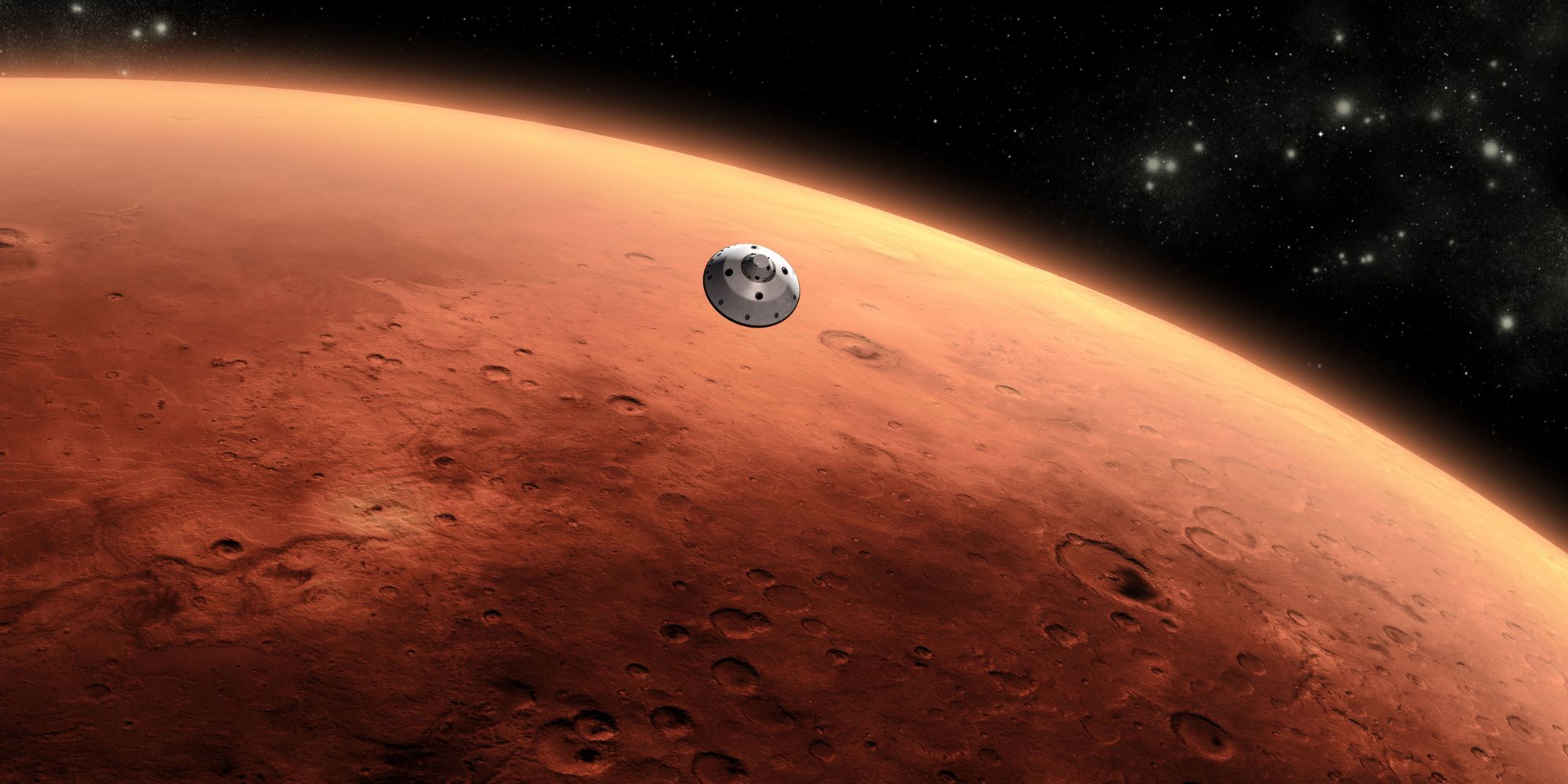
To understand the technological challenges of Mars exploration, one must first grasp the physical reality of the Sol. A Sol is the apparent interval between two successive returns of the sun to the same meridian as seen by an observer on Mars. While an Earth day is approximately 24 hours, a Martian Sol is approximately 24 hours, 39 minutes, and 35 seconds.
The 2.7% Variance and Its Impact on Hardware
This extra 39 minutes may seem negligible to a casual observer, but from a technical standpoint, it represents a 2.7% deviation from Earth’s diurnal cycle. For engineers designing solar-powered hardware, this variance is a critical variable in energy budget calculations. Every piece of equipment sent to the Martian surface, from the legacy Sojourner rover to the sophisticated Perseverance, must be programmed to recognize that its “recharge window” shifts every single day relative to Earth-coordinated Universal Time (UTC).
Data Logging and Time-Stamping in Deep Space
In digital security and data management, the integrity of a timestamp is absolute. When a rover like Curiosity captures a high-resolution spectroscopic sample, the metadata must include a precise temporal marker. Space agencies use “Local True Solar Time” (LTST) and “Sol” counts (starting from Sol 0 of a mission) to organize petabytes of data. This requires specialized software layers that can translate Martian Sols into Earth-based Gregorian dates, ensuring that scientists can correlate Martian weather patterns or geological events with Earth-based observations without temporal drift.
Software and Systems: Managing Autonomous Operations on Martian Time
Operating a robot on another planet is not a real-time endeavor. Because of the speed of light, signals take between 4 and 24 minutes to travel between Earth and Mars. This latency, combined with the unique duration of a Sol, has necessitated the development of highly sophisticated autonomous software.
Adaptive Scheduling Algorithms
Mission controllers at the Jet Propulsion Laboratory (JPL) do not “drive” rovers with a joystick. Instead, they upload a “bundle” of commands at the start of each Sol. The software onboard the rover must then execute these commands autonomously. This requires scheduling algorithms that are “Sol-aware.” These systems must calculate the sun’s position to optimize solar array output while simultaneously managing power-intensive tasks like drilling or high-bandwidth data transmission. If the software fails to account for the specific timing of the Sol, the rover could find itself attempting a power-heavy operation in the middle of a Martian night, leading to a catastrophic battery drain.
The Human-Machine Interface: Living on “Mars Time”
Perhaps one of the most unique technological “hacks” involves the human teams supporting these missions. For the first few months of a mission, ground crews often live on “Mars Time.” This means their workday shifts by 39 minutes every day. To support this, specialized apps and digital dashboards have been developed to track multiple time zones simultaneously: UTC, Pacific Daylight Time, and Martian Sol time for specific landing sites like the Jezero Crater. This synchronization is vital for ensuring that commands are ready for upload the moment the rover wakes up at sunrise on Mars.

Hardware Resilience: Engineering for the Solar Cycle on Other Planets
The definition of a Sol also dictates the physical engineering of space-faring gadgets and vehicles. Martian technology must be “hardened” not just against radiation, but against the specific thermal and luminous cycles of the Sol.
Thermal Management and Power Cycling
On Mars, temperatures can swing from a relatively comfortable 20°C (70°F) during the day to a bone-chilling -73°C (-100°F) at night. The internal hardware—CPUs, sensors, and actuators—must be protected by sophisticated thermal management systems. Most Martian tech utilizes a combination of “heaters” and “sleep modes” that are triggered by the Sol cycle. The software must initiate a “deep sleep” protocol as the sun sets to conserve energy, while keeping vital “survival heaters” active to prevent the solder joints on circuit boards from cracking due to thermal expansion and contraction.
Computer Vision and Autonomous Navigation
Modern rovers utilize AI-driven computer vision to navigate the rocky Martian terrain. This tech is heavily dependent on the lighting conditions of the Sol. As the sun moves across the Martian sky, shadows shift, potentially confusing the navigation software’s hazard detection systems. Engineers have developed “Visual Odometry” software that adjusts its sensitivity based on the specific angle of the sun during a given Sol. This allows the rover to distinguish between a deep shadow and a dangerous crevice, ensuring the safety of multi-billion dollar assets.
The Future of Interplanetary Standards: Developing a Universal Time Protocol
As we look toward the future, the concept of a Sol is moving from a scientific curiosity to a foundational element of “Interplanetary Internet” protocols. If we are to establish a permanent presence on Mars, our current digital infrastructure will need a significant upgrade.
The “Internet of Mars” and Synchronization
On Earth, the Network Time Protocol (NTP) keeps our computers synchronized to within milliseconds. On Mars, we will need a “Martian Network Time Protocol.” This involves deploying a constellation of satellites—much like a Martian GPS—that can provide a consistent time signal across the entire planet. This tech will be essential for coordinating the activities of multiple rovers, drones (like the Ingenuity helicopter), and future human habitats. Without a standardized way to measure Sols and their subdivisions, autonomous systems from different manufacturers (e.g., SpaceX, NASA, ESA) would be unable to communicate or collaborate safely.
Digital Security and Authentication in Deep Space
As space tech becomes more commercialized, digital security becomes a primary concern. Secure communication relies on time-sensitive encryption keys. If an encryption handshaking protocol expects an Earth-standard 24-hour cycle but is operating on a Martian Sol cycle, the security certificate could expire prematurely, or the “handshake” could fail entirely. Future cybersecurity tools for space will need to be “astro-agnostic,” capable of operating across different planetary rotation speeds without compromising the integrity of the data.

Conclusion: Why the Sol is the Pulse of Space Tech
The term “Sol” represents far more than just 24 hours and 39 minutes of Martian rotation. It represents the boundary where terrestrial technology meets the reality of the cosmos. Every line of code written for a Mars mission, every circuit board etched for a lander, and every communication protocol beamed across the void must pay homage to the Sol.
As we refine our AI tools, improve our battery densities, and harden our digital security for the rigors of space, the Sol remains our primary unit of measure. It is the heartbeat of our extraterrestrial endeavors. By mastering the technical challenges posed by the Martian day, we are not just learning how to operate a robot on another world—we are building the technological framework that will one day support human civilization across the solar system. In the grand scheme of technology, the Sol is the first step toward a truly multi-planetary digital age.
aViewFromTheCave is a participant in the Amazon Services LLC Associates Program, an affiliate advertising program designed to provide a means for sites to earn advertising fees by advertising and linking to Amazon.com. Amazon, the Amazon logo, AmazonSupply, and the AmazonSupply logo are trademarks of Amazon.com, Inc. or its affiliates. As an Amazon Associate we earn affiliate commissions from qualifying purchases.