
In the landscape of modern sports and entertainment, a stadium is rarely just a collection of steel, glass, and turf. It is a monument to corporate ambition, a physical manifestation of a brand’s ethos, and a strategic pillar in a multi-decade marketing play. When the massive, translucent canopy of SoFi Stadium rose over Inglewood, California, it did more than just provide a home for the Los Angeles Rams and Chargers. It signaled the arrival of a new era in corporate identity and brand storytelling. To ask “what does SoFi Stadium stand for” is to look past the architecture and into the sophisticated brand strategy of Social Finance, Inc. (SoFi), a digital-first company that used a physical landmark to transform its market perception from a niche lender to a global financial powerhouse.

The Architecture of Brand Identity
At its core, SoFi Stadium is a masterclass in architectural branding. For a company that exists primarily in the digital realm—on smartphones and computer screens—having a physical touchstone of such immense scale is a strategic necessity. The stadium stands for the transition from the ethereal world of fintech to the grounded, permanent world of established institutional power.
Transcending Digital Borders
For years, SoFi was known among millennial professionals primarily as a student loan refinancing tool. While successful, this identity was limiting. To become a “one-stop shop” for all financial needs—mortgages, investing, banking, and insurance—the brand needed to occupy a larger space in the public consciousness.
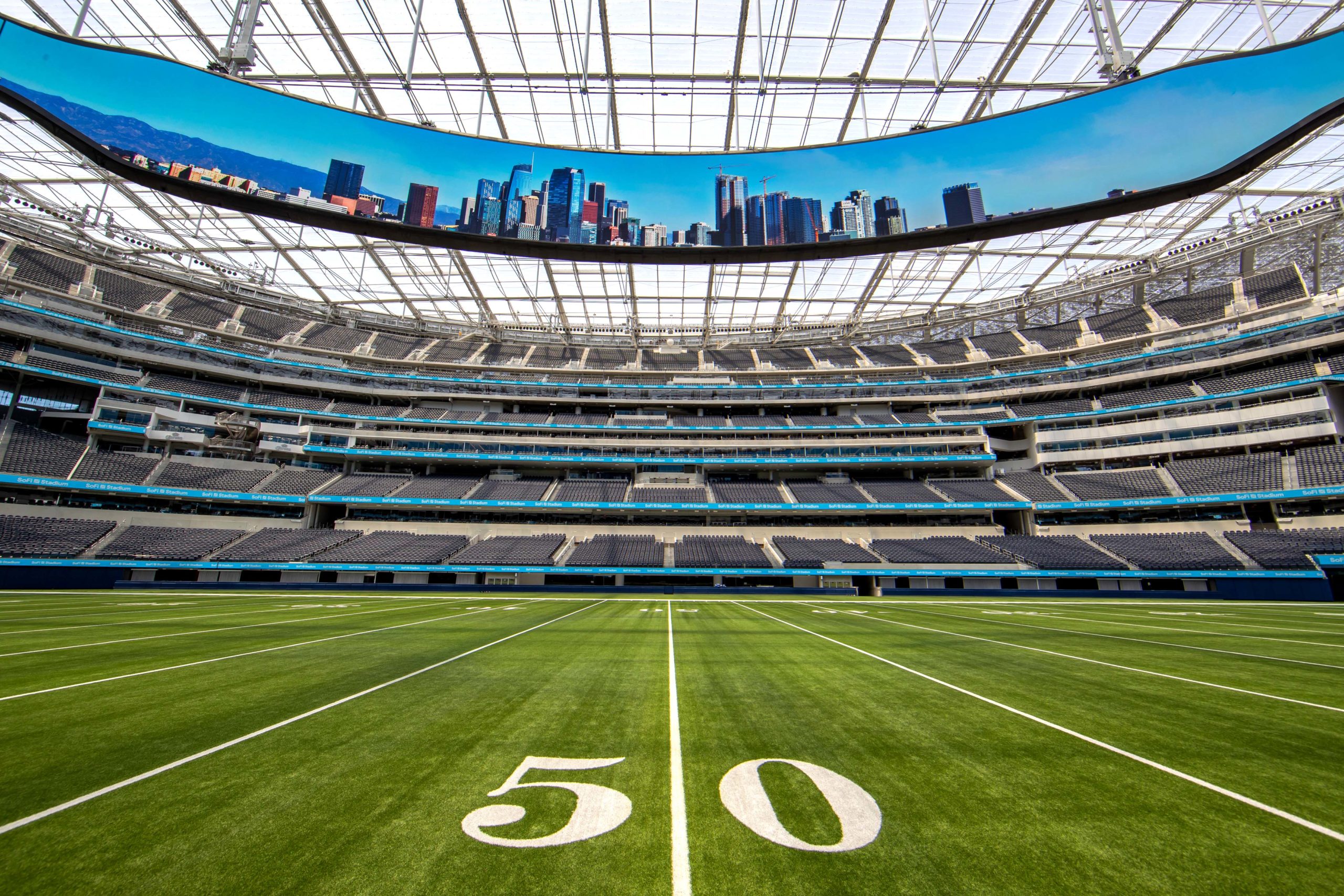
The stadium’s design reflects this desire for expansiveness. Its revolutionary dual-pendulum roof and open-air sides allow the California breeze to flow through the concourses, creating a sense of transparency and fluidity. In the world of brand strategy, these are vital traits. By associating its name with a structure that is literally “open” to its surroundings, SoFi subtly communicates a message of accessibility and modern transparency, contrasting sharply with the windowless, imposing stone facades of traditional “Big Bank” headquarters.
A Beacon of Modernity and Innovation
Every element of the stadium was designed to be “first,” “largest,” or “most advanced.” The 70,000-square-foot dual-sided 4K LED Infinity Screen by Samsung is not just a scoreboard; it is a symbol of technological dominance. For a brand like SoFi, which prides itself on being a tech-driven disruptor, this alignment is crucial. The stadium stands for the cutting edge. When fans look at the screen or experience the high-speed 5G integration throughout the park, they are experiencing the SoFi brand promise: that the future of finance, like the future of entertainment, is seamless, high-tech, and user-centric.
The Strategic Power of Naming Rights
The decision to commit over $600 million over 20 years for naming rights was one of the boldest marketing moves in recent history. In the world of brand strategy, naming rights are often viewed through the lens of “vanity metrics,” but for SoFi, the stadium is a high-yield asset in brand equity.
From Niche Fintech to Household Name
Before the stadium opened, SoFi’s brand awareness was concentrated in specific demographic pockets—mostly high-earning, tech-savvy professionals. By putting its name on the most expensive stadium ever built, located in the second-largest media market in the United States, the company achieved instant “Blue Chip” status.
The stadium stands for legitimacy. In finance, trust is the primary currency. A consumer might hesitate to put their life savings into an app they’ve only seen in a Facebook ad. However, when that same app owns the naming rights to the venue hosting the Super Bowl, the College Football National Championship, and the Olympic Games, that hesitation evaporates. The physical presence of the stadium provides a “trust proxy,” signaling to the world that SoFi is stable, capitalized, and here to stay.
ROI Beyond the Logo
Traditional brand strategy measures naming rights by “impressions”—how many times a logo is seen on TV. But SoFi Stadium stands for a more integrated approach to ROI. The stadium serves as a massive lead-generation engine. Throughout the venue, “SoFi Members” receive exclusive perks, such as access to the SoFi Social Club or expedited entry.
This creates a tangible value proposition for the brand. It isn’t just about seeing the name; it’s about the “Fear Of Missing Out” (FOMO) that non-members feel when they see the benefits of membership in action. The stadium effectively turns every attendee into a potential customer, moving them down the marketing funnel from brand awareness to active consideration through experiential rewards.

Customer Experience as Brand Narrative
In the modern marketplace, a brand is no longer what it tells the consumer it is; it is what the consumer experiences. SoFi Stadium was built to be an “experience-first” venue, mirroring the user-experience (UX) obsession of the software world.
Member-First Mindset in a Physical Space
SoFi’s corporate identity is built on the idea of “Greatness.” Their tagline, “Get Your Money Right,” implies a partnership in the user’s success. The stadium stands for this commitment to the “Member” experience. Unlike traditional sponsorships where the brand is a passive observer, SoFi has integrated its products into the physical journey of the fan.
By offering “Member” lounges and exclusive viewing areas, the brand reinforces the idea that being with SoFi gives you an “edge.” This is a classic brand strategy maneuver: creating an “in-group” and an “out-group.” In the stadium, being a member isn’t just about banking; it’s about status. This elevates the brand from a utility to a lifestyle choice.
The “Lounge” Concept: Redefining Hospitality
The various clubs and suites within the stadium, such as the Google Cloud Club or the Pechanga Founders Club, contribute to an ecosystem of luxury and high-performance branding. However, the SoFi-branded spaces specifically focus on community. They are designed to feel less like a bank lobby and more like a high-end tech campus. This architectural choice reinforces the brand’s identity as a modern, social, and community-driven organization. It stands for a shift in how financial institutions interact with their public—moving away from the transactional and toward the relational.
Cultural Capital and Corporate Identity
Perhaps the most significant thing SoFi Stadium stands for is “Cultural Capital.” In brand strategy, cultural capital is the ability of a brand to become a part of the cultural conversation, rather than just an interruption to it.
Hosting the World’s Biggest Stages
By being the backdrop for the Super Bowl LVI, the upcoming 2026 FIFA World Cup, and the 2028 Summer Olympics, SoFi Stadium ensures that the brand name is synonymous with the pinnacle of human achievement. When the world tunes in to watch these events, the SoFi brand is not just a commercial break; it is the setting for the story.
This association with excellence is a powerful brand builder. It allows SoFi to bypass the “boring” reputation of the financial services industry. Instead of being associated with spreadsheets and interest rates, the brand is associated with touchdowns, gold medals, and world-class performances. It stands for the “Big Stage,” positioning SoFi as a leader not just in finance, but in global culture.
The Future of Experiential Branding
SoFi Stadium is a prototype for the future of corporate identity. It proves that in an increasingly digital world, physical spaces are becoming more important, not less. However, these spaces must be more than just billboards. They must be immersive environments that tell a story.
The stadium stands for the “Phygital” (Physical + Digital) future. It is a place where digital finance meets physical experience. Whether it’s using the SoFi app to buy concessions or receiving a notification for a member-only event as you walk through the gates, the stadium represents the seamless integration of a brand into the daily life and entertainment of its customers.
Conclusion: A Monument to Ambition
Ultimately, SoFi Stadium stands for the audacity of modern branding. It represents a company that refused to be defined by its product category and instead chose to define itself by its scale, its technological prowess, and its cultural relevance.
For the city of Inglewood, it stands for economic revitalization and a new landmark on the skyline. For the NFL, it stands for the future of sports entertainment. But for the SoFi brand, it stands as a $5 billion declaration of intent. It is a message to competitors, customers, and the market at large that SoFi is no longer just a fintech startup—it is a cornerstone of the American financial and cultural landscape. Through this massive investment in physical space, SoFi has successfully anchored its digital identity in the real world, creating a brand legacy that will endure as long as the concrete and steel of Hollywood Park.
aViewFromTheCave is a participant in the Amazon Services LLC Associates Program, an affiliate advertising program designed to provide a means for sites to earn advertising fees by advertising and linking to Amazon.com. Amazon, the Amazon logo, AmazonSupply, and the AmazonSupply logo are trademarks of Amazon.com, Inc. or its affiliates. As an Amazon Associate we earn affiliate commissions from qualifying purchases.