
For generations, the word “Slinky” has conjured images of a mesmerizing, coil-shaped toy gracefully tumbling down stairs or performing gravity-defying tricks. More than just a simple plaything, the Slinky is a testament to brilliant design, ingenious marketing, and a brand identity so robust it has transcended decades, technological shifts, and fleeting trends. To ask “what does Slinky mean” is to delve into a rich case study of how a humble product can evolve into a globally recognized brand, embodying principles of corporate identity, marketing ingenuity, and timeless appeal. It signifies not just a toy, but a cultural touchstone, a symbol of playful innovation, and a powerful lesson in brand longevity.

In an age dominated by sophisticated digital entertainment and complex gadgets, the Slinky stands out as a beacon of enduring simplicity. Its meaning lies in its ability to captivate with minimal fuss, to evoke a sense of wonder through pure mechanical motion, and to forge a powerful, almost nostalgic, connection across diverse demographics. This article will explore the multifaceted meaning of Slinky through the lens of brand strategy, dissecting its origins, its core identity, its marketing triumphs, and its indelible cultural imprint.
The Genesis of an Icon: From Serendipity to Global Brand
Every iconic brand has a story, a moment of inception that often lays the foundation for its future success. For the Slinky, this beginning was a fascinating blend of scientific observation, accidental discovery, and a stroke of entrepreneurial insight that transformed a ship’s spring into a household name. Understanding this genesis is crucial to appreciating the fundamental elements that would later define the Slinky brand.
A Happy Accident: The Birth of a Unique Product
The year was 1943, and Richard James, a naval mechanical engineer, was working at Cramp Shipyard in Philadelphia. His task involved designing springs that could stabilize sensitive instruments aboard ships. One day, a spring accidentally fell from a shelf and, instead of simply clattering to the floor, it “walked” end over end in a mesmerizing series of arcs. James, a keen observer, immediately recognized the playful potential in this unexpected motion. What others might have dismissed as a minor mishap, James saw as a nascent product, a tangible representation of potential energy and fluid movement. This moment of serendipitous discovery is a cornerstone of the Slinky’s brand narrative, emphasizing that brilliance can emerge from the most unexpected places. It highlights the power of observation and the capacity to see beyond a product’s intended function to its inherent entertainment value.
Crafting the Core Identity: Simplicity and Motion
From that initial observation, James and his wife Betty meticulously refined the concept. They spent two years perfecting the spring’s dimensions and material, experimenting with different gauges of Swedish blue-black steel to achieve the ideal balance of flexibility, weight, and elasticity. The result was a coiled wire that possessed an almost magical ability to animate itself. The core identity of the Slinky was thus established: a simple, unembellished, yet profoundly engaging physical phenomenon. There were no flashing lights, no complex instructions, no batteries required. Its essence was pure, unadulterated motion. This commitment to simplicity in its earliest form became the bedrock of its corporate identity, communicating a brand promise of straightforward fun and endless fascination. This inherent simplicity also made it universally accessible, breaking down language and cultural barriers – anyone could understand and enjoy the Slinky’s movement.
Slinky’s Brand Identity: More Than Just a Spring
The term “brand identity” encapsulates the visual and intangible elements that convey a brand’s essence and personality. For Slinky, its identity extends far beyond its physical form; it’s about the experience it offers, the feelings it evokes, and the narrative it has cultivated over time. Its brand identity is a masterclass in how intrinsic product design, coupled with emotional resonance, can forge an unshakeable market presence.
The Power of Playful Design: Form Follows Fun
The Slinky’s design is deceptively simple, yet undeniably ingenious. Its helical structure, comprising dozens of perfectly balanced coils, is the physical embodiment of its function. This “form follows fun” philosophy is a key aspect of its brand identity. The product doesn’t just look like a spring; it behaves like a spring in ways that are unexpectedly delightful. The aesthetic is clean, industrial, and unpretentious, yet its interactive nature makes it inherently playful. There are no unnecessary embellishments; every curve serves a purpose, contributing to its signature “walk.” This elegant functionality has allowed the Slinky to remain largely unchanged in design for over 75 years, a remarkable feat in a world obsessed with constant updates. The strength of its design speaks volumes about its brand: honest, reliable, and perfectly engineered for its purpose of providing joy.
Evoking Nostalgia and Timeless Appeal: A Multi-Generational Brand
One of the most potent elements of the Slinky’s brand identity is its ability to evoke nostalgia while simultaneously captivating new generations. For many adults, the sight or sound of a Slinky instantly transports them back to childhood, triggering warm memories of simple pleasures. This strong emotional connection is a powerful asset in brand marketing, fostering loyalty and a sense of shared heritage. Simultaneously, the Slinky’s fundamental appeal—its hypnotic motion, tactile satisfaction, and open-ended play—continues to resonate with children today, despite the proliferation of high-tech toys. This dual appeal positions the Slinky as a truly multi-generational brand. It doesn’t rely on transient fads but taps into universal human fascinations with movement, physics, and discovery. This timelessness underscores a brand identity built on fundamental human experiences rather than fleeting trends, proving that simplicity can be the ultimate sophistication.
Brand Storytelling: The “Walks Down Stairs” Narrative

The most iconic piece of Slinky brand storytelling isn’t an elaborate advertising campaign, but a simple, observable action: its ability to “walk down stairs.” This singular narrative became the cornerstone of its marketing and public perception. It wasn’t just a spring; it was a spring with a seemingly independent life, capable of performing an almost magical feat. This narrative, initially demonstrated in department stores and later immortalized in its famous jingle, provided an easily digestible, highly visual, and utterly captivating brand message. It showed, rather than told, what the Slinky could do, creating an instant understanding and desire. This clear, compelling “use case” became synonymous with the brand itself, demonstrating how effective brand storytelling doesn’t always require complex narratives but can instead leverage the intrinsic magic of the product itself.
Marketing the Magic: Slinky’s Enduring Commercial Strategy
The transformation of a spring into a beloved brand required not only ingenuity in design but also shrewd marketing and sales strategies. The Slinky’s commercial success is a testament to effective brand promotion, from its early pioneering efforts to its remarkable ability to maintain relevance in a continually evolving market. Its enduring appeal offers valuable lessons in marketing a product that defies obsolescence.
Early Marketing Genius: Demonstrations and Jingles
Betty James, Richard’s wife, played a pivotal role in popularizing the Slinky. Her initial struggles to sell the toy at Gimbel’s department store in Philadelphia were overcome by a brilliant, albeit simple, marketing strategy: demonstration. By showing how the Slinky “walked” down a ramp, she created an immediate spectacle that captivated onlookers. This direct, experiential marketing approach was incredibly effective, leading to the sale of 400 Slinkys in just 90 minutes. This early success highlights the power of product demonstration in conveying brand value. Later, the iconic Slinky jingle (“What walks down stairs, alone or in pairs, and makes a zippity-doo-da sound? A Slinky, a Slinky, for fun it’s a wondrous toy…”) became one of the most recognizable advertising tunes in history. This jingle cemented the brand’s identity in the public consciousness, creating an earworm that associated the product with fun, wonder, and its unique motion. These early marketing tactics were grassroots yet incredibly powerful, forming the foundation of Slinky’s corporate identity and public perception.
Adapting to Modernity: Brand Relevance in a Digital Age
In an era where toys often have integrated circuits, apps, and complex digital interfaces, the Slinky’s continued relevance is remarkable. It hasn’t needed to drastically reinvent itself to stay current. Instead, its marketing strategy has subtly adapted, leveraging its core strengths while acknowledging contemporary platforms. While it might not dominate social media trends in the way a new video game might, its enduring presence in toy aisles and its occasional appearances in popular culture maintain its visibility. Its simplicity has become a unique selling proposition, offering a respite from digital overload. The brand doesn’t chase every trend; it relies on its established identity as a classic, dependable source of entertainment. This approach demonstrates a deep understanding of its brand niche and avoids diluting its core appeal by attempting to be something it’s not.
Licensing and Extensions: Expanding the Brand Universe
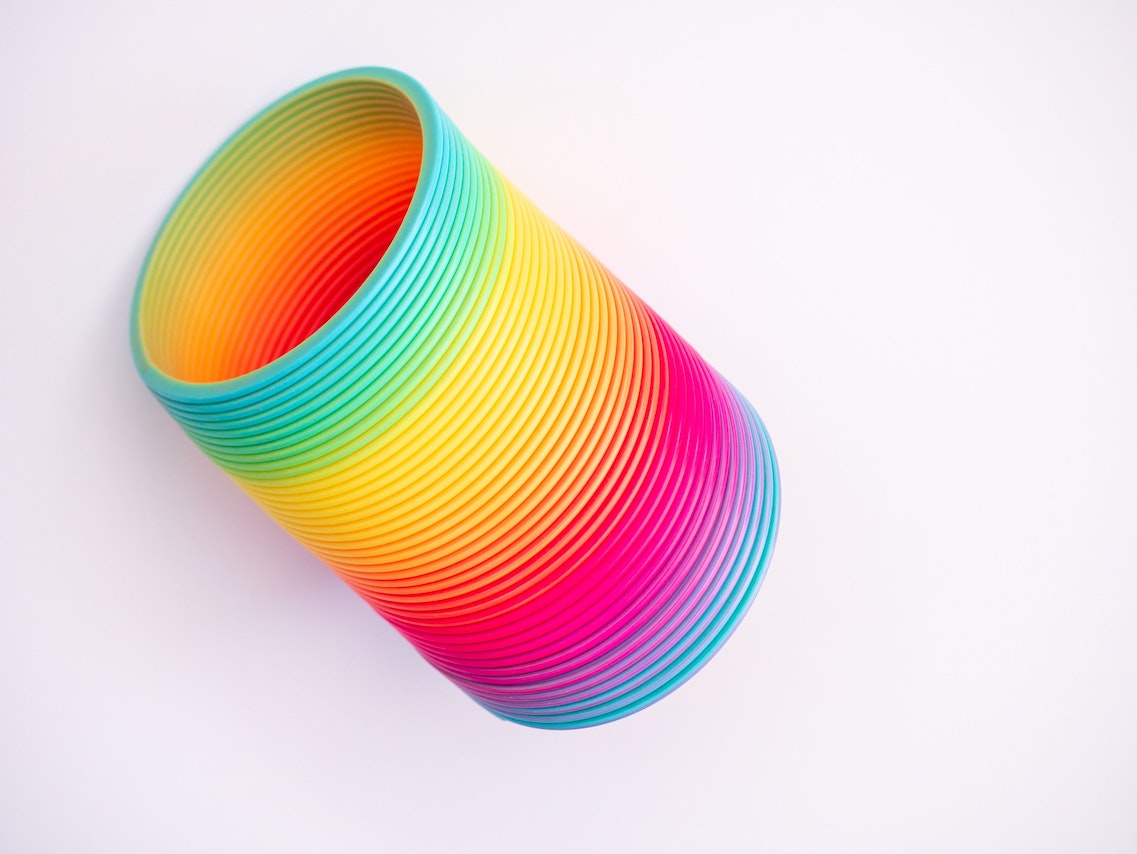
While the classic metal Slinky remains the flagship product, the brand has strategically expanded its universe through licensing and product extensions. The most famous example is the Slinky Dog, introduced in the 1950s and famously revitalized by the Toy Story franchise. This character became a powerful brand ambassador, extending the Slinky’s playful identity into new domains and reaching broader audiences through multimedia. Other variations, such as plastic Slinkys in vibrant colors, Slinky Jr., and specialized Slinky toys, further demonstrate the brand’s ability to innovate within its established framework. These extensions, however, always retain the core “slinky” motion and aesthetic, ensuring consistency in brand experience while offering novelty. This careful management of brand extensions reinforces its corporate identity without diluting the original product’s iconic status.
The Cultural Imprint: Slinky as a Case Study in Brand Longevity
Beyond its commercial success and clever marketing, the Slinky has left an undeniable cultural imprint, cementing its status as more than just a toy. It has permeated various aspects of society, becoming a recognizable symbol and a subject of fascination, offering valuable insights into the dynamics of brand longevity and cultural integration.
Beyond a Toy: Slinky in Pop Culture and Education
The Slinky’s simple yet profound mechanics have made it a recurring feature in various cultural and educational contexts. It’s a favorite prop for demonstrating wave physics, potential and kinetic energy, and spring oscillations in science classrooms worldwide. Its appearance in countless films, television shows, and even music videos further solidifies its place in pop culture. From being featured in scenes that evoke childhood to its use in clever visual gags, the Slinky transcends its toy status to become a widely understood cultural shorthand for playful motion and timeless fun. This ubiquitous presence demonstrates the deep penetration of its brand identity, where the product has become an almost archetypal representation of certain physical phenomena and nostalgic sentiment.
Lessons in Brand Resilience: Simplicity as a Strength
The Slinky’s remarkable longevity is a compelling case study in brand resilience. In an industry notoriously prone to fads, it has survived and thrived for over three-quarters of a century. The primary lesson here is that simplicity can be a monumental strength. Its lack of complexity means fewer points of failure, lower manufacturing costs, and a universal appeal that doesn’t rely on rapidly changing technological infrastructure. The brand doesn’t promise endless features; it promises a singular, fascinating experience. This focused approach has allowed it to weather economic downturns, technological revolutions, and shifting consumer tastes. Its corporate identity is rooted in reliability and consistent quality, proving that a well-executed simple idea can have far greater staying power than an overly complex one. The Slinky stands as a testament to the power of a clear, uncompromised brand vision that values fundamental engagement over fleeting novelty.
To ask “what does Slinky mean” is to understand the profound impact of a simple, ingenious design elevated by brilliant brand strategy. It means timeless appeal, a mastery of experiential marketing, and a resilience that few products ever achieve. The Slinky is more than a toy; it is a cultural icon, a testament to the power of simplicity, and a compelling case study in how to build a brand that resonates across generations. Its meaning is etched in the collective memory of play, wonder, and the enduring magic of a spring that simply “walks down stairs.”
aViewFromTheCave is a participant in the Amazon Services LLC Associates Program, an affiliate advertising program designed to provide a means for sites to earn advertising fees by advertising and linking to Amazon.com. Amazon, the Amazon logo, AmazonSupply, and the AmazonSupply logo are trademarks of Amazon.com, Inc. or its affiliates. As an Amazon Associate we earn affiliate commissions from qualifying purchases.