
In the realm of modern technology, particularly in computer graphics, user interface design, and computer vision, the concept of “skew” transcends its basic mathematical origins. To a software engineer or a 3D artist, understanding what skew means in geometry is not just about identifying non-parallel, non-intersecting lines; it is about mastering the matrix transformations that allow us to manipulate digital space. Whether you are building a responsive web layout using CSS, developing a physics engine for a triple-A game, or training a machine learning model to recognize skewed text in a scanned document, geometric skew is a fundamental principle that dictates how objects are perceived and processed in a digital environment.
The Fundamentals of Geometric Skew in Digital Environments
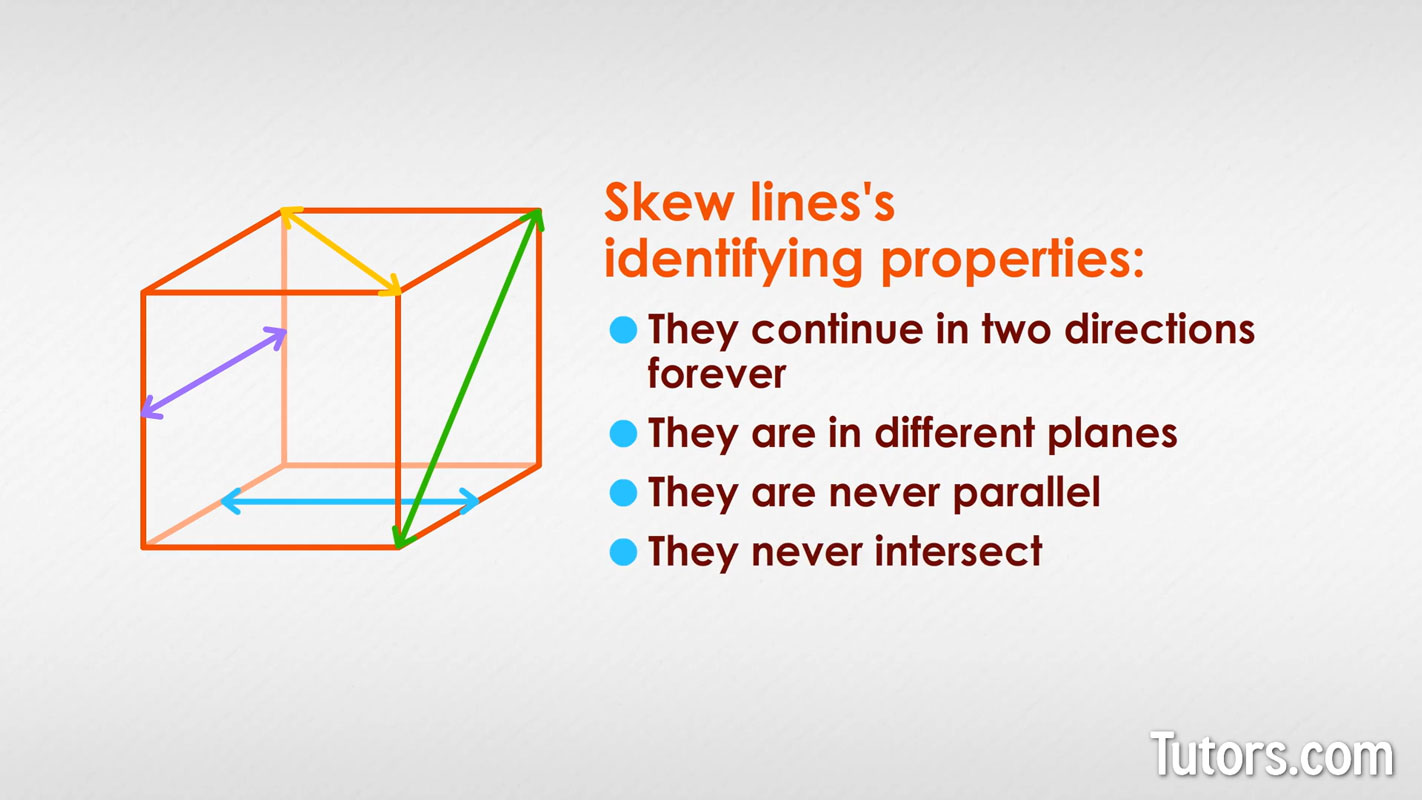
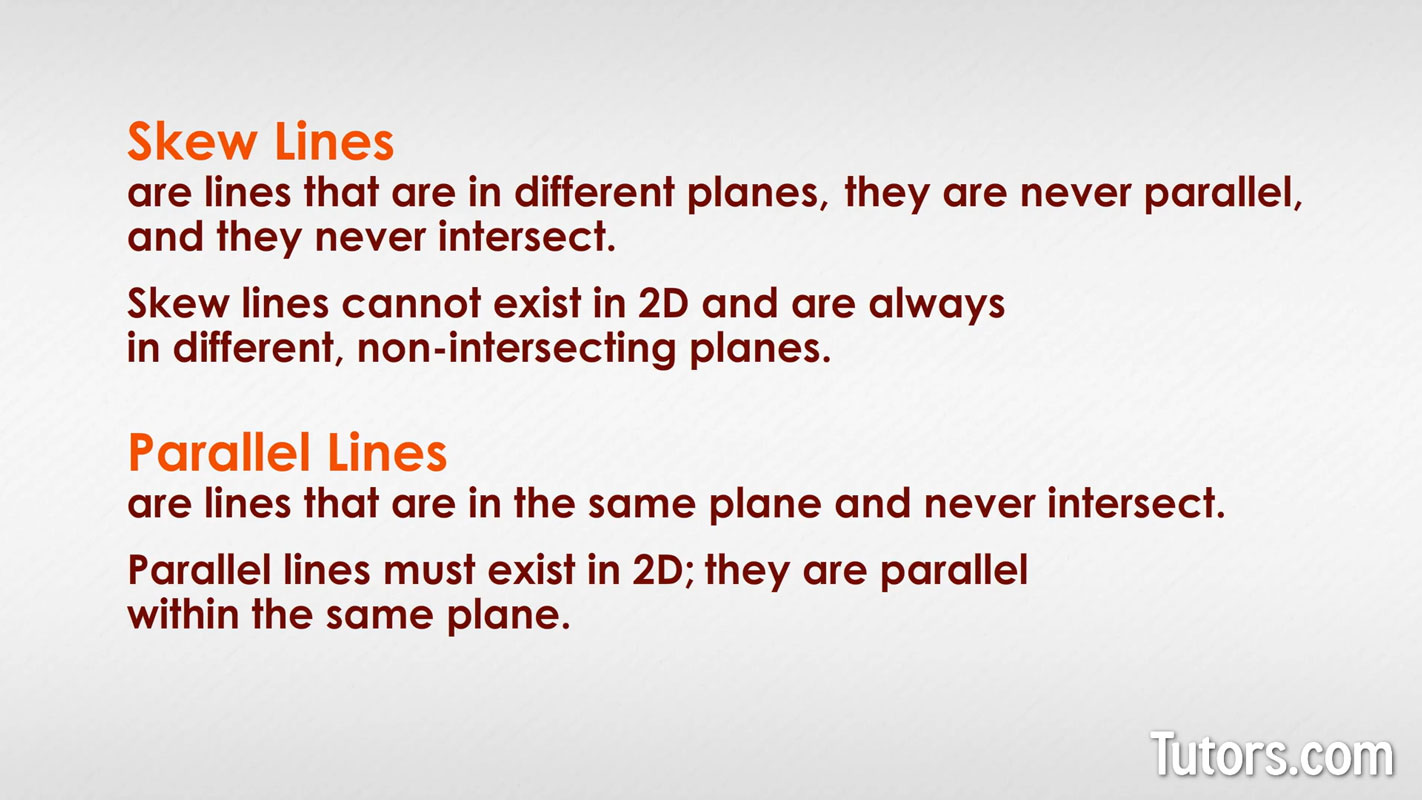
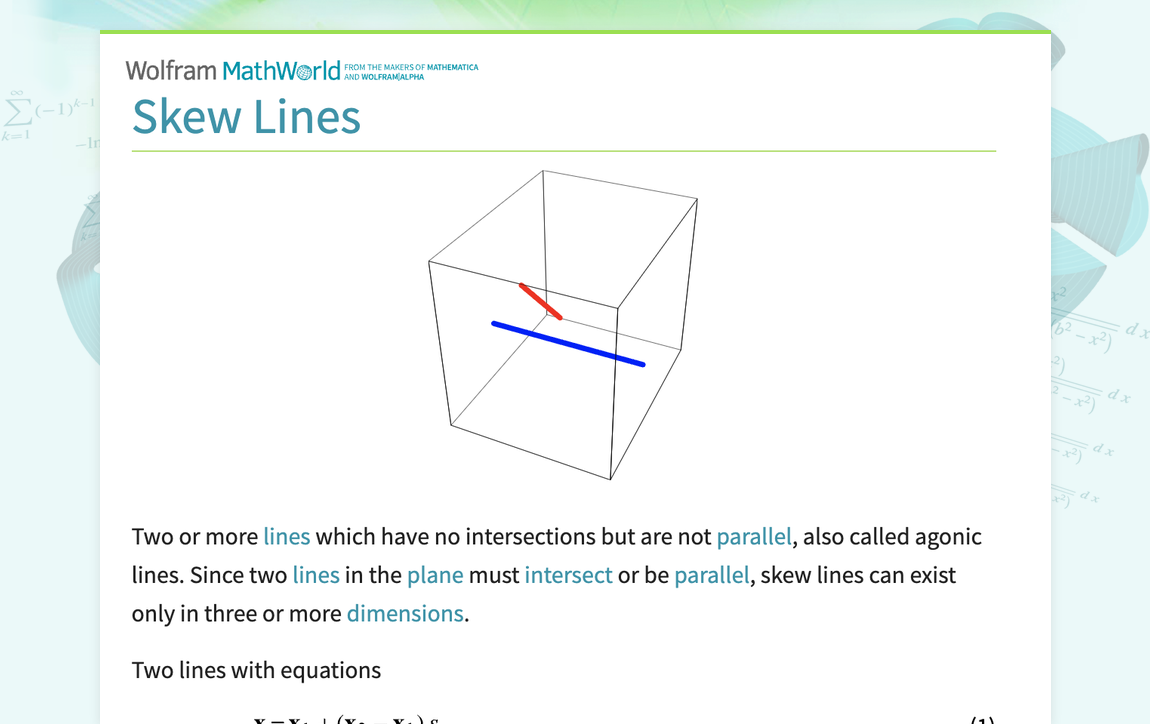
In classical Euclidean geometry, skew lines are a specific phenomenon occurring in three-dimensional space. Unlike lines in a 2D plane, which must eventually intersect unless they are parallel, skew lines are neither parallel nor intersecting. In the tech sector, specifically in computational geometry, this concept serves as the foundation for how we define spatial relationships in 3D modeling and virtual environments.
The Mathematical Foundation: Non-Parallel Lines in 3D Space
In a 3D coordinate system, skew lines represent a unique challenge for algorithmic calculations. Because they do not lie in the same plane, determining the shortest distance between two skew lines is a common task in collision detection systems. For developers working with game engines like Unity or Unreal Engine, calculating the proximity of “skew” trajectories—such as the path of a projectile versus the movement vector of a player—is essential for optimizing performance without sacrificing accuracy. The math involves cross-products and vector normalization, ensuring that the software can handle complex spatial movements that don’t follow simple linear paths.
Shear Transformations: How Software “Skews” Objects
While “skew lines” is the formal geometric term, the tech industry frequently uses “skew” interchangeably with “shear transformation.” A shear mapping is a linear map that displaces each point in fixed direction, by an amount proportional to its signed distance from a line that is parallel to that direction. In graphics programming, applying a skew (or shear) matrix to an object changes its shape, tilting it along an axis. This is a core component of the affine transformation matrices used in everything from rendering fonts to simulating the perspective of a camera lens.
Skew in UI/UX Design and Frontend Development
Beyond the backend logic of 3D engines, skew plays a pivotal role in modern web aesthetics and interface design. Modern browsers have integrated geometric transformations into their core rendering engines, allowing developers to move beyond the “boxed” look of traditional web design.
CSS Transform: SkewX and SkewY
In the world of frontend development, the transform property is a staple of CSS (Cascading Style Sheets). The functions skewX() and skewY() allow developers to distort elements along the horizontal or vertical axes. This isn’t merely a visual trick; it is a geometric remapping of the element’s coordinate system. When a developer skews a container, the text and child elements within it also adhere to that new geometric plane. This requires a deep understanding of how the browser’s “stacking context” and “hit detection” work, as a skewed button may visually appear in one location while its “clickable” area must be precisely calculated by the rendering engine to match the distortion.
Creating Dynamic Layouts with Geometric Distortion
Designers use skew to create a sense of motion and urgency. In brand-heavy tech landing pages, skewed sections (often called “angled headers” or “slanted dividers”) break the monotony of horizontal lines. Implementing these requires a mix of geometry and code to ensure responsiveness. As the viewport width changes, the angle of the skew must often remain constant, necessitating calculations that involve trigonometry (tangents and cotangents) to ensure the skewed edges align perfectly with the edges of the screen, regardless of the device’s aspect ratio.
Applications in Computer Vision and OCR Technology
One of the most critical “tech” applications of geometric skew is in the field of Image Processing and Optical Character Recognition (OCR). When a physical document is scanned or photographed, it is rarely perfectly aligned. This “skew” in the image geometry can catastrophic for data extraction algorithms.
Deskewing Algorithms for Document Digitization
“Deskewing” is the process of detecting and correcting the tilt in a digital image. In the tech world, this is a multi-step geometric process. First, the software must detect the “angle of skew” by identifying lines of text or margins using techniques like the Hough Transform. Once the angle is identified, the entire image is subjected to an inverse geometric transformation to rotate it back to a zero-degree alignment. Without this precise geometric correction, AI-driven OCR tools like Tesseract or Amazon Textract would struggle to recognize characters, as the letter shapes would be geometrically distorted relative to their training data.
Geometric Correction in Satellite Imagery and Mapping
In Geographic Information Systems (GIS) and satellite tech, “skew” occurs due to the earth’s curvature and the angle of the satellite’s sensor. To create accurate digital maps, engineers must perform “orthorectification,” a process that removes the effects of image skew and perspective. This ensures that the geometry of the map is “planimetric,” meaning distances can be measured accurately across the digital surface. This is the tech that allows apps like Google Maps to provide precise navigation and distance estimates.
3D Modeling and Game Engine Physics
In high-end 3D production, skewing is often something to be managed or avoided, as it can interfere with how light interacts with surfaces. However, understanding the geometry of skew is vital for technical artists and tool developers.
Skewed Viewports and Orthographic Projections
In architectural visualization software (BIM), “skewed” or oblique projections are used to show a 3D object on a 2D plane where the front face is parallel to the viewing surface but the other faces are skewed at an angle. This specific type of geometric projection allows for precise measurements of the front face while still providing a 3D context. Programmers writing these visualization tools must implement custom projection matrices that depart from standard perspective geometry to achieve this specific skewed look.
Handling Non-Uniform Scaling and Shear in Rigging
In character animation (rigging), “skewing” often happens accidentally when a parent bone is scaled non-uniformly, causing the child bones to “shear.” This is a notorious technical hurdle in game development. If a character’s arm skews geometrically, the “normals” (the direction the surface is facing) become distorted, leading to ugly black artifacts in the lighting. Tech artists solve this by using “Segment Scale Compensate” or by decomposing transformation matrices to ensure that geometric skew doesn’t propagate through the character’s skeletal hierarchy.
Future Trends: Skew in Generative AI and Spatial Computing
As we move into the era of Generative AI and Augmented Reality (AR), our interaction with geometric skew is becoming even more complex. The “geometry” we deal with is no longer just on a 2D screen; it is integrated into the physical world.
Latent Space Geometry and Data Distortion
In the field of AI research, “skew” refers to the distribution of data within a multi-dimensional latent space. When a model like Stable Diffusion generates an image, it is essentially navigating a high-dimensional geometric space. If the data geometry is “skewed” (meaning the distribution is biased or distorted), the output will reflect those errors. Researchers use geometric “whitening” or “normalization” to correct these skews, ensuring that the AI has a balanced “worldview” when generating new content.
The Role of Skew in AR/VR Environmental Mapping
In Spatial Computing (using devices like the Apple Vision Pro or Meta Quest), the software must constantly “deskew” the user’s environment. As you move your head, the geometric perspective of the digital objects overlaid on your living room must be updated in real-time. If the system fails to account for the geometric skew created by your movement, the digital objects will “jitter” or appear to float unnaturally. This requires massive computational power dedicated to solving geometric equations at 90 frames per second, ensuring that the skew of the virtual world perfectly matches the skew of the physical world as seen through the device’s cameras.
In conclusion, while the question “what does skew mean geometry” might start in a high school classroom, its answers are found in the code of our most advanced technologies. From the subtle tilt of a “Buy Now” button to the complex algorithms that align satellite imagery, geometric skew is a silent partner in the digital revolution. For those in the tech niche, mastering this concept is not just about math—it is about the precision, aesthetics, and functionality of the modern world.
aViewFromTheCave is a participant in the Amazon Services LLC Associates Program, an affiliate advertising program designed to provide a means for sites to earn advertising fees by advertising and linking to Amazon.com. Amazon, the Amazon logo, AmazonSupply, and the AmazonSupply logo are trademarks of Amazon.com, Inc. or its affiliates. As an Amazon Associate we earn affiliate commissions from qualifying purchases.