
In the context of the twenty-first century, the word “security” has undergone a profound transformation. Historically, security was a physical concept—a matter of locks, gates, and guards. However, as our lives, economies, and identities have migrated into the digital realm, the definition has expanded into a complex, multi-layered discipline. Today, security is not just a defensive measure; it is the foundation of trust in a hyper-connected world. From the software running on our smartphones to the massive cloud infrastructures powering global enterprises, security defines our ability to innovate, communicate, and operate without the constant threat of disruption or theft.
The Evolution of Security: From Physical Perimeters to Digital Resilience
To understand what security means today, we must first recognize how the landscape has shifted. The traditional “castle-and-moat” strategy, where a strong perimeter protected everything inside, is largely obsolete. In a world of remote work, cloud computing, and mobile devices, there is no longer a single perimeter to defend.
Redefining Security in the Cloud Era
In the past, securing a company meant securing its building. Today, data is distributed across global servers and accessed from various locations. Security now means ensuring that data is protected regardless of where it resides or how it is accessed. This shift has forced a move toward “data-centric” security, where the protection travels with the information itself. Encryption, identity management, and secure access service edge (SASE) models have become the new “walls” of the digital age.
The Shift from Defensive to Proactive Security
Modern security is no longer just about waiting for an alarm to go off. It has evolved into a proactive discipline known as “threat hunting.” Instead of merely reacting to breaches, security professionals now use advanced analytics to identify vulnerabilities before they can be exploited. This proactive stance is essential because, in the tech world, the “attack surface”—the sum of all possible points where an unauthorized user can enter—is expanding every time we add a new app, gadget, or cloud service to our lives.
The Pillars of Digital Security: Confidentiality, Integrity, and Availability
In technical circles, the meaning of security is often distilled into the “CIA Triad.” These three pillars represent the core objectives of any security program, whether for a personal smartphone or a multi-national data center.
Confidentiality and the Role of Encryption
Confidentiality ensures that sensitive information is accessed only by authorized parties. In the tech world, this is primarily achieved through encryption. Whether it is “Data at Rest” (stored on a hard drive) or “Data in Transit” (moving across the internet), encryption scrambles information into an unreadable format that can only be unlocked with a specific key. As we move toward more sophisticated AI tools and communication apps, end-to-end encryption has become the gold standard for maintaining privacy and confidentiality.
Maintaining Data Integrity in an Era of Deepfakes
Integrity means ensuring that data has not been tampered with or altered by unauthorized actors. In an era where “Deepfakes” and AI-generated misinformation are on the rise, integrity is more important than ever. If a hacker can change the code of a software update or alter the financial records in a database without being detected, the system’s integrity is compromised. Security, therefore, involves rigorous hashing algorithms and digital signatures to verify that “what you see is what was actually sent.”
Availability and the Fight Against Ransomware
A system is not secure if it is not available when needed. Availability is the third pillar, and it is currently under siege by ransomware attacks. These attacks lock users out of their own systems, demanding payment for the return of access. Security in this context means robust backup strategies, redundant systems, and Distributed Denial of Service (DDoS) protection to ensure that digital services remain online and accessible to legitimate users at all times.
Emerging Technology Trends Reshaping Security
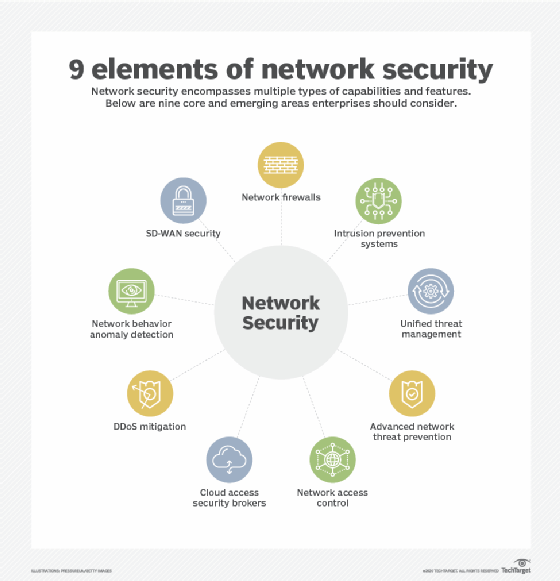
As technology evolves, so do the threats and the tools used to combat them. Several key trends are currently redefining what it means to be “secure.”
Artificial Intelligence and Machine Learning in Threat Detection
AI is perhaps the most significant double-edged sword in modern security. On one hand, hackers are using AI to automate phishing attacks and discover software vulnerabilities at record speed. On the other hand, security software now leverages machine learning (ML) to analyze patterns of network behavior. By establishing a “baseline” of normal activity, AI can detect anomalies—such as a user logging in from a new country at 3:00 AM—and trigger an immediate response. AI-driven security tools can process millions of data points in seconds, a feat impossible for human analysts.
The Rise of Zero Trust Architecture
The concept of “Zero Trust” is a fundamental shift in security philosophy. Its mantra is simple: “Never trust, always verify.” In a Zero Trust model, it doesn’t matter if you are inside the corporate network or using a company-issued laptop; the system treats every access request as a potential threat. Users must continuously prove their identity through multi-factor authentication (MFA) and are granted only the “least privilege” access necessary to do their jobs. This limits the “lateral movement” of attackers if they do manage to breach one part of the system.
Quantum Computing and the Future of Cryptography
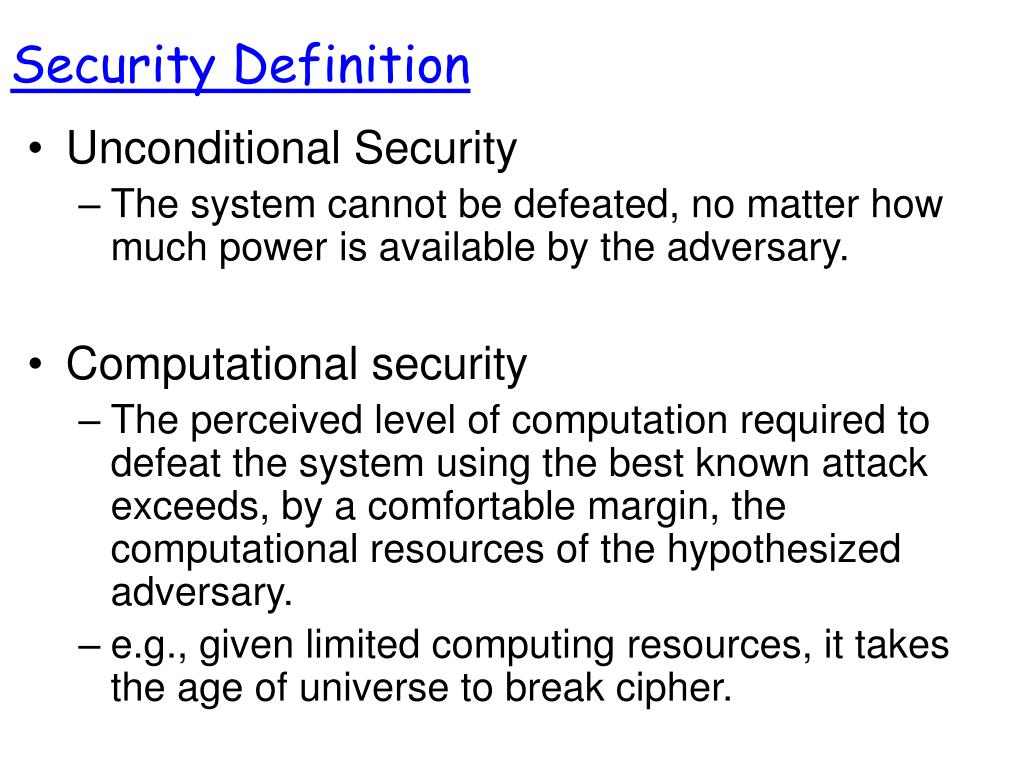
While still in its nascent stages, quantum computing represents a looming challenge for digital security. Traditional encryption methods, which would take classical computers thousands of years to crack, could theoretically be broken by quantum computers in minutes. Consequently, “Post-Quantum Cryptography” (PQC) is currently being developed. Security today means preparing for the threats of tomorrow by researching algorithms that can withstand the immense processing power of quantum machines.
User-Centric Security: Best Practices for Individuals and Enterprises
While high-level architecture is vital, security often succeeds or fails at the level of the individual user. Human error remains one of the largest contributors to security breaches.
Beyond Passwords: The Passwordless Future
The traditional password is the weakest link in the security chain. They are easily guessed, stolen, or reused. The tech industry is moving toward a “passwordless” future using standards like FIDO2 and WebAuthn. This involves using biometric identifiers (like FaceID or fingerprints) and hardware security keys (like YubiKeys) to authenticate users. Security now means moving away from “what you know” (a password) toward “what you have” (a physical key) and “who you are” (biometrics).
IoT Security: Protecting the Connected Home and Office
The Internet of Things (IoT) has introduced billions of “smart” gadgets into our lives, from thermostats to industrial sensors. Unfortunately, many of these devices were designed for convenience rather than security, often shipping with hard-coded passwords and unpatched software. Security in the IoT age involves “network segmentation”—keeping smart devices on a separate network from sensitive data—and ensuring that every device, no matter how small, is capable of receiving secure software updates.
The Future of Security: Predictive and Invisible
As we look forward, the goal of technology is to make security both more powerful and less intrusive. The most effective security is often the kind that the user never notices.
Behavioral Biometrics and Continuous Authentication
Rather than just checking a fingerprint once at login, future systems will use “behavioral biometrics.” This technology monitors the way a user types, the angle at which they hold their phone, and their navigation patterns. If the behavior suddenly changes, the system can prompt for additional verification. This creates a layer of “continuous authentication” that provides security throughout the entire session, not just at the start.

The Ethical Implications of Autonomous Security Systems
As we delegate more security decisions to autonomous AI agents, we face new ethical questions. What happens if a security AI accidentally blocks a legitimate user from a life-saving medical device? Or if the data used to train security algorithms contains biases? The meaning of security is expanding to include “algorithmic accountability.” True security in the future will require a balance between automated efficiency and human oversight to ensure that the systems we build to protect us do not inadvertently cause harm.
In conclusion, “security” is no longer a static state of being; it is a dynamic, ongoing process. It is a blend of advanced software, rigorous protocols, and informed human behavior. In the tech world, security means the resilience to withstand attacks, the integrity to maintain truth, and the foresight to adapt to a landscape that changes with every new line of code written. To be secure is to be prepared, and in our digital age, that preparation is the key to our collective progress.
aViewFromTheCave is a participant in the Amazon Services LLC Associates Program, an affiliate advertising program designed to provide a means for sites to earn advertising fees by advertising and linking to Amazon.com. Amazon, the Amazon logo, AmazonSupply, and the AmazonSupply logo are trademarks of Amazon.com, Inc. or its affiliates. As an Amazon Associate we earn affiliate commissions from qualifying purchases.