
In the rapidly evolving landscape of competitive online gaming, Skill-Based Matchmaking (SBMM) has emerged as one of the most controversial and discussed algorithms in software development. For players, developers, and data scientists alike, SBMM represents the intersection of machine learning, behavioral psychology, and user retention strategy. As games move away from server-browser models toward automated matchmaking systems, understanding the technical infrastructure behind these algorithms is essential for grasping the current state of digital entertainment.
The Technical Framework of SBMM Algorithms
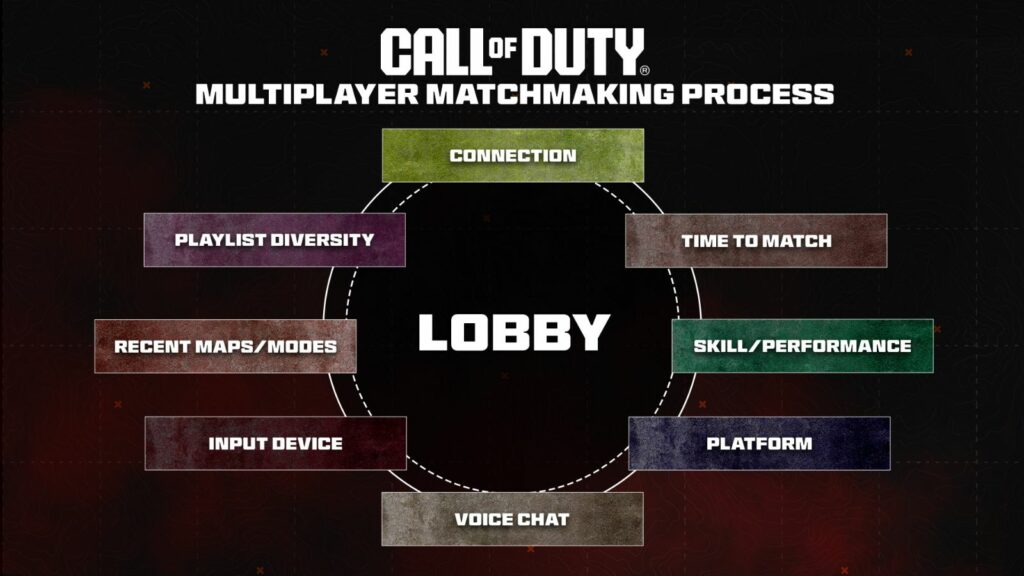
At its core, SBMM is a software-driven process designed to analyze player data and group individuals into lobbies based on a calculated skill level. Unlike classic matchmaking, which prioritized low latency and random distribution, modern SBMM utilizes complex data modeling to ensure that every player encounters opponents of similar capability.
Data Inputs and Elo Ratings
Most SBMM implementations rely on a dynamic variation of the Elo rating system—the same statistical model used in chess to estimate relative skill levels. However, in contemporary video games, the system ingests far more than just “wins” and “losses.” Software engineers integrate multi-dimensional telemetry, including:
- Kill/Death Ratios (KDR): Normalized across recent matches to account for performance spikes.
- Score Per Minute (SPM): A metric reflecting how active a player is within the game loop.
- Accuracy and Precision: Analyzing input telemetry to determine mechanical proficiency.
- Objective Participation: Tracking engagement with game-mode-specific goals, such as capturing points or carrying objectives.
These variables are processed through real-time predictive models. When a player clicks “Find Match,” the server queries these data points, compares them against a pool of available players, and constructs a lobby designed to hover near a 1.0 “win probability” expectation.
The Role of Machine Learning in Predictive Matchmaking
Modern SBMM has graduated from static calculations to active machine learning. Developers utilize neural networks to identify “engagement patterns.” If a player’s performance data suggests they are trending toward frustration—due to repeated losses or lopsided match outcomes—the software automatically adjusts the search parameters to find a lobby that can provide a “calibrating” experience. This predictive modeling is a specialized application of AI in gaming, designed to maximize the “Time Spent in Game” (TSIG) metric, a primary Key Performance Indicator (KPI) for software-as-a-service (SaaS) titles.
The Psychological and Retention Impact
From a product development standpoint, SBMM is not merely about fairness; it is about user retention. By reducing the frequency of one-sided matches—often referred to as “stomps”—developers aim to prevent player churn.
Balancing Competitive Tension and Frustration
The fundamental goal of SBMM is to maintain the “flow state.” Psychology suggests that human engagement is highest when a challenge is neither too easy (causing boredom) nor too difficult (causing anxiety). Software algorithms attempt to keep players in this narrow band. When the SBMM system functions correctly, it minimizes the skill gap between the top and bottom players in a lobby.
However, the technical implementation often faces criticism. If the system is too aggressive, every game feels like a tournament final, preventing players from testing new weapons, experimenting with non-meta strategies, or simply relaxing. This is where the engineering challenges lie: how do you quantify “fun” in a line of code?

The “Engagement-Optimized Matchmaking” Debate
There is an ongoing industry debate regarding Engagement-Optimized Matchmaking (EOMM). While traditional SBMM focuses on skill parity, EOMM is a more aggressive software architecture that prioritizes long-term retention. It may intentionally place a player in a slightly easier lobby after a streak of losses to prevent them from quitting the application. Critics argue that this creates a “manufactured” experience where the player’s agency is secondary to the algorithm’s desire to keep them logged in, turning the matchmaking process into a behavioral manipulation tool.
Technical Challenges and Latency Considerations
While data parity is the primary goal, developers must balance complex matchmaking logic against the hard constraints of network infrastructure.
The Latency vs. Skill Dilemma
In high-performance gaming, network latency (ping) is often the most important factor in a positive user experience. The technical struggle occurs when the server must choose between two suboptimal paths:
- Strict SBMM: The system finds players with exactly equal skill levels across the globe. The result is a high-skill lobby with high latency, causing “lag” and “desync,” which ruins the competitive integrity of the game.
- Loose SBMM: The system finds players within a 50-mile radius with varying skill levels. The connection is pristine, but the match quality suffers due to the skill gap.
Software engineers combat this through “latency-first” architecture. The matchmaking software typically searches for local, low-latency nodes first, and only expands the search radius—and widens the skill threshold—if a lobby cannot be found within a specific time window (usually 10 to 30 seconds). This dynamic widening of parameters is a critical component of modern backend infrastructure.
Scalability and Server Load
Managing SBMM for millions of concurrent users requires massive cloud computing resources. Every match request triggers a series of database reads and writes, as the system must pull historical player data, run it through the sorting algorithm, and communicate with the game’s instance manager. This process happens in milliseconds. As cloud-based server scaling has become more efficient, developers have been able to make SBMM more granular, moving from broad “brackets” of skill to specific percentile-based pairings.
The Future of Matchmaking Software
As AI-driven development becomes standard, we are moving toward a future where SBMM becomes increasingly personalized.
Dynamic Difficulty Adjustment (DDA)
We are beginning to see the integration of Dynamic Difficulty Adjustment, a technology borrowed from single-player games, being tested in multiplayer environments. In this model, the software adjusts the game environment on the fly based on player performance within the match. For example, the software might modify the spawning logic or item drop rates to compensate for a player who is currently struggling, further blurring the line between competitive integrity and algorithmic guidance.
Transparency vs. Proprietary Algorithms
The biggest point of contention remains the lack of transparency. Because SBMM is a proprietary, trade-secret algorithm, developers rarely disclose the exact weighting of the variables involved. This lack of visibility breeds mistrust among the player base. For software developers, the challenge is to build trust through communication without exposing the “recipe” for their engagement engine, which could be exploited or reverse-engineered by bad actors looking to bypass matchmaking restrictions.
Ultimately, SBMM is a sophisticated application of software engineering that bridges the gap between raw data analysis and human psychology. While it remains a point of intense debate, it is an indispensable component of the modern digital ecosystem, ensuring that millions of players can engage in competitive gaming without the barriers of entry that existed in the era of manual server hosting. As machine learning models continue to refine their accuracy, the influence of SBMM will only grow, cementing its role as the invisible hand guiding the experience of the modern digital gamer.
aViewFromTheCave is a participant in the Amazon Services LLC Associates Program, an affiliate advertising program designed to provide a means for sites to earn advertising fees by advertising and linking to Amazon.com. Amazon, the Amazon logo, AmazonSupply, and the AmazonSupply logo are trademarks of Amazon.com, Inc. or its affiliates. As an Amazon Associate we earn affiliate commissions from qualifying purchases.