
In the vast lexicon of finance, few acronyms command as much immediate recognition and weight as “S&P 500.” It is a term frequently uttered in financial news, market analyses, and investor conversations, often serving as a shorthand for the health of the U.S. stock market and, by extension, the broader American economy. For many, it represents the epitome of large-cap American corporate success and a beacon for long-term investment growth. But beyond its ubiquitous presence, what exactly does the S&P 500 stand for, both literally and conceptually? Understanding this powerful index is fundamental for anyone looking to grasp the dynamics of investing, evaluate market performance, or make informed financial decisions.
At its core, the S&P 500 is more than just a list of companies; it is a meticulously constructed financial instrument designed to provide a comprehensive snapshot of the U.S. equity market. Its components are carefully selected, its performance rigorously tracked, and its influence on global financial markets is undeniable. Diving into its meaning unveils layers of economic insight, historical context, and practical investment wisdom that are invaluable for both seasoned investors and curious beginners alike. This article will demystify the S&P 500, exploring its namesake, its composition, its significance, and how it serves as a critical barometer for financial prosperity.
The Core Identity: Decoding “S&P” and “500”
To truly understand the S&P 500, we must first break down its very name. Each part, “S&P” and “500,” carries specific meaning and historical significance that illuminates the index’s purpose and methodology.
The Names Behind the Index: Standard & Poor’s
The “S&P” in S&P 500 stands for Standard & Poor’s. This refers to Standard & Poor’s Financial Services LLC, a division of S&P Global. The company has a rich history dating back to the late 19th and early 20th centuries, formed through a series of mergers. Poor’s Publishing, founded by Henry Varnum Poor, began publishing a guide to railroad companies in 1860, which evolved into a comprehensive reference for financial information. Separately, Standard Statistics Company was founded in 1906, producing financial statistics on various companies. These two entities merged in 1941 to form Standard & Poor’s.
Standard & Poor’s became renowned for its credit ratings and financial indices. The company’s expertise lies in its ability to collect, analyze, and disseminate vast amounts of financial data, making it a trusted source for investors and financial professionals globally. The S&P 500 index itself was launched on March 4, 1957, building upon earlier, smaller indices, and rapidly became the industry standard due to its broad market representation and market-capitalization weighting. Today, S&P Dow Jones Indices, a joint venture between S&P Global, CME Group, and News Corp, maintains the index, ensuring its relevance and accuracy.
Representing the Market: The Significance of “500”
The “500” in S&P 500 refers to the 500 leading publicly traded companies in the United States. However, it’s crucial to understand that “500” is a symbolic number representing the index’s broad coverage rather than an absolute, immutable count. While the aim is to include approximately 500 companies, the actual number can fluctuate slightly due to mergers, acquisitions, or changes in eligibility. For instance, sometimes a company is removed, and another added, potentially leaving the count temporarily above or below 500.
These 500 companies are not just any companies; they are carefully selected to represent a diverse array of industries and economic sectors, reflecting the overall structure of the U.S. economy. By focusing on large-cap companies, the index captures a significant portion of the total value of the U.S. stock market. In fact, the S&P 500 typically covers about 80% of the total market capitalization of publicly traded U.S. stocks, making it an exceptionally comprehensive measure of the country’s economic health and corporate performance. This wide representation is precisely why it is considered such a reliable benchmark for the U.S. equity market.
Beyond the Name: What the S&P 500 Truly Represents
While understanding the literal meaning of “S&P” and “500” is a good start, grasping the index’s deeper significance requires an appreciation of its role as an economic barometer, its unique composition, and its weighting methodology.
A Bellwether for the U.S. Economy
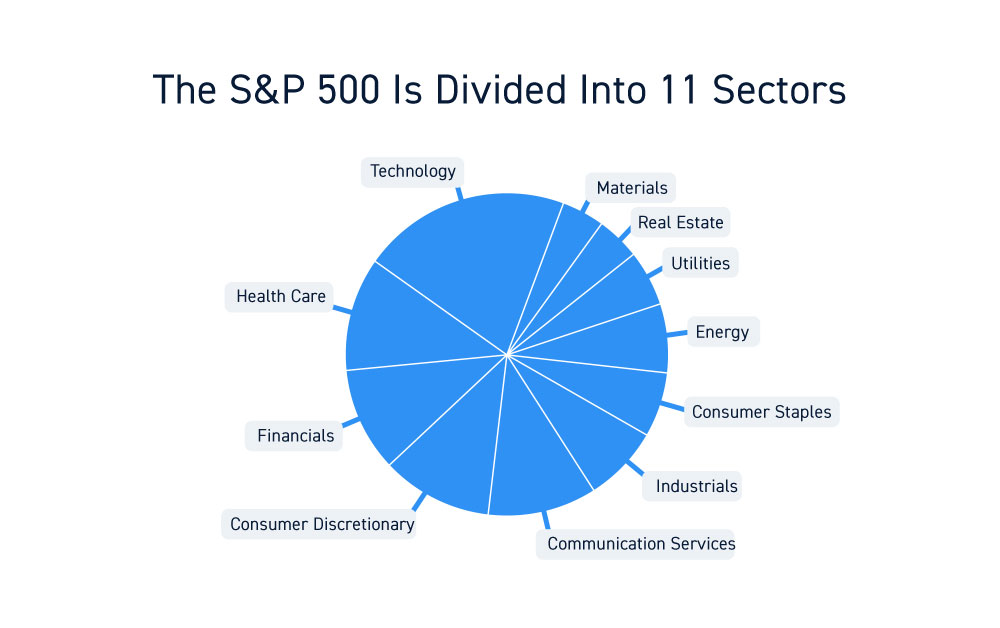
The S&P 500 functions as a powerful bellwether for the U.S. economy. Because it comprises 500 of the largest and most influential American companies across various sectors—from technology and finance to healthcare and consumer staples—its collective performance often mirrors the broader economic landscape. When these companies are thriving, experiencing growth in earnings and revenue, it generally indicates a healthy economy. Conversely, sustained declines in the S&P 500 can signal economic headwinds, recessions, or market uncertainty.
Investors, economists, and policymakers closely monitor the S&P 500 for insights into market trends, investor sentiment, and economic forecasts. Its movements are often seen as a leading indicator, providing clues about future economic activity. For example, a strong S&P 500 performance might suggest robust corporate profits and consumer confidence, while a downturn could signal tightening economic conditions or impending challenges.
The Composition: Large-Cap U.S. Companies
The S&P 500 exclusively tracks U.S.-domiciled companies. The primary criterion for inclusion is “large-cap” status, meaning companies with a significant market capitalization. While there isn’t a fixed dollar amount, companies generally need a market cap in the billions of dollars to qualify. Beyond size, the selection committee considers other factors to ensure the index accurately reflects the market.
The index’s composition is dynamic, not static. Companies are regularly added and removed to maintain the index’s relevance and representativeness. For instance, a company might be removed if its market cap shrinks significantly, if it undergoes a merger or acquisition, or if it no longer meets liquidity or profitability requirements. New, fast-growing companies that achieve the necessary scale and meet other criteria are added, ensuring the S&P 500 remains a current and accurate reflection of the leading U.S. enterprises. This constant evolution prevents the index from becoming outdated and ensures it always represents the forefront of American corporate success.
Weighting Methodology: Market-Capitalization
Unlike some indices that give equal weight to each component company, the S&P 500 is a market-capitalization-weighted index. This means that companies with larger market capitalizations have a greater impact on the index’s value and performance than companies with smaller market caps. The market capitalization of a company is calculated by multiplying its share price by the number of its outstanding shares.
For example, if Apple (a massive company by market cap) experiences a significant percentage change in its stock price, it will have a much larger effect on the S&P 500’s overall movement than a smaller company within the index, even if that smaller company experiences a proportionally larger percentage change. This methodology accurately reflects the real-world impact of larger companies on the total market value and mirrors how most investors experience the market, as a greater portion of capital is invested in these larger entities. This weighting system is a key reason why the S&P 500 is often considered a reliable gauge of the overall market.
The Selection Process: How Companies Earn Their Spot
Gaining entry into the S&P 500 is a coveted achievement for any publicly traded company, often resulting in increased visibility, liquidity, and investor confidence. However, inclusion is not automatic; it is the result of a rigorous selection process overseen by an independent committee.
Key Eligibility Criteria

While not exhaustive, the primary criteria for S&P 500 inclusion generally include:
- Market Capitalization: As mentioned, companies must be large-cap. While the exact threshold changes, it’s typically in the multi-billion-dollar range.
- Liquidity: The company’s stock must be highly liquid, meaning it’s actively traded and can be bought and sold without significantly impacting its price. This ensures that the index is tradable and reflects real market activity.
- Domicile: The company must be a U.S. company, with its primary listing on a major U.S. exchange (NYSE or NASDAQ).
- Public Float: A significant portion of the company’s shares must be available for public trading, rather than being held by insiders or restricted shareholders. This “public float” criterion ensures that the index reflects the shares accessible to the general investing public.
- Profitability: Companies must demonstrate profitability, typically based on a sum of the most recent four consecutive quarters’ GAAP earnings being positive, with the most recent quarter also being positive. This criterion helps ensure financial stability among index components.
- Sector Representation: The committee also considers the balance of sector representation to ensure the index accurately reflects the broader U.S. economy and isn’t overly concentrated in a few industries.
The S&P Dow Jones Indices Committee
The ultimate decision-makers for S&P 500 inclusion and exclusion are the members of the S&P Dow Jones Indices Committee. This committee comprises a team of experts, including economists, index analysts, and market strategists, who regularly review the index’s components. Their decisions are based on the criteria listed above, as well as qualitative factors that ensure the index remains representative and relevant.
The committee meets periodically to discuss potential changes, but it can also make ad-hoc adjustments as needed, such as in the event of a major merger or bankruptcy. Their process is designed to be objective and transparent, although the exact deliberations are not publicly disclosed. This independent oversight ensures the integrity and credibility of the S&P 500 as a benchmark for the U.S. stock market.
Why the S&P 500 Matters to Investors and the Economy
The S&P 500’s significance extends far beyond its literal definition; it plays a pivotal role in personal finance, investment strategies, and economic analysis.
A Benchmark for Performance
For investors, money managers, and financial analysts, the S&P 500 is the most widely accepted benchmark for the performance of the U.S. equity market. When an active fund manager claims to “beat the market,” they are almost invariably referring to outperforming the S&P 500’s returns over a given period. Similarly, an investor evaluating their own portfolio might compare its growth against the S&P 500 to gauge how well their investments are performing relative to a broad market average.
Its widespread use as a benchmark simplifies comparison and provides a standardized measure of success. Without such a robust and recognized index, comparing investment performance would be a much more fragmented and less reliable exercise.
Diversification and Long-Term Growth
Investing in the S&P 500 offers a compelling pathway to diversification and long-term growth. Because the index comprises 500 different companies across various sectors, an investment tied to the S&P 500 inherently provides exposure to a broad swath of the U.S. economy. This diversification reduces the risk associated with investing in individual stocks; the poor performance of one or a few companies is less likely to severely impact the overall investment.
Historically, the S&P 500 has demonstrated robust long-term growth, averaging returns that have outpaced inflation and many other asset classes over extended periods. While past performance is not indicative of future results, the index has proven to be a reliable vehicle for wealth creation for those with a long-term investment horizon, reflecting the compounding growth of America’s leading companies.
Economic Indicator and Market Sentiment
As discussed, the S&P 500 serves as a critical economic indicator. Its movements are often interpreted as reflections of broader economic health, investor confidence, and market sentiment. A rising S&P 500 can signify optimism about corporate earnings, consumer spending, and economic expansion, while a falling index can signal economic contraction or uncertainty.
Beyond raw economic data, the S&P 500 also encapsulates market sentiment—the collective mood of investors. Fear, greed, and general optimism or pessimism can be observed in the index’s daily fluctuations. It’s a real-time pulse of how the financial community perceives current events and future prospects, making it an indispensable tool for economic analysis and strategic planning.
Investing in the S&P 500: Accessibility for Every Portfolio
One of the most appealing aspects of the S&P 500 is its accessibility. You don’t need to be a large institutional investor to gain exposure to these 500 powerful companies. Retail investors can easily participate in the index’s performance through various financial instruments.
Index Funds and ETFs: The Easiest Routes
The most popular and straightforward ways to invest in the S&P 500 are through S&P 500 index funds and Exchange-Traded Funds (ETFs).
- Index Funds: These are mutual funds that aim to replicate the performance of a specific index, in this case, the S&P 500, by investing in all the companies within the index in the same proportions. They are passively managed, meaning they don’t have a fund manager actively trying to “beat” the market through stock picking, which results in lower management fees compared to actively managed funds.
- ETFs: S&P 500 ETFs are similar to index funds but trade like individual stocks on an exchange throughout the day. This offers greater flexibility in buying and selling. Like index funds, they are designed to track the S&P 500 and typically come with low expense ratios. Popular S&P 500 ETFs include SPY (SPDR S&P 500 ETF Trust), IVV (iShares Core S&P 500), and VOO (Vanguard S&P 500 ETF).
Both index funds and ETFs provide immediate diversification across the 500 companies with a single investment, making them ideal for long-term investors seeking broad market exposure at a low cost.

Understanding the Risks and Rewards
While investing in the S&P 500 through index funds or ETFs offers significant advantages, it’s crucial to understand both the potential rewards and inherent risks:
- Rewards: Historically, the S&P 500 has delivered impressive long-term returns, benefiting from the growth of the U.S. economy and corporate innovation. It provides broad diversification, reducing idiosyncratic risk associated with individual stock picking. Its passive nature often results in lower fees and greater tax efficiency compared to actively managed funds.
- Risks: The primary risk is market risk. While diversified, the S&P 500 is still susceptible to overall market downturns, economic recessions, and systemic shocks. Its value can fluctuate significantly in the short term, and there is no guarantee of returns. Additionally, while diversified across companies, it is concentrated within the U.S. equity market, meaning it does not provide direct international diversification. Investors should have a long-term perspective (ideally 5-10 years or more) to ride out market volatility and realize the potential for compound growth.
In conclusion, the S&P 500 is far more than just a catchy acronym or a random assortment of stocks. It stands for Standard & Poor’s, a venerable financial information provider, and represents 500 of America’s leading companies. It serves as an indispensable benchmark, a reliable economic indicator, and an accessible avenue for investors to participate in the long-term growth of the U.S. economy. Understanding its meaning and purpose is a cornerstone of financial literacy and a valuable asset for anyone navigating the world of investing.
aViewFromTheCave is a participant in the Amazon Services LLC Associates Program, an affiliate advertising program designed to provide a means for sites to earn advertising fees by advertising and linking to Amazon.com. Amazon, the Amazon logo, AmazonSupply, and the AmazonSupply logo are trademarks of Amazon.com, Inc. or its affiliates. As an Amazon Associate we earn affiliate commissions from qualifying purchases.