
In the complex world of construction, where projects can span years and involve colossal sums of money, clear financial foresight is not just beneficial—it is absolutely essential. One acronym frequently encountered in the early stages of project development is ROM. Far from a technical computing term, in construction, ROM stands for Rough Order of Magnitude. This seemingly simple term represents a powerful financial tool, a preliminary cost estimate that serves as a foundational pillar for early-stage decision-making, investment attraction, and strategic planning.
A Rough Order of Magnitude estimate is exactly what it sounds like: a high-level, broad-brush assessment of a project’s potential cost. It’s developed when detailed plans are scarce, and the primary objective is to gauge financial viability and establish a realistic budget range for initial discussions. For developers, investors, and project owners, understanding the nuances of a ROM estimate is paramount to navigating the financial landscape of construction with confidence and precision. This article delves into the financial underpinnings of ROM estimates, exploring their significance, methodology, and strategic deployment within the realm of construction finance.
The Financial Imperative: Why ROM Estimates Matter in Construction
At the inception of any major construction endeavor, financial stakeholders face a critical challenge: making informed investment decisions with limited information. This is where the ROM estimate steps in, not as a definitive price tag, but as a vital financial compass guiding the initial journey. Its importance is multifaceted, impacting everything from feasibility studies to early-stage capital allocation.
Early-Stage Financial Due Diligence
Before a single shovel hits the ground or detailed blueprints are drawn, investors and project sponsors need to understand if a proposed project is financially attractive and feasible. A ROM estimate provides this crucial initial financial snapshot. By quickly quantifying the potential investment required, it allows for a preliminary assessment of a project’s return on investment (ROI) potential. Is the expected revenue or value generated by the project likely to justify the estimated cost?
For private developers, a ROM might inform the decision to pursue land acquisition or spend further capital on design. For public sector projects, it helps justify the allocation of initial funds for detailed studies. This early financial due diligence, facilitated by a ROM, prevents costly mistakes and ensures that resources are not squandered on projects that are financially untenable from the outset. It acts as the first financial gatekeeper, allowing only the most promising projects to proceed to more granular financial scrutiny.
Risk Mitigation and Budgetary Anchoring
Construction projects are inherently risky, and a significant portion of that risk is financial. Unforeseen costs, market fluctuations, and scope creep can derail even well-planned endeavors. While a ROM estimate is by its nature broad, it serves as an initial anchor, setting preliminary budgetary expectations. This early anchoring helps manage financial expectations among all stakeholders, from investors to internal finance teams.
Presenting a ROM estimate as a range (e.g., +/- 25-50%) implicitly acknowledges the high level of uncertainty. This transparency about financial variability is a form of early risk mitigation. It prompts discussions about potential cost drivers and allows for the conceptualization of initial contingency funds even before detailed cost breakdowns are available. By providing a baseline financial figure, the ROM helps to frame early risk discussions and prepares stakeholders for the financial journey ahead, highlighting that initial numbers are subject to significant refinement.
Strategic Resource Allocation
Capital is a finite resource. In the early stages of a project, a ROM estimate helps guide the strategic allocation of that capital towards the most impactful preliminary activities. Should funds be primarily directed towards extensive geological surveys, market analysis, or advanced conceptual design? The ROM helps prioritize these investments by giving a sense of the overall financial scale and where preliminary capital will have the most leverage.
For instance, if a ROM estimate suggests a project is borderline expensive, it might lead to initial investment in value engineering studies to explore more cost-effective design alternatives before significant design expenditure. Conversely, if the ROM shows high financial viability, it might justify a quicker release of funds for preliminary legal work or expedited permitting processes, thereby accelerating the project timeline and potentially reducing overall financing costs in the long run.
Anatomy of a ROM: How Financial Projections Take Shape
Creating a ROM estimate is less about precise accounting and more about informed financial forecasting based on limited data. It requires a blend of historical financial knowledge, industry benchmarks, and astute judgment. The goal is not accuracy to the dollar, but rather a reliable financial range that captures the probable cost implications.
Methodologies for Rapid Financial Assessment
Given the lack of detailed plans, ROM estimates rely on top-down, comparative financial methodologies rather than bottom-up, detailed quantity take-offs.
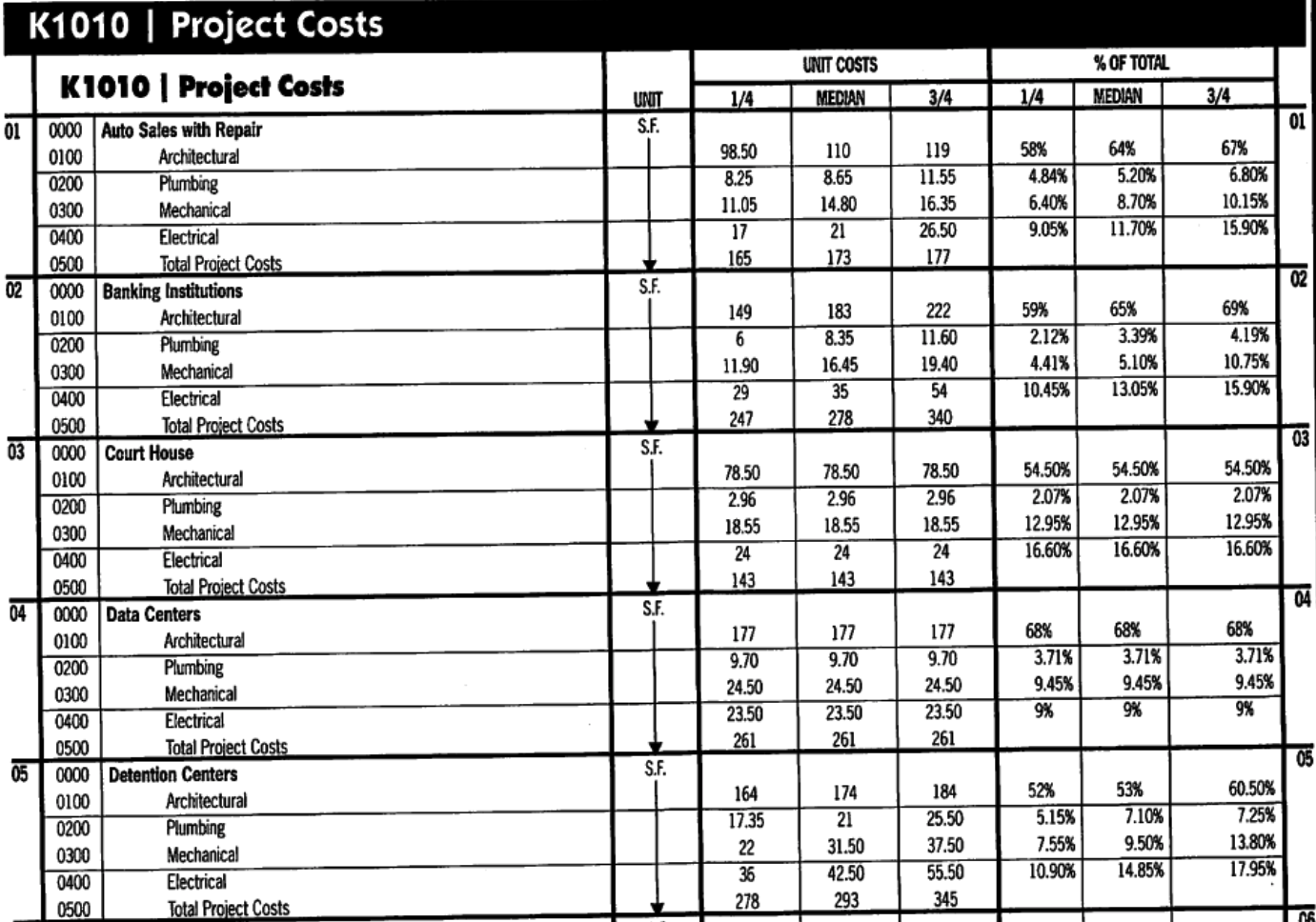
- Historical Data Comparison (Parametric Estimating): This is perhaps the most common approach. Estimators leverage financial data from similar past projects, adjusting for factors like size, location, complexity, and inflation. For example, if a developer plans a new hotel, they might look at the cost per square foot of recently completed hotels of similar star ratings in comparable markets. This provides a rapid, experience-based financial benchmark.
- Unit Costing based on Major Elements: For certain project types, a ROM can be derived by applying unit costs to major project components. For instance, a residential development might be estimated based on a cost per dwelling unit, or a road project based on cost per mile, adjusted for specific site conditions. These unit costs are derived from historical financial performance of similar components.
- Capacity Factor Estimating: For industrial projects, cost might be estimated based on production capacity. If a new plant is twice the capacity of an existing one, its cost might be estimated as a factor (e.g., 1.5 times) the cost of the smaller plant, based on financial scaling principles.
These methods are chosen for their speed and their ability to generate a credible financial projection even with minimal initial project definition. They are tools for early financial reconnaissance.
Data Dependencies and Their Financial Implications
The reliability of a ROM estimate is directly tied to the quality and relevance of the limited data available. This is a critical financial consideration. Using outdated historical data or data from vastly different project types can lead to significant financial miscalculations. Therefore, estimators must carefully vet their data sources, considering:
- Market Conditions: Current labor costs, material prices, and equipment rental rates can fluctuate significantly, directly impacting project finance.
- Inflation and Economic Outlook: The projected duration of a project means future cost escalation must be factored in, particularly for large, long-term investments.
- Site-Specific Factors: Geotechnical conditions, accessibility, and environmental considerations can add substantial, unforeseen financial burdens.
- Regulatory Environment: Permitting costs, compliance requirements, and local taxes all contribute to the overall financial outlay.
The more comprehensive and relevant the initial data, the tighter the ROM’s financial range can be, reducing early-stage financial uncertainty.
The Art of the Range: Communicating Financial Uncertainty
A defining characteristic of a ROM estimate is its presentation as a range, often expressed as a percentage deviation from a mid-point, such as +25% / -50% or +/- 30-50%. This range is not an admission of sloppiness but a deliberate, financially responsible way to communicate the inherent uncertainty at this nascent stage.
The wide spread reflects the absence of detailed engineering, material specifications, and labor breakdowns. It accounts for potential variables that could significantly impact the final cost, such as unexpected site conditions, design changes, market volatility, or even changes in the project’s scope. Communicating this financial range upfront is crucial for managing stakeholder expectations and ensuring that early financial commitments are made with a full understanding of the potential variability. It prepares all parties for the evolution of financial figures as the project progresses and more details emerge.
ROM as a Cornerstone of Project Lifecycle Finance
The ROM estimate is not an isolated financial calculation; it is an integral component of the broader project finance lifecycle. It lays the groundwork for subsequent, more detailed financial planning and plays a critical role in securing the necessary capital to bring a project to fruition.
From Concept to Capital: ROM’s Role in Funding Rounds
For projects seeking external financing, a compelling ROM estimate is often the first piece of financial evidence presented to potential investors, lenders, or grant agencies. It forms the core of initial pitch decks and preliminary business cases, demonstrating that the project has been conceptualized with financial discipline.
A well-researched ROM, even with its inherent range, provides a credible basis for discussions about initial equity investment, venture capital, or even early-stage government funding. It allows potential funders to conduct their own preliminary financial modeling, assess potential returns, and understand the scale of their required commitment. Without a ROM, securing initial capital would be significantly more challenging, as there would be no financial benchmark against which to evaluate the investment proposition.
Evolving Financial Precision: Transitioning from ROM to Detailed Estimates
The ROM is the first step in a progressive series of cost estimates, each growing in financial precision as the project matures.
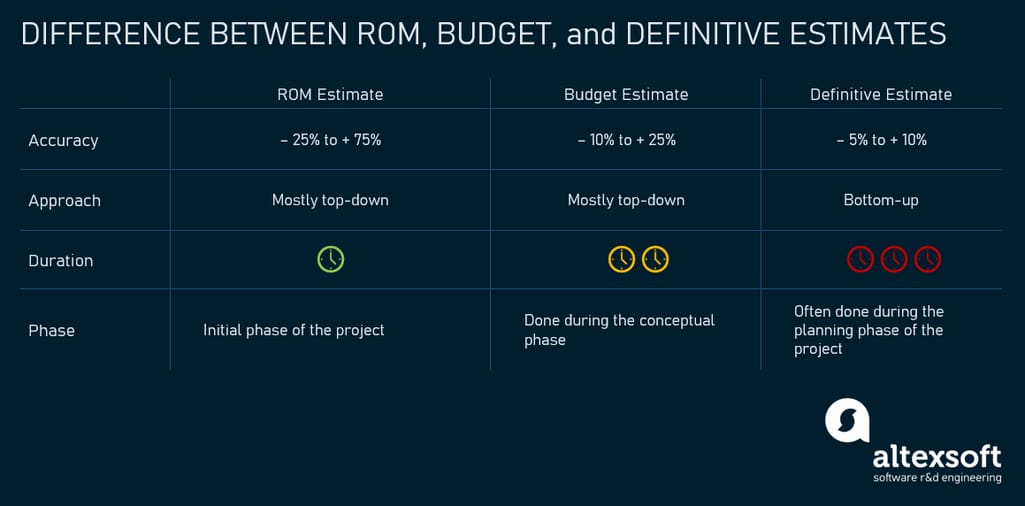
- Conceptual Estimate: (e.g., +/- 15-25%) Follows the ROM, built on basic engineering and preliminary design.
- Schematic Design Estimate: (e.g., +/- 10-15%) Based on more developed architectural and engineering plans.
- Design Development Estimate: (e.g., +/- 5-10%) Incorporates detailed design elements and specifications.
- Construction Document Estimate (Definitive Estimate): (e.g., +/- 3-5%) The most precise estimate, based on complete, bid-ready drawings and specifications.
The ROM establishes the initial financial envelope. As the project evolves, financial resources are committed to develop more detailed designs, which in turn feed into increasingly precise estimates. This structured approach to financial forecasting ensures that budgeting becomes progressively more accurate, allowing for better cost control and more informed financial commitments at each stage.
Managing Stakeholder Financial Expectations
One of the most valuable contributions of a ROM estimate is its ability to manage stakeholder financial expectations from the outset. By clearly communicating a broad cost range and the underlying assumptions, project managers and finance teams can set realistic benchmarks. This transparency helps prevent misunderstandings later when more detailed estimates might reveal higher or lower costs than initially assumed.
Educating stakeholders—be it the board of directors, government officials, or private investors—about the nature and limitations of a ROM estimate is crucial. It underscores that these are early financial indicators, subject to significant change, and that definitive financial commitments will only be possible with more developed project information. This proactive financial communication fosters trust and prepares all parties for the iterative nature of project cost estimation.
Best Practices for Robust ROM Estimation in Business Finance
While a ROM estimate is by its nature broad, there are best practices that can enhance its reliability and financial utility, ensuring it serves as a strong foundation for future financial decisions.
Leveraging Historical Financial Data
The accuracy of a ROM heavily relies on access to a comprehensive database of historical project costs. Companies that diligently track and categorize their past project financials (cost per square foot, cost per unit, material costs, labor rates, etc.) are at a significant advantage. This internal financial data, when properly analyzed and adjusted for current economic conditions, provides the most relevant and reliable basis for new ROM estimates. Investing in data collection and financial analytics tools to manage this historical information is a sound business finance strategy.
Expert Financial Judgment and Input
Even with the best data, the interpretation and application require the seasoned judgment of experienced estimators and financial analysts. These professionals possess an intuitive understanding of cost drivers, market nuances, and potential financial risks that quantitative data alone cannot capture. Their ability to “sense-check” the numbers, identify missing elements, and factor in qualitative risks is invaluable. Collaboration between technical teams and finance professionals is key to producing a holistic ROM.
Regular Financial Review and Updates
A ROM estimate should not be a static document. As more information becomes available—even before transitioning to a conceptual estimate—the ROM should be revisited and updated. New site survey data, early discussions with key subcontractors, or shifts in market material prices can all warrant a refinement of the initial ROM. This iterative process of financial review ensures that the early cost projection remains as relevant and credible as possible, aligning with the dynamic nature of project finance.
Understanding Project Scope’s Financial Impact
Even at the ROM stage, a clear, albeit high-level, understanding of the project’s scope is essential. What are the primary functions? What is the expected quality level? What are the key deliverables? While detailed specifications are absent, defining these broad parameters helps to contain the financial variables. A project’s scope inherently drives its cost, and even a rough definition helps frame the financial discussion within reasonable boundaries. Any significant change in scope must immediately trigger a re-evaluation of the ROM estimate.
Conclusion
The question “what does ROM mean in construction” leads directly to a crucial concept in business finance: the Rough Order of Magnitude estimate. This preliminary financial projection is far more than a simple guess; it is a strategic financial tool that empowers stakeholders to make critical early-stage investment decisions, manage financial risks, and set realistic budgetary expectations. By embracing the methodologies of rapid financial assessment, leveraging historical data, and applying expert judgment, construction firms and project owners can harness the power of ROM estimates to navigate the complex financial waters of construction from concept to successful capital realization. In an industry where financial prudence is paramount, understanding and effectively utilizing the ROM is truly a cornerstone of sustainable project development and fiscal responsibility.
aViewFromTheCave is a participant in the Amazon Services LLC Associates Program, an affiliate advertising program designed to provide a means for sites to earn advertising fees by advertising and linking to Amazon.com. Amazon, the Amazon logo, AmazonSupply, and the AmazonSupply logo are trademarks of Amazon.com, Inc. or its affiliates. As an Amazon Associate we earn affiliate commissions from qualifying purchases.