
In the world of mathematics, the term “reciprocal” is often introduced in middle school as the “multiplicative inverse.” Simply put, the reciprocal of a number $x$ is $1$ divided by $x$ ($1/x$). While this might seem like a dry academic concept, it serves as the underlying logic for some of the most critical decisions in personal finance, corporate accounting, and global investing.
When we ask, “What does reciprocal mean in math?” from a financial perspective, we are really asking how two related values interact when one is flipped to reveal a different dimension of value. Whether you are calculating the yield on a bond, evaluating a stock’s P/E ratio, or navigating the foreign exchange market, you are using reciprocal mathematics to translate raw data into actionable intelligence.
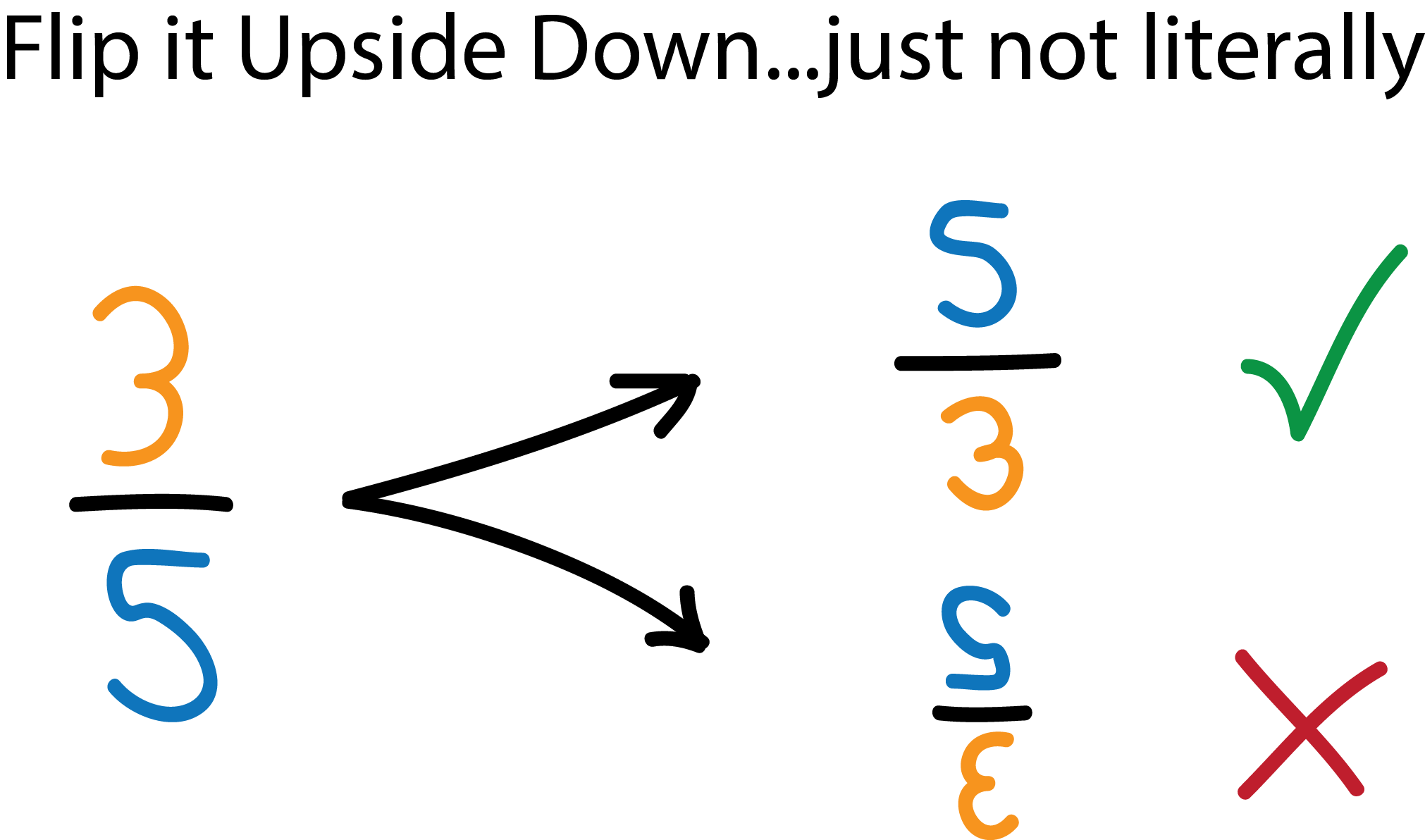
The Fundamental Concept: Understanding Reciprocity in Financial Mathematics
To master money, one must first master the relationship between numbers. At its core, a reciprocal represents a relationship where two quantities are inversely proportional. When one goes up, the other goes down in a mathematically precise way.
Defining the Mathematical Inverse
In pure mathematics, the reciprocal of a fraction $a/b$ is $b/a$. If you have a whole number like 5, its reciprocal is $1/5$. The defining characteristic of a reciprocal is that when you multiply a number by its reciprocal, the product is always 1.
In finance, this “balance” is vital. Every financial transaction is a reciprocal exchange: you trade a specific amount of liquid capital for a specific amount of an asset. The “price” is simply the ratio between the two. Understanding the reciprocal allows an investor to view that price from the perspective of both the buyer and the seller, or the lender and the borrower.
Why the “1/x” Logic Matters for Investors
Most people look at financial data linearly. However, professional investors look at data reciprocally to find hidden risks and opportunities. For example, if a company’s debt-to-equity ratio is high, the reciprocal—equity-to-debt—tells us how much of a “cushion” the shareholders have before the creditors take over. By flipping the fraction, we change the narrative from “how much do we owe?” to “how much do we own?” This shift in perspective is the essence of mathematical reciprocity in a monetary context.
Reciprocals in Valuation Multiples: The P/E Ratio vs. Earnings Yield
Perhaps the most common application of reciprocal math in the stock market involves valuation multiples. Investors often use the Price-to-Earnings (P/E) ratio to determine if a stock is “expensive” or “cheap.” However, the P/E ratio alone can be misleading without its reciprocal counterpart.
Decoding the Price-to-Earnings Ratio
The P/E ratio is calculated as:
$$text{P/E Ratio} = frac{text{Market Value per Share}}{text{Earnings per Share (EPS)}}$$
If a stock trades at $100 and earns $5 per year, its P/E is 20. This tells you that you are paying $20 for every $1 of the company’s annual earnings. While useful, the P/E ratio doesn’t easily allow for comparisons against other asset classes, like bonds or savings accounts.
Switching the Lens: The Earnings Yield ($1 div text{P/E}$)
To make a better comparison, savvy investors use the reciprocal of the P/E ratio, known as the Earnings Yield.
$$text{Earnings Yield} = frac{1}{text{P/E Ratio}} = frac{text{Earnings per Share}}{text{Price per Share}}$$
Using our previous example, if the P/E is 20, the reciprocal ($1/20$) is 0.05, or 5%.
Suddenly, the math becomes much clearer. Instead of an abstract number like “20,” you now have a percentage (5%) that you can compare directly to the 10-year Treasury note or the interest rate on a high-yield savings account. If a government bond pays 5% and a risky stock also has an earnings yield of 5%, the reciprocal math reveals that the stock may be overpriced relative to the “risk-free” alternative.
Comparative Analysis in Portfolio Construction
Reciprocal math allows for “apples-to-apples” comparisons. When building a portfolio, you might look at a Real Estate Investment Trust (REIT) with a high P/E and a tech stock with a lower one. By converting all valuations into their reciprocal yields, you create a standardized metric to evaluate where your next dollar of capital will work the hardest.
Currency Markets and the Power of Inverse Exchange Rates
The foreign exchange (Forex) market is the largest financial market in the world, and it operates entirely on the principle of reciprocals. In Forex, you are never just “buying” something; you are always trading one currency for another.

How Forex Pairs Function as Reciprocals
When you see a currency pair like EUR/USD quoted at 1.10, it means 1 Euro is worth 1.10 US Dollars. But what if you are a European business looking to buy US goods? You need to know the USD/EUR rate.
To find this, you calculate the reciprocal:
$$1 div 1.10 = 0.909$$
This means 1 US Dollar is worth approximately 0.91 Euros. In the fast-paced world of international trade, understanding that $x/y$ is the reciprocal of $y/x$ is essential for pricing goods, calculating import duties, and hedging against currency fluctuations.
Calculating Cross-Rates for Global Business
For multinational corporations, reciprocal math is a daily necessity. If a company has cash in Japanese Yen (JPY) but needs to pay a supplier in British Pounds (GBP), they must navigate the reciprocal relationship between JPY/USD and USD/GBP to find the “cross-rate.” A failure to understand the multiplicative inverse in these ratios can lead to significant “slippage”—small mathematical errors that result in millions of dollars in lost value during large-scale transfers.
Time, Interest, and the Reciprocal of Compounding
The “Time Value of Money” is a cornerstone of personal finance. It posits that a dollar today is worth more than a dollar tomorrow. The math used to calculate this—discounting and compounding—is a masterclass in reciprocal relationships.
The Relationship Between Term Length and Yield
In the bond market, there is an inverse (reciprocal) relationship between bond prices and interest rates. When interest rates rise, the price of existing bonds falls. Why? Because the fixed coupon payment of an old bond must be “discounted” to match the new, higher yield available in the market.
This is reciprocal math in action: the value of the bond is the reciprocal of the required rate of return over time. If you don’t understand how the denominator (interest rates) affects the total value, you cannot effectively manage a fixed-income portfolio.
Discounting Cash Flows: The Reciprocal of Future Value
When a business analyst performs a Discounted Cash Flow (DCF) analysis to value a company, they are essentially taking future earnings and multiplying them by a “discount factor.”
The formula for Future Value (FV) is:
$$FV = PV times (1 + r)^n$$
The formula for Present Value (PV) is the reciprocal:
$$PV = frac{FV}{(1 + r)^n}$$
By using the reciprocal of the growth multiplier, investors can “work backward” from the future to the present. This allows them to determine exactly how much they should pay today for a business that might not be profitable for another five years.
Risk Management: Utilizing Reciprocal Math for Hedging and Diversification
In the sophisticated world of hedge funds and risk management, reciprocals are used to balance the scales. If a portfolio is “long” on the market (meaning it profits when prices rise), the manager may seek an “inverse” or “reciprocal” position to protect against a crash.
Inverse ETFs and Market Hedging
There are specific financial instruments known as “Inverse ETFs.” If the S&P 500 drops by 1%, an inverse ETF is designed to rise by 1%. This is a literal application of the mathematical reciprocal in a product format. Investors use these tools to create a “delta-neutral” position, where the gains in one area are mathematically offset by the reciprocal movement in another, effectively “freezing” the value of the portfolio during times of extreme volatility.
Correlation Coefficients and the Reciprocal Nature of Volatility
In diversification strategy, the goal is to find assets with a low or negative correlation. If Asset A and Asset B have a perfectly inverse relationship, their movements are reciprocal. When Asset A loses 10% of its value, Asset B gains enough to maintain the equilibrium of the total capital.
Understanding the “math of the bounce”—how much an asset must gain to recover from a loss—is also a lesson in reciprocals. If your portfolio loses 50% ($1/2$), it does not need a 50% gain to get back to even; it needs a 100% gain (the reciprocal of $1/2$ is 2, or a 2x return). This “Asymmetry of Loss” is one of the most important mathematical truths in wealth preservation.

Conclusion: The Wealth in the Inverse
When we ask “what does reciprocal mean in math,” we are uncovering the hidden gears of the financial machine. A reciprocal is more than just a flipped fraction; it is a tool for perspective. It allows us to turn prices into yields, debts into equity cushions, and future promises into present-day valuations.
For the savvy individual, mastering this concept leads to better financial literacy. It encourages us to look past the surface-level numbers—like a high stock price or a low interest rate—and see the reciprocal reality underneath. By understanding that every financial figure has an inverse, you can evaluate opportunities with greater clarity, manage risks with higher precision, and ultimately build a more resilient financial future. In the world of money, the most valuable insights often come not from looking at the numbers as they are, but from seeing what they become when you flip them upside down.
aViewFromTheCave is a participant in the Amazon Services LLC Associates Program, an affiliate advertising program designed to provide a means for sites to earn advertising fees by advertising and linking to Amazon.com. Amazon, the Amazon logo, AmazonSupply, and the AmazonSupply logo are trademarks of Amazon.com, Inc. or its affiliates. As an Amazon Associate we earn affiliate commissions from qualifying purchases.