
In the rapidly evolving world of technology, “recalibration” is a term that bridges the gap between theoretical precision and practical performance. At its core, recalibration refers to the process of adjusting a system, sensor, or algorithm to ensure its outputs remain accurate, reliable, and aligned with a known standard. While the term originated in the realm of mechanical engineering and physical instrumentation, its meaning has expanded significantly in the digital age. Today, recalibration is a fundamental necessity across hardware maintenance, software optimization, and the fine-tuning of artificial intelligence.
Understanding what recalibration means in a tech context requires looking beyond a simple “reset.” It is a sophisticated alignment process that accounts for “drift”—the gradual loss of accuracy caused by environmental factors, usage patterns, or data decay. Whether it is a smartphone’s battery management system, a professional-grade color monitor, or a complex machine learning model, recalibration ensures that technology continues to serve its intended purpose with peak efficiency.
Hardware Recalibration: Precision in the Physical World
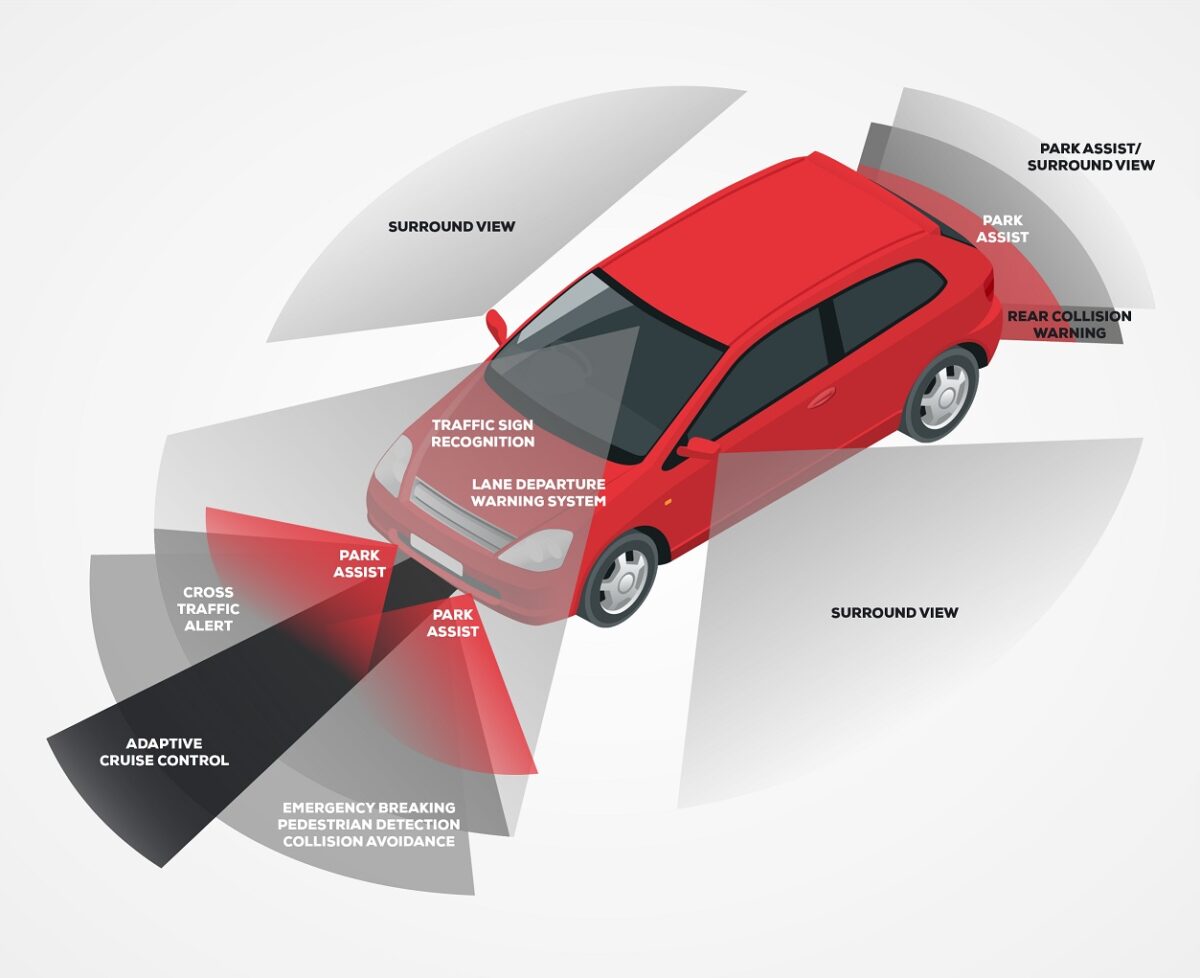
Hardware recalibration is perhaps the most visible form of this process. Every physical component in a tech ecosystem is subject to the laws of physics, which means that over time, sensors and mechanical parts deviate from their factory-set parameters.
Sensor Fusion and IMUs (Gyroscopes and Accelerometers)
Almost every mobile device, drone, and wearable contains an Inertial Measurement Unit (IMU). These units rely on gyroscopes and accelerometers to determine orientation and movement. However, these sensors are sensitive to temperature changes and magnetic interference, leading to “sensor drift.” Recalibrating these components—often seen when a smartphone asks you to move it in a “figure-eight” pattern—re-establishes the “zero point,” ensuring that your GPS orientation is correct and your augmented reality (AR) overlays stay pinned to the real world.
Display and Color Accuracy for Creative Professionals
In the world of professional photography, cinematography, and graphic design, color accuracy is non-negotiable. Monitors naturally shift in brightness and color temperature as their backlights age. Recalibration in this niche involves using a hardware colorimeter to measure the screen’s output against global standards (like sRGB or DCI-P3). The software then creates a unique Color Lookup Table (LUT) to correct these discrepancies, ensuring that the red a designer sees on their screen is the exact same red that will appear in print or on cinema projectors.
Battery Management Systems (BMS)
One of the most common user-level recalibrations involves lithium-ion batteries. While the battery chemistry itself isn’t “recalibrated,” the Battery Management System (BMS)—the software that tracks the battery’s state of charge—often loses its sense of where “0%” and “100%” actually lie. When a laptop or phone shuts down at 5% or stays at 100% for hours, the BMS is out of sync. Recalibrating involves a full discharge and recharge cycle, allowing the digital sensor to re-map the physical capacity of the cells, resulting in more accurate remaining-life readings.
Software and Algorithmic Recalibration
As we move from the physical to the digital, recalibration takes on a more abstract but equally vital role. In software engineering and data science, recalibration refers to the adjustment of logic gates, weights, and parameters to maintain performance in a changing digital environment.
Fine-Tuning Machine Learning Models
In the realm of Artificial Intelligence (AI), recalibration is a specific statistical process. A model might be highly accurate but poorly calibrated; for example, a weather AI might say there is an 80% chance of rain, but in reality, it only rains 40% of the time when that prediction is made. Recalibration involves adjusting the model’s probability outputs so they reflect real-world likelihoods. This is critical in high-stakes fields like autonomous driving or medical diagnostics, where the “confidence” of the software must precisely match its actual reliability.
Adapting Search Algorithms to User Intent
Search engines and recommendation systems (like those on YouTube or Netflix) require constant recalibration to remain relevant. This is known as “algorithmic recalibration.” As user behavior shifts—perhaps due to a global event or a change in cultural trends—the weights assigned to certain keywords or engagement metrics must be adjusted. If the algorithm continues to prioritize old data patterns, the user experience degrades. Recalibration here ensures that the software’s “understanding” of relevance evolves alongside the user base.
Gaming Latency and Input Mapping
For competitive gamers, recalibration is the difference between victory and defeat. This involves calibrating “dead zones” on controllers or adjusting “polling rates” on high-end gaming mice. Software recalibration tools allow users to map the physical movement of their hardware to the digital execution on screen, compensating for input lag or mechanical wear in the peripheral’s switches.
The Role of Recalibration in Digital Security and Privacy
Security protocols are not static; they require constant recalibration to stay ahead of evolving threats. In this niche, recalibration means adjusting the sensitivity and thresholds of defensive systems.
Biometric Data Alignment
Biometric security, such as FaceID or fingerprint scanning, relies on a mathematical representation of your physical traits. However, humans change—we age, grow hair, or experience injuries. Modern biometric systems perform “background recalibration.” Every time you successfully unlock your phone, the system updates its internal map with minor variations. This ensures that the security threshold remains high enough to block intruders but flexible enough to recognize the legitimate user despite natural physical changes.
Threat Detection Heuristics
Enterprise-level firewalls and Anti-Malware systems use heuristics (rule-based logic) to identify suspicious behavior. If the “sensitivity” is set too high, the system generates false positives, blocking legitimate work. If it is too low, threats slip through. Recalibrating these security tools involves feeding them new “threat intelligence” data to refine what constitutes “normal” versus “anomalous” behavior. It is a constant balancing act of recalibrating the threshold of suspicion.
Future Frontiers: Recalibration in Quantum and Edge Computing
As we look toward the future, the complexity of recalibration is set to increase exponentially with the rise of quantum computing and the Internet of Things (IoT).
Quantum Decoherence and Error Correction
Quantum computers are incredibly powerful but notoriously unstable. They are prone to “decoherence,” where quantum bits (qubits) lose their state due to the slightest environmental vibration or temperature change. Recalibration in quantum computing is a near-constant process of error correction. It involves recalibrating the microwave pulses used to control qubits to ensure that the mathematical operations remain valid. Without autonomous recalibration loops, a quantum computer would become non-functional within milliseconds.
Real-time Edge Device Optimization
With the explosion of IoT, we now have billions of “edge” devices—smart sensors in factories, autonomous tractors, and smart city infrastructure. These devices often operate in harsh environments where manual maintenance is impossible. The next frontier is “self-recalibrating hardware,” where devices use onboard AI to detect their own sensor drift and apply corrections in real-time. This ensures that a sensor in a remote pipeline or a deep-sea cable remains accurate for decades without human intervention.
Best Practices for Tech Maintenance and Optimization
For both casual users and IT professionals, understanding when and how to recalibrate is key to longevity and performance.
Scheduled Calibration vs. Real-time Adjustments
Not all systems require the same frequency of recalibration. High-precision tools, such as medical imaging equipment or professional monitors, often require scheduled monthly recalibration. In contrast, consumer electronics like smartphones handle most recalibration tasks in the background through “hidden” software routines. However, users should be aware of the signs of “drift”—such as erratic battery behavior, sluggish touch response, or inaccurate GPS—as these are clear indicators that a manual recalibration cycle is needed.

The Importance of Firmware Updates
Often, what a manufacturer labels as a “firmware update” is actually a recalibration of the device’s internal logic. These updates may contain new calibration profiles for the camera sensor, improved voltage tables for the processor, or refined algorithms for the cooling fans. Keeping software up to date is the simplest way for a user to ensure their tech remains “calibrated” to the latest performance standards discovered by the manufacturer after the product left the factory.
In summary, recalibration in technology is the essential process of maintaining alignment between the digital and the physical, the predicted and the actual. It is a silent but vital pillar of the modern tech experience, ensuring that as our world changes, our tools remain as precise and reliable as the day they were created. Whether it’s the invisible adjustment of an AI’s confidence or the manual tuning of a professional display, recalibration is the heartbeat of technological accuracy.
aViewFromTheCave is a participant in the Amazon Services LLC Associates Program, an affiliate advertising program designed to provide a means for sites to earn advertising fees by advertising and linking to Amazon.com. Amazon, the Amazon logo, AmazonSupply, and the AmazonSupply logo are trademarks of Amazon.com, Inc. or its affiliates. As an Amazon Associate we earn affiliate commissions from qualifying purchases.