
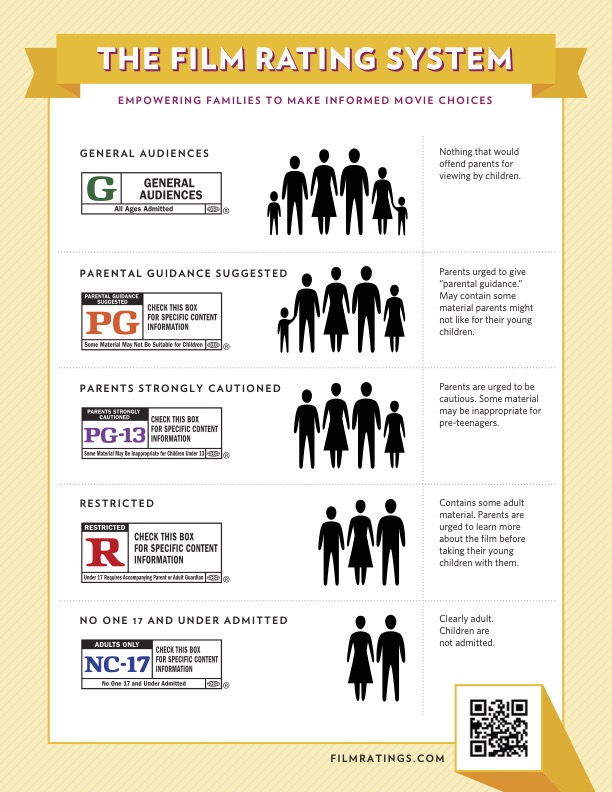
In the global film industry, a motion picture’s rating is far more than a parental guide or a moral compass; it is a critical financial metric. When a production studio receives an “R” rating from the Motion Picture Association (MPA), it signals that the content—ranging from adult themes and language to violence or nudity—requires viewers under 17 to be accompanied by a parent or adult guardian. However, from a business and investment perspective, the question “what does an R-rated movie mean?” translates directly into a discussion about market accessibility, risk management, and the potential for return on investment (ROI).
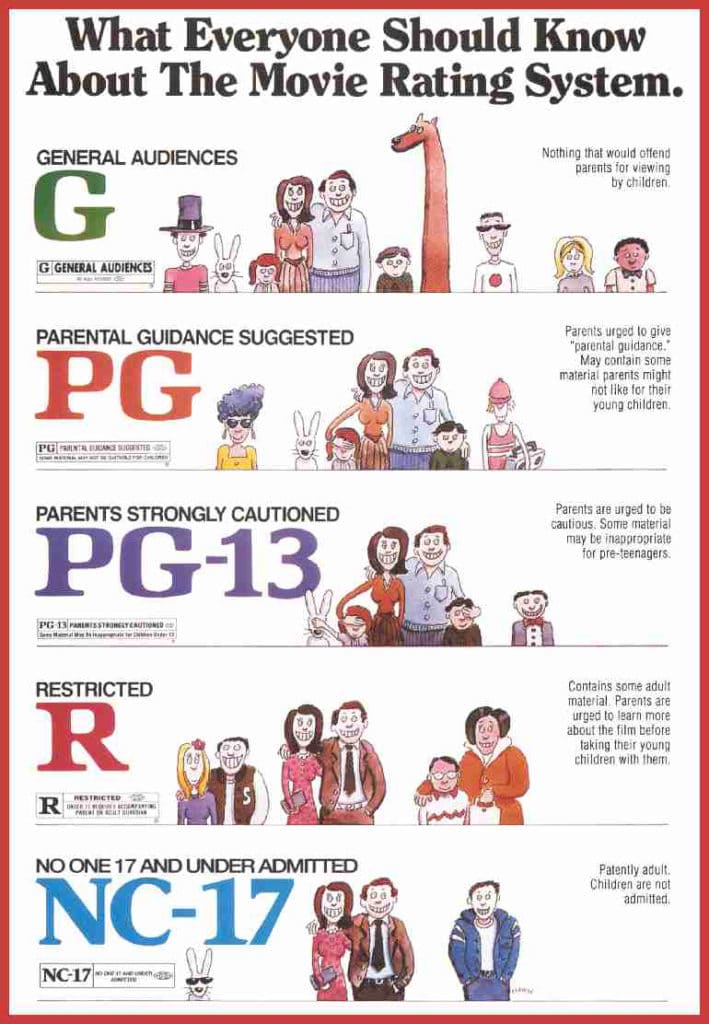
Deciding to pursue an R rating is one of the most significant financial maneuvers a studio can make. It fundamentally shifts the project’s target demographic, alters its marketing strategy, and creates a specific ceiling for potential box office earnings. Understanding the fiscal implications of this rating is essential for anyone interested in the intersection of entertainment, business finance, and market economics.
Understanding the Financial Threshold of the R-Rating
The primary financial implication of an R rating is the immediate reduction of the “addressable market.” In the world of business finance, market size is a primary predictor of revenue. By accepting an R rating, a film effectively bars a significant portion of the “Four Quadrant” audience—the gold standard of movie marketing that targets males and females both under and over 25 years old.
The Cost of the “Restricted” Label
When a film is labeled “Restricted,” it loses the lucrative teenage demographic (ages 12–17) that often drives repeat viewership and merchandise sales. For a blockbuster with a budget exceeding $150 million, this restriction is often seen as a financial liability. This is why many “tentpole” franchises, such as the Marvel Cinematic Universe or Jurassic Park, meticulously edit their content to ensure a PG-13 rating. The PG-13 rating serves as a “sweet spot,” allowing for enough intensity to satisfy adults while remaining accessible to the youth market, thereby maximizing the potential for a billion-dollar global box office.
Market Reach vs. Artistic Freedom: A Financial Balancing Act
Investors and studio executives often view the R rating as a trade-off between artistic integrity and commercial viability. While an R rating allows creators to explore complex, mature themes that may lead to critical acclaim and “prestige” status (which can drive long-term value through awards and syndication), it forces the business side to tighten the belt. Historically, R-rated films have been kept to lower production budgets to ensure that the smaller available audience can still generate a profit. When a film like Oppenheimer or Joker breaks this mold with a high budget and an R rating, it represents a high-stakes financial gamble that relies on exceptional brand pull or director equity.
Box Office Performance: R-Rated Hits vs. PG-13 Powerhouses
The data surrounding box office history reveals a clear trend: the highest-grossing films of all time are almost exclusively rated G, PG, or PG-13. However, the “R-rated” sector has carved out its own unique economic niche, proving that while the ceiling might be lower, the floor can be incredibly sturdy if the movie is positioned correctly.
The $1 Billion Ceiling and the Exceptions
For decades, it was a common industry belief that an R-rated movie could never cross the $1 billion threshold at the global box office. The logic was simple: without the “unrestricted” family and teen audience, the math simply didn’t add up. This changed with the release of Joker (2019), which grossed over $1.07 billion, proving that mature content could achieve blockbuster status if it tapped into a specific cultural zeitgeist. More recently, Deadpool & Wolverine shattered records, demonstrating that established intellectual property (IP) can overcome the financial limitations of an R rating. These outliers, however, remain exceptions to the rule, as the majority of R-rated films operate within a much tighter revenue window.

Niche Targeting: Higher Margins on Smaller Budgets
From an investment standpoint, the R rating is often synonymous with the “mid-budget” or “horror” genre. Horror films, in particular, utilize the R rating as a badge of quality for their target audience. These films are often produced for $5 million to $20 million and can gross $100 million or more. In terms of ROI percentage, an R-rated horror movie like Hereditary or Get Out can be significantly more profitable for a studio than a $200 million PG-13 superhero movie that “only” grosses $400 million. In business terms, the R rating allows for efficient niche marketing, where the cost of customer acquisition is lower because the target audience is highly defined.
The Impact on Auxiliary Income and Streaming Economics
A movie’s financial life does not end when it leaves the theater. In fact, the “long tail” of revenue—streaming rights, international licensing, and home media—is where many R-rated films find their ultimate profitability. However, the rating continues to influence the cash flow even in these secondary markets.
Licensing and International Distribution Hurdles
The “Restricted” label can be a major hurdle for international distribution, particularly in markets with strict censorship laws like China, which is the world’s second-largest film market. Since China does not have a formal rating system, many R-rated films are either banned entirely or require extensive cuts that can ruin the film’s narrative flow and marketability. For investors, this means that an R-rated film often has a “diminished international upside” compared to a PG-13 counterpart. This lack of global scalability must be factored into the initial valuation of the project.
The Subscription Model: How Streaming Changed the Value of Mature Content
The rise of Streaming Video On Demand (SVOD) platforms like Netflix, HBO Max, and Amazon Prime has revolutionized the economics of the R rating. In a subscription-based model, the “per-ticket” restriction matters less than “engagement hours” and “subscriber retention.” Streaming platforms have found that mature, R-rated-equivalent content (often categorized as TV-MA) is a primary driver for adult subscriptions. Because these platforms do not have to worry about the physical gatekeeping of a theater box office, they can invest heavily in mature content. This has created a new financial ecosystem where R-rated films that might have failed theatrically can become “anchor assets” for a digital library.
Strategic Brand Positioning: Using the R-Rating as a Marketing Tool
In a crowded marketplace, an R rating can be used as a strategic branding tool to differentiate a product from its competitors. In the language of marketing and business strategy, this is known as “blue ocean” positioning—finding a space where there is less direct competition.
Building “Must-See” Hype through Scarcity
Sometimes, the R rating itself is the marketing hook. For films like Deadpool, the R rating was sold to the public as a rebellious departure from the “sanitized” versions of other superhero films. This created a sense of exclusivity and authenticity. By leaning into the restriction, the studio turned a potential financial weakness into a core brand strength. The “R” became synonymous with “unfiltered” and “adult,” attracting a demographic that was tired of family-friendly formulas. This strategic positioning allows for higher ticket prices (in premium formats like IMAX) and stronger merchandise sales among adult collectors.
Long-tail Revenue and Cult Classic Potential
Finally, R-rated movies often have a higher “cultural half-life” than generic PG-13 action films. Films that push boundaries and utilize their R rating to deliver profound, mature narratives often become “cult classics.” From a business finance perspective, cult classics are high-value assets because they generate consistent, passive income through digital sales, special edition re-releases, and licensing for decades. While a PG-13 blockbuster might make a huge splash and then disappear, an R-rated masterpiece like The Godfather or Pulp Fiction becomes a permanent, appreciating asset in a studio’s portfolio.
Conclusion
In conclusion, “what does an R-rated movie mean?” is a question with a complex financial answer. It means navigating a smaller market with higher barriers to entry, but it also means the potential for higher margins, stronger brand loyalty, and long-term asset value. For studios and investors, the R rating is a calculated risk—a decision to prioritize a specific, mature audience at the expense of broad, youthful accessibility. As the media landscape continues to shift toward streaming and global niche markets, the economic stigma of the R rating is fading, replaced by a sophisticated understanding of how mature content can drive significant, sustained financial growth.
aViewFromTheCave is a participant in the Amazon Services LLC Associates Program, an affiliate advertising program designed to provide a means for sites to earn advertising fees by advertising and linking to Amazon.com. Amazon, the Amazon logo, AmazonSupply, and the AmazonSupply logo are trademarks of Amazon.com, Inc. or its affiliates. As an Amazon Associate we earn affiliate commissions from qualifying purchases.