
In the rapidly evolving landscape of technology, acronyms often serve as shorthand for complex systems, revolutionary hardware, or fundamental software protocols. Among these, “PSP” stands out as a term with dual significance. For some, it evokes nostalgia for a golden era of handheld gaming; for others, it represents the invisible digital architecture that allows us to purchase goods and services with a single click.
To answer “what does PSP mean” in a modern technological context, we must look at two distinct pillars: the PlayStation Portable, which redefined mobile hardware, and Payment Service Providers, which serve as the cornerstone of contemporary fintech. This article explores both dimensions, detailing their technical specifications, their impact on the digital economy, and their lasting legacy in the tech world.

The PlayStation Portable: A Revolution in Handheld Hardware
When Sony launched the PlayStation Portable (PSP) in the mid-2000s, it wasn’t just releasing a toy; it was introducing a high-performance computer that fit in a pocket. At the time, the handheld market was dominated by Nintendo’s more modest hardware. Sony’s entry changed the trajectory of mobile tech by proving that console-quality experiences could be portable.
The Birth of a Legend: Hardware and Design
The technical prowess of the PSP was unprecedented for 2004. It featured a 4.3-inch TFT LCD screen with a 480×272 resolution, capable of displaying 16.77 million colors. Under the hood, it was powered by a MIPS R4000-based CPU, clocked at speeds up to 333 MHz. This allowed for 3D graphics that rivaled the PlayStation 2, a feat previously thought impossible for a handheld device.
Unlike its competitors, the PSP utilized the Universal Media Disc (UMD), a small optical disc format capable of holding up to 1.8 GB of data. This allowed for massive game worlds and high-fidelity audio, setting a new standard for what mobile software could achieve.
Multimedia Powerhouse: Beyond Just Games
One of the most significant ways the PSP redefined “tech” was through its “media center” philosophy. It was one of the first mainstream devices to integrate robust Wi-Fi connectivity, a web browser, and dedicated video and music playback software. Users could rip movies to Memory Stick Duo cards or buy UMD movies, essentially turning the PSP into a precursor to the modern smartphone.
The inclusion of an SDK (Software Development Kit) that eventually saw “homebrew” communities emerge also marked a shift in how tech enthusiasts interacted with hardware. The PSP became a playground for developers to test the limits of mobile operating systems, leading to innovations in custom firmware and emulators that still influence the tech community today.
The Legacy and Impact on Modern Handhelds
The technical DNA of the PSP can be seen in every modern portable gaming PC, from the Nintendo Switch to the Steam Deck. Sony’s insistence on high-end mobile silicon and high-resolution screens paved the way for the current era of “AAA” gaming on the go. While the PSP eventually gave way to the PlayStation Vita and eventually smartphones, its role in pushing the boundaries of miniaturized processing power remains a pivotal chapter in hardware history.
Payment Service Providers: The Invisible Backbone of Digital Commerce
In the realm of software and digital security, PSP stands for Payment Service Provider. While the PlayStation Portable occupies the world of hardware, the Payment Service Provider occupies the world of fintech infrastructure. If you have ever bought an app, subscribed to a SaaS tool, or used an e-commerce platform, you have interacted with a PSP.
Defining the Modern PSP Ecosystem
A Payment Service Provider is a third-party entity that enables businesses to accept electronic payments, such as credit cards, debit cards, and e-wallets. Companies like Stripe, PayPal, and Adyen are the tech giants of this sector.
Technically, a PSP acts as a bridge between the merchant, the customer, and the banking networks. Instead of a business having to set up individual connections with every bank and credit card network—an engineering nightmare—they integrate a single PSP API (Application Programming Interface). This “plug-and-play” tech model has democratized global commerce, allowing a small developer in one country to sell software to a customer in another with near-zero latency.

How PSPs Facilitate Secure Online Transactions
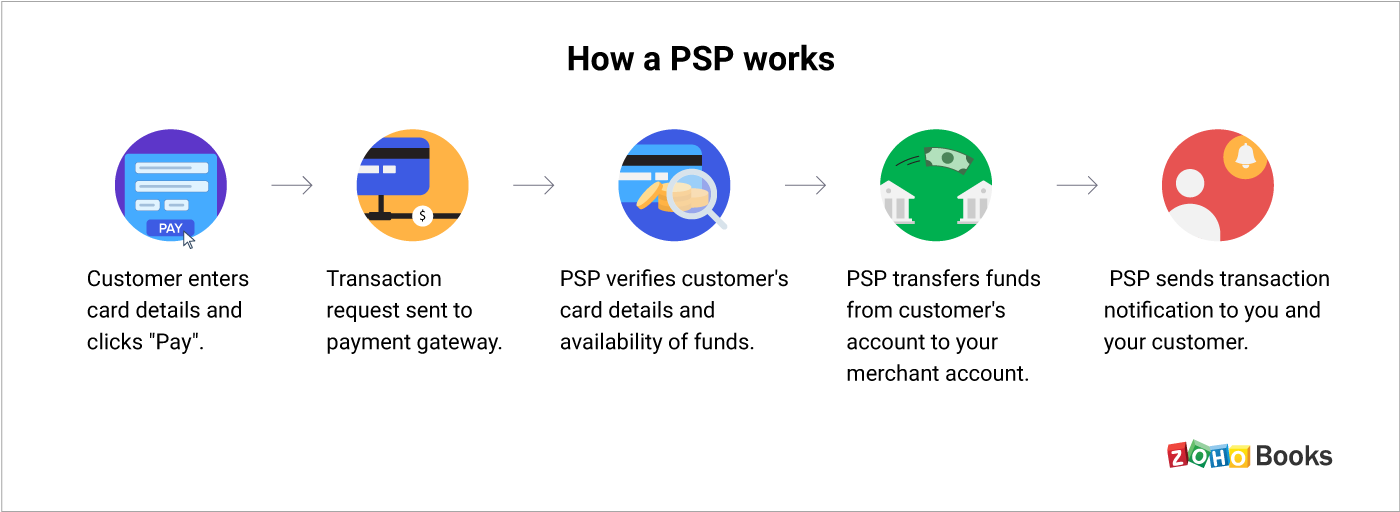
The technical process behind a PSP transaction is a marvel of modern digital security. Within milliseconds of a user clicking “buy,” several layers of technology spring into action:
- Encryption and Tokenization: The PSP encrypts sensitive data and replaces it with a “token.” This ensures that the merchant never actually sees or stores the customer’s credit card number, drastically reducing the risk of data breaches.
- Authentication: The PSP communicates with the issuing bank to verify that the user has sufficient funds and that the card is not reported stolen.
- Fraud Detection: Modern PSPs utilize AI and machine learning algorithms to analyze transaction patterns in real-time. If a transaction looks suspicious—such as a sudden high-value purchase from an unknown IP address—the tech can flag or block the payment instantly.
The Role of AI and Automation in Payment Processing
The “Tech” in PSP has shifted from simple transaction routing to advanced data analytics. Today’s providers use predictive modeling to help businesses understand churn rates and payment success rates. Through sophisticated software dashboards, merchants can see real-time data on their global sales, localized into dozens of currencies. This level of automation has turned payment processing from a back-office necessity into a strategic tech asset that drives business growth.
Technical Architectures: Comparing Niche PSP Variants
Beyond gaming and finance, the term PSP appears in specialized technical niches that cater to software engineers and systems architects. Understanding these variations provides a more holistic view of the term’s footprint in the tech industry.
PSP in Digital Signal Processing
In the field of engineering and acoustics, PSP can refer to “Programmable Signal Processor.” These are specialized microprocessors designed to handle the mathematical requirements of digital signal processing in real-time. Unlike a general-purpose CPU, a signal-processing PSP is optimized for high-speed data streams, such as those found in telecommunications, radar systems, and high-end audio equipment.
Program Segment Prefix in Computing History
For those who study the history of operating systems, specifically DOS (Disk Operating System), PSP stands for “Program Segment Prefix.” This was a 256-byte data structure used in DOS environments to store the state of a program. It contained crucial technical information, such as the segment address of the environment strings and the command-line arguments. While largely obsolete in the age of 64-bit Windows and macOS, the PSP remains a fundamental concept for computer scientists studying how early software managed memory and process execution.
The Future of PSP Technology: From Web3 to Cloud Gaming
As we look toward the next decade, the “PSP” in both gaming and finance is set to undergo a significant transformation driven by emerging technologies like blockchain, 5G, and edge computing.
The Convergence of Finance and Tech
The next generation of Payment Service Providers will likely move beyond traditional banking rails. We are seeing the rise of “PSP 2.0,” which incorporates decentralized finance (DeFi) and stablecoins. Technically, this involves integrating smart contracts into the payment flow, allowing for instant settlements without the 2-3 day delay typical of the current banking system. This evolution will require even more robust digital security frameworks and a new approach to API design to handle the complexities of distributed ledgers.
What the Next Generation of Portability Looks Like
In the hardware world, the spirit of the PlayStation Portable is being resurrected through cloud gaming. As 5G and 6G networks reduce latency to negligible levels, the need for massive on-board processing (like the PSP’s MIPS chip) is being replaced by thin-client devices that stream high-end graphics from the cloud.
The “New PSP” might not be a single device at all, but a software layer that allows high-performance gaming to exist across a spectrum of screens—from foldable smartphones to augmented reality (AR) glasses. The focus has shifted from “what hardware can we fit in a pocket” to “how can we provide a seamless software experience across any device.”
Conclusion: The Multi-Faceted Identity of PSP
The question “what does PSP mean” does not have a singular answer because technology is rarely static. In the hands of a gamer, it is a symbol of mobility and hardware innovation. In the hands of a software developer or a merchant, it is a sophisticated tool for global economic participation.
Whether we are discussing the historical impact of the PlayStation Portable’s MIPS architecture or the complex encryption protocols of a modern Payment Service Provider, the term “PSP” represents the core tenets of the tech industry: miniaturization, connectivity, security, and the constant drive to make complex systems accessible to the end-user. As these technologies continue to converge, the definition of PSP will likely expand further, continuing its role as a vital acronym in the lexicon of the digital age.
aViewFromTheCave is a participant in the Amazon Services LLC Associates Program, an affiliate advertising program designed to provide a means for sites to earn advertising fees by advertising and linking to Amazon.com. Amazon, the Amazon logo, AmazonSupply, and the AmazonSupply logo are trademarks of Amazon.com, Inc. or its affiliates. As an Amazon Associate we earn affiliate commissions from qualifying purchases.