
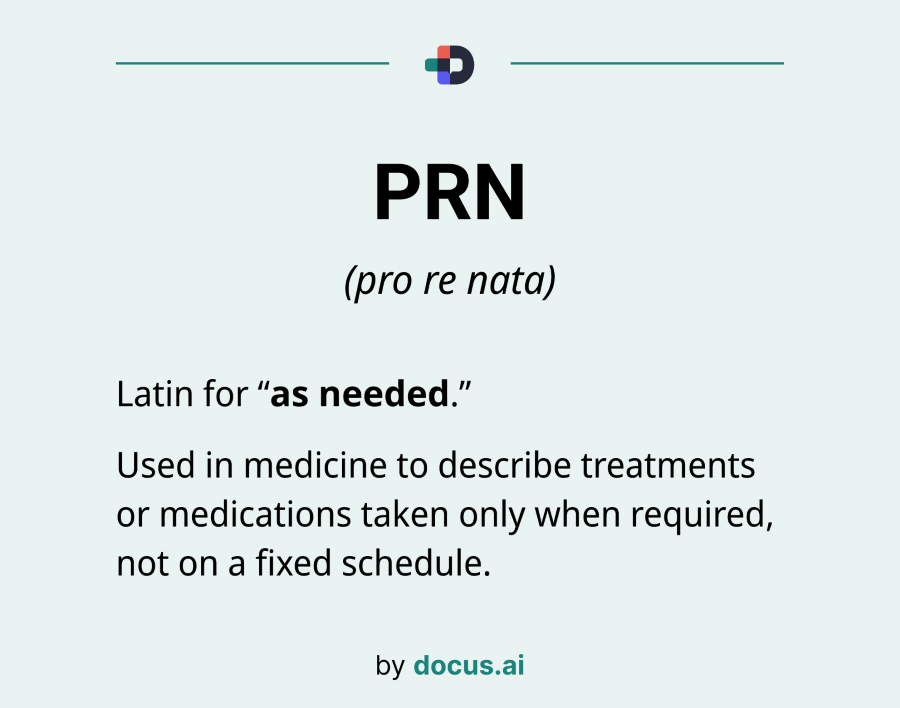
When you encounter “PRN” on a prescription label, it’s more than just a medical instruction; it’s a critical notation that can significantly impact your personal finances and healthcare budgeting. Derived from the Latin “pro re nata,” PRN translates to “as needed,” indicating that a medication should be taken only when specific symptoms occur, rather than on a fixed schedule. While this flexibility is medically beneficial, it introduces a layer of unpredictability into your healthcare expenditures that demands careful financial planning and astute understanding of your insurance coverage.
Understanding PRN: A Brief Overview and Its Financial Relevance
At its core, “PRN” signifies discretionary usage. Unlike daily maintenance medications for conditions like high blood pressure or diabetes, which incur predictable, recurring costs, PRN medications are taken for intermittent or acute symptoms such as pain, anxiety, nausea, or allergies. This variability means your monthly medication spend can fluctuate wildly, posing unique challenges for household budgeting and financial forecasting.

The financial relevance of PRN prescriptions stems from several factors:
- Variable Consumption: You might use a PRN medication frequently one month and not at all the next, making cost estimation difficult.
- Inventory Management: Deciding how much PRN medication to keep on hand balances the immediate need for relief against the cost of unused or expired drugs.
- Insurance Nuances: Coverage models for PRN drugs can differ from scheduled medications, potentially leading to higher out-of-pocket costs.
- Long-Term Health Costs: Inadequate management or avoidance of PRN medication due to cost concerns can lead to worsening conditions, potentially resulting in more expensive emergency care or hospitalizations.
The financial implications of PRN are not just about the cost of the pill itself, but also about the broader economic impact on your healthcare journey.
Navigating Insurance and Coverage for “As Needed” Medications
The “as needed” nature of PRN prescriptions introduces complexities in insurance coverage that can significantly affect your wallet. Understanding how your health plan handles these drugs is paramount to managing expenses.
Deductibles, Co-pays, and Co-insurance with Variable Usage
Many health insurance plans feature deductibles, co-pays, and co-insurance. For PRN medications, the impact of these components can be particularly pronounced:
- Deductibles: If your PRN medication is used early in the plan year, its cost might contribute towards your deductible, meaning you pay the full negotiated price until the deductible is met.
- Co-pays/Co-insurance: Once your deductible is met, PRN medications will typically incur a co-pay (a fixed amount) or co-insurance (a percentage of the drug’s cost). The more frequently you use a PRN medication, the more these small costs accumulate over time.
- Out-of-Pocket Maximum: While your total spend on all healthcare services contributes to this, PRN medications can sometimes push you closer to your maximum faster than anticipated if they are high-cost or frequently used.
Formulary Tiers and PRN Drugs
Most insurance companies categorize drugs into tiers, each with a different cost-sharing level.
- Tier 1 (Generic): These are usually the cheapest option. If a generic PRN medication is available, it’s almost always the most financially prudent choice.
- Tier 2 (Preferred Brand): Brand-name drugs for which the insurer has negotiated a discount.
- Tier 3 (Non-Preferred Brand): More expensive brand-name drugs with higher co-pays or co-insurance.
- Specialty Tiers: Some high-cost PRN drugs, particularly biologics for conditions like migraines or specific rescue medications, may fall into specialty tiers with very high co-insurance or specific management programs. It is crucial to check the formulary status of any PRN medication your doctor prescribes.
Prior Authorizations and Quantity Limits
For certain expensive or high-risk PRN medications, insurers may require prior authorization. This means your doctor must provide justification to the insurance company that the medication is medically necessary before it will be covered. Similarly, quantity limits are common for PRN drugs, especially those with abuse potential (e.g., opioids, benzodiazepines). Your insurance might only cover a limited number of pills per month, regardless of your doctor’s prescription. Exceeding these limits often means paying the full cash price.
Health Savings Accounts (HSAs) and Flexible Spending Accounts (FSAs)
These tax-advantaged accounts are excellent tools for managing PRN medication costs. Contributions to HSAs and FSAs are pre-tax, reducing your taxable income, and withdrawals for qualified medical expenses are tax-free.
- HSAs: Offer more flexibility as funds roll over year-to-year and are portable. They are ideal for saving for potentially variable PRN costs over the long term.
- FSAs: Typically operate on a “use it or lose it” basis annually, making them suitable for anticipating and covering expected PRN costs within a calendar year, though careful estimation is required.
Utilizing these accounts effectively can mitigate the financial strain of unpredictable PRN medication expenses.
Budgeting for Unpredictable Medication Costs
Budgeting for PRN medications presents a unique challenge: how do you allocate funds for something you might not even use? Traditional fixed budgeting methods fall short here, necessitating more flexible and strategic approaches.
The Challenge of Variable Expenses
Unlike a mortgage or a fixed utility bill, PRN medication costs can swing from zero to hundreds of dollars in a single month. This unpredictability can throw off a carefully constructed budget, leading to financial stress or, worse, forcing individuals to skip necessary medication to save money—a decision that often leads to greater health and financial costs down the line.
Strategies for Effective Budgeting
- Historical Data Analysis: If you’ve been on a PRN medication for some time, review past usage patterns to identify averages or seasonal spikes. For instance, allergy medications might be heavily used in spring, while pain medication use might correlate with specific activities.
- Dedicated “Healthcare Buffer” Fund: Instead of trying to pinpoint exact PRN costs, create a dedicated savings fund specifically for out-of-pocket medical expenses, including PRN medications. Contribute a fixed amount monthly to this fund. This provides a safety net for when PRN usage is high.
- Anticipate “Worst-Case” Scenarios: For chronic conditions that flare up, consider the maximum possible PRN usage within your doctor’s prescription limits and budget for that upper range occasionally. This proactive approach helps avoid sticker shock.
- Track Usage and Spending: Keep a detailed log of when you take PRN medication and what you paid for it. This data will refine your budgeting accuracy over time. Many pharmacy apps and personal finance tools can help track these expenses.
- Review Your Insurance Plan Annually: As formularies change and deductibles reset, re-evaluate your PRN medication costs and adjust your budget accordingly.
The “Just in Case” vs. “Only When Necessary” Inventory Dilemma
A common financial dilemma with PRN medications is deciding how much to refill.
- Refilling “Just in Case”: Ensures you always have the medication on hand when symptoms strike, preventing delays in treatment. However, it can lead to stockpiling, potential waste if medication expires, and tying up capital in unused drugs.
- Refilling “Only When Necessary”: Minimizes immediate cash outlay and reduces waste, but risks leaving you without critical medication during an acute need, potentially leading to emergency room visits which are far more expensive.
The optimal strategy often involves finding a balance—perhaps refilling a small, manageable quantity to have on hand, while ensuring easy access to further refills if needed, or timing refills with anticipated seasonal increases in symptoms.
The Financial Prudence of Effective PRN Management
Effective management of PRN prescriptions extends beyond just taking the medication; it involves making financially astute decisions that promote both health and economic stability.
Avoiding Overuse or Underuse Due to Cost Concerns
One of the most dangerous financial pitfalls of PRN medications is the temptation to underuse or overuse them based on cost.
- Underuse: Skipping doses or delaying taking PRN medication to save money can lead to worsening symptoms, more severe health crises, and ultimately, much higher costs in emergency room visits, hospitalizations, or the need for more intensive (and expensive) treatments. This false economy can have devastating health and financial consequences.
- Overuse: Conversely, taking PRN medication more frequently than needed or prescribed, perhaps due to anxiety or perceived benefit, can lead to running out of refills prematurely, incurring additional costs, and potentially creating dependency or adverse effects.
Open communication with your healthcare provider about medication costs and your financial constraints is vital. They may be able to suggest equally effective but less expensive alternatives.
Seeking Generic Alternatives and Patient Assistance Programs
- Generic Options: Always inquire about generic versions of your PRN medications. Generics are therapeutically equivalent to their brand-name counterparts but are significantly cheaper. This is often the quickest and most impactful way to reduce PRN prescription costs.
- Patient Assistance Programs (PAPs): For high-cost brand-name PRN medications, investigate whether the pharmaceutical manufacturer offers patient assistance programs. These programs can provide medication at low or no cost to eligible patients based on income thresholds. Additionally, non-profit organizations or state programs may offer assistance.
- Discount Cards and Pharmacy Programs: Many pharmacies offer discount programs or accept third-party discount cards that can significantly lower the cash price of medications, especially for those not covered by insurance or during high-deductible phases.
Discussing Cost with Your Doctor
Your doctor is a key ally in managing medication costs. Don’t hesitate to discuss your financial concerns openly. They might be able to:
- Prescribe a cheaper, equally effective alternative.
- Adjust the dosage or frequency to minimize cost while maintaining efficacy.
- Offer samples of new, expensive medications to try before committing to a full prescription.
- Provide a larger quantity for a longer supply at a potentially lower per-pill cost (e.g., 90-day supply vs. 30-day supply, if appropriate for PRN use).
Impact of Medication Adherence on Overall Health Costs
While PRN medications are taken “as needed,” ensuring you have and use them appropriately when needed is a form of adherence. Failing to adhere to PRN instructions, whether by underusing due to cost or by not having the medication available, can exacerbate underlying conditions. For instance, not taking PRN rescue inhalers during an asthma attack can lead to an ER visit, which can easily cost thousands of dollars, far outweighing the cost of the inhaler itself. The financial prudence of PRN management lies in recognizing that timely, appropriate medication use is an investment in preventing more expensive future health crises.
Economic Considerations in Specific PRN Scenarios
The financial impact of PRN prescriptions can vary significantly depending on the type of medication and the condition it addresses. Examining specific scenarios highlights the diverse economic considerations involved.
Pain Management
PRN pain medications range from over-the-counter NSAIDs to prescription opioids.
- Cost vs. Effectiveness: While OTC options are cheap, they may not be effective for severe pain, necessitating more expensive prescription drugs.
- Opioids: Beyond their high cost and potential for addiction (which carries immense personal and societal financial burdens), PRN opioids often come with strict quantity limits and high scrutiny from insurers. Managing the financial aspect of chronic pain involving PRN opioids requires careful negotiation with both prescribers and insurers to ensure adequate pain control without exorbitant out-of-pocket costs or the risk of dependency.
Mental Health
PRN medications for anxiety (e.g., benzodiazepines) or sleep (e.g., zolpidem) are common.
- Balancing Immediate Relief with Long-Term Strategy: These medications offer immediate relief but can be expensive and carry risks of dependency. Financially, it’s crucial to weigh the cost of these PRN interventions against the cost of alternative long-term strategies, such as therapy or non-pharmacological interventions, which might have different cost structures but offer sustained benefits.
- Insurance Coverage for Therapy: Often, insurance covers mental health therapy, which can reduce the reliance and thus the financial outlay on PRN anxiolytics or hypnotics.
Allergies and Asthma
For conditions like allergies or asthma, PRN medications such as antihistamines, nasal sprays, or rescue inhalers are frequently prescribed.
- Seasonal vs. Year-Round Costs: Allergy sufferers might face seasonal spikes in PRN medication costs, while asthmatics might incur year-round expenses for rescue inhalers. Budgeting for these conditions requires anticipating these patterns.
- Preventative vs. PRN: Sometimes, investing in daily preventative medications (e.g., maintenance inhalers for asthma, daily antihistamines for severe allergies) can reduce the need for more frequent and potentially more expensive PRN acute treatments, leading to overall savings and better health outcomes.

High-Cost Specialty PRN Drugs
A growing number of specialized PRN medications, such as biologics for episodic migraines, antiemetics for chemotherapy-induced nausea, or rescue medications for rare diseases, can carry exorbitant price tags, often thousands of dollars per dose.
- Significant Financial Planning: For these drugs, understanding your insurance’s specialty tier coverage, exploring patient assistance programs, and engaging in robust financial planning are not just advisable but essential. The unpredictable nature of PRN usage for such expensive drugs means that a single acute event could result in a massive out-of-pocket expense if not carefully managed.
In conclusion, “PRN” on a prescription, while seemingly a simple medical directive, carries substantial financial weight. Effectively managing PRN medications requires understanding insurance policies, proactive budgeting, diligent cost-saving measures, and open communication with healthcare providers. By taking these steps, individuals can navigate the unpredictable nature of “as needed” prescriptions without compromising their health or their financial well-being.
aViewFromTheCave is a participant in the Amazon Services LLC Associates Program, an affiliate advertising program designed to provide a means for sites to earn advertising fees by advertising and linking to Amazon.com. Amazon, the Amazon logo, AmazonSupply, and the AmazonSupply logo are trademarks of Amazon.com, Inc. or its affiliates. As an Amazon Associate we earn affiliate commissions from qualifying purchases.