
In the realm of human physiology, “popping your ears” is a survival mechanism—a way for the body to equalize pressure between the middle ear and the external environment via the Eustachian tubes. However, in the rapidly evolving landscape of consumer technology, this biological necessity has become a central challenge for engineers, hardware designers, and acoustic specialists. From the development of high-fidelity Active Noise Cancellation (ANC) headphones to the pressurized cabins of state-of-the-art aircraft, understanding what happens when ears pop is essential to creating a seamless user experience.

As we move deeper into an era of “wearable” everything, the intersection of biology and technology dictates the comfort and efficacy of our devices. This article explores how tech companies are mastering the science of pressure equalization to redefine audio clarity, prevent “listener fatigue,” and advance the future of human-computer interfaces.
The Physics of Pressure: Why Tech Must Account for Biological Realities
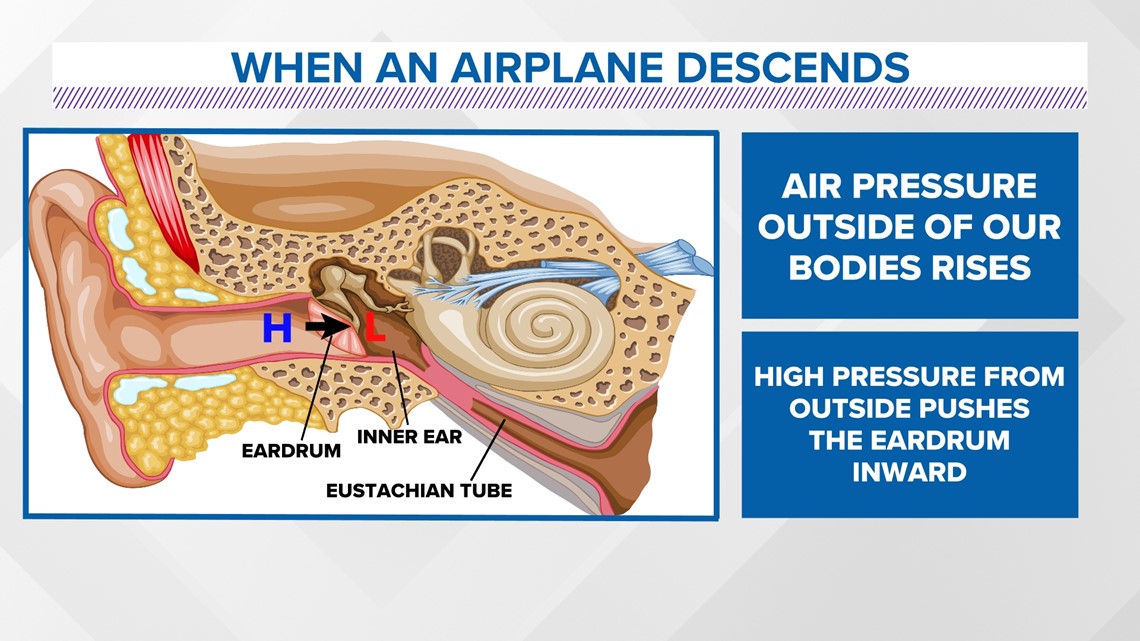
To understand how technology manages ear pressure, one must first understand the biological trigger. When we change altitude or submerge in water, the atmospheric pressure changes, creating a vacuum or a bulge in the eardrum. “Popping” is the manual or automatic opening of the Eustachian tube to balance that pressure. For technology developers, particularly in the audio and aerospace sectors, this physiological event is a hurdle to be overcome through clever engineering.
Understanding the Eustachian Tube in a Digital Age
In the context of modern tech, the Eustachian tube is the biological equivalent of a pressure relief valve. When software engineers design immersive VR environments or high-fidelity audio drivers, they must account for the fact that a “perfect seal” in an earbud can actually cause discomfort. If a device creates a hermetic seal without a way for the ear to “pop” or equalize, the user experiences a sensation of being underwater. This has led to the development of “vented” designs in high-end peripherals, ensuring that digital immersion does not come at the cost of physical ear strain.
The “Occlusion Effect” in In-Ear Monitors
For professional musicians and audiophiles using In-Ear Monitors (IEMs), the act of sealing the ear canal leads to the “occlusion effect”—that boomy, hollow sound of one’s own voice or footsteps. This occurs because bone-conducted vibrations cannot escape the sealed ear canal. Engineers solve this by integrating microscopic acoustic vents. These vents act as artificial Eustachian tubes, allowing trapped pressure to escape and effectively “popping” the ear continuously so the user doesn’t have to do it manually.
Active Noise Cancellation (ANC) and the Illusion of Pressure
One of the most common questions in the tech world is: “Why do my noise-canceling headphones make me feel like I need to pop my ears?” This phenomenon, often called “ANC pressure,” is a fascinating intersection of digital signal processing (DSP) and psychoacoustics.
How Algorithms Simulate Silent Vacuums
Active Noise Cancellation works by using microphones to pick up low-frequency noise and then neutralizing it by creating an “anti-noise” wave (a wave with the same amplitude but inverted phase). While this effectively cancels the sound, it can trick the brain. Because the low-frequency sounds we usually hear in pressurized environments (like a plane cabin) are missing, the brain perceives a change in pressure that isn’t actually there. Tech giants like Apple, Sony, and Bose spend millions on R&D to refine their algorithms so that the “silent vacuum” feels natural rather than oppressive.
Managing the “Pressure Cooker” Feel in Premium Headphones
To combat the sensation that one needs to pop their ears while wearing ANC headphones, modern hardware utilizes internal barometric sensors. These sensors detect the ambient pressure and adjust the ANC intensity in real-time. For instance, if you are on a flight and the cabin pressure drops, the headphone’s firmware recalibrates the transducer’s movement to ensure that the “anti-noise” doesn’t create an uncomfortable pressure sensation against the eardrum. This is a triumph of software-hardware integration, where the device “pops” the virtual pressure on behalf of the user.
Innovative Hardware Solutions: Vents, Valves, and Smart Sensors
As hardware continues to shrink, the space available to manage air pressure becomes even more limited. This has sparked a new wave of innovation in MEMS (Micro-Electro-Mechanical Systems) and material science.
Atmospheric Sensors in Wearable Devices
The latest generation of smartwatches and high-end earbuds now includes dedicated atmospheric pressure sensors. In wearables, these sensors are often used for altimetry (tracking elevation during a hike), but in audio tech, they serve a dual purpose. By monitoring the external pressure, the device can proactively warn a user or adjust its acoustic profile before the user even feels the need to pop their ears. This proactive equalization is a cornerstone of “smart” hardware design.
Semi-Open Architecture and Acoustic Relief
Many tech companies are moving away from completely “closed-back” designs in favor of semi-open architectures. By using laser-drilled micro-vents, manufacturers can allow for a small amount of air exchange. This design choice mimics the natural state of the ear, preventing the buildup of static pressure. The challenge for engineers is to allow air to flow (to equalize pressure) without letting ambient noise leak in, requiring sophisticated “acoustic mesh” materials that are permeable to air but resistant to sound waves.
Beyond Audio: Aerospace and Deep-Sea Tech Innovations
While consumer electronics focus on comfort, in sectors like aerospace and commercial diving, the technology behind “popping your ears” is a matter of safety and operational efficiency.
Pressurized Cabin Automation in Commercial Flight
The aerospace industry was the first to digitize the “ear pop.” In modern aircraft like the Boeing 787 Dreamliner, the cabin altitude is managed by automated Environmental Control Systems (ECS). Unlike older planes that might have sudden shifts in pressure, these digital systems use high-precision valves and software to transition pressure so gradually that the passenger’s Eustachian tubes equalize naturally without the need for a conscious “pop.” This is achieved through predictive algorithms that sync with the flight’s rate of climb and descent.
Diving Computers and Automated Equalization
In the world of marine tech, “clearing” or popping the ears is a critical skill for divers. Modern diving computers have evolved from simple depth gauges into sophisticated biometric monitors. High-tech masks are currently being prototyped with integrated pneumatic systems that can assist in equalization. By sensing the external water pressure and providing a gentle, regulated micro-burst of air toward the nose, these devices could eventually automate the Valsalva maneuver, allowing divers to focus on their surroundings rather than their internal pressure.
The Future of Auditory Interfaces: From Bone Conduction to Neural Links
As we look toward the future of technology, the very need to “pop” one’s ears may become obsolete through the use of non-traditional audio delivery systems.
Bone Conduction: Bypassing the Eardrum
Bone conduction technology, utilized by brands like Shokz, bypasses the ear canal and the eardrum entirely. By sending vibrations directly through the cheekbones to the cochlea, these devices eliminate the pressure issues associated with traditional headphones. Since the ear canal remains open and unsealed, atmospheric pressure equalizes naturally. As this tech improves in fidelity, we may see a shift toward bone-conduction for all “always-on” wearables to ensure long-term comfort and ear health.
Eliminating the Need for Physical Equalization via Neural Links
The ultimate tech frontier is the direct neural interface. Companies like Neuralink are exploring ways to transmit data directly to the brain’s auditory cortex. In a world where sound is “injected” digitally into our neural pathways, the mechanical limitations of the middle ear—and the subsequent need to pop it—become irrelevant. While this tech is still in its infancy, it represents the final step in the decoupling of human perception from biological barometric constraints.

Conclusion
What does popping your ears do in the world of technology? It serves as a constant reminder of the physical boundaries that hardware must respect. For engineers, “the pop” is a metric of success—or failure. A device that requires the user to constantly clear their ears is a device with poor ergonomic design.
As we advance, the goal of the tech industry is to create a frictionless existence where the transition between different environments—whether climbing to 30,000 feet or diving into a VR simulation—is handled entirely by the machines we wear. By mastering the engineering of equalization, we are not just making gadgets more comfortable; we are refining the very way humans interact with the physical and digital worlds, one millibar at a time.
aViewFromTheCave is a participant in the Amazon Services LLC Associates Program, an affiliate advertising program designed to provide a means for sites to earn advertising fees by advertising and linking to Amazon.com. Amazon, the Amazon logo, AmazonSupply, and the AmazonSupply logo are trademarks of Amazon.com, Inc. or its affiliates. As an Amazon Associate we earn affiliate commissions from qualifying purchases.