
For millions of Americans, the orange-and-blue logo of PNC is a familiar sight on city street corners, at neighborhood ATMs, and on mobile banking apps. However, despite its ubiquitous presence in the American financial landscape, many customers and investors often find themselves asking: “What does PNC stand for?”
At its simplest level, PNC stands for Pittsburgh National Corporation and Provident National Corporation, the two primary entities that merged in 1983 to form the modern powerhouse we know today. But in the world of high-stakes finance, PNC stands for much more than its historical initials. It represents a transformation of the American banking sector, a pioneer in digital financial tools, and a cornerstone of corporate and personal wealth management.

The Origins and Evolution of PNC Financial Services
To understand what PNC stands for in the context of modern money, one must look back at the strategic “merger of equals” that redefined regional banking in the early 1980s. The fusion of Pittsburgh National Corporation and Provident National Corporation was a landmark event that created the largest bank holding company in Pennsylvania at the time.
The Merger of Equals
The 1983 merger was a calculated move to gain scale in an increasingly competitive financial market. Pittsburgh National brought strength in industrial and commercial lending, while Philadelphia-based Provident National was renowned for its trust and asset management capabilities. By combining these two distinct strengths, the newly formed PNC Financial Services Group positioned itself as a diversified giant capable of handling both the “bread and butter” of consumer banking and the complex needs of institutional investors.
Expansion and Growth through Acquisition
Following the initial merger, PNC embarked on a decades-long journey of strategic growth. What the name “PNC” stood for began to expand as the company acquired dozens of smaller banks across the Midwest and Mid-Atlantic. Perhaps the most significant move in recent history was the 2021 acquisition of BBVA USA. This $11.6 billion deal catapulted PNC into the ranks of the nation’s largest retail banks, giving it a coast-to-coast presence and solidifying its status as a “national” player, despite its regional roots.
A Modern Financial Footprint
Today, PNC is a member of the elite group of “Super Regional” banks. With over $500 billion in assets, it operates in nearly every major U.S. market. For the savvy investor or the everyday saver, PNC stands for stability and scale—offering the resources of a global institution with the specialized attention of a regional partner.
Personal Finance and Consumer Banking Excellence
In the niche of personal finance, PNC has earned a reputation for creating tools that simplify money management. The name has become synonymous with innovation in how individuals interact with their liquid assets and long-term savings.
Virtual Wallet: A Paradigm Shift in Budgeting
One of the most significant contributions PNC has made to the “Money” niche is the invention of the Virtual Wallet. Launched at a time when traditional banking was still largely paper-based, Virtual Wallet revolutionized how consumers viewed their cash flow. It divided money into three distinct buckets: “Spend” (checking), “Reserve” (short-term savings), and “Growth” (long-term savings). This tool didn’t just store money; it taught financial literacy through a visual interface, helping users avoid “danger days” when their balance might dip too low.
Savings and Wealth Management
Beyond everyday checking, PNC stands for a comprehensive approach to wealth accumulation. Through its “PNC Investments” and “PNC Private Bank” divisions, the company provides sophisticated financial planning. Whether it is a high-yield savings account or a diversified brokerage portfolio, the bank focuses on the “Life Path” of the investor. They emphasize that money isn’t just a number—it’s a tool for retirement, education, and legacy building.
Lending Solutions for the Modern Borrower
The bank’s role in the lending market is equally robust. From competitive mortgage rates to personal lines of credit, PNC utilizes a data-driven approach to lending. For the consumer, this means faster approvals and personalized rates that reflect their unique financial health. In this context, PNC stands for accessibility—providing the capital necessary for individuals to achieve the “American Dream” of homeownership or business expansion.
Commercial and Corporate Banking Solutions
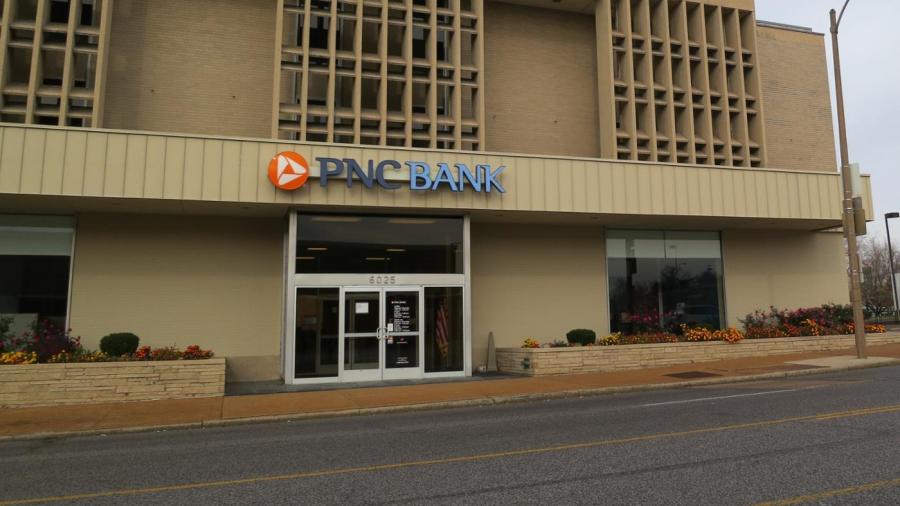
While the general public knows PNC for its ATMs and mobile app, the financial world recognizes it as a powerhouse in corporate banking. For business owners and CFOs, PNC stands for liquidity, efficiency, and capital growth.
Treasury Management Expertise
One of PNC’s strongest pillars is its Treasury Management division. In the world of business finance, managing cash flow is the difference between success and failure. PNC provides cutting-edge platforms that allow corporations to automate their payables and receivables, manage international currency fluctuations, and optimize their working capital. This focus on “financial logistics” makes them an indispensable partner for mid-market companies and large enterprises alike.
Investment Banking and Capital Markets
Through PNC Capital Markets LLC, the institution facilitates complex financial maneuvers, including debt and equity underwriting, mergers and acquisitions (M&A) advisory, and derivative hedging. For a business looking to go public or a corporation seeking to restructure its debt, PNC stands for strategic intellect. They provide the “intellectual capital” required to navigate the volatile global markets.
Small Business Growth and Support
PNC is consistently ranked as one of the top Small Business Administration (SBA) lenders in the United States. They recognize that small businesses are the engine of the economy. By providing specialized small business checking accounts, payroll services, and credit solutions, PNC helps entrepreneurs transition from “side hustle” to “scalable enterprise.”
Navigating the Digital Frontier of Modern Money
In the 21st century, a bank is only as good as its technology. In the “Tech-Money” crossover space, PNC has invested billions to ensure that its digital infrastructure is both user-friendly and fortress-secure.
Security and Fraud Protection
When we ask what a bank “stands for,” the answer must include security. PNC utilizes advanced encryption, multi-factor authentication, and real-time fraud monitoring to protect trillions of dollars in transactions. Their “Security Center” offers consumers proactive tools to lock credit cards instantly and monitor for identity theft, acknowledging that in the digital age, financial peace of mind is the ultimate commodity.
The Role of AI and Data Analytics in Finance
PNC is increasingly leaning into Artificial Intelligence (AI) to improve the customer experience. From AI-driven chatbots that can answer complex billing questions to predictive analytics that suggest when a user should move money into a savings account, the bank is at the forefront of “FinTech.” They use data not just to track money, but to predict financial needs before the customer even realizes them.
Mobile Accessibility and the Cashless Society
As the world moves toward a cashless society, PNC’s mobile app has become a central hub for financial activity. Integration with Zelle for P2P payments, mobile check deposits, and contactless “tap-to-pay” features ensure that PNC remains relevant to younger, tech-savvy generations. For the modern consumer, PNC stands for “banking in your pocket”—removing the friction from financial transactions.
The Strategic Importance of PNC in the Global Market
To conclude an analysis of what PNC stands for, one must look at its macroeconomic impact. It is not just a place to keep a savings account; it is a systemic pillar of the American economy.
Asset Management and Fiduciary Responsibility
Through its ownership stakes and various asset management arms, PNC influences how capital is allocated across the globe. They hold a fiduciary responsibility to millions of pensioners and institutional investors. Their commitment to “Responsible Investing” and ESG (Environmental, Social, and Governance) criteria shows that they recognize that the value of money is increasingly tied to the values of the society it serves.
Economic Impact and Community Development
PNC is a leader in community reinvestment. Through the “PNC Grow Up Great” initiative, the bank has committed hundreds of millions of dollars to early childhood education, recognizing that long-term economic prosperity begins with a well-educated workforce. In this light, PNC stands for “Community Capital”—the idea that a bank’s success is intrinsically linked to the health of the neighborhoods it operates in.

Future Outlook: What PNC Will Stand For Tomorrow
As the financial landscape continues to shift with the rise of decentralized finance (DeFi) and digital currencies, PNC is positioned to adapt. While its name remains rooted in its 1983 Pennsylvania origins, its vision is global. Whether it is through further acquisitions, deeper integration of AI, or expanding its wealth management services, PNC will continue to stand for the intersection of traditional stability and modern innovation.
In summary, while the acronym “PNC” originally denoted Pittsburgh National and Provident National, today it stands for a comprehensive suite of financial services that power the American economy. From the individual saver using a Virtual Wallet to the multi-national corporation managing its treasury, PNC represents a commitment to the growth, security, and strategic management of money in all its forms.
aViewFromTheCave is a participant in the Amazon Services LLC Associates Program, an affiliate advertising program designed to provide a means for sites to earn advertising fees by advertising and linking to Amazon.com. Amazon, the Amazon logo, AmazonSupply, and the AmazonSupply logo are trademarks of Amazon.com, Inc. or its affiliates. As an Amazon Associate we earn affiliate commissions from qualifying purchases.