
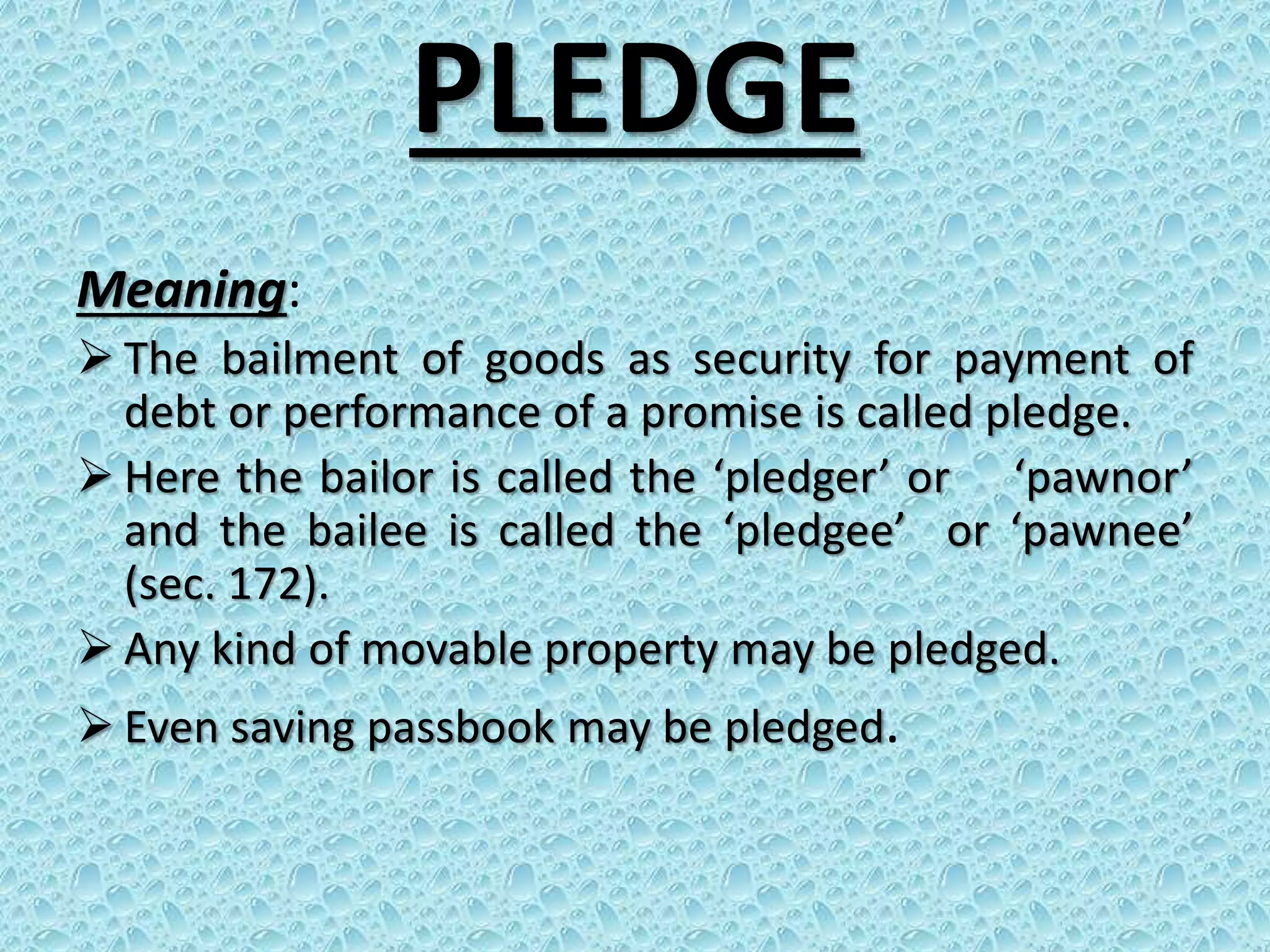
In the sophisticated world of personal and corporate finance, the term “pledge” carries significant weight. While the everyday usage of the word might imply a simple promise or a solemn commitment, its financial definition is far more precise and legally binding. In a financial context, a pledge is a form of security interest where a debtor (the pledgor) provides an asset to a creditor (the pledgee) as collateral for a loan or debt.
Understanding what a pledge means is essential for anyone looking to navigate complex lending environments, optimize their investment portfolio, or manage a business’s capital structure. Pledging allows individuals and entities to unlock liquidity from their existing assets without having to sell them, providing a strategic bridge between long-term investment and immediate cash needs.
The Fundamentals of Pledging in Finance
At its core, a financial pledge is a contract between two parties. It serves as a guarantee that a debt will be repaid. If the borrower fails to meet the terms of the agreement, the lender has the legal right to seize the pledged asset to recoup their losses. This mechanism reduces the risk for the lender, which often results in more favorable borrowing terms for the debtor, such as lower interest rates.
Defining the Pledgor and the Pledgee
In every pledge agreement, there are two primary roles. The pledgor is the party who owns the asset and offers it as security. The pledgee is the party receiving the security interest, typically a bank, credit union, or private lender. While the pledgor retains ownership of the asset, the pledgee gains a “possessory” interest. In traditional banking, this meant the lender physically held the asset (like gold or stock certificates), but in the modern digital age, this is usually handled through book-entry records and legal freezes on accounts.
How Pledging Differs from a Standard Lien or Mortgage
While the terms are often used interchangeably in casual conversation, a pledge is distinct from other types of security interests like liens or mortgages. In a mortgage, the borrower typically retains possession of the property (like a house) while the lender holds a legal claim to the title. In a pledge, the “possession” (either physical or via control of a brokerage account) is technically transferred to the lender or a neutral third party until the debt is satisfied.
The Legal Framework of a Pledge
For a pledge to be valid, three elements must be present: the delivery of the asset (or the control of it), the intent to create a security interest, and a valid underlying debt. Modern financial systems use the Uniform Commercial Code (UCC) in the United States, and similar frameworks internationally, to govern these transactions. These laws ensure that the pledgee’s rights are protected against other creditors, a process often referred to as “perfection” of the security interest.
Common Types of Pledged Assets
The versatility of pledging makes it a popular tool across various financial sectors. Almost any asset with a verifiable value can be pledged, but certain categories are more common due to their liquidity and ease of valuation.
Pledged Securities and Investment Portfolios
One of the most frequent applications of pledging occurs in the world of investing. Investors may pledge their stocks, bonds, or mutual funds as collateral for a loan. This allows the investor to access cash for other opportunities—such as purchasing real estate or funding a business venture—without selling their shares. By pledging rather than selling, the investor avoids triggering capital gains taxes and continues to benefit from any potential appreciation or dividends generated by the portfolio.
Real Estate and Tangible Collateral
While mortgages are the standard for real estate, a “pledge of equity” is sometimes used in complex commercial real estate deals. In this scenario, the borrower pledges their ownership interest in the entity that owns the property rather than the property itself. Additionally, tangible goods such as precious metals, fine art, or high-value equipment can be pledged. These items are often held in a secure facility or “vaulted” to satisfy the possession requirement of a pledge.
Pledged Certificates of Deposit (CDs)
For those looking for a low-risk way to secure a loan, pledging a Certificate of Deposit (CD) is a common strategy. A bank may offer a “CD-secured loan” where the interest rate is only a few percentage points higher than what the CD is earning. This is often used by individuals looking to build credit or those who need a short-term loan but do not want to break their CD and pay an early withdrawal penalty.
The Mechanics of a Pledged Asset Line (PAL)

For high-net-worth individuals, the “Pledged Asset Line” (PAL) is a powerful financial product. It is a revolving line of credit secured by the assets in a brokerage account. This tool provides a level of financial flexibility that traditional loans cannot match.
Liquidity Without Liquidation
The primary appeal of a PAL is the ability to maintain a long-term investment strategy while meeting short-term liquidity needs. If an investor has $1 million in a diversified stock portfolio and needs $200,000 for a down payment on a home, they could sell $200,000 worth of stock. However, doing so might incur a 20% capital gains tax. By using a PAL, they can borrow the $200,000 against the $1 million portfolio. They pay interest on the loan, but the entire $1 million stays invested and continues to grow.
Interest Rates and Repayment Terms
PALs typically offer variable interest rates based on a benchmark like the Secured Overnight Financing Rate (SOFR) plus a margin. Because the loan is fully collateralized by liquid securities, these rates are often much lower than unsecured personal loans or credit cards. Repayment terms are also highly flexible; many PALs are “interest-only” for a certain period, allowing the borrower to manage their cash flow effectively.
Risks: The Dreaded Margin Call
Pledging securities is not without risk. The most significant danger is a market downturn. If the value of the pledged securities drops below a certain threshold—determined by the “loan-to-value” (LTV) ratio—the lender will issue a margin call. The borrower must then either deposit more collateral or pay down a portion of the loan. If they cannot do so, the lender has the right to sell the pledged assets immediately, regardless of market conditions, to cover the debt.
Pledging in Corporate and Business Finance
In the corporate world, pledging is a standard practice for managing working capital and securing expansion a debt. Businesses use their balance sheet strength to negotiate better terms with institutional lenders.
Using Accounts Receivable as Collateral
Many businesses experience cash flow gaps between the time they deliver a product and the time the customer pays the invoice. To bridge this gap, companies can pledge their accounts receivable. In this arrangement, the bank provides a line of credit based on the value of the outstanding invoices. As customers pay their bills, the loan is repaid. This is a form of “asset-based lending” that keeps the wheels of commerce turning for manufacturers and wholesalers.
Share Pledging by Promoters and Executives
In many publicly traded companies, “promoters” (the original founders or majority shareholders) may pledge their personal shares in the company to raise funds for other projects or to infuse capital into the business. While this is a legitimate financial move, it is closely watched by market analysts. If a promoter has pledged a large percentage of their shares, a drop in the stock price could trigger a forced sale by the bank, leading to a “spiral effect” that further devalues the company’s stock.
Inventory Pledging
Retailers and manufacturers often pledge their inventory to secure financing. This is common in industries with high-value goods, such as automotive dealerships or heavy machinery distributors. The lender may perform regular audits to ensure the inventory exists and is being maintained in good condition. This allows the business to stock its shelves or floor space without exhausting its cash reserves.
Pros and Cons of Asset Pledging for the Individual Investor
Deciding to pledge an asset is a strategic choice that requires a careful weighing of the benefits against the potential pitfalls. It is a high-level financial maneuver that can accelerate wealth building or, if mismanaged, lead to significant losses.
Tax Advantages and Wealth Preservation
The most significant “pro” is tax efficiency. By borrowing against an asset rather than selling it, you defer capital gains taxes indefinitely. This is a cornerstone of the “Buy, Borrow, Die” strategy used by the ultra-wealthy to grow and pass on estates. Furthermore, because the assets remain in the investor’s name, they continue to receive dividends and interest, which can sometimes be enough to offset the interest cost of the loan itself.
The Complexity of Collateral Maintenance
The primary “con” is the complexity and the risk of over-leverage. When you pledge an asset, you are effectively “double-counting” its value—once as an investment and once as a source of credit. If the market becomes volatile, this leverage can work against you. Additionally, the legal and administrative requirements of maintaining a pledge—such as periodic valuations and restricted access to the pledged funds—can be cumbersome for those who prefer simple financial arrangements.

Final Thoughts on the Meaning of Pledge
In summary, when asking “what does pledge mean” in the world of money and finance, the answer lies in the strategic use of collateral. It is a mechanism that transforms static wealth into active liquidity. Whether it is a small business pledging inventory to stay afloat, a homeowner pledging a CD for a lower interest rate, or a billionaire pledging a stock portfolio to buy a sports team, the pledge remains one of the most vital tools in the global financial ecosystem. It enables credit, fosters investment, and, when used with discipline, serves as a powerful engine for wealth optimization.
aViewFromTheCave is a participant in the Amazon Services LLC Associates Program, an affiliate advertising program designed to provide a means for sites to earn advertising fees by advertising and linking to Amazon.com. Amazon, the Amazon logo, AmazonSupply, and the AmazonSupply logo are trademarks of Amazon.com, Inc. or its affiliates. As an Amazon Associate we earn affiliate commissions from qualifying purchases.