
For much of its history, Palantir Technologies has been one of the most enigmatic entities in the Silicon Valley ecosystem. Often associated with secretive government contracts and high-stakes intelligence operations, the company’s actual technical output remained obscured by a veil of national security and corporate confidentiality. However, as the world enters the era of pervasive artificial intelligence and massive data integration, Palantir has moved into the spotlight.
To understand what Palantir does, one must look past the headlines and into the core of its software architecture. At its heart, Palantir does not “collect” data in the way a social media company might. Instead, it builds the platforms that allow organizations to integrate, manage, and secure their own data. It provides the “operating system” for modern enterprises and government agencies, enabling them to make sense of fragmented information and turn it into actionable intelligence.
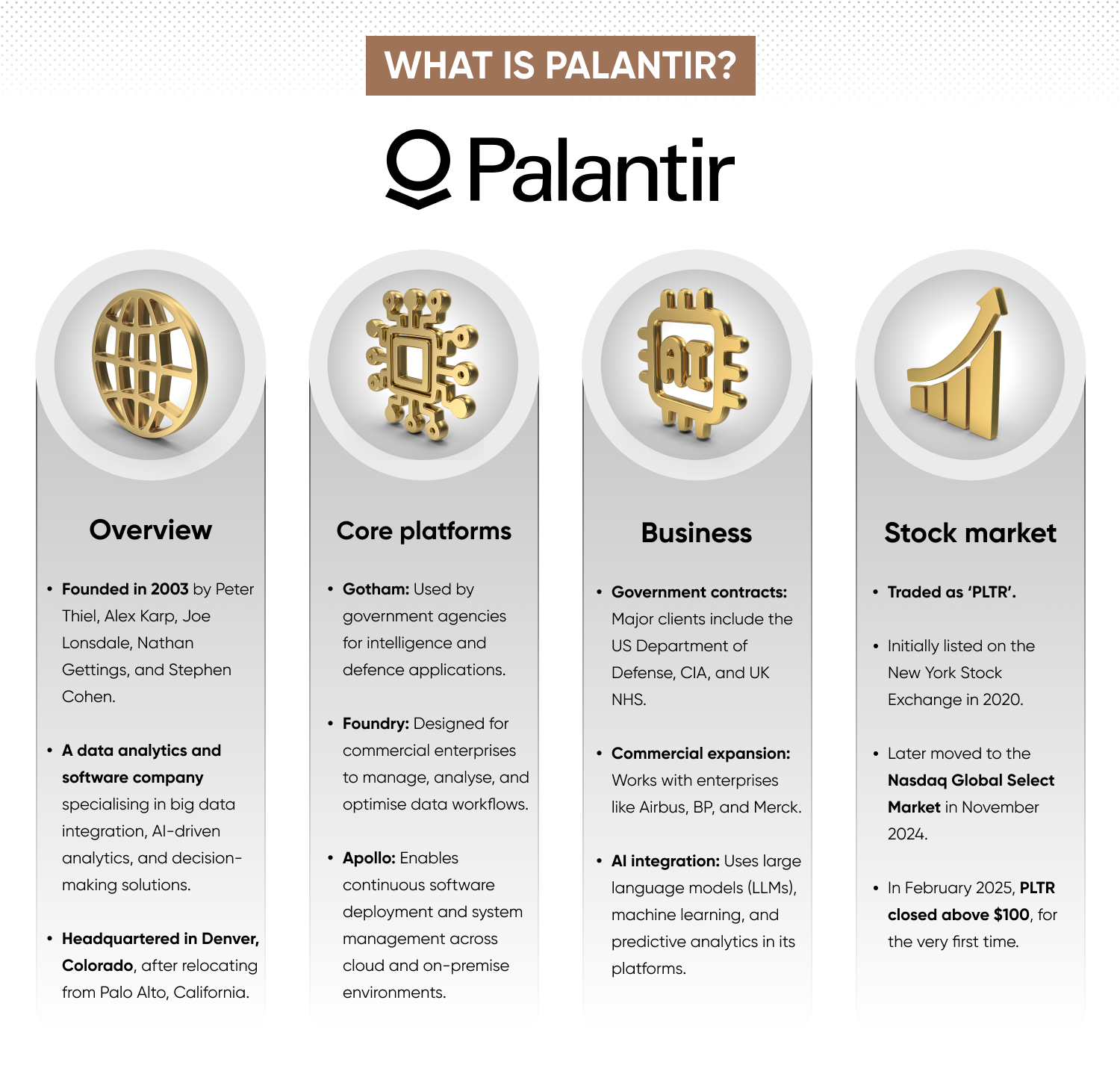
The Core Ecosystem: Gotham, Foundry, and Apollo
Palantir’s technical suite is primarily divided into three major platforms, each designed to solve specific challenges in the lifecycle of data management and decision-making. These platforms—Gotham, Foundry, and Apollo—serve as the foundation for the company’s expansion into both the public and private sectors.
Palantir Gotham: The Intelligence Operating System
Gotham was Palantir’s first flagship product, specifically designed for the needs of the intelligence community and defense agencies. The primary challenge Gotham solves is the “needle in the haystack” problem. In modern warfare and counter-terrorism, data is generated by thousands of disparate sources: satellite imagery, signals intelligence, financial transactions, and human reports.
Gotham functions as a central repository that can ingest these unstructured and structured data sets, mapping them into a unified graphical interface. Analysts use Gotham to perform link-node analysis, identifying connections between seemingly unrelated entities. For instance, if a specific vehicle is spotted near a sensitive site and the owner of that vehicle has a history of suspicious financial transactions, Gotham flags the correlation. It transforms a static database into a dynamic, living map of threats and opportunities.
Palantir Foundry: Bridging the Data-Action Gap for Enterprise
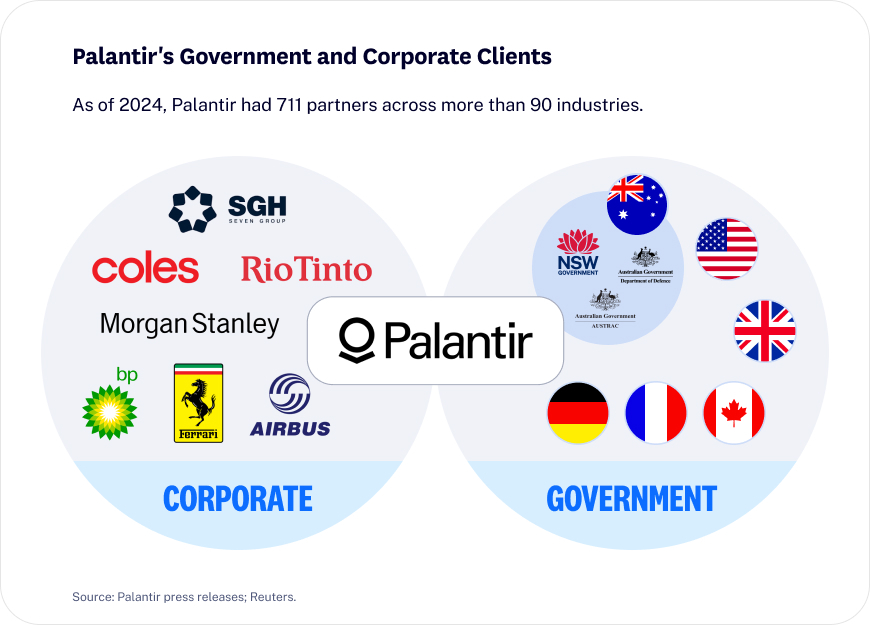
While Gotham focused on intelligence, Foundry was developed to address the data silos within massive commercial enterprises. Large corporations, such as Airbus or BP, struggle with fragmented data spread across legacy systems, cloud environments, and specialized software.
Foundry is a data integration and analytics platform that allows users to create a “digital twin” of their entire organization. It automates the extraction, transformation, and loading (ETL) processes that typically consume 80% of a data scientist’s time. By creating a semantic layer where data is labeled in a way that business users understand—such as “Part Number,” “Flight Schedule,” or “Supply Chain Node”—Foundry enables non-technical staff to run complex simulations and optimize operations without writing a single line of code.
Palantir Apollo: Continuous Delivery and Infrastructure Management
The most technical of the three, Apollo, is the orchestration engine that allows Palantir’s software to run anywhere. In the world of software development, the “edge” refers to environments that are not stable, high-bandwidth data centers. This includes submarines, drones, or remote oil rigs.
Apollo ensures that Gotham and Foundry can be deployed, managed, and updated across heterogeneous environments—whether that is on-premises hardware, a public cloud like AWS, or a ruggedized tactical laptop in a combat zone. It manages the complexity of microservices and ensures that security patches and software updates are delivered autonomously, even in the most disconnected environments.
The Evolution of Decision-Making: The Artificial Intelligence Platform (AIP)
In recent years, the conversation around Palantir has shifted toward the Artificial Intelligence Platform (AIP). While many companies have integrated Large Language Models (LLMs) into their workflows, Palantir’s approach is fundamentally different. AIP is designed to bridge the gap between “Generative AI” (which can write text) and “Operational AI” (which can execute business logic).
Integrating Large Language Models with Operational Logic
Most enterprises face a significant hurdle when adopting AI: hallucinations and lack of context. A standard LLM does not know the specific inventory levels of a warehouse or the legal constraints of a procurement contract. AIP solves this by connecting LLMs directly to the organization’s “Ontology”—Palantir’s proprietary method for organizing data into real-world objects and relationships.
When a user asks AIP a question, such as “Which shipments will be delayed by the hurricane and how should I reroute them?”, the AI doesn’t just guess. It queries the Ontology to find the real-time location of ships, analyzes the weather data, checks the contractual obligations for delivery, and presents a series of validated options. The user can then click a button to execute the rerouting within the platform itself.
Security and Governance in the Age of AI

Security is the primary reason why Palantir is the platform of choice for highly regulated industries. AIP includes built-in guardrails that dictate what the AI can and cannot see. Through a robust access-control layer, an LLM in the HR department won’t have access to the engineering team’s source code, and vice versa.
Every action taken by the AI is logged in an immutable audit trail. This allows organizations to move from experimental AI to operational AI, knowing exactly who (or what) made a decision, why they made it, and which data points were used to justify the action. This level of transparency is critical for compliance and accountability.
Technical Architecture: How Palantir Solves the “Data Silo” Problem
The most significant technical contribution Palantir has made to the field of data science is the concept of the “Ontology.” To understand why this is revolutionary, one must understand how traditional data warehouses function.
The Ontology: Creating a Digital Twin of the Organization
Traditionally, data is stored in tables and rows. To get an answer to a question, an analyst must perform complex SQL joins across dozens of different tables. This is time-consuming and prone to error.
Palantir’s Ontology sits on top of these data sources. It translates raw technical data into business concepts. Instead of looking at a table named M_VNDR_INV, a user sees an object called “Vendor Invoice.” This object is linked to other objects like “Supplier,” “Project,” and “Budget.”
By creating this semantic layer, Palantir allows the organization to build a “digital twin.” This twin reflects the real-world state of the company in real-time. If a sensor on a manufacturing line fails, the digital twin updates immediately, triggering downstream alerts in the supply chain and maintenance modules.
Data Integration and Semantic Modeling
Palantir’s software uses a “data-agnostic” approach. It does not care if the data is coming from a legacy mainframe, a modern SaaS application, or a real-time IoT stream. The platform uses a series of pipelines to clean and normalize this data, ensuring that “Customer A” in the sales system is recognized as the same “Customer A” in the shipping system. This unification is the prerequisite for any meaningful AI or machine learning application.
Real-World Applications: From Defense to Supply Chains
The utility of Palantir’s technology is best demonstrated through its diverse range of applications. While its origins are in national security, its commercial footprint has expanded to touch nearly every major industry.
Defense and National Security
In the defense sector, Palantir’s software is used for mission planning, situational awareness, and predictive maintenance. For example, the U.S. Army uses Palantir to manage its complex logistics networks, ensuring that troops have the supplies they need before they even know they need them. By analyzing historical usage patterns and real-time movement data, the software can predict when a vehicle component is likely to fail, allowing for proactive repairs.
Commercial Excellence and Industrial Efficiency
In the commercial world, Palantir helps companies navigate the complexities of global trade. During the COVID-19 pandemic, Palantir’s software was used by health organizations like the NHS in the UK to manage vaccine distribution. The platform integrated data on infection rates, hospital capacity, and vaccine supply to optimize the delivery of doses to the most vulnerable populations.
In the aviation industry, Airbus uses Palantir Foundry (under the “Skywise” brand) to optimize its production lines and help airlines minimize aircraft downtime. By analyzing data from thousands of sensors on every plane, Skywise identifies patterns that precede technical faults, allowing airlines to perform maintenance during scheduled stops rather than dealing with unexpected groundings.
The Future of Palantir: Sovereignty and the New Tech Frontier
As we look toward the future, Palantir is positioning itself at the center of “digital sovereignty.” In an era where data is the most valuable resource, nations and corporations are becoming increasingly protective of how their data is stored and used.
Palantir’s commitment to providing a platform that stays within the customer’s own environment—rather than sucking data into a centralized Palantir-owned cloud—is a significant competitive advantage. It allows institutions to maintain full ownership of their data while benefiting from cutting-edge AI and analytics capabilities.
What Palantir does, ultimately, is provide the infrastructure for high-stakes decision-making. Whether it is a general on a battlefield, a CEO in a boardroom, or a doctor in a hospital, Palantir’s software ensures that they have the right data, in the right context, at the right time. By turning the chaos of big data into the clarity of an ontology, Palantir has built the essential toolkit for the 21st-century organization.
aViewFromTheCave is a participant in the Amazon Services LLC Associates Program, an affiliate advertising program designed to provide a means for sites to earn advertising fees by advertising and linking to Amazon.com. Amazon, the Amazon logo, AmazonSupply, and the AmazonSupply logo are trademarks of Amazon.com, Inc. or its affiliates. As an Amazon Associate we earn affiliate commissions from qualifying purchases.